
Raspberry Pi Keyboard: A Deep Dive into the Integrated Keyboard Solutions for the Raspberry Pi Ecosystem
The Raspberry Pi, renowned for its versatility and affordability in the world of single-board computers, has fostered a vibrant ecosystem of peripherals designed to enhance its functionality and user experience. Among these, keyboard solutions have always been a cornerstone, enabling interaction and control. While standard USB keyboards are a common and accessible choice, the Raspberry Pi ecosystem has seen the development of integrated keyboard solutions, most notably the official Raspberry Pi Keyboard. This article provides a comprehensive, SEO-friendly examination of these integrated keyboards, exploring their features, benefits, use cases, and considerations for potential buyers, aiming to equip readers with the knowledge to make informed decisions.
The official Raspberry Pi Keyboard, released in 2016, was a significant development, designed not just as an input device but as an integral part of the Raspberry Pi user experience. It boasts a compact, yet full-sized layout, making it ideal for desk setups where space might be limited. The design emphasizes durability and a comfortable typing experience, with a matte finish that resists fingerprints and a tactile key feel that is responsive without being overly loud. This keyboard is engineered with a specific purpose: to seamlessly connect and power a Raspberry Pi board directly through its integrated USB connector. This eliminates the need for separate power supplies for the Pi and the keyboard, simplifying cable management and creating a cleaner, more organized workspace. The connection is facilitated by a tethered USB cable that plugs into the Pi’s USB ports. Furthermore, the keyboard features three USB ports on its own chassis, allowing users to connect their Raspberry Pi board, an external mouse, or other USB peripherals directly to the keyboard. This "hub" functionality is a key differentiator, streamlining the setup and reducing the overall number of cables required for a functional Raspberry Pi workstation. The internal circuitry of the keyboard is designed to deliver power to the connected Raspberry Pi, effectively acting as a power delivery hub. This integration is not merely superficial; it’s a fundamental aspect of the keyboard’s design philosophy, aiming to create a cohesive and user-friendly computing experience.
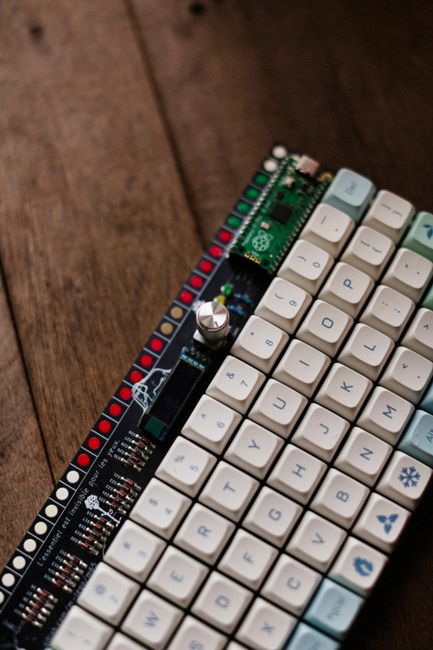
Beyond the official offering, the broader Raspberry Pi community has embraced and developed a multitude of third-party integrated keyboard solutions. These often cater to more niche applications and specific user needs, ranging from industrial control panels to portable computing projects. Many of these solutions are built around compact form factors, often featuring built-in trackpads or pointing sticks for mouse functionality. Some are designed for rugged environments, employing water-resistant or impact-resistant materials. Others integrate specialized keys for specific programming languages or applications, offering shortcuts and streamlined access to frequently used commands. The advent of maker-focused platforms has also seen a surge in DIY keyboard projects that can be integrated with the Raspberry Pi. These projects often leverage microcontroller units (MCUs) like the Raspberry Pi Pico or other Arduino-compatible boards to manage key matrix scanning and communication with the main Raspberry Pi board. This allows for a high degree of customization, from keycap legends to firmware functionality. The availability of open-source firmware like QMK and KMK further empowers makers to create truly bespoke keyboard experiences, tailored precisely to their workflow. These third-party and DIY solutions highlight the flexibility of the Raspberry Pi ecosystem and its ability to adapt to a vast array of creative and functional requirements.
The benefits of utilizing an integrated keyboard solution with a Raspberry Pi are numerous and directly address common user pain points. Foremost is the simplicity and decluttering it provides. By consolidating the keyboard, USB hub, and often power delivery into a single unit, users can significantly reduce the number of cables and peripherals required for a functional setup. This is particularly valuable for small desk spaces, portable projects, or educational environments where neatness and ease of setup are paramount. The integrated power delivery of solutions like the official Raspberry Pi Keyboard is a major advantage. It eliminates the need for a separate power adapter for the Raspberry Pi, simplifying the power chain and reducing the risk of power-related issues. This can be a lifesaver when troubleshooting or when power outlets are scarce. The dedicated design of these keyboards often translates to a more robust and tailored user experience. Unlike generic USB keyboards, integrated solutions are engineered with the Raspberry Pi’s specific power and data requirements in mind. This can lead to improved compatibility, stability, and performance. For example, the official keyboard’s design ensures proper power delivery to the Pi, preventing undervoltage issues that can plague less integrated setups. Furthermore, the space-saving form factor of many integrated keyboards makes them ideal for compact computing setups. They can easily be incorporated into custom enclosures, kiosks, or portable workstations without taking up excessive space. This is a significant advantage for projects where physical footprint is a constraint. Finally, the enhanced portability and ease of deployment are notable benefits. A single integrated unit simplifies packing, setting up, and moving a Raspberry Pi workstation. This is invaluable for educators, presenters, or anyone who needs to frequently relocate their computing setup.
The use cases for integrated Raspberry Pi keyboard solutions are as diverse as the Raspberry Pi itself. In educational settings, these keyboards offer a streamlined and user-friendly experience for students learning to code or interact with computing hardware. The all-in-one nature simplifies setup and reduces potential points of failure, making them ideal for classroom environments. For hobbyist programmers and makers, an integrated keyboard provides a convenient and efficient way to interact with their Raspberry Pi projects. Whether it’s for coding on the go, prototyping, or setting up a dedicated development station, the convenience of a single unit is invaluable. In digital signage and kiosk applications, integrated keyboards offer a compact and self-contained solution for user interaction. Their simplified cabling and robust design make them suitable for public-facing environments where reliability and ease of maintenance are crucial. Home theater PC (HTPC) builds can also benefit from integrated keyboards, offering a neat and tidy input solution for controlling media playback and navigating entertainment interfaces. The compact nature of many of these keyboards allows them to blend seamlessly into a living room environment. Industrial control and automation projects often require specialized input devices. Integrated keyboards, especially those with ruggedized designs or custom key layouts, can serve as robust control panels for machinery and systems. The ability to integrate directly with a Raspberry Pi makes them a cost-effective alternative to dedicated industrial HMIs. Finally, portable computing projects can be dramatically enhanced by integrated keyboards. Projects like portable retro gaming consoles, DIY laptops, or mobile workstations rely on compact and self-contained input solutions, and integrated keyboards are a natural fit. The ability to integrate the Raspberry Pi board directly into the keyboard chassis significantly reduces the overall volume and complexity of such projects.
When considering an integrated keyboard for a Raspberry Pi project, several factors warrant careful evaluation. Compatibility is paramount. While most USB keyboards will work with a Raspberry Pi, integrated solutions are often designed with specific Pi models in mind. The official Raspberry Pi Keyboard, for instance, is designed to work seamlessly with all Raspberry Pi models from the Pi 1 Model B+ onwards. Third-party solutions may have varying levels of compatibility, so it’s essential to check specifications and user reviews. Power delivery is another critical aspect, especially if you opt for a keyboard that aims to power the Pi. Ensure the keyboard’s power output is sufficient for the chosen Raspberry Pi model and any connected peripherals. Underpowering can lead to instability and performance issues. The physical layout and key feel are subjective but crucial for comfortable and efficient typing. Consider the size of the keys, the spacing between them, and the tactile feedback. If you intend to do a lot of typing, a more traditional layout and a satisfying key feel will be beneficial. Integrated pointing devices, such as trackpads or trackballs, can be a significant convenience, especially for compact setups where a separate mouse is undesirable. Evaluate the quality and responsiveness of these integrated pointing devices. Durability and build quality are important considerations, particularly for projects that will be exposed to harsh environments or frequent handling. Look for keyboards made with robust materials and solid construction. Connectivity and port availability are also worth noting. Some integrated keyboards offer additional USB ports, acting as a built-in hub. Consider how many ports you need and their placement. Finally, price and availability will naturally play a role in your decision-making process. While integrated solutions can offer significant value, compare prices across different models and brands to find the best option for your budget.
The evolution of the Raspberry Pi has been intrinsically linked to the development of its peripheral ecosystem, and integrated keyboard solutions stand as a testament to this symbiotic relationship. From the official Raspberry Pi Keyboard’s elegantly simple integration to the vast and innovative landscape of third-party and DIY offerings, these devices cater to a wide spectrum of user needs and project aspirations. They represent a move towards more cohesive, efficient, and user-friendly computing experiences, whether for educational purposes, creative endeavors, or specialized industrial applications. The emphasis on streamlined cabling, integrated power, and often compact form factors addresses fundamental challenges faced by Raspberry Pi users, fostering a more enjoyable and productive interaction with this powerful single-board computer. As the Raspberry Pi platform continues to advance, it is highly probable that integrated keyboard solutions will evolve alongside it, offering even more innovative features and tailored experiences for an ever-expanding user base. The ongoing development in areas like low-power connectivity, advanced haptic feedback, and even customizable E-ink key displays suggests a future where integrated keyboards become even more sophisticated and indispensable components of the Raspberry Pi ecosystem. For anyone looking to maximize the potential of their Raspberry Pi while minimizing clutter and complexity, exploring the world of integrated keyboard solutions is a worthwhile and often transformative endeavor. Their ability to combine essential functionality with a refined user experience makes them a compelling choice for a broad range of applications, solidifying their place as a vital category of Raspberry Pi peripherals.





Leave a Reply