The Japan Aerospace Exploration Agency (JAXA) has unveiled breathtaking new imagery of the near-Earth asteroid Torifune, captured during a remarkably close flyby by the Hayabusa2 spacecraft on July 5, 2026. The mission, which pushed the aging probe to its operational limits, yielded unexpected scientific surprises and highlighted JAXA’s growing capabilities in deep space exploration, particularly in the realm of planetary defense.
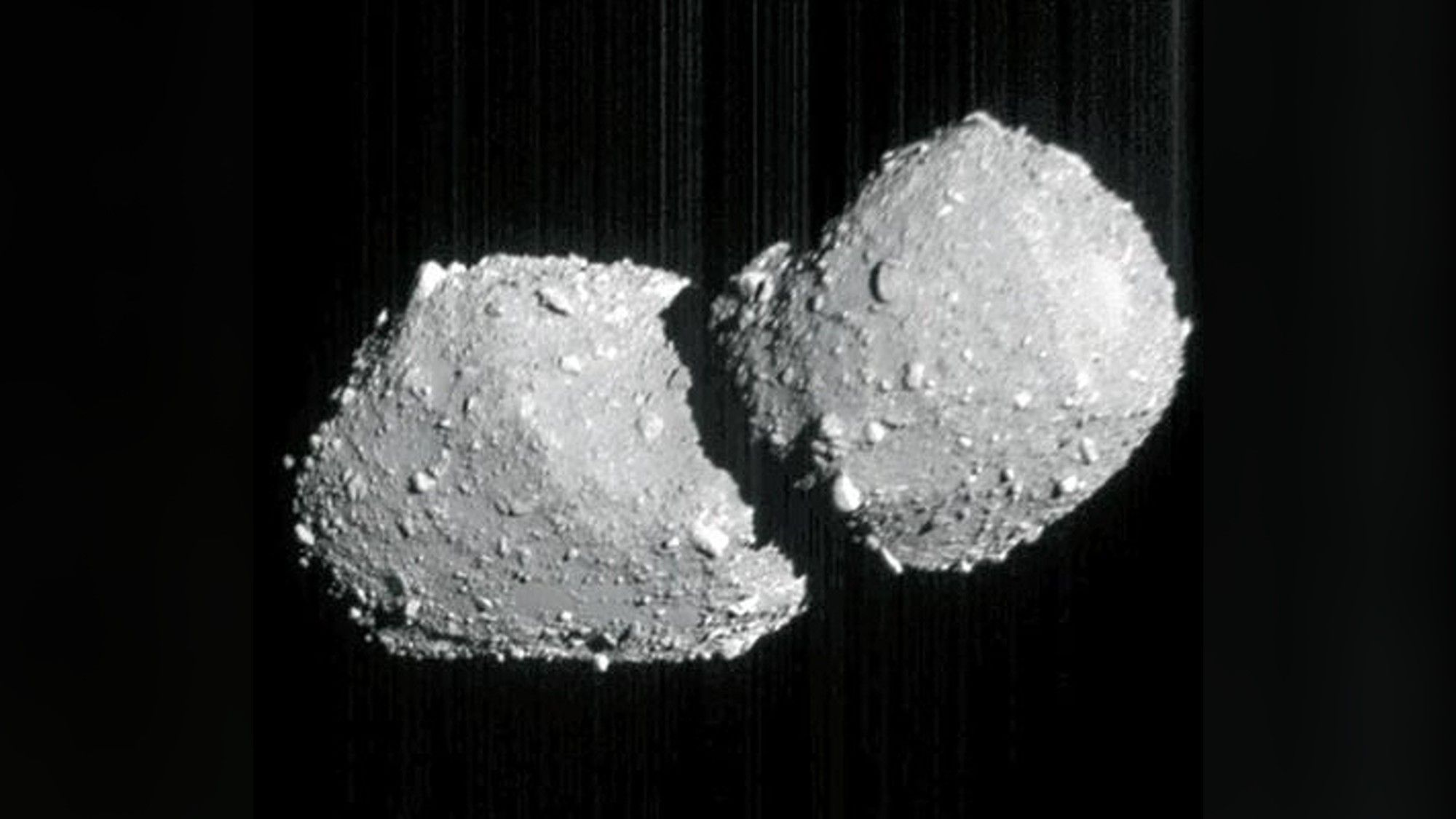
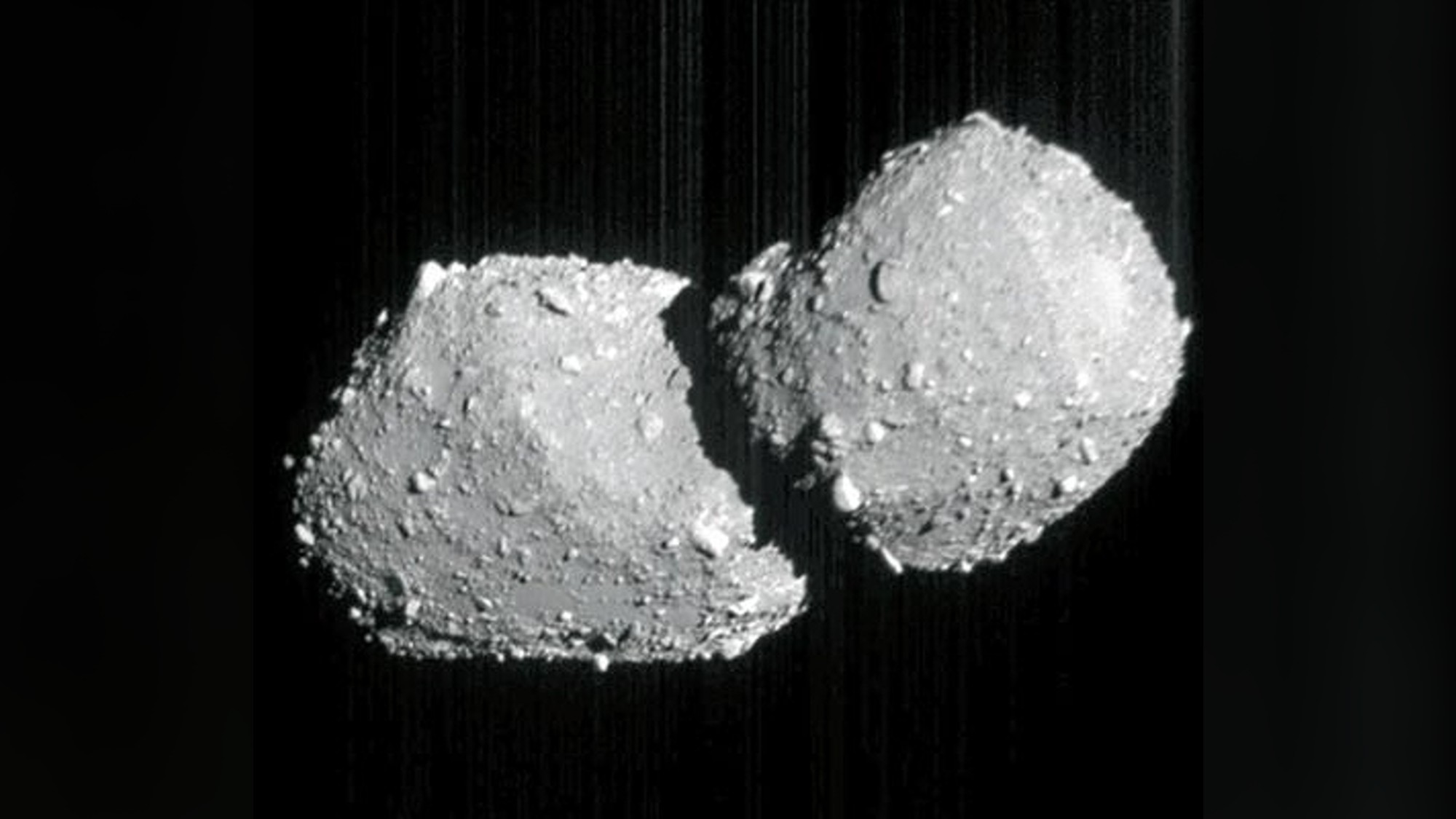
The images, received by the mission control team on the morning of July 6 Japan time, revealed Torifune to be a contact binary – a celestial body composed of two distinct rocky masses gravitationally bound together. This formation was not anticipated by the mission planners, adding a significant layer of scientific intrigue to the encounter. Furthermore, the clarity and scale of the returned images surpassed initial expectations, showcasing the asteroid’s rugged, boulder-strewn surface in unprecedented detail.
"We did not imagine such a contact binary," Makoto Yoshikawa, former mission manager of Hayabusa2, shared with scientists at the Asteroids, Comets and Meteors conference in Poznan, Poland, on July 10. "Originally, we didn’t think we could have such a very big image. Maybe we will take a very small one, but the image was much larger than we expected."
A Mission of Calculated Risks: The Debate Behind the Flyby
The success of the Torifune flyby was not a foregone conclusion. The mission was the culmination of months of intense deliberation between JAXA’s science and engineering teams. A last-minute proposal to approach the asteroid even closer than initially planned sparked heated debate, raising concerns about the safety of the venerable Hayabusa2 spacecraft. Ultimately, the decision was made to execute a daringly close encounter, pushing the boundaries of what the spacecraft was designed to achieve.
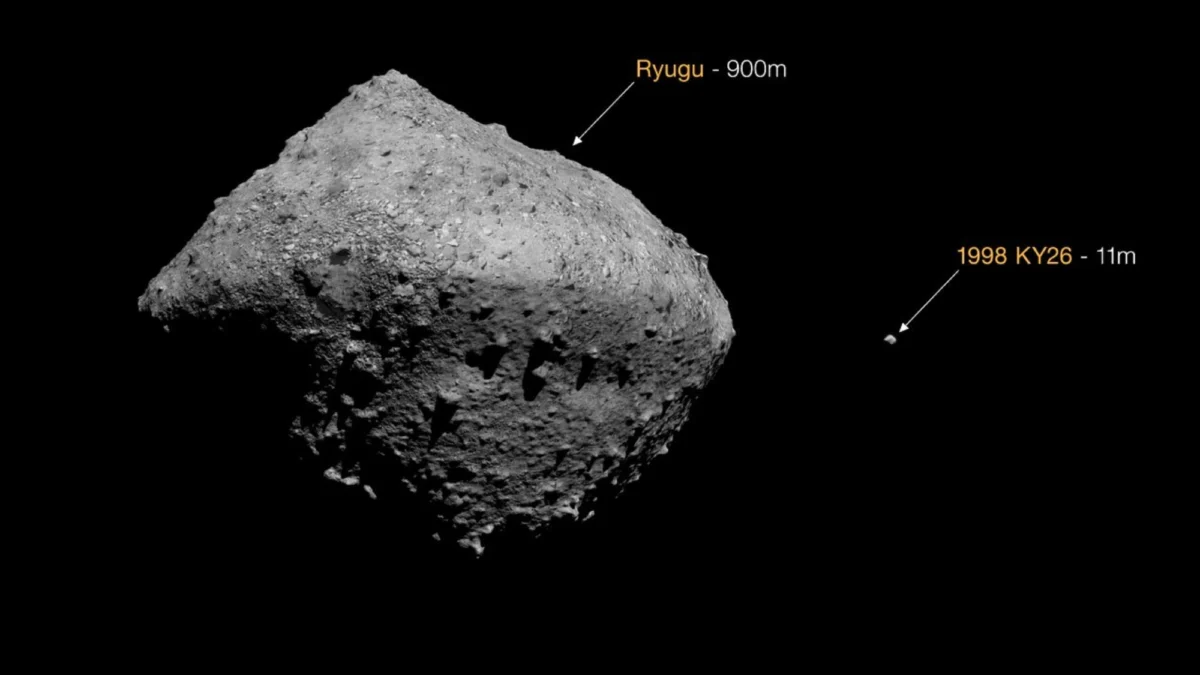
Hayabusa2, launched in December 2014, had already achieved significant milestones, including its successful rendezvous with the larger asteroid Ryugu. After collecting samples from Ryugu and delivering them to Earth in 2020, the spacecraft’s primary mission was complete. JAXA then embarked on an extended mission, with plans to rendezvous with the much smaller asteroid 1998 KY26 in 2031. The Torifune flyby was conceived as a valuable opportunity to gather further scientific data and test the spacecraft’s capabilities in a new operational context.
Pushing the Envelope: From Kilometers to Hundreds of Meters
Traditionally, asteroid flybys are conducted at distances of around 100 kilometers (62 miles). However, Yoshikawa explained that this distance would have been insufficient to obtain the high-resolution imagery desired for Torifune. Hayabusa2, while expertly designed for rendezvous, proximity operations, and sample collection, was not inherently built for high-speed passes at velocities of approximately 5.3 kilometers per second (3.3 miles per second). The spacecraft’s camera systems also posed a challenge, as they were not optimized for rapid slewing required during such a swift encounter.
The science team initially expressed concerns that at 100 kilometers, the cameras would only be able to resolve the asteroid’s global shape, offering limited detail. In response, the engineering team proposed a closer approach of 10 kilometers (6.2 miles), which was deemed acceptable by the scientists. However, the pursuit of even more detailed data led the engineers to investigate the feasibility of approaching within 1 kilometer (0.6 miles) of the asteroid’s center. This ambitious target was met with enthusiasm by the science contingent, eager for the potential for remarkable photographic evidence.
The true drama unfolded just one month prior to the scheduled flyby. Yuya Mimasu, the leader of the extended mission team, put forth a bold proposition: to reduce the closest approach distance to a mere 800 meters (approximately 2,625 feet). This proposal ignited a significant debate, with some members of the science team voicing strong reservations due to the perceived risks involved.
Navigating the Unknown: Risks and Mitigation Strategies
A primary concern revolved around the unknown precise size and dimensions of Torifune, and the associated safety margins for the spacecraft. Based on ground-based observations, the team had estimated a worst-case scenario for Torifune’s dimensions, ranging from 1,400 meters by 400 meters (4,600 by 1,300 feet). An 800-meter flyby from the center would place the spacecraft at the very edge of this estimated exclusion zone.
Compounding these concerns was the condition of Hayabusa2’s optical instruments. The spacecraft’s optics had been exposed to dust particles during the sample collection activities at Ryugu, potentially affecting their performance. The final navigation analysis indicated a targeting error ellipse of approximately 200 meters (656 feet). This meant that while the planned closest approach was 800 meters, the actual trajectory could deviate by a significant margin, making the mission a considerable challenge. "The distance fixed is 800 meters," Yoshikawa acknowledged, "but this is quite a big challenge for us."
A Technological Leap: Onboard Guidance and Instrument Performance
Hayabusa2 first detected Torifune on June 19, providing a crucial window for final preparations. In a testament to JAXA’s technological advancements, the spacecraft utilized ground-based guidance for up to three hours before the flyby, after which it transitioned to an innovative onboard guidance system. "This is quite new," Yoshikawa stated, referring to the development of specialized software that was transmitted to the spacecraft for this autonomous navigation.
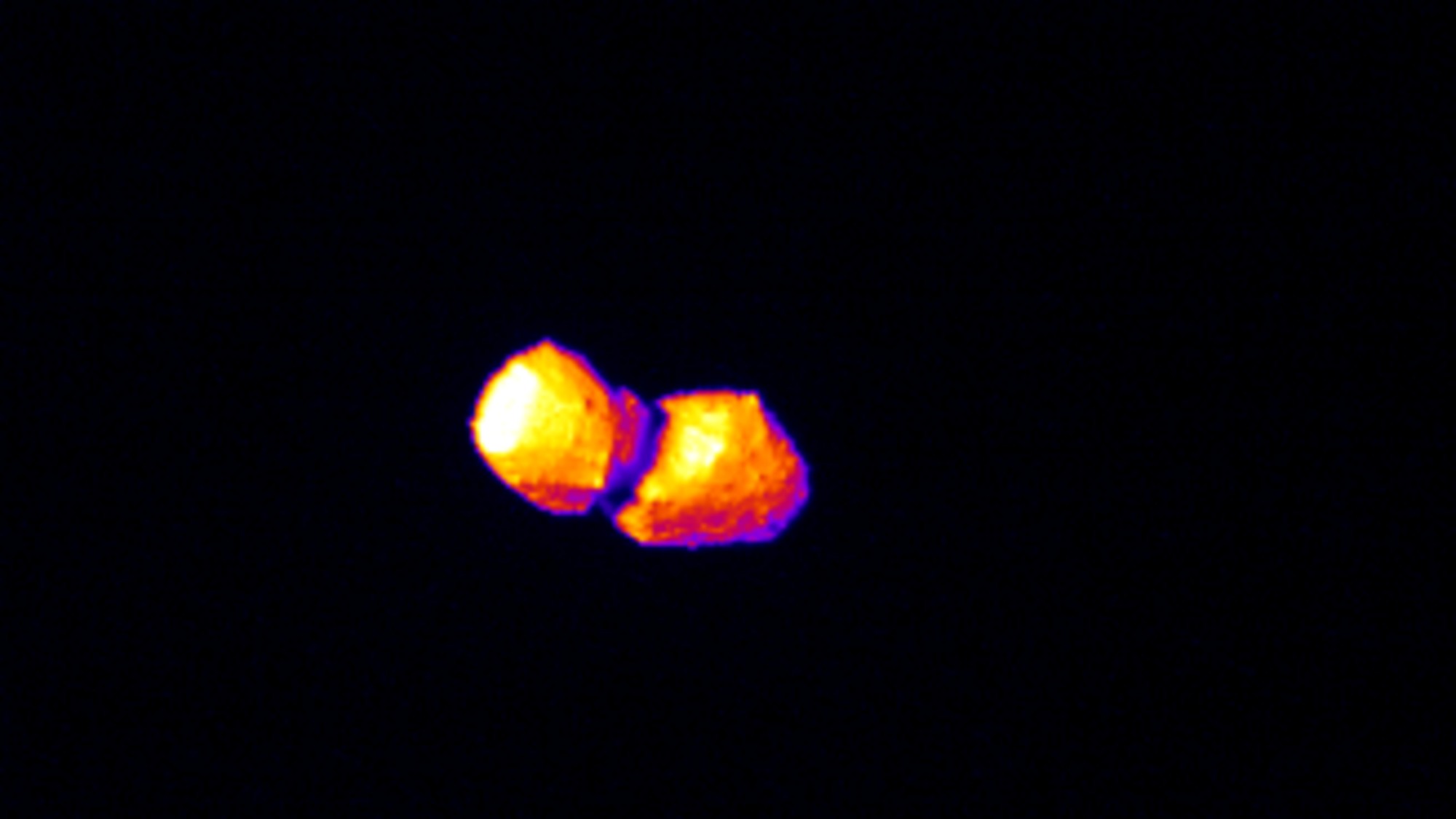
The successful execution of this ultra-close flyby resulted in the spectacular images captured by the probe’s Optical Navigation Camera Telescope (ONC-T). However, the scientific yield was not limited to visual data. All four of Hayabusa2’s scientific instruments were operational during the encounter. The Thermal Infrared Imager (TIR) recorded nine seconds of thermal imaging data between 09:29:50 and 09:29:59 GMT on July 5, just moments before the closest approach. This data independently corroborated the contact binary structure of Torifune through its heat emission characteristics.
Comprehensive Data Collection and Future Trajectory
Beyond visual and thermal imaging, the Near Infrared Spectrometer (NIRS3) and the laser altimeter (LIDAR) also gathered valuable scientific information. Yoshikawa highlighted the LIDAR’s performance, describing it as potentially the first successful LIDAR ranging measurement achieved during an asteroid flyby. While the most critical 25 MB of data were promptly downlinked, the full 300 MB of scientific data will require a longer transmission period. Hayabusa2’s ion engine system was reactivated on July 9 to initiate its journey back towards Earth, with two planned Earth flybys in 2027 and 2028. The remaining data will be transmitted to Earth following these gravitational assists, a process that will take approximately four months.
Implications for Planetary Defense and Future Exploration
The Torifune flyby transcends its status as a mere scientific bonus or a captivating photo opportunity. Yoshikawa emphasized that the successful ultra-close encounter demonstrates JAXA’s mastery of "the technology to collide spacecraft with a small celestial body," drawing a parallel to NASA’s Double Asteroid Redirection Test (DART) mission. "This flyby mission can be said to serve as a demonstration of the fast reconnaissance concept in planetary defense," he concluded. This capability is crucial for rapidly characterizing potentially hazardous asteroids, providing vital information that could inform the deployment of impactor missions to deflect celestial threats.
The extended mission of Hayabusa2 is far from over. Its ultimate objective remains the rendezvous with the minuscule asteroid 1998 KY26, a rapidly rotating object measuring approximately 11 meters (36 feet) in diameter. This encounter is slated for 2031, marking another significant step in humanity’s exploration of the solar system’s smaller bodies.
The images of Torifune serve as a powerful testament to JAXA’s engineering prowess and scientific ambition. They not only deepen our understanding of asteroid formation and evolution but also underscore Japan’s significant contributions to global space exploration and its burgeoning role in safeguarding Earth from potential cosmic impacts. The daring flyby of Torifune, born from rigorous debate and technological innovation, has opened new avenues for scientific discovery and reinforced the critical importance of continued investment in space-based reconnaissance and defense strategies.