The James Webb Space Telescope, humanity’s most powerful observatory in orbit, has once again demonstrated its unparalleled ability to peer into the most distant reaches of the cosmos. In a recent revelation, astronomers utilized the telescope to observe the galaxy cluster MACS J0553.4-3342, a massive and collision-prone collection of galaxies located approximately 10 billion light-years away in the constellation Columba. What makes this observation particularly groundbreaking is the Webb telescope’s strategic use of a cosmic phenomenon known as gravitational lensing. This natural magnifying effect, created by the immense gravity of the foreground galaxy cluster, allows Webb to amplify and observe incredibly faint, distant galaxies that would otherwise be beyond our current detection capabilities. These magnified galaxies represent some of the earliest stellar nurseries in the universe, offering an unprecedented glimpse into the epoch when the first stars and galaxies began to form.
Unlocking the Universe’s Earliest Moments
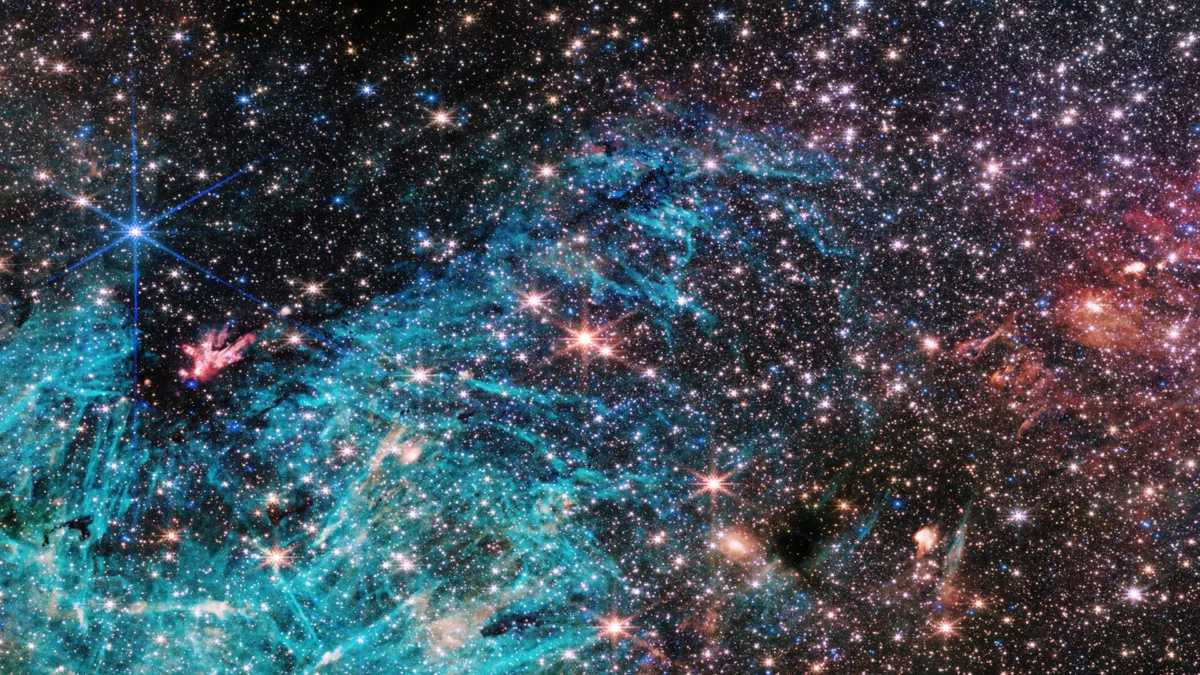
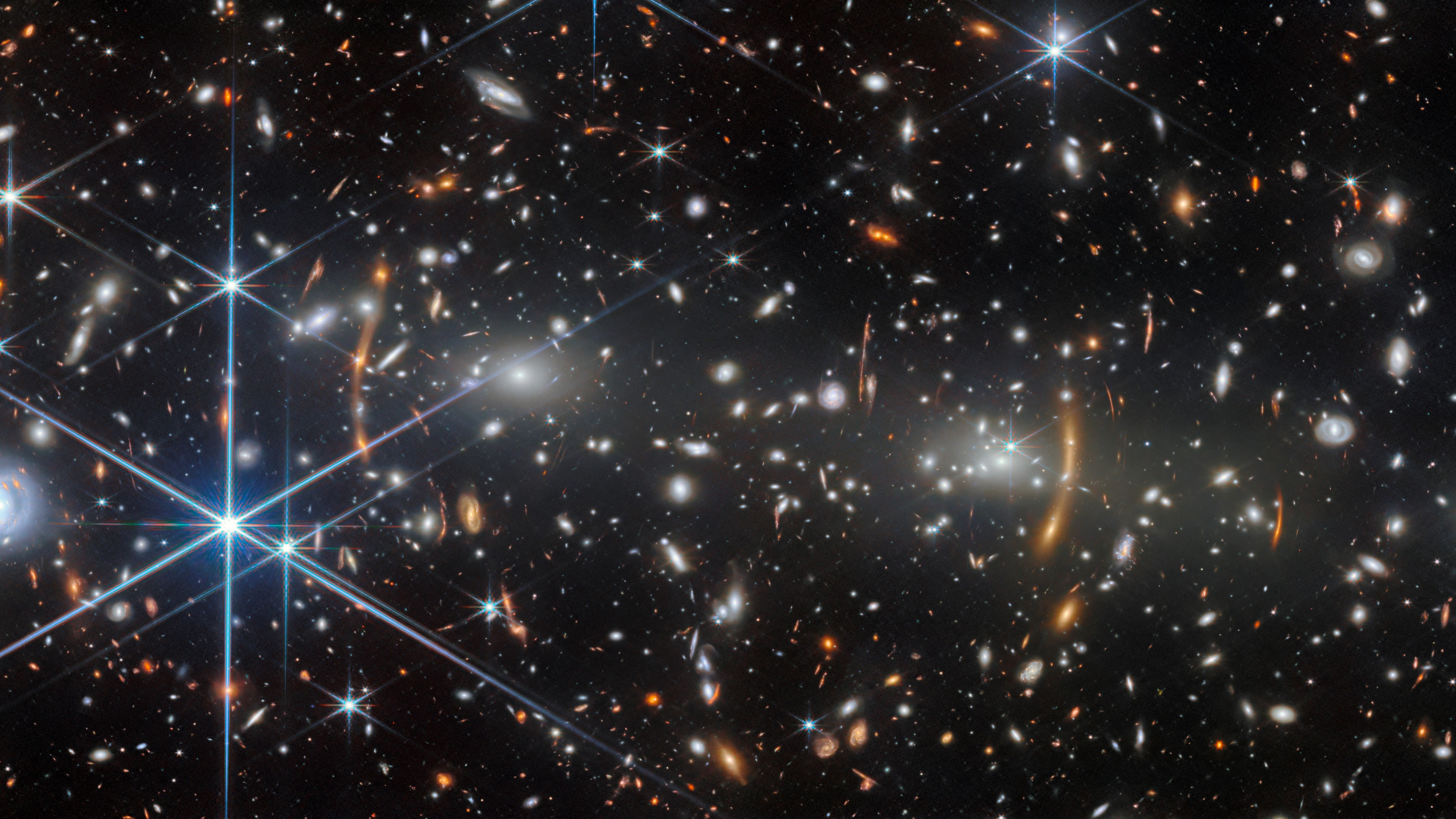
The image released by the telescope showcases a breathtaking deep-field view, where the gravitational influence of MACS J0553.4-3342 acts as a cosmic magnifying glass. The orange blurs in the image are not the galaxies themselves, but rather distorted and amplified images of even more distant galaxies situated behind the cluster. These lensed galaxies appear stretched and warped due to the bending of spacetime caused by the cluster’s massive gravitational pull, a phenomenon predicted by Albert Einstein’s theory of general relativity.
This technique of gravitational lensing is crucial for understanding the early universe. The light from these nascent galaxies has traveled for billions of years to reach us, and by the time it arrives, it is often too faint and redshifted (stretched to longer wavelengths due to the expansion of the universe) to be detected by most telescopes. However, when a massive object like a galaxy cluster lies between us and these distant galaxies, its gravity can bend and focus the light from the background objects, effectively acting as a natural telescope. The James Webb Space Telescope, with its extraordinary sensitivity and infrared capabilities, is perfectly suited to capture this amplified light, revealing details about these ancient galaxies that were previously hidden from view.
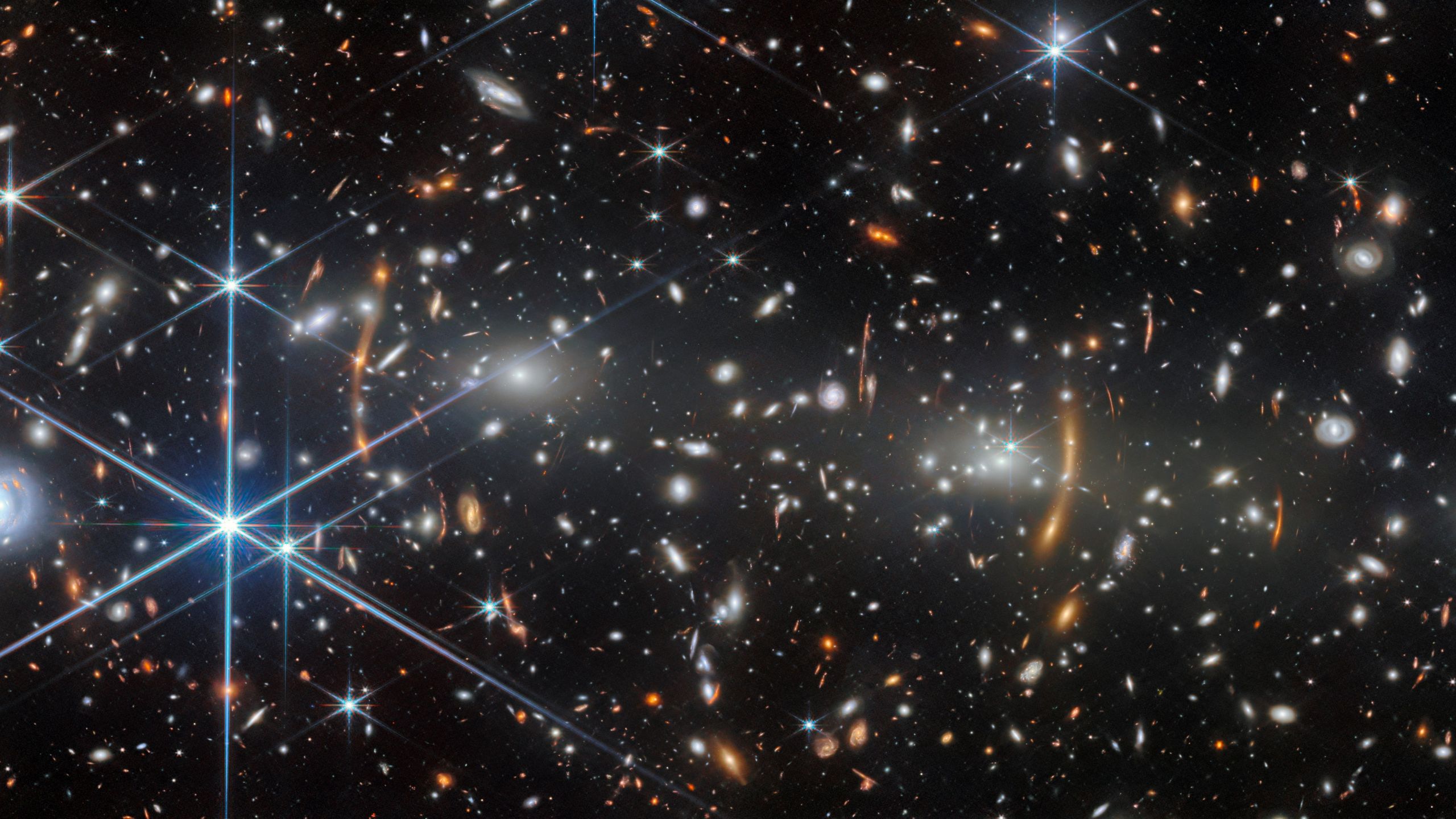
The galaxy cluster MACS J0553.4-3342 itself is a fascinating object of study. It is one of the most massive and distant galaxy clusters ever observed, composed of over 300 galaxies, many of which are in the process of colliding and merging. These collisions are violent events that can trigger bursts of star formation and shape the evolution of galaxies over cosmic timescales. By studying this cluster, astronomers gain insights into the processes that governed the formation and growth of large-scale structures in the early universe.
A Chronicle of Cosmic Discovery
The journey to observing these ancient galaxies has been a long and complex one, involving decades of scientific endeavor and technological advancement.
- Early Theoretical Foundations: The concept of gravitational lensing was first theorized by Albert Einstein in his general theory of relativity, published in 1915. His equations predicted that massive objects would warp spacetime, causing light to bend around them.
- First Observational Evidence: The first observations confirming gravitational lensing occurred in the early 20th century, with Eddington’s expedition in 1919 during a solar eclipse, which observed the bending of starlight around the Sun.
- Advancements in Telescope Technology: The development of increasingly powerful telescopes, both ground-based and space-based, paved the way for the detection of more subtle lensing effects and the observation of fainter, more distant objects.
- Hubble Space Telescope Era: The Hubble Space Telescope provided groundbreaking images and data that revolutionized our understanding of the universe, including early observations of gravitational lensing in galaxy clusters.
- The James Webb Space Telescope Era: Launched in December 2021, the James Webb Space Telescope (JWST) represents a monumental leap forward. Its unparalleled sensitivity in infrared wavelengths, coupled with its large mirror, allows it to detect light from the very first stars and galaxies that formed after the Big Bang. The ability to observe through dust clouds that obscure visible light is another key advantage of JWST.
- Recent Revelations (July 2026 – inferred date based on content): The observation of MACS J0553.4-3342 and its lensed background galaxies marks a significant milestone in JWST’s ongoing mission to explore the universe’s origins. The data gathered from this observation is expected to provide crucial information about the properties and evolution of early galaxies.
Supporting Data: The Power of Infrared and Gravitational Lensing
The James Webb Space Telescope’s success in capturing these faint, distant galaxies is directly attributable to its sophisticated instrumentation and its strategic use of gravitational lensing.
- Infrared Sensitivity: The universe’s expansion causes light from distant objects to be redshifted into the infrared spectrum. JWST’s primary mirrors and instruments are optimized to detect these infrared wavelengths, allowing it to see further back in time than any previous telescope. This is critical for observing the faint light emitted by the first stars and galaxies, which are highly redshifted due to the immense distances involved.
- Gravitational Lensing Magnification: The degree of magnification provided by a gravitational lens depends on the mass of the foreground object and the alignment between the source, lens, and observer. In the case of MACS J0553.4-3342, the cluster’s immense mass and favorable geometry create significant magnification, allowing astronomers to resolve details in the lensed galaxies that would otherwise be invisible. Some estimates suggest that gravitational lensing can magnify distant objects by factors of tens or even hundreds, making faint galaxies appear brighter and larger.
- Spectroscopic Analysis: Beyond just imaging, JWST can also perform spectroscopic analysis on the light from these lensed galaxies. Spectroscopy breaks down light into its constituent wavelengths, revealing information about the galaxy’s chemical composition, temperature, velocity, and redshift. This detailed analysis is crucial for determining the age and properties of these early galaxies and for understanding the conditions in the early universe.
Official Responses and Scientific Community Reactions
While specific official statements regarding this particular observation are not provided in the source content, the scientific community’s reaction to JWST’s discoveries is consistently one of awe and excitement.
- Anticipation of New Discoveries: Astronomers worldwide have been eagerly awaiting JWST’s observations, knowing that its capabilities would revolutionize our understanding of cosmology. The release of such detailed images of the early universe is a testament to this anticipation.
- Validation of Theories: The data obtained from JWST observations, including those utilizing gravitational lensing, will serve to validate and refine existing cosmological models. The precise measurements of galaxy properties and distribution will provide crucial tests for theories of cosmic evolution, dark matter, and dark energy.
- Future Research Directions: Each new image and dataset from JWST opens up new avenues of research. The identification of these early, lensed galaxies will prompt further investigations into their formation mechanisms, their contribution to the reionization of the universe, and their role in the cosmic web.
Broader Impact and Implications: Reshaping Our Cosmic Narrative
The ability of the James Webb Space Telescope to leverage gravitational lensing to study the dawn of the universe has profound implications for our understanding of our place in the cosmos.
- Understanding Galaxy Formation: By observing these early, lensed galaxies, scientists can study the very first stages of galaxy formation. This includes understanding how the first stars ignited, how they clustered together to form the first galaxies, and how these early galaxies evolved into the diverse structures we see today. This directly addresses fundamental questions about the origins of cosmic structures.
- The Epoch of Reionization: The early universe was a neutral, opaque fog of hydrogen. The first stars and galaxies emitted ultraviolet radiation that gradually ionized this hydrogen, making the universe transparent. Studying the light from these early galaxies is crucial for understanding the timeline and mechanisms of this critical "Epoch of Reionization."
- Testing Cosmological Models: The precise measurements of distant galaxy populations and their properties provided by JWST will allow cosmologists to test and refine their models of the universe’s evolution. Discrepancies between observations and predictions could lead to new theories about fundamental physics, such as the nature of dark matter and dark energy, or even modifications to our understanding of gravity.
- The Search for Life Beyond Earth: While this particular observation focuses on the early universe, the improved understanding of cosmic evolution and galaxy formation that JWST provides is indirectly relevant to the search for extraterrestrial life. A more complete picture of how planets and potentially habitable environments form within galaxies across cosmic time can inform astrobiological research.
The ongoing mission of the James Webb Space Telescope, particularly its ability to harness the power of gravitational lensing, promises to continue unveiling the universe’s most profound secrets. Each new image and data point pushes the boundaries of human knowledge, offering a deeper and more comprehensive understanding of our cosmic origins and our place within the vast tapestry of existence. The orange blurs in the recent image are not just streaks of light; they are windows into a time when the universe was young, a time that is now, thanks to Webb, becoming clearer than ever before.