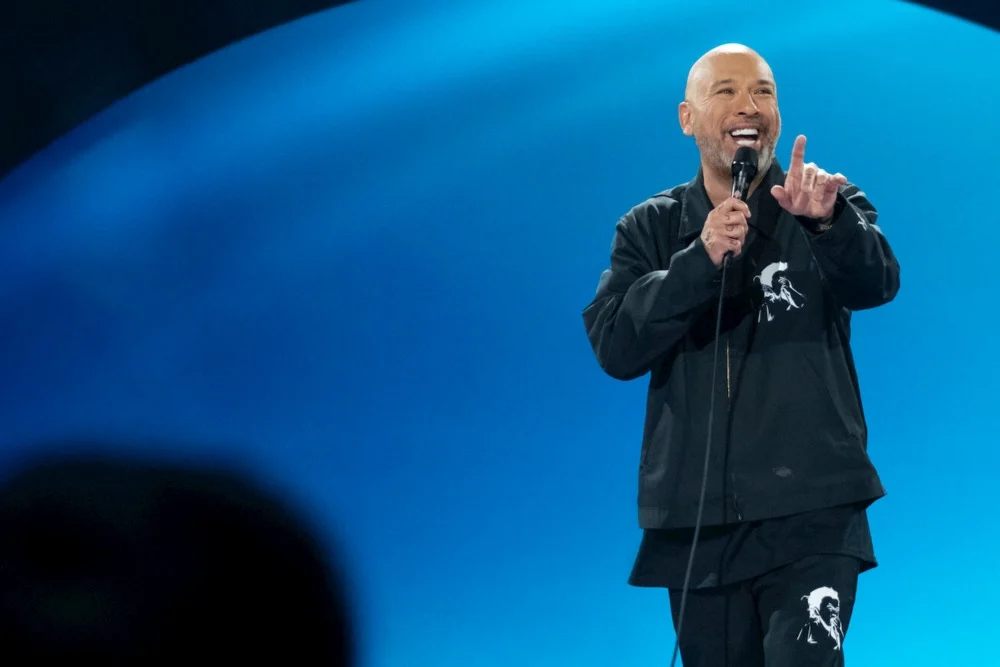
The release of Jo Koy’s latest Netflix stand-up special, Blue in the Face, serves as more than just a comedic milestone; it is a calculated effort to document the cultural trajectory of the Filipino-American experience. Taped in front of two sold-out audiences at the Stockton Arena in California’s Central Valley, the special functions as a thematic bookend to a career built on personal narrative, familial legacy, and the nuances of the immigrant experience. By choosing Stockton—a city with a dense, often fraught history involving Filipino immigration—Koy intentionally pivoted from his initial plans to deliver a blistering social critique toward a more celebratory reflection on progress and communal resilience.
A Strategic Shift in Narrative
Koy, born Joseph Glenn Herbert, originally arrived in Stockton with a meticulously prepared set that intended to confront the city’s darker past. Historical records of the Central Valley reveal a landscape once defined by institutional exclusion; the area was home to "Little Manila," a vibrant community that faced systemic displacement during the mid-20th century, largely due to urban renewal projects and the construction of state freeways. Beyond displacement, early Filipino immigrants in the region frequently encountered "No Filipinos Allowed" signage in public establishments and discriminatory policies regarding access to public infrastructure, such as water fountains.
However, the performance underwent an instantaneous metamorphosis the moment Koy stepped onto the stage. Observing the diverse composition of the sold-out audience—a mix of Asian, Black, Latino, and white attendees sharing an integrated space—Koy abandoned his prepared critique. Instead, he opted for a message of optimism, emphasizing that while the historical grievances are undeniable, the current social reality represents a significant departure from the exclusionary practices of the 1980s and earlier. This on-the-spot revision serves as the core thesis of Blue in the Face, which focuses on the necessity of maintaining a close-knit support system and honoring those who paved the way for current successes.
The Evolution of a Special: Chronology and Production
The production of Blue in the Face represents the conclusion of a two-special contract signed between the comedian and Netflix in 2023. The first installment of this deal, Live From Brooklyn, set a high bar for both viewership and production value. Koy’s process is distinct in the comedy world; he remains deeply involved in the post-production and editing phase, a practice he considers a "secret talent."
For the Stockton project, Koy filmed two distinct performances over two nights. In his own assessment, the second night served as the creative laboratory where he moved beyond the structured set to incorporate freestyle elements and spontaneous jokes. The process of distilling over four hours of raw footage into a concise 55-minute special involved a rigorous editing process, which Koy describes as a complex puzzle. By avoiding traditional, jarring audience reaction shots and focusing on seamless narrative transitions, he aimed to create a cohesive, bookended story that resonates with his core message: celebrate the people who celebrated you during your climb.
The "Notorious" Connection and Industry Influence
Koy’s career has been marked by significant professional endorsements and unexpected intersections with pop culture royalty. A defining moment in his recent trajectory involved a bit regarding the late Notorious B.I.G. performed during his Brooklyn special. Despite initial complications regarding the clearance of the artist’s music, the performance eventually led to a personal dialogue with the late Voletta Wallace, the rapper’s mother.

The interaction culminated in a unique professional arrangement where Mrs. Wallace granted Koy the rights to utilize the iconic image of her son wearing a crown. This partnership was not merely commercial; it included a philanthropic component, with proceeds from associated merchandise directed toward the Wallace Foundation. This anecdote underscores Koy’s broader approach to his work: a blend of high-energy comedy, deep respect for cultural icons, and an insistence on professional accountability within the entertainment industry.
Hollywood, Heritage, and the Spielberg Connection
Koy’s move into film and television, most notably through his DreamWorks deal and the release of the film Easter Sunday, originated from a high-profile industry endorsement. Following a viewing of his Hawaii-based special, Comin’ in Hot, filmmaker Steven Spielberg expressed interest in the comedian’s work. This led to a development deal that allowed Koy to translate his family-centric comedy into a major motion picture.
The film, which depicts the intricate and often volatile dynamics of a Filipino-American family gathering, faced the unique challenge of being released during the post-pandemic theatrical reopening—a crowded market that included blockbusters like Top Gun: Maverick and Jurassic World. Despite these challenges, the project demonstrated the market viability of authentic, culturally specific storytelling. Following his role in the animated feature Forgotten Island, Koy has further solidified his commitment to blending folklore with modern entertainment, noting that the inclusion of cultural myths—such as the Filipino belief in the duwende—is essential to ensuring these stories reach younger generations.
Fact-Based Analysis: The "Jo Koy" Brand
The name "Jo Koy" itself has become a symbol of this cultural bridge-building. Initially a misunderstanding of his Auntie Evelyn’s Tagalog endearment "Jo ko" (meaning "my Jo"), the name evolved from a phonetic error into a globally recognized brand. This origin story, which Koy describes as an emotional discovery made over a meal at a fast-food chain, serves as a metaphor for his entire body of work: the transformation of private, family-centric moments into public, relatable, and lucrative comedy.
From a sociological perspective, Koy’s success is an indicator of shifting demographics in stand-up comedy. By consistently prioritizing his mother’s experiences—often depicting her as a resilient figure who navigated 1980s America with a fierce commitment to her identity—Koy has effectively institutionalized the Filipino-American experience within the mainstream comedy canon. His mother’s refusal to be intimidated by racial bias, as seen in his famous anecdote about a shoe store confrontation in 1984, remains a central pillar of his material. It serves as a reminder to his audience that the "hustle" required to build a community in a foreign land is the foundation upon which his current success stands.
Looking Toward the Future
With the conclusion of his current Netflix deal, Koy is currently in a transitional phase. While he has not yet announced a subsequent contract, his standing in the industry remains strong, bolstered by his performance in the current Golden Globes’ category for best performance in stand-up comedy and his anticipated entry into the Emmy Awards’ race for outstanding variety special (pre-recorded) in the coming year.
Koy’s advice to aspiring performers, rooted in the idea of "trying everything" and honoring one’s internal creative gut, reflects the ethos that brought him to this point. His focus on "keeping the circle tight" is not just a line from his set; it is his operational philosophy. As he looks toward potential future projects, whether in film, streaming, or live performance, the Stockton special stands as a testament to his ability to adapt, his respect for the history of his community, and his commitment to the art of the tight-knit, narrative-driven comedy hour. For the time being, however, the comedian remains focused on the immediate reception of Blue in the Face, a project that has successfully captured the intersection of personal growth and collective memory.