The national landscape of healthcare policy, public health threats, and regional medical infrastructure challenges took center stage in mid-November as journalists from KFF Health News appeared on various prominent broadcast networks. From the alarming resurgence of preventable infectious diseases like measles and the systemic strain facing pediatric intensive care units in rural states, to the evolving political agendas surrounding universal healthcare and high-profile legislative victories, public health reporting has increasingly become a focal point of public discourse. As federal and state policymakers grapple with shifting political dynamics following recent election cycles, healthcare reporters have provided vital context to help the public understand the complex intersection of medicine, economics, and governance.
The Resurgence of Measles and the Erosion of Herd Immunity
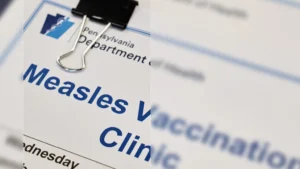
Addressing the public health community on NPR’s Morning Edition on November 17, Dr. Céline Gounder, KFF Health News editor-at-large for public health, delivered an urgent warning regarding the resurgence of measles in various parts of the United States. Once declared eliminated in the United States in 2000—thanks to a highly effective, decades-long vaccination campaign—measles has made a troubling comeback in recent years. This reversal is largely attributed to declining childhood vaccination rates, exacerbated by pandemic-related disruptions to routine preventative care and a measurable rise in vaccine hesitancy.
Measles is one of the most contagious infectious diseases known to medical science, capable of lingering in the air for up to two hours after an infected person has left a room. Public health experts emphasize that maintaining herd immunity against measles requires a community vaccination coverage rate of approximately 95 percent with the measles, mumps, and rubella (MMR) vaccine. However, recent data from the Centers for Disease Control and Prevention (CDC) indicates that kindergarten exemption rates for routine vaccinations have climbed to historic highs nationally, dropping well below the safety threshold in multiple states and local municipalities.
During her NPR segment, Dr. Gounder underscored the critical nature of these trends, noting that public health infrastructure is continually tested when communities drop their guard against historical pathogens. Healthcare systems are forced to expend significant resources on contact tracing and outbreak containment—efforts that could otherwise be dedicated to routine wellness and chronic disease management. Medical professionals continue to urge parents, school administrators, and policymakers to prioritize evidence-based immunization schedules to protect vulnerable populations, including infants too young to receive the vaccine and immunocompromised individuals.
The Crisis Facing Pediatric Intensive Care Units in Rural America
Shifting from national infectious disease trends to regional healthcare delivery, KFF Health News Montana correspondent Katheryn Houghton joined Montana Public Radio on November 16 to discuss the escalating crisis surrounding the closures of pediatric intensive care units (PICUs) across Montana and similar rural states. The fragility of rural healthcare infrastructure has long been a subject of study, but the compounding pressures of workforce shortages, inflationary operational costs, and declining patient volumes in sparsely populated areas have pushed several regional hospitals to a breaking point.
In vast states like Montana, the closure of specialized pediatric units forces families to travel hundreds of miles—often across hazardous mountain passes during winter weather—to access specialized pediatric critical care. This geographical isolation drastically alters the prognosis for critically ill children suffering from severe respiratory illnesses, trauma, or congenital complications, where every minute of delay in receiving advanced interventions can be life-altering.
Healthcare economists and hospital administrators point to a combination of inadequate Medicaid reimbursement rates, severe nurse and pediatric specialist shortages, and the high fixed costs of maintaining 24/7 pediatric intensive care capabilities as primary drivers of these closures. While large academic medical centers in urban hubs can absorb financial losses or cross-subsidize specialized departments through profitable elective surgeries, community and rural hospitals lack such fiscal cushions. Consequently, regional healthcare deserts are expanding, leaving vast geographic areas without immediate access to advanced pediatric life support.
Post-Election Healthcare Agendas and Democratic Legislative Priorities
On the legislative and political front, KFF Health News Georgia correspondent Briah Lumpkins appeared on WUGA’s The Georgia Health Report on November 13 to analyze the strategic direction of the Democratic Party following a campaign season heavily anchored by healthcare messaging. Access to affordable care, the protection of reproductive rights, the lowering of prescription drug costs, and the defense of the Affordable Care Act (ACA) served as central pillars for Democratic candidates nationwide.
With election cycles shifting the balance of power across various state legislatures and congressional delegations, analysts are closely monitoring how these campaign promises translate into actionable policy. In states like Georgia—a battleground with significant uninsured populations and a history of rejecting federal Medicaid expansion incentives under the ACA—healthcare remains a deeply polarizing yet intensely urgent issue for constituents.
Lumpkins discussed the policy mechanisms available to lawmakers seeking to expand healthcare access in restrictive political environments. These include leveraging federal funding opportunities, pursuing targeted state-level administrative reforms, and continuing to advocate for enhanced federal subsidies for marketplace insurance plans. As lawmakers return to legislative sessions, healthcare advocacy groups are mobilizing to hold elected officials accountable to the sweeping reform promises made on the campaign trail, particularly as federal COVID-19 pandemic-era Medicaid continuous enrollment provisions have fully phased out, leaving millions to navigate complex re-enrollment processes or transition to alternative coverage.
The Political Future of Medicare for All and Senate Dynamics in Michigan
Continuing the theme of electoral outcomes and healthcare policy, KFF Health News Michigan correspondent Kate Wells joined Michigan Public’s Stateside on November 10 to discuss the election of Abdul El-Sayed to the U.S. Senate and the broader political trajectory of his signature policy platform, "Medicare for All." El-Sayed, a prominent epidemiologist, former health director for the city of Detroit, and progressive champion, has long been a leading voice for single-payer healthcare reform in the United States.
The discussion on Stateside explored how El-Sayed’s ascension to the federal legislative stage could reignite national debates over the structural overhaul of the American health insurance system. While the concept of a single-payer government-run healthcare system enjoys substantial support among progressive wings of the Democratic Party, it simultaneously faces fierce opposition from hospital associations, private insurance companies, conservative lawmakers, and moderate Democrats who favor incremental reforms, such as strengthening the ACA or introducing a public option.
Proponents of Medicare for All argue that transitioning to a single-payer framework would eliminate administrative waste, decouple health insurance from employment, and guarantee comprehensive medical, dental, and vision coverage as a fundamental human right. Conversely, critics frequently cite the immense tax increases necessary to fund such a program, potential disruptions to existing employer-sponsored coverage enjoyed by millions of Americans, and the risk of reduced reimbursement rates for medical providers as insurmountable hurdles. Wells’ analysis highlighted the delicate ideological balancing act facing modern progressive legislators as they attempt to advance transformative structural changes within a deeply divided Congress.
Broader Implications and Future Outlook
The convergence of these four distinct reporting segments underscores the multifaceted nature of the American healthcare crisis. From the microscopic battle against re-emerging pathogens to the macro-level debates over single-payer economics and hospital funding, public health reporting remains essential in documenting the systemic stresses affecting citizens daily.
As the United States navigates the remainder of the decade, public health officials warn that addressing these intersecting challenges will require unprecedented cooperation between federal agencies, state governments, and healthcare providers. Whether through bolstering immunization rates to forestall outbreaks, financially stabilizing rural pediatric care to protect the nation’s youth, or debating structural overhauls to insurance markets, the decisions made by policymakers today will profoundly shape the health and economic security of generations to come. KFF Health News continues to monitor these developments, providing objective, data-driven journalism to inform the public and hold decision-makers accountable.