In a somber milestone for American public health, the Pan American Health Organization (PAHO) officially announced on Tuesday that the United States has lost its measles elimination status, a designation the nation held for more than a quarter-century. The declaration follows at least 12 months of sustained, person-to-person transmission of the virus across multiple states, officially signaling that the disease has become reestablished within the country. This reversal marks the end of an era of medical achievement and underscores a deepening crisis in national immunization coverage.
The loss of elimination status is not merely a bureaucratic designation; it represents a tangible failure to protect the most vulnerable members of society. As the virus circulates, the risk of exposure intensifies for infants who are too young to receive their first dose of the measles, mumps, and rubella (MMR) vaccine, as well as for immunocompromised individuals—including transplant recipients and cancer patients—whose medical conditions render them highly susceptible to complications.
A Chronology of a Public Health Retreat
The degradation of the nation’s measles-free status did not happen overnight, but rather through a steady erosion of herd immunity. In January 2025, when the current administration took office, the United States had enjoyed nearly a decade without a single measles-associated death. That safety net shattered in February 2025, when an unvaccinated child succumbed to the virus during a significant outbreak in West Texas.
Throughout 2025, the epidemiological situation deteriorated. By the end of that year, cases had begun to climb, prompting experts to warn that the nation’s progress was hemorrhaging. The situation escalated into a full-scale crisis in late 2026. November 2026, in particular, proved to be a tragic month for public health, as state after state reported fatalities that had not been seen in decades:
- New York: Authorities in Lewis County confirmed a child’s death from measles, the first such fatality in the state in over 30 years.
- Wisconsin: The state reported its first measles death since 1990—an infant—followed just eight days later by the death of a second child.
- Pennsylvania: The state became an epicenter of the current crisis, reporting two deaths early in November and confirming an eighth measles-associated death on November 18, the day after the PAHO announcement.
Data Discrepancies and Surveillance Challenges
A significant point of tension has emerged between state health departments and the federal government regarding the official death toll. As of mid-November 2026, state-level reporting from Pennsylvania, Wisconsin, and New York accounts for 11 measles-associated deaths. Conversely, the Centers for Disease Control and Prevention (CDC) has maintained a provisional national count of six deaths.
This discrepancy arises from differences in data processing and reporting criteria. The CDC relies primarily on national death certificate data, a process that is historically slow and prone to administrative lag. In contrast, state health departments often identify measles as a contributing factor through active outbreak investigations and real-time clinical reporting. Public health experts argue that the federal government must reconcile these reporting gaps to provide an accurate, transparent picture of the outbreak’s severity. Without a unified definition, the public is left with conflicting information, which further complicates efforts to mobilize an effective national response.
The Erosion of Vaccine Coverage
The root cause of this resurgence lies in the decline of routine immunization rates. According to CDC data, vaccination coverage among U.S. kindergartners plummeted from 95.2% during the 2019–2020 school year to 92.4% in 2025–2026. While a drop of less than three percentage points may seem modest, it represents approximately 280,000 children who lack the protection of the two-dose MMR series.

Because measles is exceptionally contagious—requiring vaccination rates of roughly 95% to maintain herd immunity—these pockets of unvaccinated individuals provide the fuel necessary for outbreaks to ignite and persist. Even in states with high aggregate coverage, localized "clusters" of low vaccination rates in specific school districts or neighborhoods act as incubators for the virus.
Addressing the Trust Deficit
The challenge of returning to elimination status is as much about communication as it is about clinical delivery. Recent survey data presented at IDWeek 2026 revealed a concerning lack of public trust in federal health agencies. While more than half of U.S. adults express confidence in the accuracy of the CDC’s vaccine information, only 30% identified the agency as their most trusted source when information conflicts arise.
Instead, the public remains most reliant on their personal physicians. This presents a clear path forward: empowering primary care providers with the time, resources, and evidence-based materials needed to address patient concerns. When parents are hesitant, they are often seeking nuanced answers regarding vaccine side effects, the evolution of clinical recommendations, and the science behind the schedules. Without the capacity for clinicians to engage in meaningful, time-intensive consultations, the "vaccine confidence" gap is likely to widen.
Policy Recommendations for Congress
As the new Congress prepares to take up its first funding bills, the focus must shift from reactive crisis management to sustained, proactive infrastructure support. Experts suggest a three-pronged legislative strategy to reclaim the nation’s measles-free status:
- Protect and Expand the Vaccines for Children Program: This foundational program must remain insulated from political volatility and receive increased funding to support outreach in communities with the lowest coverage rates.
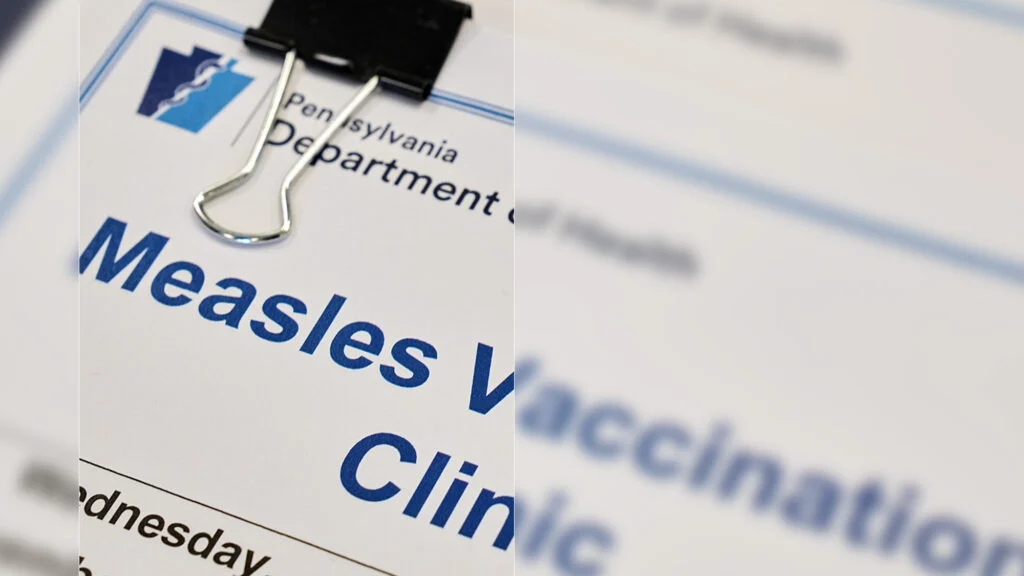
- Infrastructure for Public Health Departments: Funding must be earmarked for local health departments to hire and retain staff who can conduct proactive outreach, such as contacting families of children with missing doses, offering flexible vaccination appointments, and managing rapid-response teams. The success of Pennsylvania’s pop-up clinics, which administered over 7,100 doses in the wake of their outbreak, demonstrates that such resources are effective when deployed early.
- Legislative Oversight and Transparency: The House and Senate health committees should conduct public hearings to hold the Department of Health and Human Services (HHS) and the CDC accountable. Congress should require that any changes to vaccine recommendations be accompanied by a clear, public explanation of the supporting evidence, the consultation process, and the reasoning behind departures from scientific advisory opinions.
The Path to Re-elimination
Regaining elimination status is a rigorous process. The United States must demonstrate at least 12 months of interrupted, sustained transmission, validated through reliable, high-quality surveillance data. Achieving this requires a level of coordination between state and federal authorities that has, thus far, been insufficient.
The CDC should be directed to report on a quarterly basis regarding the progress of MMR coverage in high-risk areas. Furthermore, the agency must provide detailed information on how quickly suspected cases are being investigated and where the primary chains of transmission remain active. By codifying these reporting requirements, Congress can ensure that the nation’s response is data-driven rather than purely reactive.
The current situation is a sobering reminder that public health progress is not permanent. The resurgence of measles—a disease for which a safe, highly effective, and widely available vaccine exists—serves as a critical indicator of the state of the American medical system. For the families who have lost children to a preventable illness, the bureaucratic loss of "elimination status" is a secondary tragedy to the personal, irreplaceable losses they have suffered. Addressing this crisis requires a commitment to restoring faith in public health, strengthening the infrastructure of local clinics, and ensuring that no child goes unprotected due to a lack of access or information. The time to act is before the next outbreak, not after the next funeral.