
The political landscape has been a turbulent terrain for JD Vance, the junior senator from Ohio and potential vice-presidential nominee for Donald Trump, who has found himself the subject of sharp critiques and humorous dissection by prominent late-night television hosts. A recent confluence of events, including Vance’s defense of controversial statements made by Donald Trump regarding Pope Francis and the ongoing fallout from revelations about Trump’s past association with Jeffrey Epstein, has provided ample fodder for hosts like Jimmy Kimmel and Stephen Colbert. These comedians have leveraged Vance’s perceived struggles to highlight what they describe as the senator’s increasingly challenging role as a loyal defender of the former president.
Vance’s recent appearance at a Turning Point USA conference in Athens, Georgia, served as a focal point for the late-night monologues. During his address, Vance attempted to navigate the delicate task of refuting Pope Francis’s criticisms of Donald Trump and downplaying the significance of Trump’s long-standing relationship with the convicted sex offender Jeffrey Epstein. These efforts, however, were met with skepticism and derision from the late-night hosts, who characterized Vance’s performance as a difficult and perhaps even futile endeavor.
Polling Data and Public Perception
Jimmy Kimmel, host of "Jimmy Kimmel Live!", directly addressed Vance’s perceived lack of popular appeal, citing polling data that reportedly places the Ohio senator as the "least popular vice president in more than two decades." This assertion, if accurate and verifiable from reputable polling sources, underscores a significant challenge for Vance as he seeks to solidify his position within the Republican party and potentially appeal to a broader electorate. Kimmel’s sarcastic observation, "Americans don’t seem to be responding to JD infectious charisma. Maybe it’s time for a new eyeliner," served as a pointed jab at Vance’s public persona and his effectiveness in connecting with voters. The reference to "eyeliner" appears to be a thinly veiled, albeit crude, allusion to Vance’s physical appearance, a common tactic in political satire.
Kimmel further amplified his critique by playing a clip of Vance’s speech at the Turning Point USA event, which he described as having a "sparsely-attended" and "sitting room-only crowd." The host juxtaposed the size of the audience with the perceived importance of Vance’s role, humorously suggesting that a documentary about Melania Trump drew a larger audience. This observation, if factually supported by comparisons of attendance figures or media coverage, would imply a significant disconnect between Vance’s perceived political standing and the actual public engagement he garners. The implication is that Vance’s platform, despite its association with a prominent political figure, is failing to generate substantial interest.
Navigating Controversial Defenses
The core of the late-night hosts’ mockery stemmed from Vance’s attempts to defend Donald Trump against a series of highly charged criticisms. Kimmel outlined Vance’s purported "rough week," enumerating his challenges: "He failed to make a deal to end the war in Iran. He had to defend Trump bashing the pope and the AI Jesus stuff. And now he’s made it his job to try to pretend his boss wasn’t a close friend of the world’s most notorious pedophile." This summary highlights the multifaceted and often ethically complex nature of Vance’s role as a Trump surrogate.
The specific controversies cited by Kimmel are significant. Trump’s past criticisms of Pope Francis have drawn considerable attention, particularly given the Pope’s global influence and moral authority. The "AI Jesus stuff" likely refers to the controversial use of artificial intelligence to generate images of Jesus, which Trump has amplified. However, the most explosive of Vance’s defensive duties, as highlighted by Kimmel, involves addressing Trump’s decades-long association with Jeffrey Epstein, a convicted sex offender whose activities have been the subject of intense scrutiny and legal proceedings.
The Epstein Association: A Difficult Defense
Vance’s attempt to distance Trump from Epstein was particularly targeted by Kimmel. After playing a clip of Vance’s explanation, which suggested that Trump and Epstein were not "best friends," Kimmel retorted with a sarcastic quip: "They weren’t best friends. They were just extremely horny acquaintances together." This highly charged and informal language reflects the satirical nature of late-night comedy, aiming to provoke a visceral reaction from the audience. Kimmel further speculated on the nature of conversations between Trump and Vance regarding Epstein, suggesting that Vance was fabricating his defense: "By the way, do you think Trump and JD Vance have ever had a conversation about this where JD asked him, ‘What actually happened with Jeffrey Epstein?’ Not a chance. He’s pulling every bit of this out of his ass.” This rhetorical question implies a deep lack of genuine understanding or transparency on Vance’s part regarding the sensitive issue.
Stephen Colbert’s Take on Faith and Loyalty
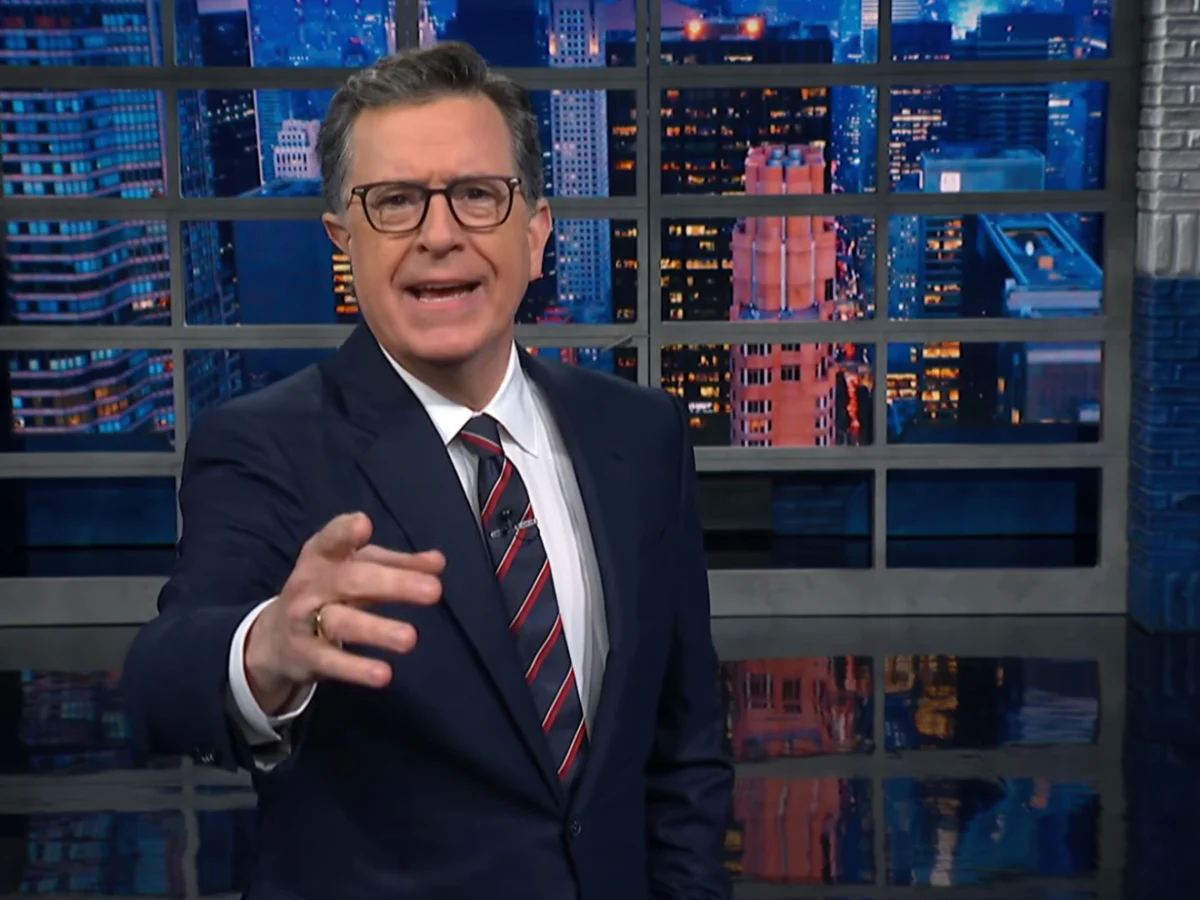
Stephen Colbert, host of "The Late Show," offered his own critical perspective on Vance’s predicament, framing it as a duty to "receive a swift kick in the nuts." Colbert then focused on Vance’s critique of Pope Francis, playing a clip where Vance asserted that "the pope should be careful when he talks about matters of theology." Vance’s statement, implying that the pontiff’s theological pronouncements should be subject to the same caution as a U.S. vice president’s policy statements, was met with disbelief by Colbert.
Colbert, who identifies as Catholic, responded with a humorous yet pointed critique of Vance’s perceived overreach. He stated, "I know you’re Catholic. But you joined in 2019. I’ve been genuflecting since the mid-1960s and let me tell you brother, I think you’re out over your Catholic skies here.” This statement, delivered with Colbert’s signature blend of wit and genuine observation, questions Vance’s authority to lecture the Pope on theological matters, particularly given the host’s longer and more personal engagement with the faith. Colbert concluded his segment with a biblical allusion, suggesting, “You know who left the last supper early? Judas.” This comparison, while harsh, implies that Vance’s actions are a form of betrayal or disloyalty, not just to the Catholic faith but perhaps to a more universal sense of ethical conduct.
Background and Context
The Turning Point USA (TPUSA) organization is a conservative youth group that hosts events and conferences aimed at mobilizing young conservatives. Its conferences often feature prominent Republican figures and are known for their enthusiastic, often ideologically charged, atmospheres. Vance’s appearance at such an event was intended to galvanize support among a key demographic within the Republican base. However, the context of his remarks—defending Trump against criticisms from the Pope and addressing the Epstein scandal—suggests that Vance was tasked with managing highly sensitive and potentially damaging narratives.
Donald Trump’s relationship with Jeffrey Epstein dates back several decades, with numerous photos and anecdotes illustrating their past interactions. While Trump has largely sought to minimize the significance of this association in recent years, the persistent revelations and ongoing investigations into Epstein’s activities continue to cast a shadow. Similarly, Trump’s often contentious relationship with Pope Francis, marked by disagreements on issues ranging from immigration to climate change, has been a recurring theme in political discourse. Vance’s role as a defender of Trump in these instances places him in a position of having to rationalize or dismiss criticisms that many find difficult to overlook.
Broader Implications and Analysis
The late-night hosts’ critiques of JD Vance, while couched in humor, reflect a broader concern about the ethical and political implications of his role as a vocal defender of Donald Trump. The challenges Vance faces in defending Trump on issues like the Epstein association and criticism of the Pope highlight the increasing difficulty for politicians to navigate the complexities of Trump’s past and present controversies.
Vance’s performance at the Turning Point USA conference and the subsequent commentary from late-night hosts suggest a potential disconnect between the Republican party’s base and the broader American electorate. If polling data indicates Vance’s unpopularity, it raises questions about his effectiveness as a potential running mate and his ability to broaden Trump’s appeal. Furthermore, the hosts’ commentary on Vance’s attempts to defend Trump’s alleged past associations with Epstein touches upon a deeply sensitive issue that resonates with many voters, particularly in the context of the MeToo movement and ongoing discussions about accountability for powerful individuals.
The late-night monologues, in their satirical fashion, serve as a form of public commentary, reflecting and shaping public opinion. The sustained focus on Vance’s defensive maneuvers underscores the challenges he faces in presenting a credible and appealing image to the electorate. As the political landscape continues to evolve, JD Vance’s ability to effectively navigate these controversies and connect with a wider audience will be crucial to his political future and his role within the Republican party. The ongoing narrative suggests a critical juncture for the senator, where his loyalty to Donald Trump is being tested, and his public persona is under intense scrutiny.










Leave a Reply