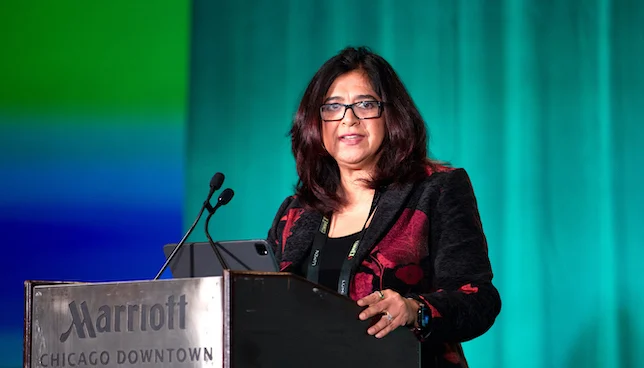
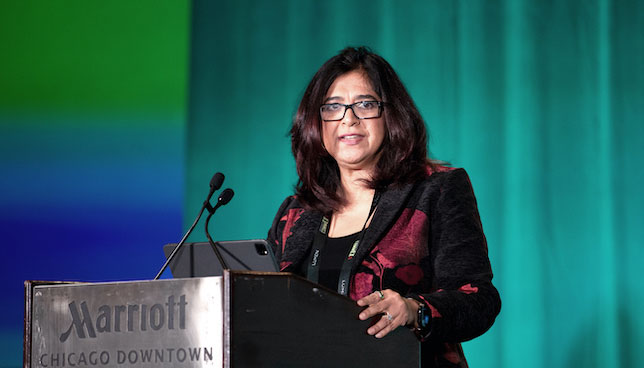
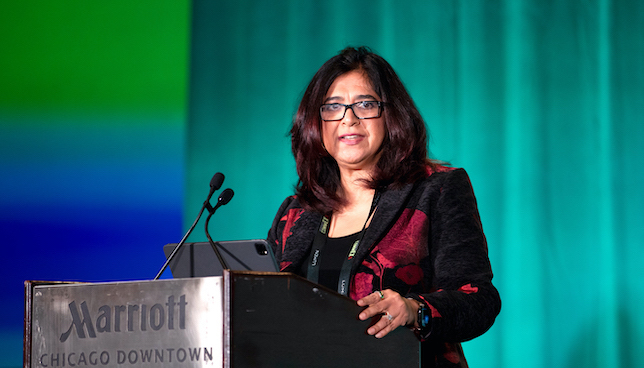
October 2026 marks a significant watershed moment in the history of global research and education networking as Internet2 celebrates its 30th anniversary. Coinciding with this milestone is the completion of the first year of Tripti Sinha’s tenure as president and CEO. As the organization reflects on three decades of facilitating high-speed data transfer for the academic and scientific communities, it simultaneously pivots toward a future defined by emerging breakthrough technologies, massive data sets, and a diversifying membership base.
The transition to Sinha’s leadership represents more than a change in management; it signifies a commitment to the foundational principles that necessitated the creation of the organization in 1996. Sinha, who previously served as the chief technology officer at the University of Maryland, has been a central figure in the research and education (R&E) community since the inception of Internet2. Her appointment reflects a strategic effort to maintain the organization’s identity as a member-driven nonprofit while navigating an increasingly commercialized digital landscape.
A Chronology of Innovation: From NSFNET to the Hyperscale Backbone
To understand the current state of Internet2, one must revisit the mid-1990s. The retirement of the National Science Foundation Network (NSFNET) served as the primary catalyst for the organization’s birth. At the time, as the commercial internet began its rapid expansion, higher education institutions identified a critical vulnerability: the lack of a dedicated, high-performance network infrastructure tailored specifically for collaborative scientific research.
In 1996, approximately 30 research universities joined forces to establish a network that would function outside the constraints of commercial traffic. This initiative was designed to support high-bandwidth applications, such as distributed computing, remote instrumentation, and massive data visualization, which the nascent commercial internet could not reliably sustain.
Throughout the 2000s and 2010s, Internet2 evolved from a experimental backbone into a critical national infrastructure. It facilitated the development of the "Next Generation Network" (NGN) and later, the "Advanced Layer 2 Service" (AL2S), allowing researchers to provision dedicated circuits for data-intensive projects. By the 2020s, the organization had fully transitioned into a high-capacity, software-defined network, effectively becoming the hyperscale backbone of American higher education and global scientific collaboration.
The Current Ecosystem: Data and Membership Growth
The modern landscape of Internet2 has expanded far beyond its original roster of research universities. As of October 2026, the organization supports a diverse community of 517 members. This growth reflects the increasing intersection of academic research, federal oversight, and private-sector innovation.
The current membership composition includes:
- 352 Higher Education Institutions: The core of the R&E mission, focusing on pedagogical and research excellence.
- 62 Industry Members: Corporations involved in technology, telecommunications, and cloud services that collaborate on network innovations.
- 46 Regional R&E Network Members: The local and state-level infrastructure providers that aggregate traffic and provide the "last mile" connectivity to campus hubs.
- 34 Federal Affiliates: Agencies, including national laboratories, that rely on Internet2 for secure and rapid transmission of government-funded research data.
- 23 Nonprofit Affiliates: Organizations that align with the research and education mission, further broadening the ecosystem.
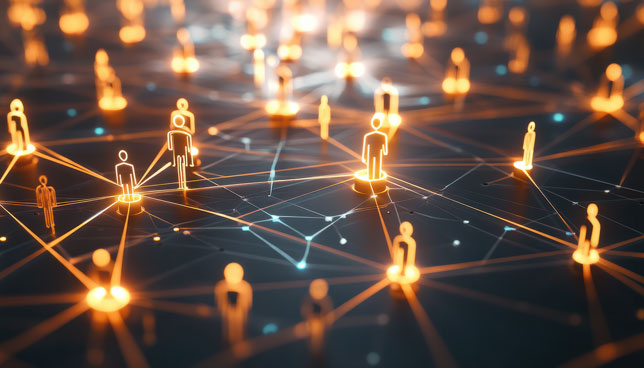
This diversity is not merely a quantitative achievement; it represents a strategic shift toward a "federated" approach to research. By integrating industry and federal partners, Internet2 has effectively reduced the latency between academic discovery and practical application, a necessity in fields such as genomics, high-energy physics, and artificial intelligence.
Strategic Planning in a New Era
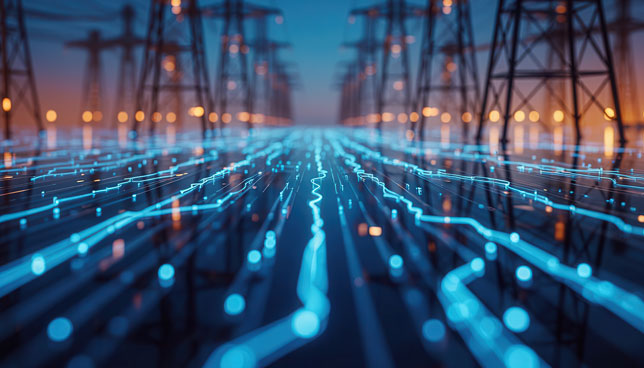
In her first year as CEO, Sinha has overseen a comprehensive strategic planning process designed to address the challenges of the late 2020s. Central to this strategy is the "Network of the Future" initiative, which focuses on automated provisioning, increased security protocols to counter modern cyber threats, and the integration of edge computing.
The strategic planning process involved extensive consultation with the membership base, reflecting the organization’s bottom-up governance model. "Internet2 began as a national backbone for research and education," Sinha noted during her recent plenary session. "But much has happened from the time it was first conceived to what it is today." The current strategic vision emphasizes that while the network is the foundation, the organization’s true value lies in the community of researchers and practitioners who use it to solve global problems.
Implications for Research and Education
The impact of Internet2 on the global scientific community is profound. By providing a high-capacity, low-latency environment, the network enables the real-time sharing of data from facilities such as the Large Hadron Collider, telescope arrays, and global climate monitoring stations.
However, the organization faces significant pressures. As data sets grow into the exabyte scale, the demand for bandwidth is relentless. Furthermore, the rise of artificial intelligence and machine learning (AI/ML) has placed unprecedented requirements on infrastructure, necessitating more sophisticated traffic engineering.
"The breakthrough technologies I am most excited about are those that fundamentally change how we compute," Sinha remarked. She pointed to the integration of quantum networking and the maturation of programmable network fabrics as key areas for the next decade. These technologies will likely define the "post-Internet2" era, where the network becomes not just a conduit for data, but an active, intelligent participant in the research process itself.
Analysis of the Leadership Transition
Industry analysts and academic stakeholders view Sinha’s leadership as a stabilization and revitalization effort. By leveraging her extensive experience as a CTO in a university setting, she possesses a unique understanding of the "pain points" experienced by campus IT departments. This perspective is vital as Internet2 attempts to balance the needs of elite research universities with those of smaller, resource-constrained colleges.

The challenge ahead for the organization lies in maintaining its neutrality and mission-driven focus while participating in an ecosystem increasingly dominated by massive commercial cloud providers. The ability of Internet2 to provide a "trusted" environment—free from the data-mining and commercial incentives of public providers—remains its most significant competitive advantage.
Looking Toward the Future
As Internet2 enters its fourth decade, the organization finds itself at a crossroads. The fundamental requirement for a high-performance, private backbone for research remains as valid in 2026 as it was in 1996, but the technologies required to sustain that backbone are shifting toward software-defined control and AI-driven optimization.
Sinha’s vision for the next era involves deepening the collaborative ties between the 517 members. By fostering an environment where federal agencies and academic researchers share resources more seamlessly, Internet2 is positioning itself to be the primary engine for domestic innovation. The anniversary celebrations serve as both a retrospective on the success of the R&E model and a challenge to continue that tradition in an era of rapid technological acceleration.
The coming years will likely see a renewed focus on network security and resilience, as the research data handled by Internet2 becomes increasingly sensitive and valuable. For a community that has spent 30 years building a digital commons for the benefit of the public good, the mission remains unchanged: to provide the infrastructure that allows human knowledge to advance at the speed of light.
With a seasoned leader at the helm and a sprawling, diverse network of members, Internet2 is poised to continue its role as the silent but essential backbone of the scientific and educational progress that will define the next 30 years. As Sinha concludes her first year, the message to the community is clear: the architecture of the past has been built, but the infrastructure for the future is currently under construction.