

The modern digital threat landscape is undergoing a profound structural transformation, driven by the simultaneous acceleration of artificial intelligence and the looming operational horizon of quantum computing. According to comprehensive new research published in the 2026 Thales Data Threat Report: Quantum & AI Trends, these two seismic technological shifts are placing unprecedented strain on corporate security architectures, forcing enterprise leaders to rethink their defensive postures from the ground up. The study, which surveyed 3,120 IT security and management professionals across 20 distinct global markets and was conducted by 451 Research by S&P Global, reveals a staggering 98% of organizations are actively evaluating how artificial intelligence and quantum computing intersect to alter their overall risk profiles.
This convergence is no longer a theoretical concern confined to academic laboratories or futuristic think tanks. As enterprises race to integrate generative models, machine learning pipelines, and massive cloud-native data repositories into their core operations, they are inadvertently exposing themselves to novel attack surfaces. Simultaneously, the impending reality of cryptanalytically relevant quantum computers threatens to render current asymmetric encryption standards obsolete overnight. This dual-front pressure has ignited a scramble for specialized resources, evidenced by 30% of surveyed organizations reporting significant, dedicated increases in their security budgets explicitly earmarked for artificial intelligence defenses.

The Dual-Edge Sword of Quantum Computing
While quantum computing is frequently framed in cybersecurity discourse as an existential threat to modern encryption—capable of breaking widely used cryptographic algorithms like RSA and ECC via Shor’s algorithm—industry perspectives are notably more nuanced. The Thales report highlights that enterprise technology leaders recognize the immense computational upside of quantum mechanics. For instance, 57% of survey respondents believe that quantum computing will fundamentally enhance and accelerate machine learning workflows, while 54% anticipate that the technology will enable hyper-advanced, real-time simulations of complex systems, ranging from molecular drug discovery to global supply chain logistics.
However, this technological optimism coexists with deep anxiety regarding implementation timelines and readiness. Security architects are caught in a strategic paradox: they must harness the predictive and generative power of AI to combat automated, machine-speed cyberattacks, while simultaneously preparing their data estates for the "Q-Day" scenario—the point at which quantum machines can decrypt legacy data captured and stored by threat actors today. This phenomenon, often described as "harvest now, decrypt later," means that sensitive data intercepted across corporate networks right now remains vulnerable to future quantum decryption efforts if it is not secured with quantum-resistant, or post-quantum, cryptography today.
Cloud Infrastructure as the Primary Battlefield
As organizations pivot toward AI-driven business models, the geography of enterprise data has shifted decisively toward the cloud. Consequently, cloud environments have become the primary battleground for threat actors seeking to compromise corporate assets, harvest proprietary algorithms, or steal the massive training datasets required to fuel modern large language models.
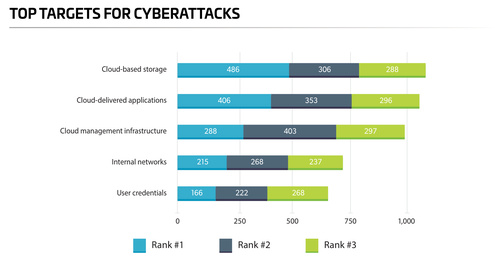
According to the 2026 findings, cloud-based storage, cloud-delivered applications, and cloud management infrastructure emerged as the three most frequently targeted asset types by malicious actors, cited by 35%, 34%, and 32% of respondents, respectively. This acute vulnerability stems directly from the nature of AI adoption, which necessitates the aggregation, centralization, and constant movement of vast quantities of structured and unstructured data across disparate cloud environments. The rapid expansion of AI infrastructure has frequently outpaced the implementation of centralized security controls, creating visibility gaps that sophisticated threat actors are eager to exploit.
Faced with these complex threats, organizations are increasingly looking to their cloud service providers (CSPs) for foundational defense mechanisms. The report indicates that 67% of enterprises have invested heavily in their cloud provider’s native, AI-specific security tools. This represents a notable shift compared to the 63% who rely on traditional, established cybersecurity vendors for comparable protections. Many organizations are adopting a multi-layered procurement strategy, simultaneously utilizing solutions from security startups, major foundational model providers, and internally developed custom controls to secure their cloud perimeters.
The Encryption Deficit: A Worsening Trend
Despite the escalating threat landscape and the widespread recognition of cloud vulnerabilities, enterprise data encryption coverage paints a concerning picture of unpreparedness. The Thales research reveals a startling regression in foundational data hygiene: only 7% of organizations reported encrypting more than 80% of their sensitive cloud data, down from previous benchmarks, while just 29% encrypt more than 60%.

Most alarmingly, the report’s long-term comparative data shows that the average share of sensitive cloud data protected by encryption has actually declined, falling to 47% in 2026 from 51% in 2025. This downward trend directly mirrors findings from the 2025 Thales study, which warned that surging investments in artificial intelligence security were actively displacing and cannibalizing existing security budgets, leaving traditional data-centric protections such as encryption and tokenization underfunded and neglected.
This regression highlights a dangerous operational disconnect within corporate boardrooms. While executives are willing to allocate capital toward high-profile, cutting-edge AI security tools to satisfy board-level innovation mandates, the fundamental hygiene practices required to secure underlying data assets—such as robust encryption key management and data discovery—are being deprioritized.
Misaligned Priorities: Spending Versus Governance
The friction between rapid AI deployment and effective risk management is further illustrated by examining how organizations measure the success of their artificial intelligence initiatives. While AI security ranked as the second-highest prioritized security spending category overall—trailing only broader cloud security expenditures—protecting data against loss and ensuring regulatory compliance ranked near the bottom of organizational success metrics.

When asked to identify the primary criteria used to evaluate the success of AI projects, protecting data and mitigating noncompliance risks placed a distant sixth out of seven options, cited by only 35% of respondents. In stark contrast, metrics tied to top-line business value and operational efficiency dominated the criteria list. Improving the overall customer experience led all success measures at 68%, closely followed by reducing employee toil and friction through advanced task automation at 63%.
This prioritization mismatch creates fertile ground for governance failures. When business units are incentivized to deploy AI rapidly to boost customer satisfaction and drive efficiency, data governance and security protocols are frequently treated as administrative bottlenecks rather than essential operational guardrails.
This dynamic is reflected in the primary inhibitors cited by enterprises attempting to scale their artificial intelligence initiatives. Poor data quality and inadequate initial data governance emerged as the single greatest barrier to AI adoption, cited by 65% of survey participants. Closely following this was the acute security risk posed by exposed or unmanaged data, noted by 61% of respondents. Furthermore, 51% of IT professionals reported that their internal AI initiatives were moving forward at a velocity that made it virtually impossible for security teams to properly audit, monitor, and secure them.

Chronology of the Threat Landscape and Industry Evolution
To understand the current state of enterprise cybersecurity in 2026, it is necessary to examine the rapid evolutionary arc that has characterized the past several years:
- 2023–2024 (The Generative AI Gold Rush): Following the mass commercialization of generative AI models, enterprises rushed to deploy chatbots, automated coding assistants, and internal knowledge retrieval systems. Security teams largely operated in a reactive mode, scrambling to draft acceptable use policies while employees freely uploaded proprietary corporate data into public-facing AI platforms.
- 2025 (The Budgetary Squeeze and Cloud Realities): Research from mid-2025 highlighted a critical turning point. While security budgets began pivoting toward AI protection, this spending largely came at the expense of established security disciplines. Data encryption rates dipped to 51% on average, and organizations realized that securing cloud perimeters against AI-driven automated attacks required entirely new paradigms of visibility and access control.
- 2026 (The Quantum Convergence and Governance Reckoning): The current landscape is defined by the compounding pressures of artificial intelligence integration and quantum risk awareness. With 98% of IT leaders now evaluating the intersection of AI and quantum threats, the conversation has shifted from speculative experimentation to urgent infrastructure remediation. However, persistent gaps in data encryption (dropping further to 47%) and foundational data governance continue to expose enterprises to severe operational, regulatory, and financial vulnerabilities.
Broader Implications and Industry Analysis
The convergence of artificial intelligence and quantum risks marks a definitive inflection point for the global cybersecurity industry. For decades, enterprise security strategies have been largely reactive, designed to patch known vulnerabilities, protect defined network perimeters, and respond to human-executed attacks. However, the rise of machine-speed AI threats—coupled with the looming cryptographic obsolescence threatened by quantum computing—renders traditional, perimeter-based security models obsolete.
Industry analysts emphasize that mitigating these multifaceted risks will require a fundamental philosophical shift toward data-centric security architectures. Rather than relying solely on firewalls, endpoint detection, and cloud provider perimeter tools, organizations must embrace a zero-trust model rooted in pervasive encryption, automated cryptographic agility, and rigorous data governance.

Cryptographic agility—the ability of an organization to rapidly update, swap, or upgrade its encryption algorithms without redesigning underlying software systems—is rapidly emerging as the holy grail of modern security preparedness. As quantum computing draws closer to commercial viability, organizations that fail to build cryptographic agility into their cloud and AI pipelines today will find themselves catastrophically exposed tomorrow.
Ultimately, the findings from the 2026 Thales Data Threat Report serve as a stark warning to enterprise leadership. The race to achieve AI-driven efficiencies and market dominance cannot succeed if it is built on a foundation of eroding data hygiene. Until corporate boards and C-suite executives align their spending priorities with rigorous data governance and comprehensive encryption practices, the dual threats of advanced artificial intelligence and quantum computing will continue to exploit the weakest links in the modern digital enterprise.









