
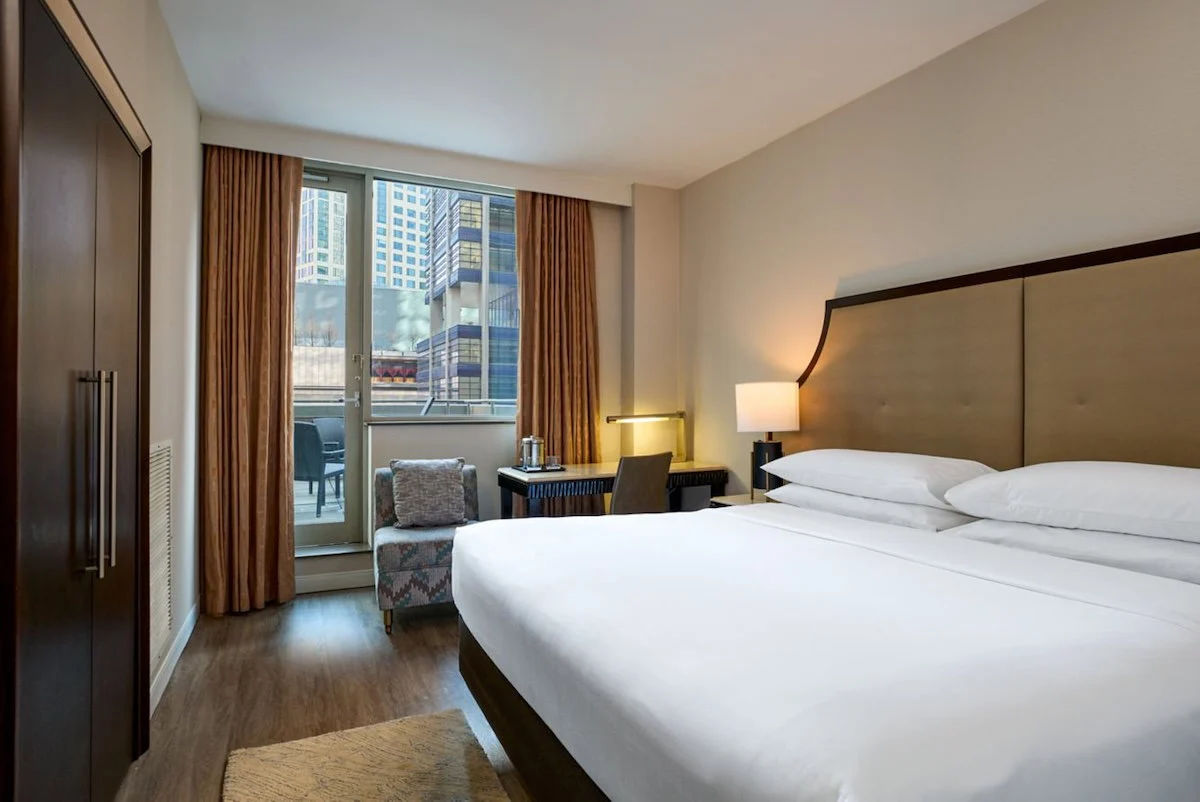
The intersection of loyalty program guarantees and day-of hotel operations came under scrutiny following an incident involving a Marriott Bonvoy Titanium Elite member at the Sheraton Brooklyn. The traveler, who had secured a one-night reward stay using points during the peak of the New York City summer, was confronted with a systemic property failure that ultimately exposed vulnerabilities in how major hotel chains manage overbookings, maintenance emergencies, and elite guest compensation.
What began as a standard summer getaway turned into a multi-week customer service dispute. The case highlights ongoing friction between corporate loyalty promises and individual franchise property practices, raising questions about the enforceability of top-tier elite benefits when properties experience sudden operational failures.
The Booking and Arrival: A Sweltering Summer Night in Brooklyn
In October 2025, the affected traveler planned ahead for a summer excursion to New York City, booking a one-night reward reservation for Thursday, June 25, 2026, at the Sheraton Brooklyn. The cost for the room was established at 37,000 Marriott Bonvoy points—a standard rate for the property during a high-demand travel period. As a Marriott Bonvoy Titanium Elite member, the guest held expectations of recognized status, reliable property conditions, and adherence to published corporate guarantees.
Upon arriving late in the evening on June 25, the traveler was met with an unexpected hurdle at the front desk. Staff members informed the guest that the hotel was experiencing a total failure of its air conditioning system, leaving zero rooms with functional cooling available for occupancy. Given that late June in New York City is characterized by high temperatures and severe humidity, accepting a room without air conditioning was functionally impossible for a comfortable stay.

Faced with this predicament, the front desk staff offered an immediate alternative: the guest could be "walked" next door to the Aloft Brooklyn, a sister property under the Marriott umbrella. Assuming that this involuntary relocation due to uninhabitable room conditions would trigger the Marriott Ultimate Reservation Guarantee—a core benefit designed to protect elite members when a hotel cannot honor a confirmed reservation—the guest agreed to the relocation to secure a habitable room for the night.
The Financial Discrepancy: Unbeknownst Rebooking and Higher Point Charges
The primary grievance emerged not from the relocation itself, but from the financial and administrative execution that followed behind the scenes. Without the guest’s explicit knowledge or consent at the time of check-in, the hotel handled the transfer by canceling the original 37,000-point reservation and issuing a brand-new booking at the adjacent Aloft property.
Rather than honoring the original point value or absorbing the cost of the property failure, the system charged the market rate for the new room, amounting to 52,000 points. The traveler was initially refunded the original 37,000 points, only to be debited 52,000 points for the replacement accommodation. In effect, the guest was penalized with a 15,000-point surcharge because the Sheraton Brooklyn could not provide a room with working air conditioning.
Under the Marriott Bonvoy loyalty structure, members holding Titanium Elite status rely on predictability and transparency. Discovering that an involuntary move due to property negligence had resulted in a higher point expenditure without prior disclosure prompted the guest to escalate the matter through official channels.
A Seven-Week Customer Service Ordeal
Resolving the billing discrepancy and seeking the appropriate compensation proved to be a protracted administrative challenge. Beginning immediately after the stay, the guest attempted to contact Marriott customer service on a weekly basis, enduring a frustrating cycle of delayed communications and administrative roadblocks that lasted approximately seven weeks.

During multiple interactions, customer service representatives reported that they were entirely unable to reach the Sheraton Brooklyn management or front desk staff. Representatives stated that outbound calls to the property went unanswered because the hotel’s internal phone systems were allegedly not functioning properly. This communication breakdown between corporate support and the individual franchise location created a prolonged stalemate, leaving the guest’s case open and unresolved.
It was not until the intervention of Marriott’s specialized Case Resolution department that the communication barrier was bypassed, though the final outcome fell short of the guest’s expectations.
Evaluating the Marriott Ultimate Reservation Guarantee
The core of the dispute centers on the interpretation and application of the Marriott Ultimate Reservation Guarantee. The policy is designed to provide specific financial and point-based compensation to Platinum, Titanium, and Ambassador Elite members when a hotel is unable to honor a confirmed reservation, forcing the guest to walk to an alternative property.
For brands operating under Sheraton’s tier within the Marriott portfolio, the published guarantee typically dictates that if a hotel cannot honor a reservation, it must pay for the guest’s accommodations nearby, compensate the guest for the inconvenience, and provide a fixed cash and point payout—often cited as up to $200 USD plus 90,000 Marriott Bonvoy points, depending on the specific brand tier and circumstances of the walk.
However, Marriott’s Case Resolution department ultimately denied the application of the Ultimate Guarantee. The corporate justification rested on a technicality: because the guest physically accepted the alternative room at the Aloft next door, corporate management deemed the relocation a voluntary or successfully mitigated accommodation swap rather than an unfulfilled walk under the strict parameters of the guarantee policy.

Furthermore, despite acknowledging the unauthorized point differential, Marriott customer service initially offered a goodwill gesture of 20,000 points, but refused to reinstate the original 37,000-point rate or provide the standard guarantee compensation. When accounting for the net point deductions and credits, the final compensation rendered to the elite member amounted to a fraction of what was expected, leaving the guest with a net gain of only 5,000 points relative to the original booking value.
Broader Implications for Hotel Loyalty Programs
This incident brings to light several systemic vulnerabilities within modern hotel franchise models and loyalty program administration:
- Franchise Accountability vs. Corporate Policy: Individual franchise properties maintain independent management structures, maintenance teams, and front desk operations. When critical infrastructure—such as HVAC systems—fails during peak weather events, corporate loyalty desks often struggle to enforce uniform compliance or secure direct accountability from franchise operators.
- Communication Silos: The inability of Marriott corporate customer service to reach the Sheraton Brooklyn property manager or front desk via telephone for seven weeks illustrates a concerning breakdown in internal communication channels. Such delays undermine customer trust and prolong minor administrative errors into major consumer relations issues.
- Transparency in Relocation Procedures: The practice of canceling an existing reward reservation and rebooking a guest at a higher market-rate property without explicit, upfront disclosure sets a precarious precedent. If properties can unilaterally shift guests to more expensive alternate rooms and pass the increased point or cash cost onto the consumer under the guise of "resolving" a maintenance failure, the protective value of advance bookings is significantly diminished.
- The Erosion of Elite Value: For frequent travelers who maintain top-tier status through substantial annual nights and spending, the primary incentive is elite recognition and guaranteed service recovery when things go wrong. Incidents where high-status members encounter administrative resistance and diminished compensation can lead to brand fatigue and prompt travelers to evaluate competing hospitality portfolios.
Conclusion and Next Steps
Frustrated by the resolution process and the final corporate response, the traveler documented the correspondence and submitted the details to travel industry analysts and public forums to highlight the challenges of navigating hotel customer service disputes.
While the guest ultimately avoided a direct financial loss in terms of cash out-of-pocket, the psychological toll of a seven-week administrative battle, combined with the opaque handling of point valuations during a property emergency, underscores a widening gap between published loyalty guarantees and operational reality in the hospitality sector. As major hotel chains continue to expand their franchise footprints, the enforcement of consistent service standards remains a critical area for consumer scrutiny.









Leave a Reply