
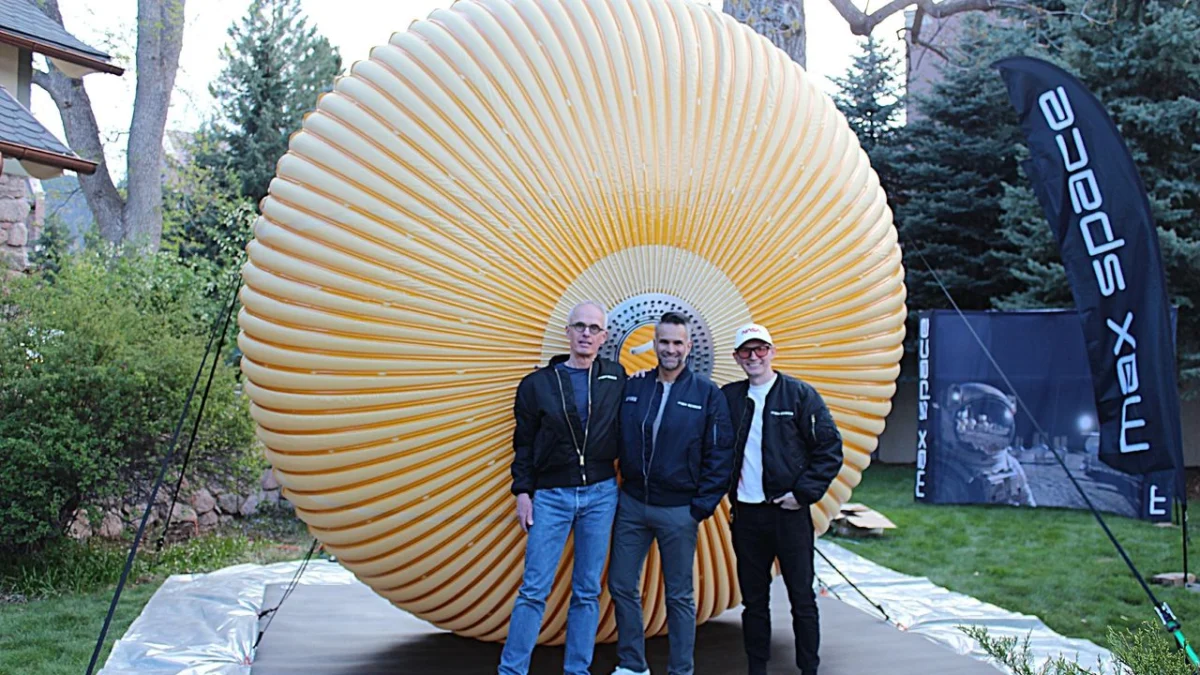
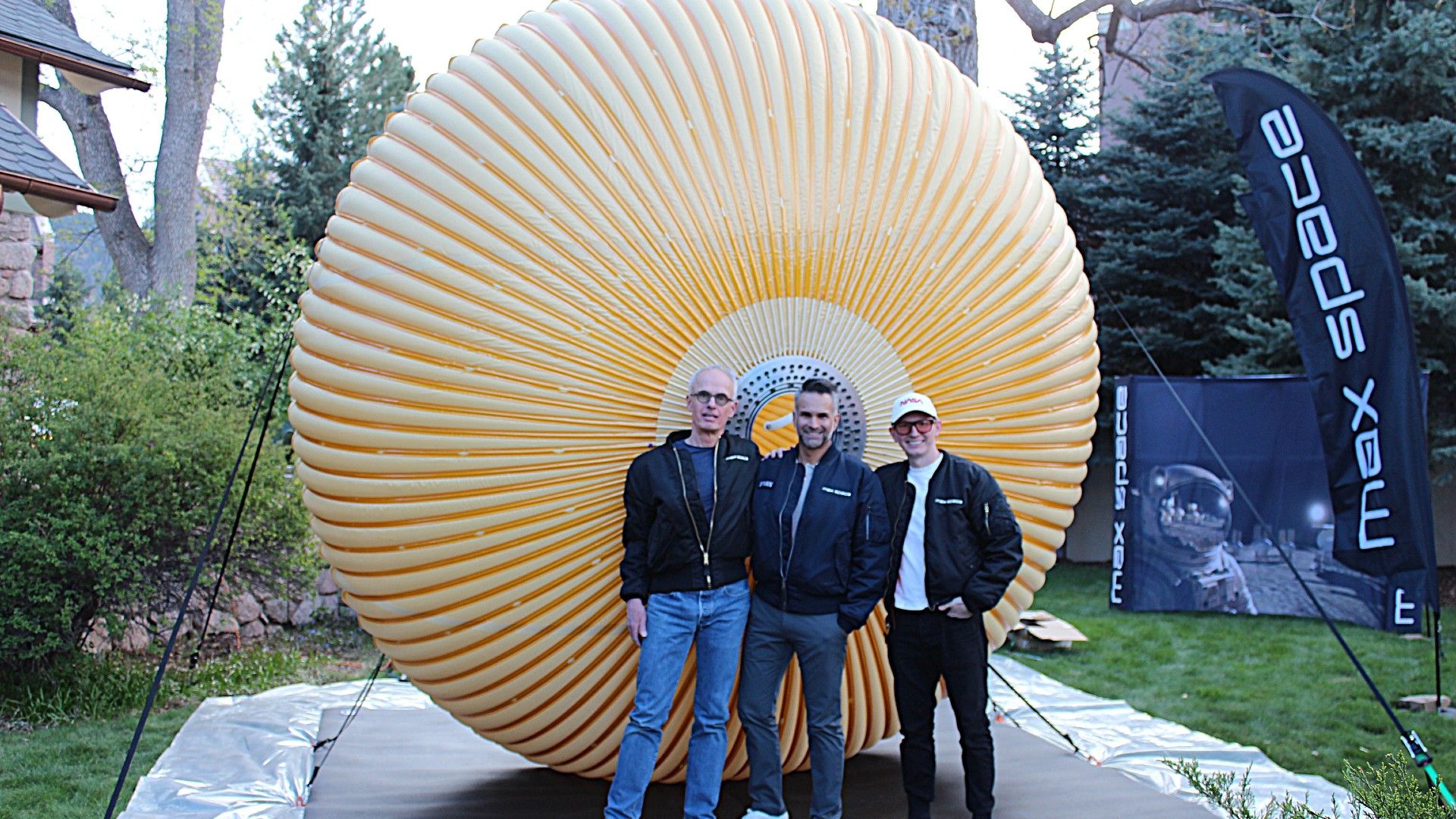
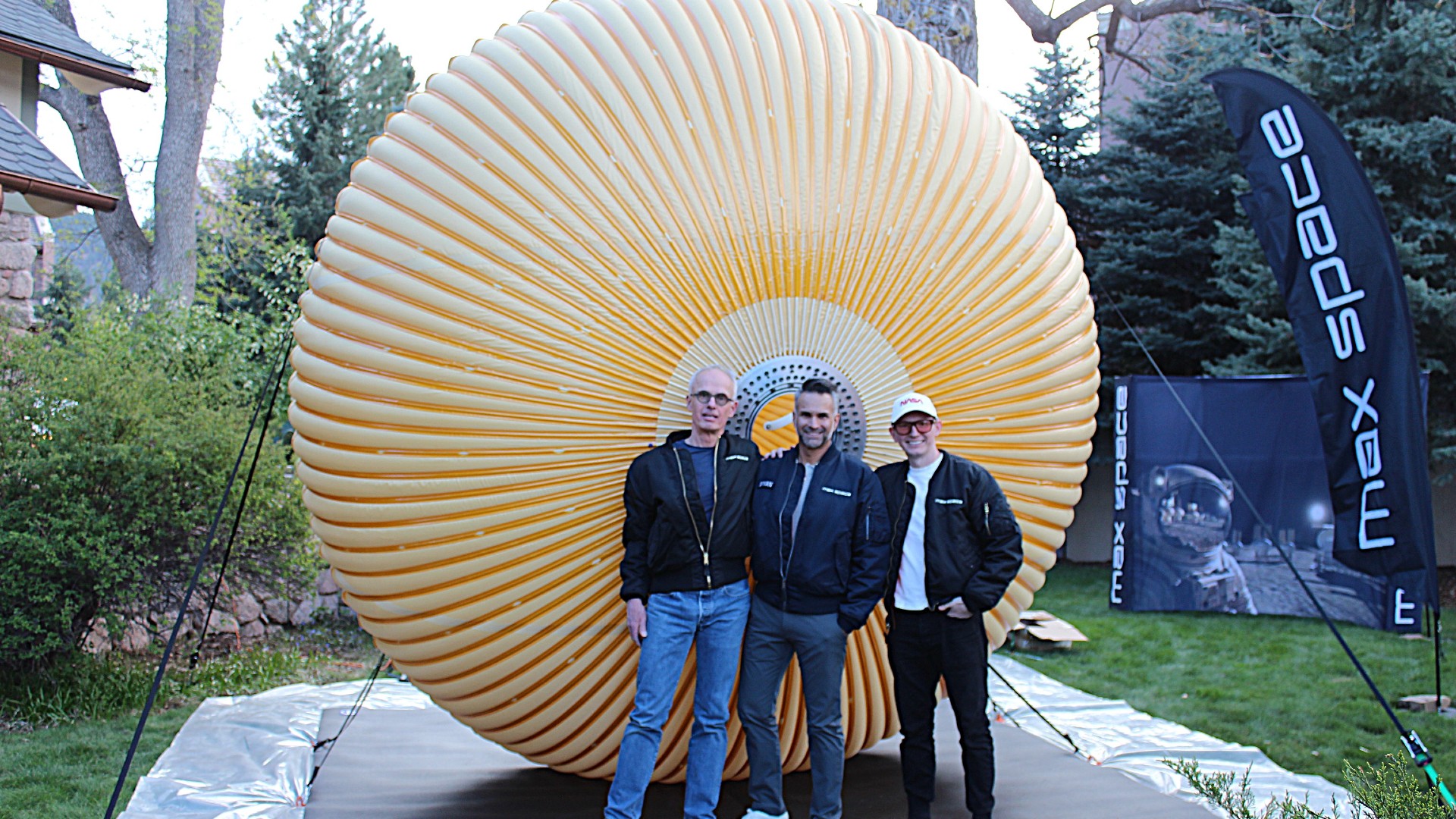
COLORADO SPRINGS, Colorado – At the 41st annual Space Symposium, a premier gathering for the global space community, Max Space has dramatically advanced the conversation around future space habitation with the unveiling of a large, sub-scale model of its groundbreaking expandable habitat. This innovative technology promises to significantly increase habitable volume for a range of space endeavors, from commercial low Earth orbit (LEO) stations to lunar bases and ambitious deep space missions. The display, which provides a tangible look at the company’s vision, underscores a critical leap forward in making sustained human presence beyond Earth more feasible and cost-effective.
Saleem Miyan, co-founder and CEO of Max Space, articulated the significance of the exhibit, stating, "This is more than a model. It is a physical demonstration of a new approach to space infrastructure, offering far greater habitable volume, lower launch mass and logistics burden, and a scalable architecture for commercial low Earth orbit stations, lunar surface systems, and future deep space missions." This statement encapsulates the multifaceted advantages of Max Space’s technology, addressing key challenges that have historically limited the scale and duration of human space activities. The company, headquartered in Florida, has positioned itself at the forefront of a new wave of space infrastructure development, moving beyond incremental improvements to a fundamental rethinking of how we build in space.
The Space Foundation’s annual Space Symposium, held in Colorado Springs, serves as a vital nexus for industry leaders, government officials, and technological innovators. This year’s event, the 41st iteration, provided a crucial platform for companies like Max Space to showcase their advancements to a highly influential audience. The symposium has historically been a bellwether for emerging trends and significant announcements in the aerospace sector, making Max Space’s debut of its expandable habitat a notable highlight. The event’s focus on the future of space exploration, including lunar and Martian endeavors, aligns perfectly with the capabilities that Max Space’s habitat technology aims to enable.
Practical Readiness of Materials: A Foundation of Expertise
Max Space’s approach to space habitation is deeply rooted in decades of material science expertise. The company emphasizes what it terms "Practical Readiness of Materials" (PRM), a concept that goes beyond the traditional Technical Readiness Levels (TRLs) often used to assess the maturity of space technologies. While TRLs focus on the technological validation of a concept, PRM highlights the real-world, long-term suitability and durability of the materials themselves for the harsh conditions of space.
"We rely heavily on our over three decades of material science expertise," Miyan explained, referring to this know-how as PRM. "And they are truly ready for long duration space flights and lunar habitation." This assertion is critical, as the longevity and reliability of materials are paramount for any infrastructure intended for extended use in space, particularly on celestial bodies with extreme temperature fluctuations, radiation, and abrasive lunar dust. The company’s confidence in its materials suggests a rigorous testing and development process, aiming to preemptively address potential failure points that could compromise crew safety or mission objectives.
The "next era of space habitation will not be built with small thinking," Miyan declared. This statement serves as a powerful indictment of past limitations and a bold declaration of intent. It suggests that future space habitats will need to be significantly larger, more complex, and more robust than anything currently in orbit. Max Space’s expandable design directly tackles this by allowing a much larger habitable volume to be launched at a significantly reduced mass compared to traditional rigid structures. This volumetric efficiency is a game-changer for mission planning and execution.
Strategic Partnership: Amplifying Capabilities for Lunar Operations
The significance of Max Space’s technology has been amplified by a recent strategic partnership announced in February with Voyager Technologies, a prominent defense and space technology company. This collaboration is poised to accelerate the development and deployment of Max Space’s habitat solutions.
Dylan Taylor, chairman and CEO of Voyager Technologies, highlighted the transformative potential of this alliance, stating, "This technology reflects a fundamental shift in how humanity will live and work in space." His perspective underscores the broader implications of Max Space’s innovations, extending beyond mere shelter to enabling comprehensive human activities in space.
Taylor further elaborated on the strategic imperative for such advancements, particularly concerning lunar operations: "Sustained operations on the moon require infrastructure designed for endurance, scalability and industrial execution." This statement directly addresses the evolving nature of lunar exploration, which is transitioning from brief scientific forays to establishing a permanent, sustainable human presence. The ability to scale infrastructure and execute industrial-level operations on the Moon is crucial for unlocking its potential for resource utilization, scientific research, and as a stepping stone for further exploration.
The partnership’s vision for the Moon is particularly forward-looking. "The moon is no longer a single destination or a flags-and-footprints exercise," Taylor asserted. "It is the next operational domain in a growing space economy." This sentiment reflects a growing consensus within the space industry: the Moon is not merely a scientific curiosity but a vital economic and strategic frontier. Establishing robust infrastructure, such as expandable habitats, is a prerequisite for realizing this economic potential. This partnership between Max Space and Voyager Technologies signifies a united front in building the necessary foundations for this new era of lunar engagement.
Phased Development Path: A Roadmap to Operational Readiness
Max Space’s journey in developing expandable structures has been marked by early pioneering efforts. The company’s lightweight expandable habitat technology offers a remarkable advantage: it launches in a compact form and can expand up to 20 times its initial volume once deployed in orbit or at a destination. This dramatic expansion capability means that a large, fully equipped habitat can be launched using a single SpaceX Falcon 9 rocket, significantly reducing the complexity and cost associated with deploying substantial living and working spaces in space.
The strategic partnership with Voyager Technologies has outlined a clear, phased development path. This roadmap includes rigorous ground validation and ambitious in-space demonstrations scheduled for later this decade. The ultimate goal of this phased approach is to enable operational lunar and Mars capabilities that are precisely aligned with NASA’s ambitious exploration timelines. This alignment is crucial for ensuring that new technologies can seamlessly integrate with and support ongoing and planned government-led space missions.
NASA’s Artemis program, for example, aims to return humans to the Moon and establish a sustained presence, with subsequent missions targeting Mars. The success of these long-term endeavors hinges on the availability of reliable and scalable infrastructure, a need that Max Space’s expandable habitats are designed to meet. By demonstrating their technology in orbit and eventually on the lunar surface, Max Space and Voyager Technologies aim to prove their readiness for these critical missions.
The phased development strategy is designed to mitigate risks and build confidence incrementally. Ground validation will involve extensive testing of the habitat’s structural integrity, life support systems, and deployment mechanisms under simulated space conditions. In-space demonstrations, likely starting with LEO missions, will provide invaluable real-world performance data. These demonstrations will be critical for refining the technology and validating its performance in the actual space environment, paving the way for more complex applications on the Moon and beyond.
Expanding Habitable Volume: The Core Innovation
The core of Max Space’s innovation lies in its ability to dramatically increase the usable volume within a spacecraft or surface module. Traditional rigid modules, while robust, are limited in size by the fairing of launch vehicles. This constraint often necessitates complex multi-launch assembly missions or restricts the overall size of habitats, limiting the scope of activities that can be undertaken.
Expandable habitats, on the other hand, offer a fundamentally different approach. They are engineered to be compressed into a small volume for launch, utilizing advanced materials and folding mechanisms. Once in space, actuators and internal pressure are used to unfurl and inflate the habitat to its full size. This process allows for significantly more interior space to be delivered to orbit or a planetary surface per unit of launch mass.
For the International Space Station (ISS), for example, astronauts currently have a finite amount of living and working space. As the ambitions for space exploration grow, and with the potential development of commercial space stations and lunar bases, the demand for larger, more versatile habitats will only increase. Max Space’s technology directly addresses this growing demand. Imagine a laboratory, a medical bay, or even recreational facilities that can be deployed with the same launch mass as a smaller, rigid module. This volumetric efficiency translates into enhanced scientific research capabilities, improved crew comfort and well-being, and the potential for larger crews to undertake more complex missions.
The implications for long-duration spaceflight are particularly profound. Extended missions, such as those to Mars, require habitats that can provide a safe, comfortable, and functional environment for crews over months or even years. The psychological and physiological benefits of having ample space cannot be overstated. Expandable habitats can offer private crew quarters, dedicated exercise areas, and larger common spaces, all contributing to the mental and physical health of astronauts on these arduous journeys.
The Future of Lunar and Deep Space Infrastructure
The unveiling of Max Space’s sub-scale habitat at the Space Symposium is more than just a product demonstration; it represents a significant step towards enabling a sustainable human presence beyond Earth. The company’s focus on practicality, material science, and scalability positions them as a key player in the burgeoning space economy.
The partnership with Voyager Technologies further solidifies this vision, bringing together expertise in advanced manufacturing, defense technologies, and space systems. This synergy is crucial for translating innovative concepts into tangible, operational assets. As the world looks towards establishing permanent bases on the Moon and eventually venturing to Mars, the demand for robust, adaptable, and cost-effective habitation solutions will be paramount.
The phased development plan, with its emphasis on both ground and in-space validation, suggests a mature and responsible approach to bringing this technology to fruition. By aligning with NASA’s exploration timelines, Max Space and Voyager Technologies are signaling their intent to be integral to the next chapter of human space exploration.
For those interested in learning more about this transformative technology, Max Space’s official website provides further details on their innovative habitat designs and their vision for the future of space infrastructure. The journey to becoming a multi-planetary species is complex and demanding, but advancements like those showcased by Max Space are bringing that future into sharper focus, one expandable habitat at a time. The company’s commitment to pushing the boundaries of what is possible in space habitation promises to reshape our understanding of human presence beyond Earth for decades to come.










Leave a Reply