
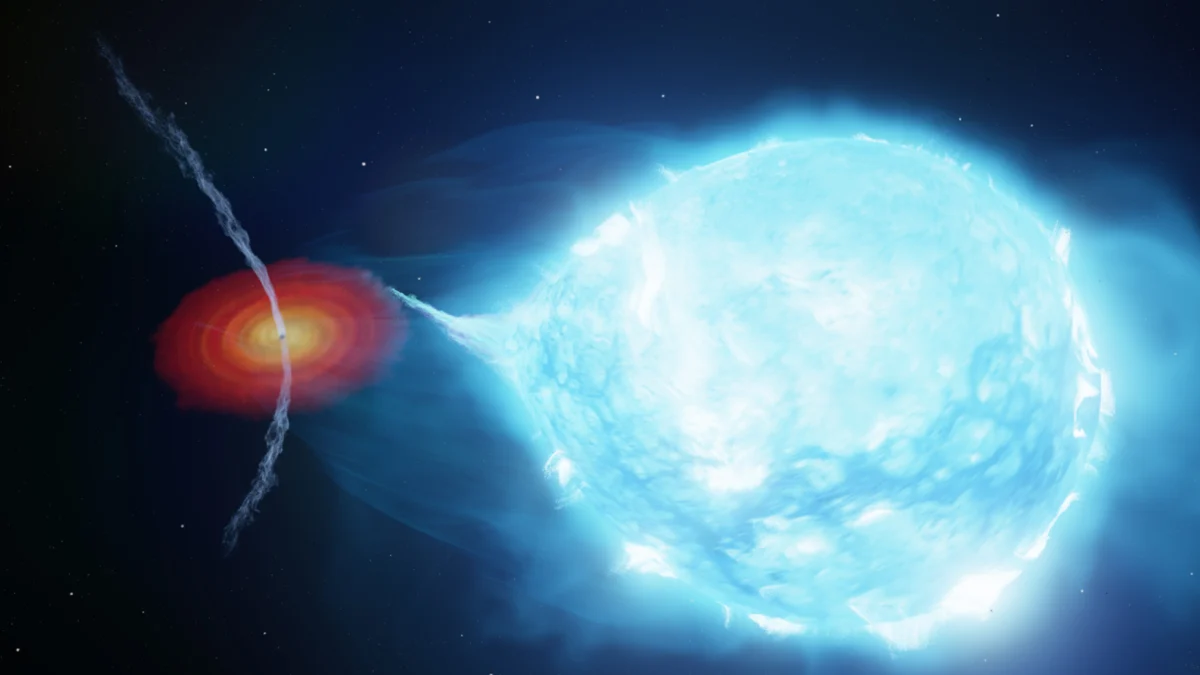
More than six decades after its initial discovery, Cygnus X-1, the first celestial object definitively identified as a black hole, continues to unveil its profound secrets. Recent groundbreaking research has successfully quantified the immense energy output of this cosmic behemoth’s powerful "jets," a feat that promises to deepen our understanding of the extreme phenomena governing black holes across the universe. This significant advancement, achieved by meticulously mapping the subtle "dance" of these jets as they are influenced by the stellar winds of its companion star, offers a crucial empirical validation for theoretical models that have long guided astrophysical research.
Cygnus X-1, a stellar-mass black hole residing approximately 7,000 light-years away in the constellation Cygnus, is a colossus in its own right. Its mass is estimated to be around 21 times that of our Sun. It is locked in an intimate, rapid binary orbit with HDE 226868, a massive blue supergiant star. This cosmic waltz is completed every 5.6 days, with the two celestial bodies circling each other at a remarkably close distance of just 0.2 astronomical units—a mere one-fifth of the separation between Earth and the Sun. The insatiable gravitational pull of the black hole relentlessly siphons off the outer layers of its stellar companion, forming a superheated, swirling disc of matter known as an accretion disk. This disk, a violent crucible of stellar material, glows intensely in X-ray light, providing astronomers with one of the primary signatures of a black hole’s presence.
Like many other active black holes, Cygnus X-1 is known to expel two colossal beams of energy. These jets, composed of superheated plasma originating from the accretion disk, are propelled outward by the black hole’s extraordinarily powerful and rapidly rotating magnetic field. While astronomers have detected numerous similar jets emanating from various cosmic sources and have even managed to capture images of some, accurately measuring the precise energy output of these energetic outflows has historically presented a formidable challenge. The dynamic and often erratic nature of these jets has made direct quantification a persistent hurdle in astrophysical research.
However, a pioneering study, published on April 16th in the esteemed journal Nature Astronomy, has unveiled an innovative methodology for precisely measuring the jets of Cygnus X-1. The research team achieved this by meticulously tracking the subtle wobbling or "dancing" motion of these jets, a phenomenon directly influenced by the intense stellar winds emanating from HDE 226868. This breakthrough offers a tangible and verifiable measurement, moving beyond theoretical estimations and providing a much-needed observational anchor for our understanding of black hole energetics.
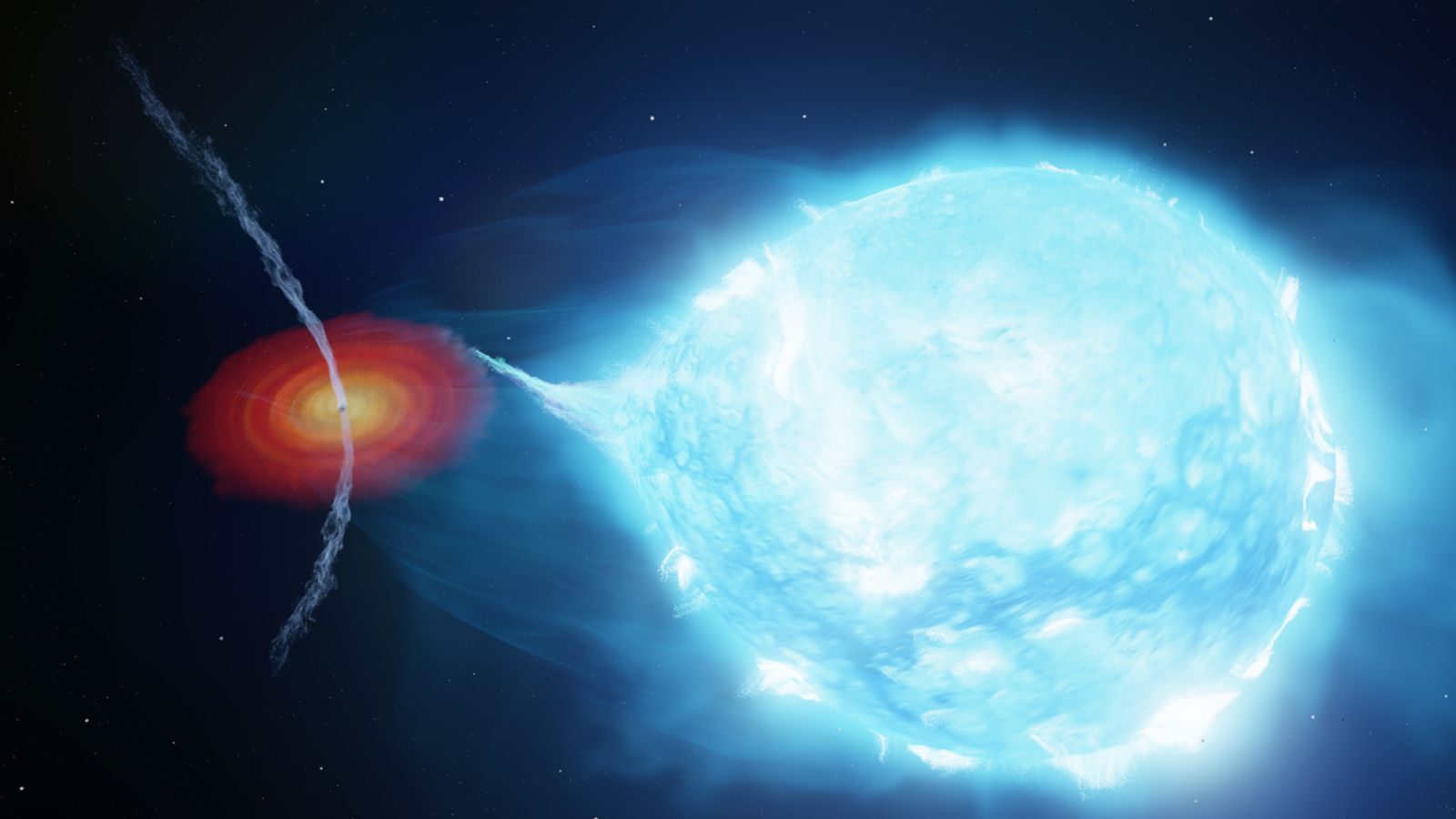
The findings reveal that the jets of Cygnus X-1 possess an astonishing energy output equivalent to that of approximately 10,000 suns. These powerful streams of plasma are ejected at speeds nearing 335 million miles per hour (540 million kilometers per hour), a staggering velocity that equates to about half the speed of light. This precise quantification not only confirms the immense power of black hole jets but also provides crucial data for refining astrophysical models.
The Rhythmic Dance of Cosmic Jets
All active stars, including the massive blue supergiant HDE 226868, are known to emit stellar winds. These winds are streams of charged particles, energized and accelerated by the star’s potent magnetic fields. These invisible, yet powerful, gusts of stellar material exert pressure on the atmospheres of planets within their reach and eventually interact with the interstellar medium.
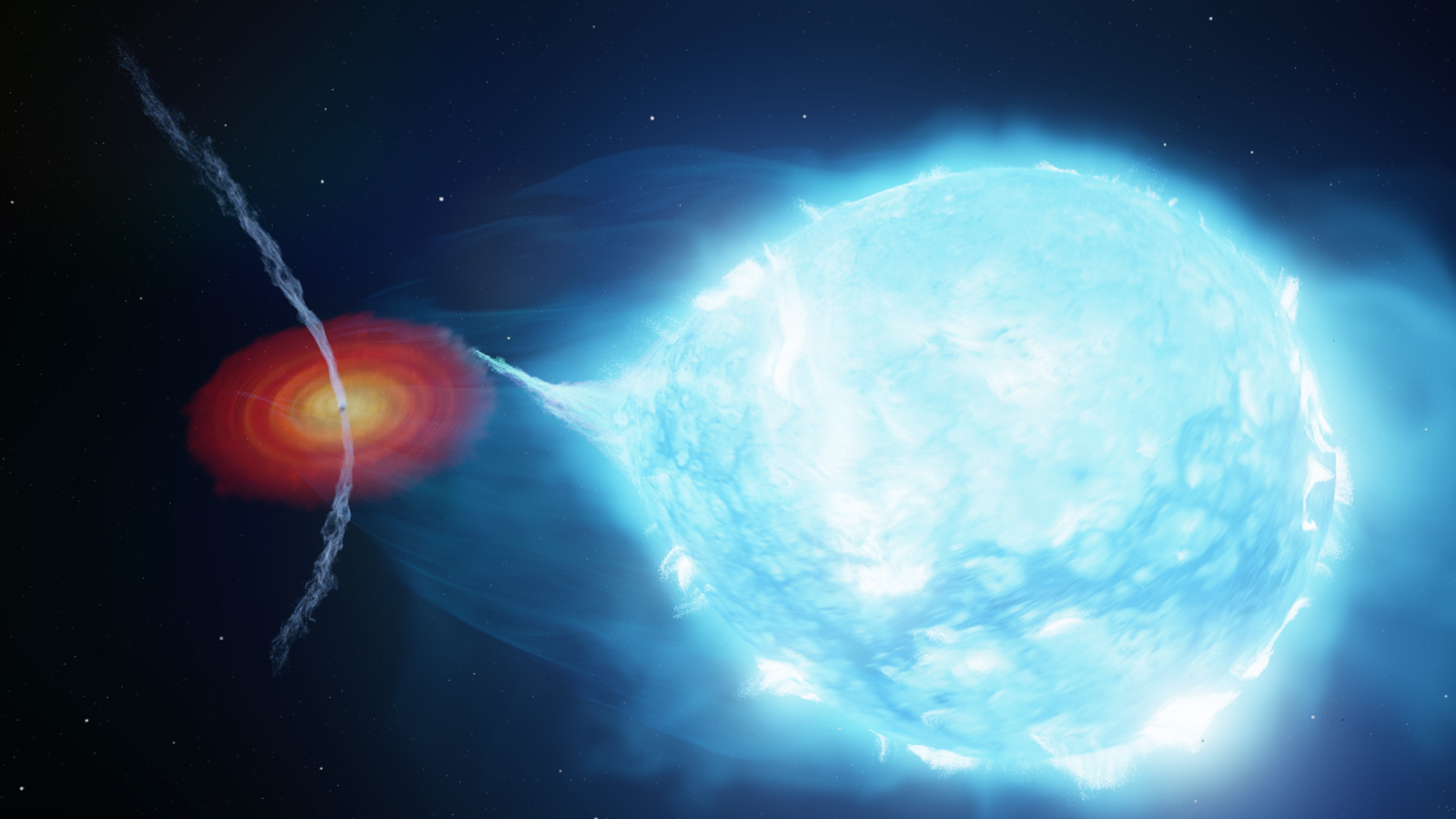
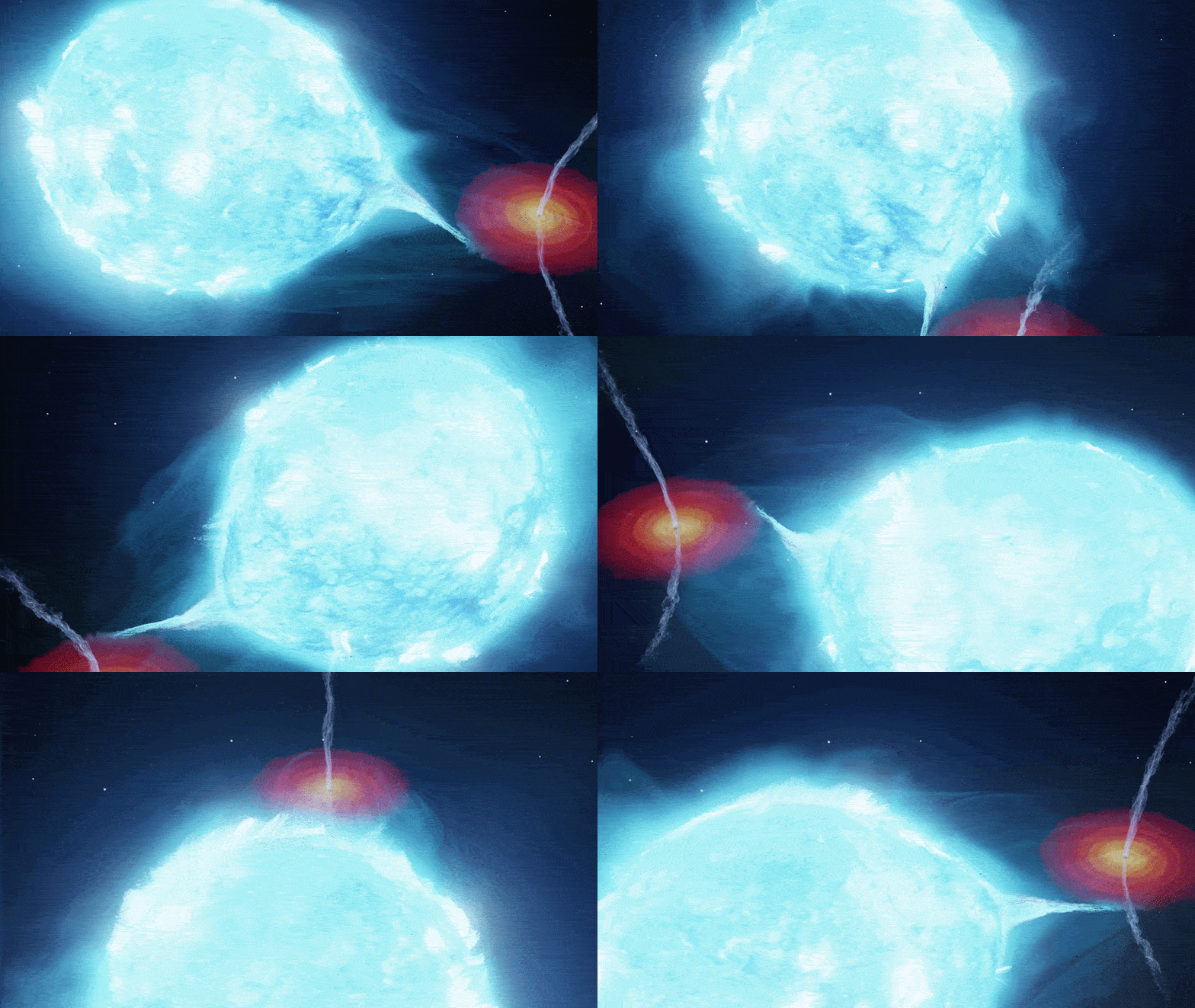
In the binary system of Cygnus X-1, the energy jets ejected by the black hole are constantly subjected to the intense radiation and robust stellar winds from HDE 226868. This continuous bombardment causes the jets to bend and deflect away from the companion star. Because Cygnus X-1 and HDE 226868 orbit a common center of mass, this interaction results in a noticeable back-and-forth bending, or wobbling, of the jets as observed from Earth. It is this consistent, rhythmic swaying motion that the researchers have aptly described as the "dancing jets."
Historically, obtaining accurate measurements of these dynamic jets has been a significant undertaking. Their continuous movement and variable orientation made it exceedingly difficult to capture a stable, comprehensive view. However, by ingeniously combining observational data from a network of radio telescopes strategically positioned across the globe, the research team was able to construct a remarkably precise three-dimensional model of the jets’ geometry. This global collaborative effort in radio astronomy allowed them to achieve what was previously considered an elusive goal: a definitive measurement of the jets’ energy output.
Filling Crucial Gaps in Black Hole Astrophysics
The significance of these new findings extends far beyond the specific case of Cygnus X-1. Astrophysicists are particularly enthusiastic about this research as it directly addresses fundamental questions and fills critical gaps in our current comprehension of black hole physics.
"A key finding from this research is that about 10 percent of the energy released as matter falls in towards the black hole is carried away by the jets," stated study lead author Steve Prabu, a radio astronomer at the University of Oxford, in a press release. "This is what scientists usually assume in large-scale simulated models of the universe, but it has been hard to confirm by observation until now."
This observed ratio of energy carried away by jets has profound implications for cosmological simulations. Many theoretical models of galaxy formation and evolution rely on the assumption that a significant fraction of the energy liberated during the accretion process is channeled into these powerful jets. The direct measurement from Cygnus X-1 provides strong empirical support for this long-held assumption, bolstering the validity of these complex simulations.
Furthermore, the physics governing black hole jets are theorized to be remarkably consistent across different scales, from stellar-mass black holes like Cygnus X-1 to the supermassive black holes found at the centers of galaxies. Albert Einstein’s theory of general relativity, formulated in 1915, provides the theoretical framework that suggests these fundamental processes should be universal.
"Because our theories suggest that the physics around black holes is very similar, we can now use this measurement to anchor our understanding of [other] jets, whether they are from black holes 10 or 10 million times the mass of the sun," explained study co-author James Miller-Jones, a radio astronomer and black hole accretion expert at Curtin University in Australia. This means the precise measurements obtained from Cygnus X-1 can serve as a calibration point for understanding the jets of vastly different black holes, including those that play a dominant role in shaping the evolution of entire galaxies.
Broader Implications for Galactic Evolution
The ability to accurately measure and understand black hole jets has far-reaching implications for our understanding of how galaxies, including our own Milky Way, have evolved over cosmic time. These colossal outflows are not merely spectacular cosmic phenomena; they are active agents that profoundly influence their surrounding environments.

"Black hole jets provide an important source of feedback to the surrounding environment and are critical to understanding the evolution of galaxies," Miller-Jones added. This "feedback" mechanism refers to how the energy and momentum injected by black hole jets can regulate star formation within a galaxy. For instance, jets can heat up or expel gas from a galaxy’s core, thereby quenching or slowing down the birth of new stars. Conversely, in some scenarios, they might even trigger localized bursts of star formation.
By quantifying the energy of these jets, scientists can better model these feedback processes and refine our understanding of the intricate interplay between black holes and their host galaxies. This knowledge is crucial for piecing together the cosmic narrative, from the formation of the earliest galaxies to the complex structures we observe today.
A Glimpse into the Past and Future of Cygnus X-1
The discovery and ongoing study of Cygnus X-1 have a rich history. First identified as a celestial X-ray source in 1964 by the sounding rocket Aerobee-X, it was later confirmed to be a black hole in 1972 through observations made by the Uhuru satellite. This confirmation was a landmark moment in astrophysics, providing the first concrete evidence for the existence of black holes predicted by Einstein’s theories.
The binary system’s relative proximity to Earth and the persistent, observable nature of its accretion disk and jets have made Cygnus X-1 a prime target for astronomical observation for decades. Early studies focused on understanding its orbital dynamics and the nature of the matter being accreted. The detection of its powerful jets followed, but their precise energetic output remained an elusive parameter.
The current research represents a significant leap forward, building upon decades of observational data and technological advancements in radio astronomy. The use of Very Long Baseline Interferometry (VLBI), a technique that links multiple radio telescopes to create a virtual telescope with a much larger effective aperture, was instrumental in achieving the resolution necessary to map the dancing jets.
This latest breakthrough not only validates theoretical models but also opens new avenues for research. Future studies will likely focus on applying this refined measurement technique to other black hole systems, further expanding our catalog of jet energy outputs and improving our comparative understanding. Scientists will also aim to investigate the subtle variations in jet behavior and their correlation with changes in the accretion disk and the companion star’s activity.
The "dancing jets" of Cygnus X-1, once a source of mystery and a challenge for measurement, have now become a beacon of knowledge, illuminating the fundamental processes that govern the most extreme objects in our universe. The continued study of this iconic black hole promises to yield further insights, pushing the boundaries of our cosmic understanding and refining our models of galaxy evolution. This research underscores the power of sustained scientific inquiry and international collaboration in unraveling the universe’s most profound enigmas.








Leave a Reply