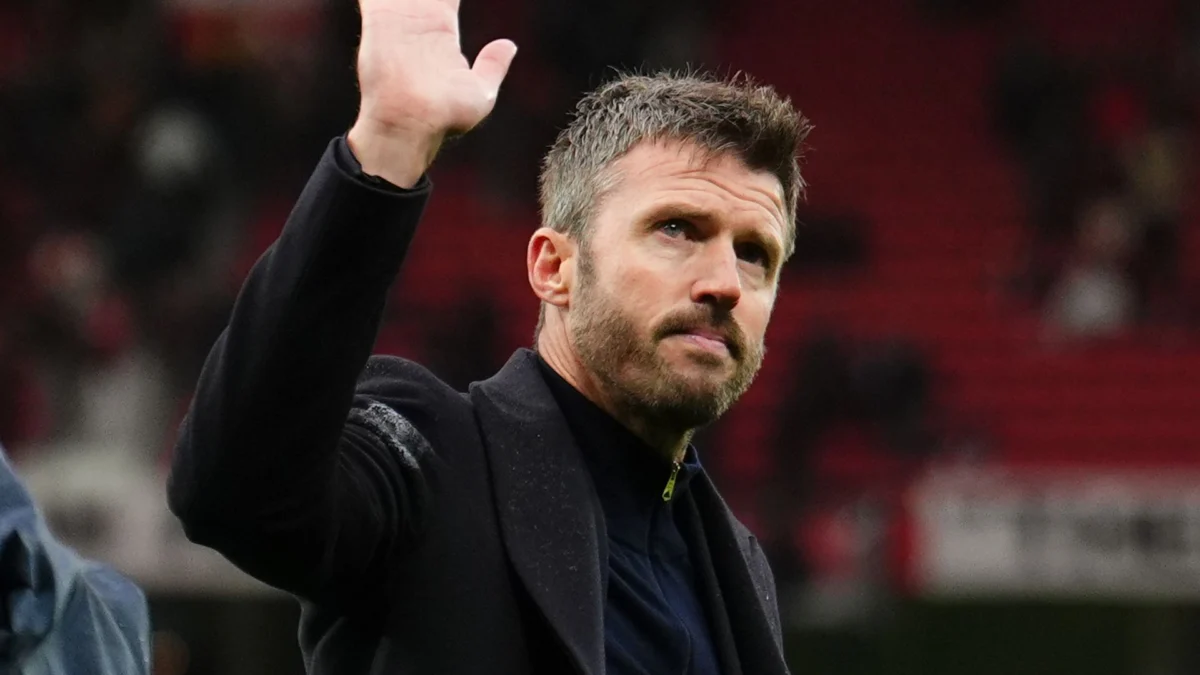
The tenure of Michael Carrick as Manchester United head coach is currently under intense scrutiny as the club’s leadership conducts a comprehensive performance review during the ongoing international break. Despite a sequence of results that has left the club languishing in the lower half of the Premier League table, no definitive decision regarding his immediate future has been communicated. The review, spearheaded by director of football Jason Wilcox, aims to determine whether a change in leadership is necessary to reverse the club’s worst-ever start to a domestic campaign.
The current situation represents a significant departure from the optimism surrounding the club at the conclusion of the previous season. Having secured a third-place finish and a return to Champions League football, expectations for the current term were high. However, the reality has been a stark decline in defensive stability and attacking cohesion, culminating in a string of results that have severely damaged the club’s reputation and its standing in the table.
A Chronology of Decline: From Stability to Crisis
The current crisis did not emerge overnight, but rather through a sustained period of underperformance. The trajectory of the team’s season can be traced back to the opening fixtures, where signs of tactical inconsistency were already apparent. The 3-0 home defeat to Bournemouth two weeks ago served as a critical inflection point, prompting the board to grant Carrick a three-match reprieve to prove his capability to stabilize the squad.
While the team managed a resilient, if chaotic, 4-4 draw against Aston Villa and a Champions League victory against Roma, the underlying metrics remain concerning. United is currently navigating an eight-match winless streak in the Premier League, a statistic that underscores the severity of the challenge facing the coaching staff. With the team set to travel to Anfield to face Liverpool after the international break, the club hierarchy is acutely aware that a failure to rectify these issues could lead to a catastrophic result against their fiercest rivals.
Statistical Analysis: The Depth of the Deficit
The numbers illustrating Manchester United’s plight are historic in their severity. The club has conceded 30 goals in all competitions so far, a figure that marks the worst defensive record among all teams in the top five European leagues. This lack of defensive structure is compounded by an inability to maintain leads or exert control over matches.
Statistically, the team is suffering from a lack of identity. The "worst-ever start" to a Premier League season is not merely a product of bad luck; it is a manifestation of tactical failures that have left the team vulnerable. While there have been flashes of individual brilliance, the collective output has been insufficient to compete with the top-tier clubs in England. The contrast between the previous season’s over-achievement—which provided the board with a sense of security—and the current under-achievement has created a disconnect that the leadership is now desperate to resolve.
The Boardroom Perspective: Evaluating Potential Replacements
Internal sources suggest that the Manchester United hierarchy is reticent to pull the trigger on a dismissal for several strategic reasons. First and foremost is the desire to avoid the disruption associated with an interim appointment. The club’s leadership is reportedly keen to avoid a repeat of past cycles where temporary managers were brought in without a long-term plan, leading to further instability.
Furthermore, there is a clear distinction between the availability of talent and the suitability of a successor. Candidates such as Julian Nagelsmann and Eddie Howe are currently unattached and, according to reports, would be open to discussions should a vacancy arise. However, the board remains unconvinced that a managerial change in isolation will solve the structural issues that have plagued the club for years. The reluctance to engage in substantive talks with these candidates indicates a high degree of caution, as the club seeks to ensure that any potential successor is the correct fit for a long-term project rather than a short-term fix.
The Role of Sentiment and Player Loyalty
A unique factor in the current discourse surrounding Carrick is the persistent support from the Old Trafford faithful. Unlike other managers in the Premier League who might face immediate calls for their removal from the stands, Carrick maintains a reservoir of goodwill due to his legendary status as a player. His contribution to the club’s history—including 11 major trophies and a Champions League title—acts as a protective buffer that has, thus far, silenced the typically vocal demands for a managerial sacking.
Internally, the club’s leadership also believes that the players have not "downed tools." The late comebacks against Roma and Aston Villa are interpreted by some within the organization as evidence that the squad remains committed to the current coaching staff. This perceived player loyalty is a significant variable in the decision-making process; the board is hesitant to remove a manager if they believe the dressing room is still playing for him, fearing that a dismissal could cause further fracturing within the squad.
Systemic Issues and the Ownership Debate
Beyond the immediate crisis, the broader context of Manchester United’s struggles involves a deep-seated debate regarding the club’s ownership and structural management. Critics, including chief sports reporters and industry analysts, argue that the managerial position is merely one component of a much larger, systemic failure.
The perspective remains that the club has lost its competitive edge, drifting away from the standards required to challenge for titles regularly. The argument is frequently made that even world-class tacticians—such as Pep Guardiola or Jurgen Klopp—would face monumental challenges under the current ownership structure. The perception is that the "circus" surrounding the club, characterized by constant speculation and a lack of coherent long-term planning, has created an environment where success is difficult to sustain.
The "papering over the cracks" narrative suggests that changing the head coach may provide a temporary boost in results but will ultimately fail to address the fundamental issues regarding recruitment, youth development, and organizational philosophy. For many observers, the path forward requires a wholesale cultural shift, rather than the simple replacement of the individual at the helm.
Implications for the Upcoming International Break
With the first-team players departing for international duty, the coaching staff at Carrington has been granted a period of relative calm. The lack of scheduled training sessions for the senior squad allows the club’s directors to perform a forensic evaluation of the season. This "breathing space" is crucial for Jason Wilcox and the hierarchy to determine the next steps.
The decision to be made before the end of the break will be one of the most significant in recent years. If the board decides to retain Carrick, they will be betting on his ability to correct the defensive lapses and tactical errors that have defined the opening months. If they decide to part ways, they must have a clear vision for the future—one that goes beyond replacing a head coach and begins the process of rebuilding a club that has seen its standards diminish significantly over the past year.
As the team prepares for the daunting prospect of facing Liverpool, the pressure remains squarely on the shoulders of the leadership to decide whether the current path is salvageable. Whether Carrick continues or a new figure arrives, the consensus among observers is that Manchester United must undergo a period of profound self-reflection to reclaim its status as a premier institution in global football. For now, the club remains in a state of suspended animation, waiting to see if the recent "reprieve" can truly blossom into a sustained turnaround or if it is merely the final chapter of a failed tenure.