The abrupt departure of James Gunn and Peter Safran from the helm of DC Studios on Monday marks the latest seismic shift in the turbulent history of Warner Bros.’ intellectual property management. Their exit, which comes as a jarring conclusion to what was intended to be a multi-year, unified storytelling endeavor, has left industry analysts and fans questioning the stability of the DC brand. Despite a promising start with 2025’s Superman—a film that garnered both critical acclaim and significant box office returns—the studio now finds itself at a crossroads, balancing the legacy of recent successes against a pattern of disjointed strategic pivots.
The Rise and Fall of the Gunn-Safran Era
The tenure of James Gunn and Peter Safran began with high expectations. Tasked with revitalizing the DC cinematic footprint following years of inconsistency, the duo implemented a structured approach reminiscent of the Marvel Cinematic Universe’s "phase" strategy. The rollout began with animated projects like Creature Commandos and the television series Peacemaker, creating a foundation for the cinematic debut of the new DC Universe (DCU).
The 2025 Superman film served as the primary proof-of-concept for this new direction. By securing positive critical reception and strong commercial performance, the project validated the creative pivot. Subsequent ventures, such as the HBO series Lanterns and the R-rated thriller Clayface, showed a willingness to experiment with tone and platform. Clayface, produced on a modest $40 million budget, surpassed $100 million at the global box office, proving that smaller, character-focused stories could remain profitable for the studio.
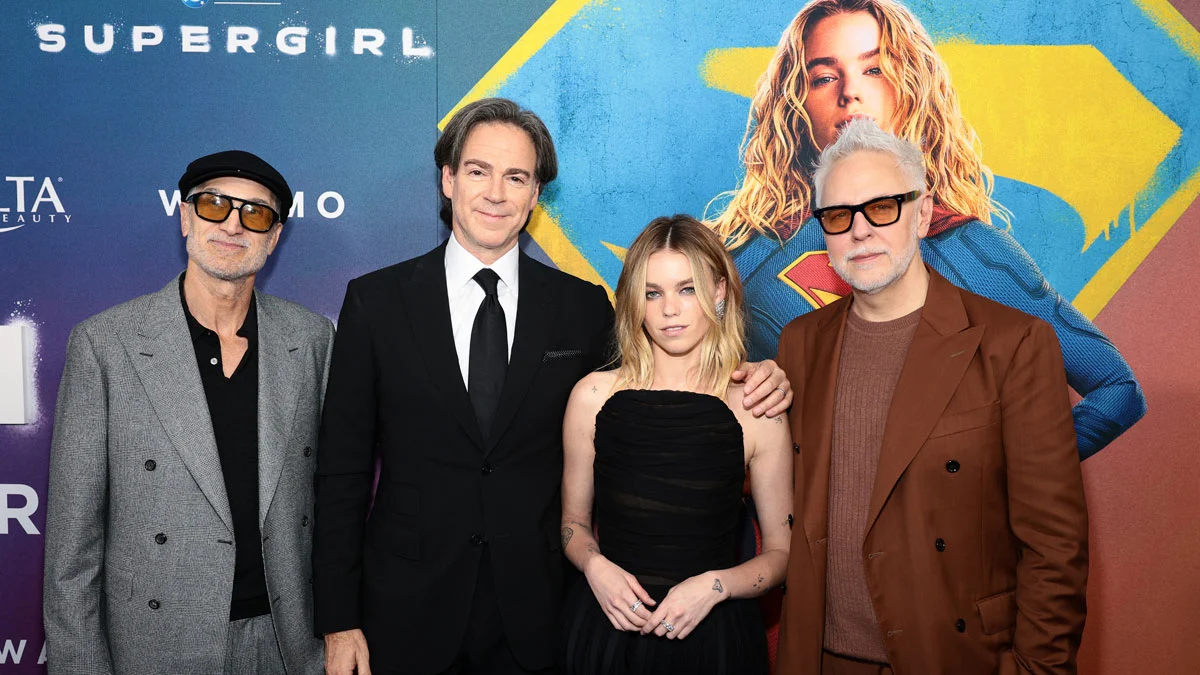
However, the momentum stalled with the June 2026 release of Supergirl. The film, starring Milly Alcock, faced significant criticism for its perceived stylistic mimicry of the Guardians of the Galaxy franchise. The failure of Supergirl to resonate with audiences or critics appears to have been a critical tipping point. Industry insiders suggest that the film’s inability to distinguish itself from Gunn’s previous work for Marvel contributed to a loss of confidence among stakeholders, ultimately precipitating the leadership change.
A Chronology of Strategic Instability
The history of DC at Warner Bros. has been defined by a cycle of ambitious resets followed by premature abandonment.
- 2013–2017: The inception of the DC Extended Universe (DCEU) with Man of Steel, followed by the contentious reception of Batman v. Superman: Dawn of Justice and the studio-mandated restructuring of Justice League.
- 2018–2022: A period of creative fragmentation, characterized by the critical success of The Batman—a standalone project—alongside the cancellation of projects like Batgirl and the rise of the "Arrowverse" on The CW.
- 2023–2025: The installation of Gunn and Safran and the formal launch of the DCU.
- 2026: The release of Supergirl and the subsequent announcement of leadership changes following the Skydance merger.
This timeline illustrates a persistent inability to maintain a cohesive creative vision. While the Marvel Cinematic Universe (MCU) benefited from a singular, long-term creative roadmap, Warner Bros. has frequently shifted its focus in response to fluctuating market conditions and internal corporate restructuring.
The Impending Release of Man of Tomorrow
Despite the leadership vacuum, the production pipeline remains active. The upcoming 2027 feature Man of Tomorrow is currently positioned as the next major entry in the DCU. The film is expected to serve as a direct sequel to Superman while integrating characters from various corners of the DC stable.

Confirmed cast members include Aaron Pierre, reprising his role as John Stewart from Lanterns, and Milly Alcock returning as Kara Zor-El. Perhaps most notably, the inclusion of Xolo Maridueña as Jaime Reyes—a character introduced in the pre-Gunn 2023 film Blue Beetle—signals an attempt to salvage legacy characters rather than engaging in a complete reboot. Furthermore, reports suggest the film will integrate plot threads from the Peacemaker series, including the multiverse-adjacent cliffhanger that concluded Season 2. There are also unconfirmed reports of a new Wonder Woman character introduction, though official studio sources have yet to verify this development.
Corporate Realities and Market Saturation
The decision to pause or reevaluate the DC strategy cannot be viewed in isolation from the broader corporate climate. The recent Skydance merger has introduced a new cadre of executives and shareholders who prioritize immediate fiscal discipline. Unlike the early days of the MCU, where Marvel Studios operated with a degree of independence, every DC project is now subject to intense scrutiny regarding return on investment.
The current market environment is significantly more challenging than it was a decade ago. Superhero fatigue is a documented phenomenon, with audiences showing waning interest in traditional comic book adaptations that do not offer unique or elevated storytelling. DC’s disadvantage is particularly pronounced in the absence of a "Spider-Man" equivalent—a singular, globally recognized character that guarantees a baseline of massive commercial success.
Furthermore, the studio faces the looming challenge of "Dunesday" on December 18, when Avengers: Doomsday and the third installment of the Dune franchise (also a Warner Bros. production) are slated to compete for the same audience. If Dune continues to outperform the superhero genre, the corporate appetite for high-budget comic book adaptations may diminish even further.
Implications for the Future
In a statement released on Monday, James Gunn clarified that he and Safran remain under contract for specific projects, including Man of Tomorrow and one additional unannounced film. Gunn noted that while the executive oversight is changing, the foundation they established will likely persist in some form.
"The characters we set up will live on," Gunn wrote, hinting that the casting choices—such as David Corenswet’s acclaimed portrayal of Superman—may be preserved. This suggests a shift toward a "soft" transition, where the studio attempts to maintain the most successful elements of the Gunn-Safran era while stripping away the overarching, highly serialized structure that failed to generate the desired momentum.
The fundamental issue remains: Can a massive, interconnected universe be built when the studio’s corporate hierarchy is in constant flux? The case of the Batman franchise, which continues to exist in a separate creative lane under Matt Reeves and Steven Soderbergh, proves that DC is capable of producing high-quality, successful films when they are allowed to exist outside of a mandated, overarching continuity.
As the industry observes the final outputs of the Gunn-Safran era, the focus for Warner Bros. will likely shift away from the "all-encompassing universe" model. Instead, the future of DC may lie in a hybrid approach: focusing on high-quality, singular narratives that can occasionally intersect, rather than the relentless, interconnected assembly-line production that defined the previous four years. For now, the "DCU" remains a work in progress, trapped between its past iterations and an uncertain, corporate-driven future.