
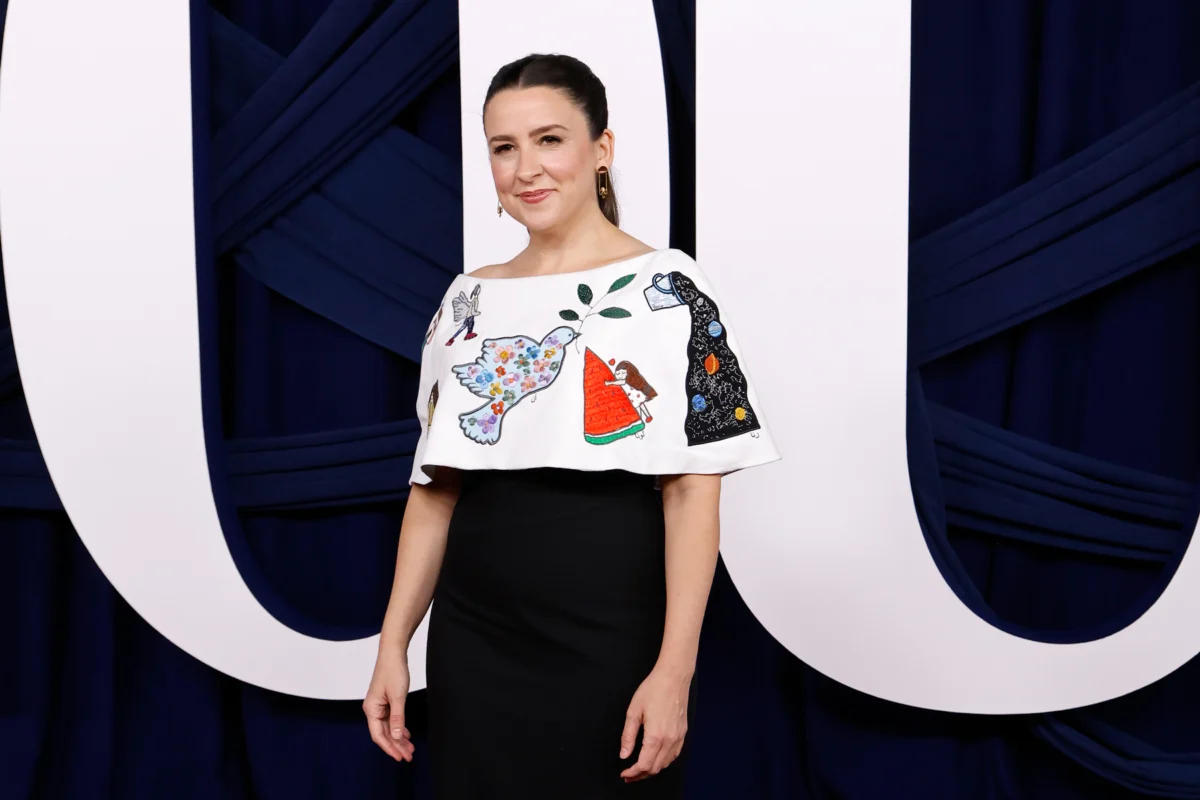
The intersection of mainstream entertainment, high-profile concert touring, and geopolitical activism has become a focal point of intense public debate following a cascading series of events that began on the stage of MetLife Stadium. Rachel Accurso, widely recognized by families globally as the children’s entertainer "Ms. Rachel," has announced a $1 million donation to the Palestine Children’s Relief Fund. This financial commitment directly mirrors a matching pledge made by musician Macklemore, who found himself removed from Ed Sheeran’s ongoing Loop Tour after vocalizing support for Palestinian civilians in Gaza and the West Bank during his live performances.
The developments have triggered a broader reckoning across the entertainment industry, prompting other supporting acts to withdraw from the concert tour, drawing public commentary from prominent figures, and intensifying discussions regarding the social responsibilities of public personalities who command massive audiences of both children and adults.
The Genesis of the Controversy at MetLife Stadium
The sequence of events leading to the current industry-wide controversy unfolded in early September at MetLife Stadium in East Rutherford, New Jersey. Macklemore, performing as a supporting act on Ed Sheeran’s Loop Tour, took the stage on September 4 and 5. During his performance on the opening night, the Grammy Award-winning artist shouted "Free Palestine" and delivered a prolonged address concerning the mounting casualties, humanitarian catastrophe, and widespread destruction experienced by innocent civilians in Gaza.
Following these remarks, Macklemore was informed that he would be barred from performing at the remaining eight scheduled stops of the tour. According to statements from the artist and subsequent investigative reports, the removal was executed after substantial pressure was exerted on tour organizers and venue proprietors. Reports from journalistic outlets, corroborated by public statements, indicated that New England Patriots owner Robert Kraft—whose organization operates Gillette Stadium, one of the scheduled tour stops—refused to permit Macklemore to perform on the premises. Further reporting revealed that similar pressure was applied to other stadium and venue owners to ensure the artist’s exclusion from subsequent dates.
The fallout intensified rapidly. In response to his removal, Macklemore announced a $1 million allocation derived from his earnings on the Loop Tour, distributing the funds across six distinct organizations dedicated to humanitarian aid in Palestine: the Palestine Children’s Relief Fund, HEAL Palestine, Gaza Soup Kitchen, Medical Aid for Palestinians, the United Nations Relief and Works Agency USA (UNRWA USA), and Anera.
"Whatever we disagree about, perhaps we can agree on this: Palestinian lives are worth protecting," Macklemore wrote in a public statement accompanying his financial contribution. "A Palestinian life is no less valuable than any other life on this earth."
Ms. Rachel’s Intervention and Wider Industry Boycott
In the wake of Macklemore’s public statement and financial pledge, Rachel Accurso utilized her platform to amplify the call for humanitarian aid and accountability among wealthy public figures. Writing on Instagram, Accurso committed to matching the $1 million donation to the Palestine Children’s Relief Fund.
"I will match Macklemore’s donation and I invite every wealthy white celebrity to match it and speak out against the genocide in Gaza," Accurso wrote. "Over 20,000 precious Palestinian children have been killed and children continue to be killed every day. We have a moral obligation to use our privilege and platforms to protect children and human rights."
Accurso’s public stance is an extension of her documented history of child advocacy and humanitarian fundraising. Beyond her digital presence as an educator and entertainer for toddlers and preschoolers, she has previously criticized federal immigration policies regarding the separation of migrant families and has spearheaded fundraising campaigns to support minors affected by the ongoing famine in Sudan.
The controversy deepened as other supporting acts scheduled for Ed Sheeran’s tour joined in solidarity with Macklemore. Artists including Finneas, pop singer Lukas Graham, folk band Beoga, and singer-songwriter Aaron Rowe all elected to withdraw from the tour. These performers cited their personal convictions regarding the Palestinian cause and expressed acute apprehension over what they characterized as the suppression of artists expressing political opinions.
Ed Sheeran’s Response and the Dilemma of Platform Neutrality
Ed Sheeran addressed the escalating crisis through an official public statement, detailing the complex operational pressures that faced the production management as venues threatened cancellations. Sheeran explained that he attempted to mediate discussions with stadium proprietors to preserve the tour’s original lineup, but ultimately faced an ultimatum: remove Macklemore or confront the cancellation of the remainder of the tour.
"There is a reason I do not use my professional platform for politics — my audience includes young people, often children, of all backgrounds," Sheeran stated. "Those who come to my shows do not expect a political forum. I respect Macklemore’s strength of purpose to stand up and shout for what he believes. However, there is room for multiple approaches to the same end: peace."
Sheeran’s position highlights a central tension in modern entertainment: the balancing act required by global superstars whose commercial viability relies on broad, non-partisan appeal, contrasted with artists who view their public prominence as an unavoidable vehicle for sociopolitical advocacy.
Humanitarian Context and Statistical Background
The focal point of the donations—the humanitarian crisis in Gaza—has been a subject of intense scrutiny by international bodies, human rights organizations, and global health agencies. According to data compiled by the United Nations Office for the Coordination of Humanitarian Affairs (OCHA) and local health ministries, the ongoing conflict has resulted in tens of thousands of casualties, a disproportionate percentage of whom are women and children.
International agencies have repeatedly reported severe shortages of potable water, medical supplies, fuel, and nutritional support, creating conditions that pediatric health organizations describe as catastrophic for infant and child survival. Organizations such as the Palestine Children’s Relief Fund, which is set to receive the combined $2 million contribution from Macklemore and Accurso, specialize in providing specialized medical care, surgical missions, psychological support, and humanitarian aid to minors who have been physically or psychologically impacted by regional conflicts.
The financial injection from high-profile American and international artists represents a significant infusion of private capital into relief operations that have otherwise faced severe logistical bottlenecks, border restrictions, and administrative hurdles imposed by regional authorities.
Accurso’s Resolve Amid Digital and Commercial Backlash
For Ms. Rachel, taking a definitive stance on the humanitarian crisis in Gaza has not been without commercial and professional friction. Since expanding her public advocacy beyond childhood education into international human rights issues, Accurso has faced organized digital campaigns, criticism from corporate partners, and polarized commentary across social media platforms.
However, in interviews addressing the backlash, Accurso has maintained that her primary loyalty remains with the children and families who consume her content, asserting that the scale of human suffering supersedes brand safety or commercial considerations.
"’You’re gonna lose this partnership. You’re gonna lose views.’ That doesn’t faze me because the kids gave me the platform. I’m going to stand with them no matter what," Accurso stated in an interview with cultural journalists. "People on the ground in Gaza are risking their lives all the time to help kids. I can do it from Manhattan."
Broader Implications for Celebrity Activism and the Live Event Industry
The convergence of the Macklemore tour dismissal and Ms. Rachel’s matching donation underscores a profound shift in how cultural figures navigate geopolitical crises. Historically, children’s entertainers and mainstream pop acts maintained strict boundaries between their commercial output and international politics, fearful of alienating core demographics or corporate sponsors.
However, the proliferation of direct-to-consumer digital platforms, independent funding models, and hyper-engaged online communities has empowered public figures to bypass traditional corporate public relations safeguards. Artists and educators alike are increasingly leveraging their independent clout to influence public discourse, direct substantial capital to war-torn regions, and challenge institutional censorship within the live entertainment sector.
As the legal, contractual, and public relations ramifications of the Loop Tour disruptions continue to unfold, the actions taken by Macklemore, Ms. Rachel, and the withdrawing supporting acts have set a new benchmark for the financial and vocal mobilization of the Western entertainment industry regarding Middle Eastern humanitarian issues. Whether this collective action will prompt a reevaluation of venue policies or permanently alter how touring artists express political beliefs remains one of the most closely watched dynamics in the contemporary cultural landscape.






Leave a Reply