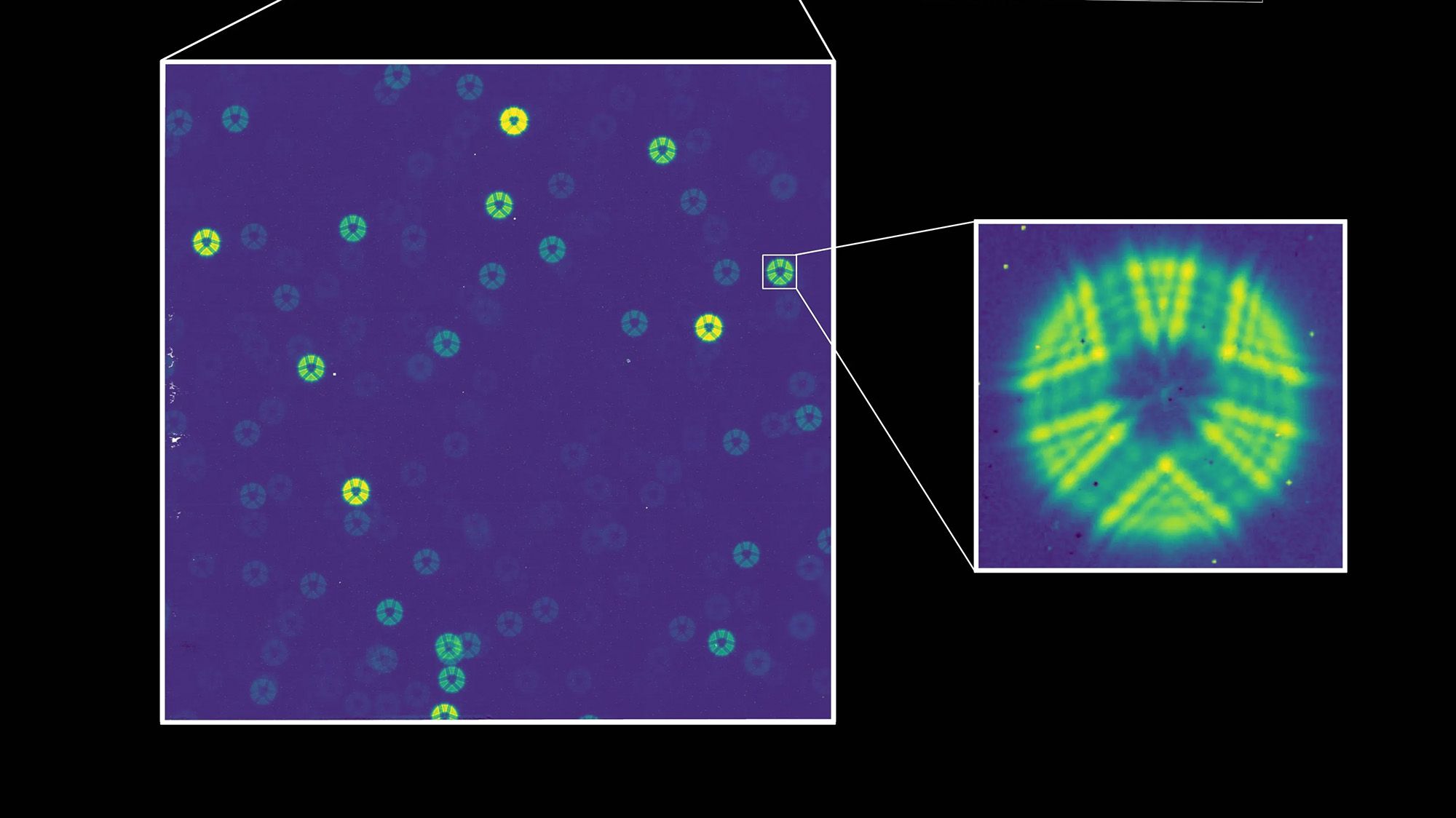
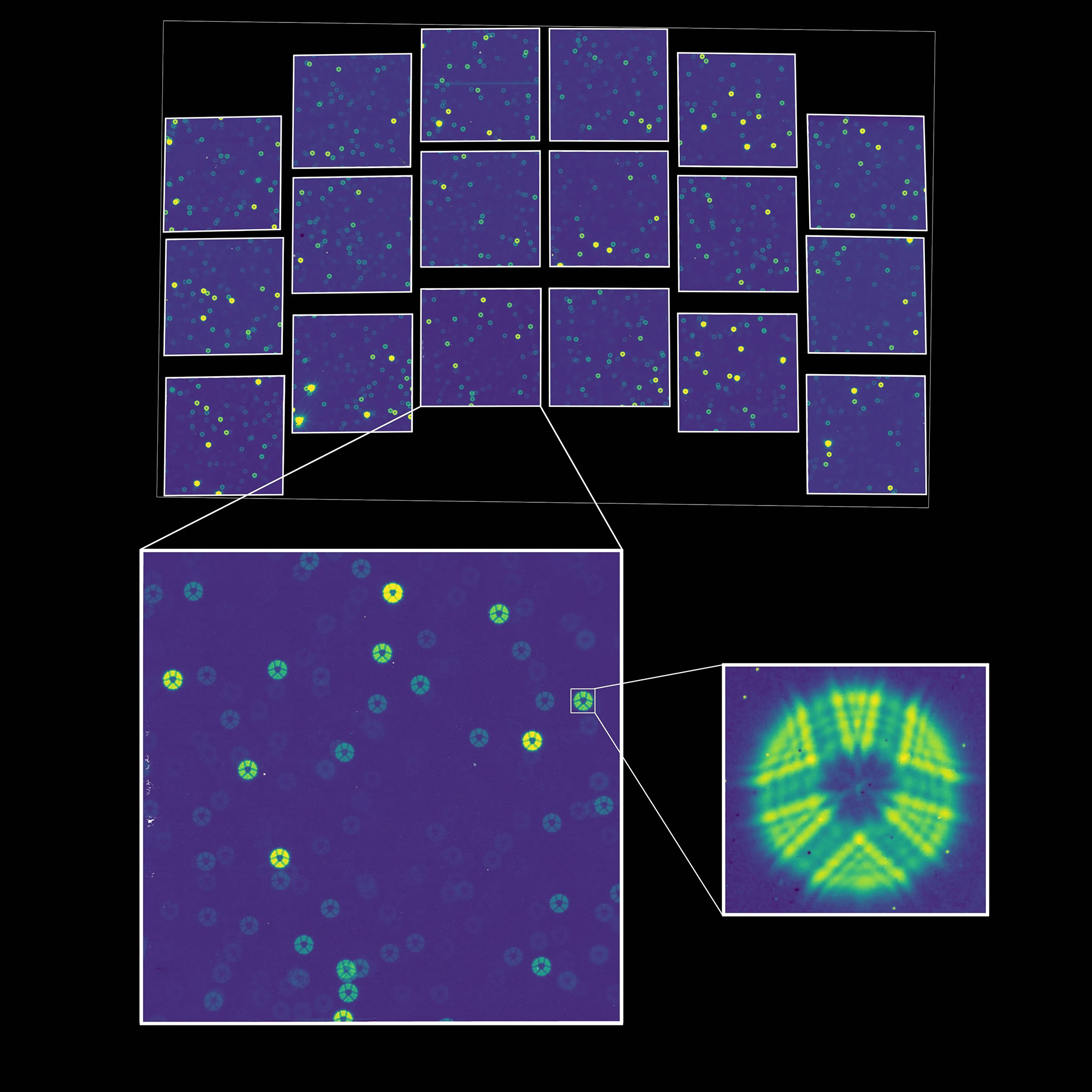
The burgeoning era of wide-field infrared astronomy has taken a monumental step forward as NASA officially unveiled the first test image captured by the Nancy Grace Roman Space Telescope. Shared publicly on September 15, 2026, the preliminary visual data reveals a dense star field in an undisclosed section of the cosmos, rendered as a captivating array of distinctive green rings of light. Although the observatory is still undergoing critical optical tuning and instrument calibration, this initial milestone has already validated the core engineering principles of a machine poised to redefine humanity’s understanding of the universe.
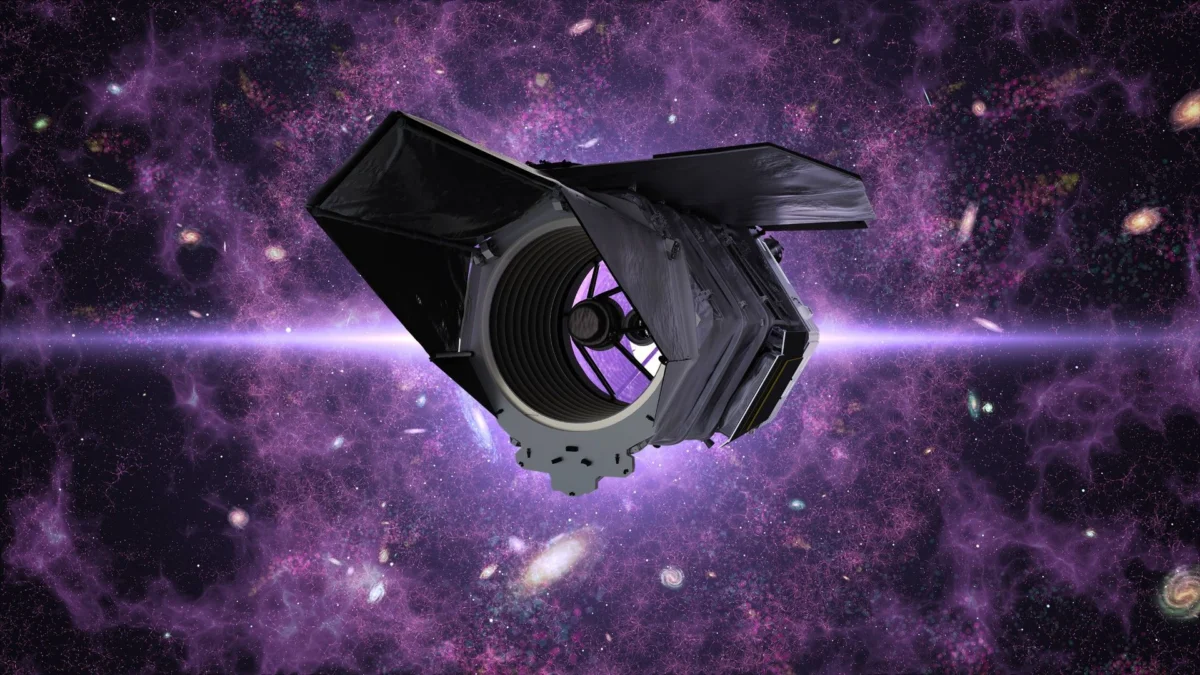
When fully operational, the Roman Space Telescope will combine the legendary optical clarity of the Hubble Space Telescope with a field of view that is an astonishing 100 times larger. This generational leap in capability is expected to revolutionize multiple disciplines within astrophysics, particularly the investigation of dark energy, the discovery of elusive exoplanets, and the cataloging of billions of cosmic bodies. As engineers and scientists spend the coming months optimizing the telescope’s focus and alignment, this early test image serves as both a technical proof of concept and a tantalizing preview of the discoveries yet to come.
Background Context and Mission Objectives
Named in honor of Nancy Grace Roman, NASA’s first Chief of Astronomers—widely celebrated as the "Mother of Hubble"—the space telescope was conceptualized to address some of the most profound mysteries in modern astrophysics. Traditional telescopes are often forced to choose between deep, narrow views of the cosmos, ala Hubble and the James Webb Space Telescope (JWST), or wide, sweeping surveys that lack fine detail. The Roman Space Telescope was designed to bridge this technological gap by providing unprecedented panoramic resolution across vast expanses of space.
The mission’s primary scientific drivers focus on dark energy, the mysterious force driving the accelerated expansion of the universe. By mapping the positions and shapes of millions of galaxies across cosmic time, Roman will help researchers measure the growth of cosmic structure and the expansion history of the universe with unprecedented precision. Additionally, the observatory will utilize a technique known as gravitational microlensing to survey the Milky Way, searching for millions of distant stars and the planets orbiting them, including cold, rocky worlds that are virtually undetectable by other methods.
Chronology of the Milestone
The journey toward the September 15, 2026 reveal has been decades in the making, marked by rigorous development, rigorous ground testing, and the complex logistics of modern aerospace engineering.
Early Conceptualization and Design: Following recommendations from the 2010 Decadal Survey by the National Academy of Sciences, NASA adopted the Wide-Field Infrared Survey Telescope (WFIRST) as a top priority. The mission later adopted a repurposed 2.4-meter primary mirror, identical in size to the one used by the Hubble Space Telescope, donated by the National Reconnaissance Office.
Renaming and Construction: In 2020, NASA officially renamed the observatory the Nancy Grace Roman Space Telescope to honor her foundational contributions to space astronomy. Throughout the early 2020s, major aerospace contractors and NASA centers, including NASA’s Goddard Space Flight Center in Greenbelt, Maryland, built, tested, and integrated the telescope’s massive Wide Field Instrument.
Launch Preparation and Liftoff: After extensive pre-flight checks, the observatory progressed through final integration stages, culminating in its scheduled transition toward flight readiness.
First Light and Initial Testing: In September 2026, mission controllers powered on the spacecraft’s optics and captured the historic first test image. The resulting frame, featuring hundreds of stars appearing as stylized green rings, demonstrated that the telescope’s light-gathering apparatus was functioning correctly, even before the intricate fine-tuning of its focal plane.
Technical Analysis of the First Test Image
The distinctive appearance of the stars in Roman’s first test image—manifesting as green rings of light rather than sharp points—is a direct result of the current phase of commissioning. During this initial alignment period, the telescope’s mirrors and optical assemblies have not yet achieved their final, precisely locked focus. Light passing through the uncalibrated optics spreads out into ring-like diffraction patterns.
Instrument specialists emphasize that this phenomenon is entirely expected and desired at this stage of the mission. By analyzing these optical patterns, ground teams can calculate exact adjustments required to align the mirrors down to nanometer-scale tolerances. Over the next few months, engineers will systematically refine the telescope’s focus, transforming the preliminary rings into razor-sharp stellar points that match or exceed Hubble-quality resolution across an exponentially wider frame.
Official Responses and Scientific Reactions
Astrophysicists and project engineers have expressed immense enthusiasm over the successful acquisition of the first test data. Mission leadership at NASA’s Goddard Space Flight Center, alongside collaborative partners at the Space Telescope Science Institute (STScI) and international space agencies, have praised the seamless performance of the spacecraft’s bus, power systems, and telemetry links.
"Seeing this first test image is a powerful validation of countless hours of dedicated work by engineers, scientists, and technicians around the world," noted members of the Roman science operations team. "While the optics are still in their infancy of calibration, the data confirms that our hardware is healthy, stable, and ready to execute the rigorous tuning phase required to unlock the telescope’s full scientific potential."
Broader Impact and Implications for Astronomy
The deployment of the Nancy Grace Roman Space Telescope marks a pivotal shift in observational strategy. Historically, deep-space surveys required years of painstaking stitching together of thousands of narrow-field images. Roman’s Wide Field Instrument will capture patches of the sky that are 100 times larger than a typical Hubble image in a single exposure. This efficiency will allow researchers to survey vast swaths of the sky in days rather than decades.
The implications for exoplanet research are particularly profound. By scanning the crowded central bulge of our galaxy, Roman’s microlensing surveys are expected to discover thousands of new exoplanets, expanding our census of planetary systems beyond the solar neighborhood and providing vital data on the distribution of worlds capable of supporting life. Simultaneously, its deep cosmological surveys will yield unprecedented insights into the life cycle of stars, the formation of early galaxies, and the ultimate fate of the universe under the influence of dark energy.
As the mission progresses through its commissioning phase, the astronomical community eagerly anticipates the release of fully calibrated images in the near future. These upcoming milestones will herald a new golden age of discovery, expanding the boundaries of human knowledge and offering a breathtakingly expansive window into the deep cosmos.