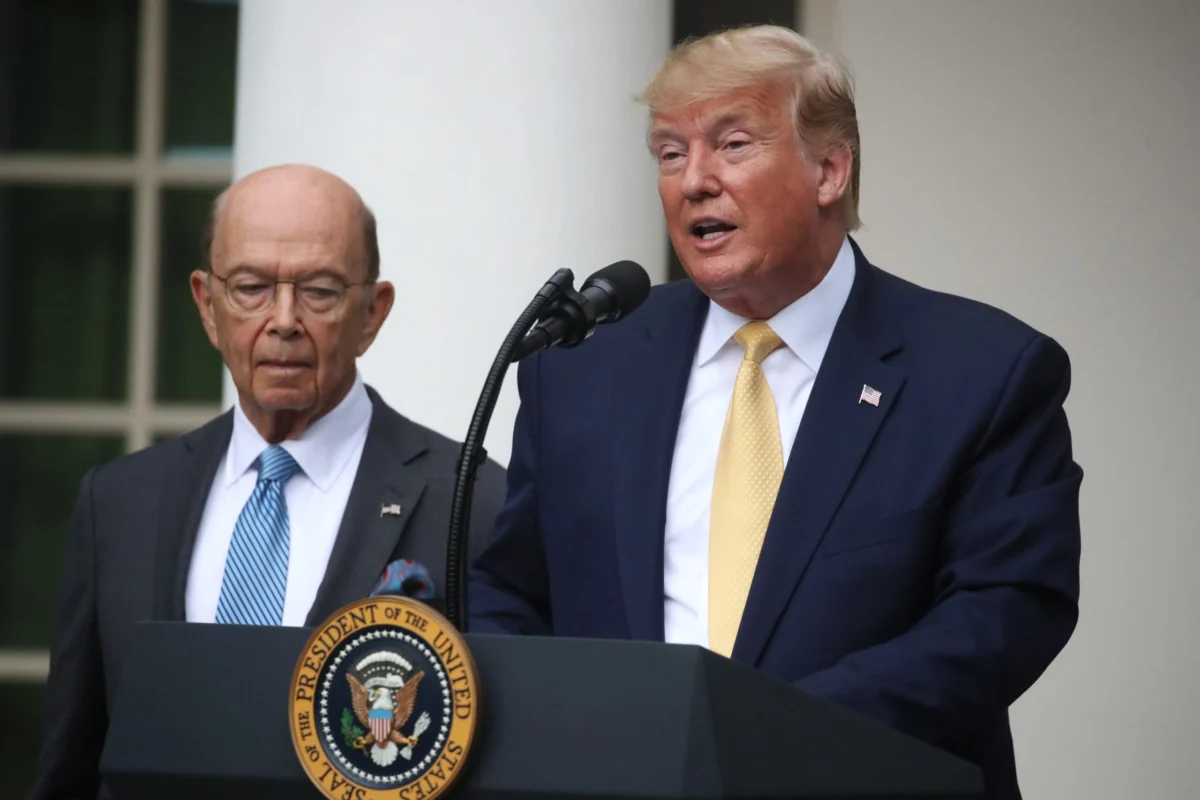
The current political landscape presents a formidable challenge for the sitting administration, balancing the volatile dynamics of the Iran conflict with the immediate concerns of American consumers facing rising oil prices. This intricate tightrope walk, as outlined by Wilbur Ross, former Commerce Secretary in the first administration, pits the risk of voter backlash over high fuel costs against the potential for political weaponization if the administration is perceived as withdrawing prematurely from the region. Ross, speaking exclusively to Fortune, underscored the profound political implications, particularly with the critical midterm elections looming, where "affordability" has solidified its position as a paramount issue for voters.
The Geopolitical Chessboard: Escalation in the Middle East
The heart of the administration’s foreign policy dilemma lies in the persistent and escalating tensions with Iran. While Ross characterizes the conflict as "relatively short-lived" in the grand scheme of wars, its protracted nature in the eyes of Wall Street and the electorate belies initial pronouncements that it would conclude within weeks. This divergence between rhetoric and reality has fueled public frustration and economic uncertainty.
The strategic flashpoint is undeniably the Strait of Hormuz, a narrow maritime chokepoint bordering Iran, through which a significant portion of the world’s seaborne oil — estimated at 20-25% of global petroleum liquids consumption — traverses daily. Its vital role in global energy supply chains means any disruption, or even the perception of it, sends immediate ripples through international oil markets, driving up crude prices. Despite the administration’s assurances of U.S. control, the inherent risks associated with operating near a belligerent Iran have made shipping companies wary, leading to higher insurance premiums and logistical challenges. This reluctance directly impacts supply, and with demand remaining constant, the inevitable outcome is upward pressure on pump prices for consumers globally.
Further exacerbating this precarious situation, the conflict has spread beyond the Strait of Hormuz. In recent days, the Houthis, a Yemen-based terror group widely understood to act as a proxy for Iran, have commenced attacks on commercial shipping in the Bab al-Mandab Strait. This second critical waterway, situated on the other side of the Arabian Peninsula, connects the Red Sea to the Gulf of Aden, serving as a gateway for vessels transiting the Suez Canal. The dual threats in both Hormuz and Bab al-Mandab effectively encircle the Arabian Peninsula, creating a maritime security crisis that significantly elevates the risk profile for global shipping and consequently, global energy prices.
A Chronology of Rising Tensions and Economic Fallout
The current state of heightened alert in the Middle East is the culmination of a series of events that began years prior. A brief chronology illustrates the escalating trajectory:
- 2018: The U.S. withdraws from the Joint Comprehensive Plan of Action (JCPOA), commonly known as the Iran nuclear deal, and re-imposes stringent sanctions on Iran, initiating a "maximum pressure" campaign. This move, intended to cripple Iran’s economy and force it back to the negotiating table for a "better deal," instead led to increased regional aggression from Tehran and its proxies.
- 2019-2020: A series of attacks on oil tankers in the Gulf, drone attacks on Saudi Arabian oil facilities, and the downing of a U.S. surveillance drone are attributed to Iran, signaling its defiance and willingness to disrupt global energy flows.
- Early 2020s: Tensions remain high with sporadic skirmishes and cyberattacks. The administration maintains a robust military presence in the region, aimed at deterring further Iranian aggression and protecting shipping lanes.
- Late 2025/Early 2026: A significant escalation occurs, leading to the current "Iran conflict." Details surrounding the initial spark are debated, but it quickly involves direct military confrontations or proxy engagements that directly threaten maritime security in the Persian Gulf.
- Current State (Early 2026): The conflict, initially promised to be "over within weeks," drags on, creating sustained uncertainty. Oil prices respond erratically to developments, but the overall trend is upward. The Houthis begin targeting ships in the Bab al-Mandab, effectively expanding the zone of conflict and further disrupting shipping.
This prolonged instability, despite the administration’s initial optimistic rhetoric, has directly translated into higher costs for consumers. Ross emphasizes, "The war itself, in a kind of technical sense, is over. Iran has no air force, they have no real navy, they have no air defense, so in that sense, it’s over. The question is, can we win the peace? And that’s what Hormuz is about." This distinction highlights the shift from conventional warfare to a protracted struggle for regional influence and control over vital economic arteries, with significant global repercussions.
The Domestic Imperative: Midterm Elections and the Affordability Crisis
The geopolitical quagmire in the Middle East is inextricably linked to the domestic political landscape, particularly the impending midterm elections. For the administration, the stakes are exceptionally high. Wilbur Ross unequivocally states, "If oil gets back up to $5 a gallon at the pump, that’s gonna make the midterms very, very difficult. And, if he loses both houses in the midterms, he will be impeached."
This stark warning underscores the direct correlation between kitchen-table economics and electoral success. "Affordability" has emerged as a dominant theme in voter concerns, encompassing not just gasoline prices but also broader inflationary pressures on food, housing, and other essentials. While other issues, such as immigration, are certainly salient, the tangible impact of high fuel costs on daily commutes, household budgets, and supply chains makes it a particularly potent political weapon for the opposition.
The administration faces a classic political Catch-22:
- Option 1: Maintain a Strong Stance: Continuing military pressure or a robust presence to secure the Straits risks prolonged conflict, potentially higher oil prices, and voter dissatisfaction with the economy. This plays into the narrative that the administration’s foreign policy is costly and ineffective.
- Option 2: Withdraw/De-escalate: A perceived withdrawal without a clear resolution could be framed by the opposition as a capitulation, weakening American standing, and potentially empowering Iran to further disrupt oil flows, leading to even higher prices. Ross cautions against this, noting, "If he pulled out without this being resolved, and [Iran] do impose some huge fines or what have you on Hormuz, then the Democrats have a very nice storyline: ‘What was the war all about? Look what we got for it: We’ve got the high oil prices, and we don’t have peace.’"
Ross also suggests that the timing of the midterms might be influencing Iran more than the U.S. leadership. "The Iranians seem to be betting that they can outlast the president, and that has been a characteristic theory of their prior discussions," he explained. This strategy aims to exploit the democratic cycle, anticipating that electoral pressures might force a less resolute U.S. stance. However, Ross remains skeptical that a U.S. withdrawal would automatically lead to lower prices, as Iran would likely continue to assert its influence over the Strait of Hormuz.
The prospect of losing both houses of Congress would fundamentally alter the balance of power, severely restricting the administration’s ability to enact its agenda, including its prerogative to conduct war. Even a split Congress, with Democrats controlling the House and Republicans the Senate, would lead to significant gridlock and intense scrutiny of executive actions. Historically, midterm elections often serve as a referendum on the sitting president’s performance, and economic indicators, particularly gas prices, frequently play a disproportionate role in voter sentiment.
The "Big Oil" Option: Domestic Pressure and Production
Recognizing the immediate political threat posed by high gasoline prices, the administration has also turned its attention domestically, specifically targeting the major oil companies. In a notable Truth Social post last month, the president accused "Big Oil" of price gouging, asserting that despite a drop in crude oil prices, "the big oil companies are not dropping their price at the pump commensurate with the sharply lower prices they are paying for oil." He subsequently instructed the Department of Justice (DOJ) to "immediately start looking into this," demanding that "Gasoline prices better start going down a lot faster than what I’m seeing!"
This move represents a strategic pivot, attempting to shift blame for high pump prices from geopolitical factors to corporate profiteering, a populist stance that often resonates with frustrated consumers. Ross supports this pressure, highlighting the immediate jump in pump prices following any military action, which he argues is not "really justified to go up the same day because the oil hasn’t found its way through."
From an economic perspective, there is often a lag between changes in crude oil prices and corresponding adjustments at the pump. This is due to several factors:
- Inventory Lag: Gasoline sold at pumps was refined from crude oil purchased weeks or even months prior.
- Refining and Distribution Costs: These fixed and variable costs (labor, transportation, marketing) contribute significantly to the final price and don’t necessarily fluctuate with crude prices.
- Taxes: Federal and state taxes make up a substantial portion of the retail price, remaining constant regardless of crude costs.
- Retailer Margins: Gas station operators adjust their margins based on local competition and operational costs.
However, the administration’s directive implies a belief that these lags or margins are being exploited. Ross anticipates continued pressure on oil companies "to do two things: One, not to expand the margins of the gas stations themselves, and two, to produce more."
On the production front, the U.S. Energy Information Administration (EIA) data released earlier this month indicates that U.S. crude oil production averaged 13.8 million barrels per day in 2026, a modest increase from 13.6 million barrels per day a year prior. While the U.S. remains a global leader in oil production, the administration’s call for "more" production highlights a desire for domestic supply to act as a buffer against global price shocks. Increasing production, however, is not an instantaneous process. It involves significant capital investment, lead times for drilling and infrastructure development, and is also subject to environmental regulations and market dynamics. Oil companies often make long-term investment decisions based on sustained price signals, not short-term political demands.
Broader Impact and Implications
The confluence of the Iran conflict, volatile oil markets, and the looming midterm elections creates a multifaceted crisis with significant implications:
- Economic Strain: Sustained high oil prices translate directly into inflationary pressures across the economy. Transportation costs for goods increase, impacting supply chains and consumer prices for virtually everything. For American households, $5 a gallon gasoline significantly erodes disposable income, forcing difficult choices and potentially dampening consumer spending, which is a major driver of economic growth. This could also lead to a broader slowdown, risking a recessionary environment.
- Political Vulnerability: The administration’s credibility on economic management and foreign policy is on the line. Failure to stabilize oil prices or resolve the Iran conflict before the midterms could lead to substantial losses in Congress, potentially triggering a period of intense partisan conflict and governmental paralysis. The threat of impeachment, as articulated by Ross, becomes a very real possibility if the opposition gains sufficient power.
- Geopolitical Instability: The ongoing tensions in the Middle East contribute to global instability, affecting international trade, alliances, and energy security for partner nations. The dual threats in the Strait of Hormuz and Bab al-Mandab underscore the fragility of critical global supply lines and could prompt a re-evaluation of energy diversification strategies by importing nations.
- Energy Policy Debate: The crisis intensifies the debate around U.S. energy policy, weighing the benefits of domestic production and energy independence against climate goals and the transition to renewable energy sources. The administration’s pressure on "Big Oil" also reignites discussions about market regulation and corporate responsibility in times of crisis.
- Shifting Global Power Dynamics: Iran’s perceived strategy of "outlasting" the U.S. administration highlights a broader trend of adversaries attempting to exploit democratic cycles and internal divisions. This requires a nuanced and sustained foreign policy approach that transcends immediate electoral concerns.
In conclusion, the administration finds itself at a critical juncture, with its political fortunes intimately tied to events unfolding thousands of miles away in the Middle East and the pricing decisions of domestic energy companies. The imperative to "win the peace" in the Strait of Hormuz, manage consumer expectations on affordability, and navigate the complex relationship with the oil industry forms an intricate web of challenges. How the administration addresses these pressures in the coming months will not only define its legacy but also determine the future direction of American politics and foreign policy, with the midterm elections serving as the ultimate arbiter of public sentiment. The path forward is fraught with peril, demanding a delicate balance of diplomatic resolve, economic strategy, and domestic political acumen.