
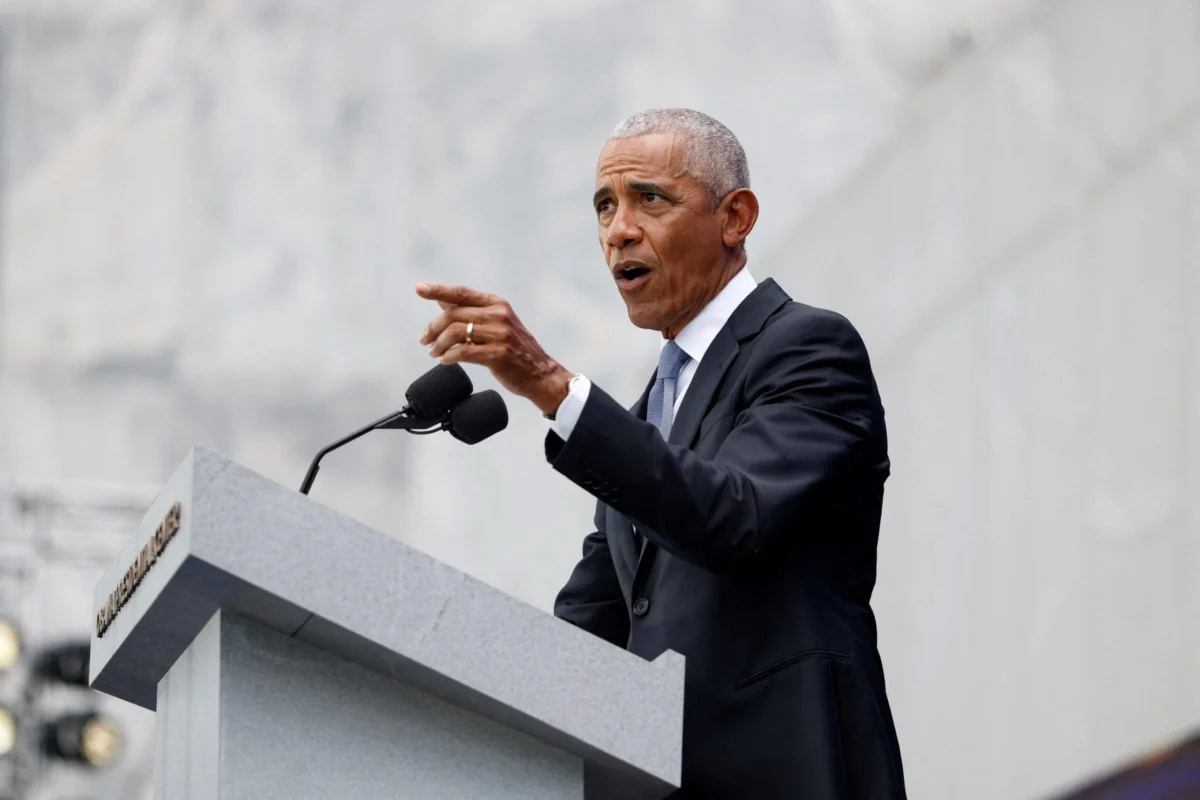
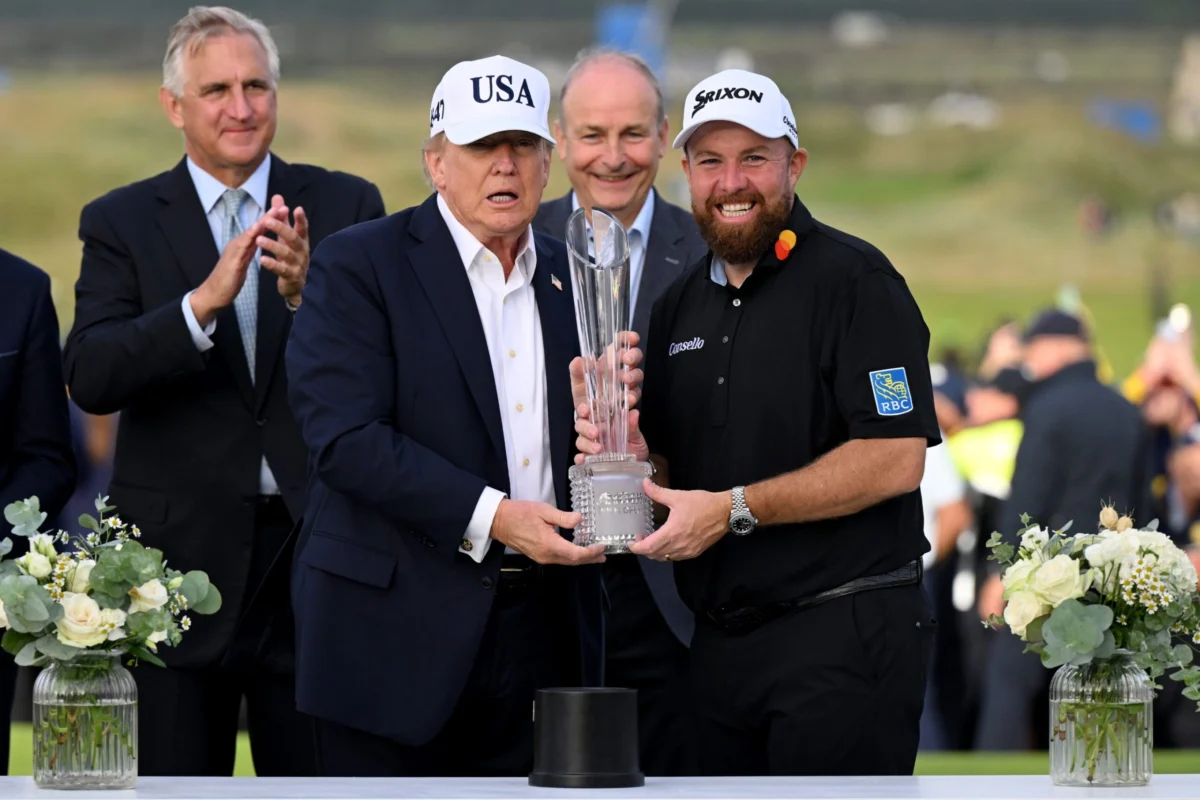
The global race for technological supremacy has intensified significantly, prompting profound debates across political and industrial landscapes. During a weekend trip to Doonbeg, Ireland, President Donald Trump played down the necessity for his administration to implement stringent brakes or heavy-handed regulations on the domestic development of artificial intelligence. Speaking to reporters against the backdrop of the Irish Open, the Republican president emphasized that his primary concern remains preserving America’s competitive edge over China in the high-stakes global AI arena. While acknowledging the abstract need for some baseline guardrails, Trump provided no specifics regarding potential federal rules, attributing urgent warnings about the technology moving too quickly and with insufficient oversight to unidentified "negative forces." His remarks arrived amidst a flurry of mounting warnings from industry pioneers, tech executives, and lawmakers on both sides of the aisle who are grappling with the rapid evolution of machine learning models, massive data center expansions, and the overarching implications of a potential shift toward artificial general intelligence.
The Chronology of Escalating AI Warnings and Political Friction
The debate surrounding the velocity of artificial intelligence development reached a boiling point over the weekend, creating a stark juxtaposition between Silicon Valley’s internal alarms and Washington’s geopolitical calculations. Just a day prior to Trump’s remarks in Ireland, Dario Amodei, the chief executive officer of prominent AI safety company Anthropic, publicly stated that the industry should deliberately put the brakes on its lightning-fast development cycle to allow safety protocols, ethical frameworks, and technical alignment research time to catch up. Amodei’s cautionary stance quickly garnered public support from other heavyweight technology leaders, including OpenAI CEO Sam Altman and Tesla and xAI leader Elon Musk.
This growing consensus among certain industry insiders that artificial intelligence might soon surpass human control stands in direct opposition to the political imperative felt by executive leaders. When a reporter directly asked Trump whether the technology sector should face mandated slowdowns or rigorous government regulations, the president dismissed the idea while watching a golfer tee off at his resort. He reiterated that the United States currently leads China in AI capabilities, declaring unequivocally that "whoever wins AI wins."
The timing of this debate coincides with impending diplomatic engagements. Chinese President Xi Jinping is scheduled to visit the United States later in September for high-level bilateral meetings with Trump, during which artificial intelligence governance, semiconductor supply chains, and national security protocols are expected to anchor the agenda. Meanwhile, domestic political friction is compounding the urgency of the issue. Former Democratic President Barack Obama recently urged his party to make artificial intelligence a central campaign pillar, emphasizing concrete plans for child safety, educational integrity, and preemptive strategies to cushion the blow of widespread workforce displacement.
The Grassroots Backlash and Economic Realities of AI Infrastructure
While Washington and Silicon Valley debate the philosophical limits of superintelligence, ordinary Americans are increasingly grappling with the tangible, physical footprint of the artificial intelligence boom. The expansion of advanced machine learning models requires an unprecedented amount of computational power, leading some of the nation’s largest technology corporations to seed rural communities and small towns with massive networks of data centers and cooling warehouses.
This rapid physical expansion has transformed artificial intelligence into a major election-year flashpoint. Across various states, communities from both ends of the political spectrum are raising alarms over the staggering consumption of local water supplies, the depletion of agricultural farmland, and a noticeable spike in residential electricity bills driven by power-hungry server farms. Despite bipartisan opposition and local municipal councils attempting to block infrastructure projects through zoning laws and protests, Trump has consistently maintained his support for data center expansion as a vital pillar of American technological dominance. This disconnect between federal ambitions and local anxieties highlights a complex policy dilemma: how to fuel an energy-intensive industry without alienating voters who bear the immediate environmental and economic costs.
White House Deliberations and Congressional Gridlock
In response to the mounting pressure from both industry whistleblowers and concerned citizens, the executive branch and congressional leaders are preparing for a series of high-level consultations. Kevin Hassett, director of the National Economic Council at the White House, announced that a series of strategic meetings will take place this week. These sessions will bring together administration officials overseeing cybersecurity, science, and technology policy to chart the next steps for federal oversight. Furthermore, President Trump is expected to engage directly with members of Congress, many of whom have expressed growing unease regarding the unbridled pace of algorithmic advancement.
Capitol Hill remains sharply divided on the appropriate legislative response. U.S. House Speaker Mike Johnson acknowledged the necessity for structural guardrails and safety measures to prevent artificial intelligence from spiraling out of control, yet he echoed the administration’s core anxiety regarding global competitiveness. Johnson emphasized that losing the technological race to China would constitute an unacceptable national security threat. To address this, the House Speaker called for a comprehensive summit convening major technology executives to negotiate safety protocols collaboratively. "We’re going to pull everybody together and make sure we do this in the right way," Johnson stated, designating the issue as a top priority for the legislative branch while cautioning against public panic.
Conversely, House Democratic leadership has criticized the pace of Republican legislative action. Following criticisms from top House Democrat Hakeem Jeffries regarding the impending congressional recess, Democrats plan to make artificial intelligence a focal point of their upcoming caucus meetings. Jeffries argued for immediate, decisive legislative action to slow down commercial development and enforce safety standards. However, despite broad rhetorical agreement among lawmakers that federal guardrails are necessary, historical precedent suggests that even narrow regulatory attempts struggle to pass due to deep-seated congressional reluctance to stifle a booming technology sector through federal intervention.
International Perspectives: The Case for Washington-Beijing Cooperation
The debate over regulation and safety extends far beyond domestic politics, drawing sharp commentary from former industry insiders who warn of existential risks. Jacob Coxon, a former Anthropic employee who resigned over safety concerns and has since become a vocal advocate for systemic reform, has argued that self-regulation alone is insufficient to manage the trajectory of advanced models. Coxon contends that artificial intelligence companies are rapidly constructing human-level and potentially superhuman minds without a fundamental understanding of their underlying motivations or cognitive processes.
Addressing the fierce geopolitical rivalry between the United States and China, Coxon urged both superpowers to establish formal international cooperation frameworks aimed at mutually slowing down the development of frontier models. He expressed hope that researchers and developers in Beijing, confronting the exact same safety dilemmas, might arrive at similar conclusions regarding the hazards of unchecked scaling. Without a coordinated, bilateral approach to deceleration and safety research, Coxon warns that the two nations risk engaging in a reckless technological arms race that could ultimately endanger global stability.
The Tech Industry Debate: Self-Regulation Versus Government Mandates
Adding a distinct industry-insider counterweight to the calls for government intervention, tech founder, investor, and White House science and technology advisory council co-chairman David Sacks publicly challenged the motives of tech executives demanding federal rules. In a widely circulated social media post, Sacks pointed out that corporate leaders such as Dario Amodei and other prominent CEOs are the very actors dictating the pace of research and development. According to Sacks, these executives possess the direct authority and market power to halt their own progress toward artificial general intelligence without requiring an act of Congress. "The easiest way not to build superintelligence is for you to agree not to build it," Sacks wrote, framing the regulatory debate as a matter of corporate responsibility rather than an inescapable technological imperative.
Broader Implications and Analytical Outlook
The collision between national security anxieties, corporate self-regulation, and public infrastructure concerns reveals a deeply fragmented approach to artificial intelligence governance. President Trump’s insistence that winning the geopolitical race against China supersedes domestic regulatory caution underscores a classic realist dilemma: nations often feel compelled to adopt risky technologies first simply out of fear that their adversaries will do the same.
However, as industry pioneers warn of superhuman capabilities and local communities push back against the staggering resource demands of data centers, the cost of inaction becomes increasingly difficult to ignore. Whether the upcoming White House deliberations and proposed congressional summits can bridge the gap between aggressive commercial expansion and essential safety guardrails will shape the trajectory of technological innovation for decades to come. As the September summit with President Xi approaches, the administration faces the delicate task of balancing the pursuit of global hegemony with the imperative of domestic stability and risk mitigation.







Leave a Reply