President Donald Trump’s recent proposal to impose significant tariffs on imported generic drugs, aiming to bolster domestic production and address national security concerns, has sparked a nuanced debate within the Republican party, even among key figures on health policy. Senator Bill Cassidy of Louisiana, chairman of the Senate Health, Education, Labor, and Pensions (HELP) Committee, acknowledged that such a policy could lead to increased costs for American patients. However, he suggested that this potential price hike might be a “worthwhile trade-off” for safeguarding the nation’s pharmaceutical supply chain.
“The national security might be something worth paying for,” Senator Cassidy stated in an exclusive interview with KFF Health News on July 22. This assertion comes at a time when the United States has faced persistent challenges with drug shortages, highlighting a critical vulnerability in its reliance on foreign manufacturing for essential medicines.
The U.S. pharmaceutical industry, particularly for generic drugs, has become heavily dependent on international suppliers, with China emerging as a dominant force in the production of active pharmaceutical ingredients (APIs), the core components of many medications. A study published last fall in the JAMA Health Forum underscored this dependency, revealing that a substantial portion of APIs for numerous antibiotics are sourced from China. This reliance has been exacerbated by the closure of domestic manufacturing facilities or their shift to producing more profitable drugs, leaving the nation susceptible to supply chain disruptions.
Cassidy, a physician himself, articulated the strategic concerns driving this debate: “Do we want China to have that sort of leverage for these drugs to be produced principally, maybe 99%, over there, and we don’t have access to them if tension rises between the two countries?” His question points to a broader geopolitical consideration, where economic interdependence in critical sectors like pharmaceuticals could become a tool of influence or leverage in international relations.
Trump’s proposal, outlined in a social media post on July 21, outlined a two-year grace period for generic drug companies to relocate their production back to the United States. Following this period, he intends to implement a 100% tariff on imported generic drugs, with the rate escalating to 200% in the subsequent year. This move targets a significant segment of the American pharmaceutical market, as generic drugs constitute an estimated 90% of all prescriptions filled in the U.S., providing affordable alternatives to brand-name medications for millions of Americans.
The Geopolitical Imperative: Securing the Drug Supply Chain
The push to onshore pharmaceutical manufacturing is not a new concept, but it has gained significant traction in recent years due to increased awareness of global supply chain fragilities, exacerbated by events like the COVID-19 pandemic. The U.S. has long expressed concerns about its dependence on China for critical goods, including pharmaceuticals. This dependence creates potential risks, ranging from trade disputes and geopolitical tensions to regulatory changes in exporting countries that could disrupt supply.
The reliance on China for APIs is particularly acute. China, along with India, dominates the global API market. For many essential antibiotics, the U.S. has limited domestic production capacity, making it vulnerable to any interruption originating from these key manufacturing hubs. The economic incentives for API production have often favored countries with lower labor costs and less stringent environmental regulations, leading to the decline of similar industries in the United States.
Senator Cassidy’s framing of the issue as a national security concern aligns with a growing sentiment among policymakers to de-risk critical supply chains. The idea is that by bringing production back to the U.S., the nation can ensure greater control over its supply of essential medicines, reducing reliance on potential adversaries or competitors. This approach, however, necessitates a careful consideration of the economic implications, particularly for the cost of healthcare.
Economic Ramifications: The Price of Independence
The immediate concern raised by Senator Cassidy and others is the potential for increased drug prices. Tariffs are essentially taxes on imports, and these costs are typically passed on to consumers, either directly through higher prices at the pharmacy or indirectly through increased costs for health insurers, which can then lead to higher premiums. For generic drugs, which are designed to be affordable, any significant price increase could disproportionately affect patients with limited incomes and those with chronic conditions who rely on these medications daily.
The Congressional Budget Office (CBO) has not yet released a formal analysis of Trump’s specific tariff proposal. However, historical analyses of tariffs on imported goods suggest that they can lead to higher consumer prices. The impact on the pharmaceutical sector could be particularly complex, as it involves intricate global manufacturing networks.
The pharmaceutical industry itself has offered mixed reactions to such proposals in the past. While some domestic manufacturers might benefit from reduced foreign competition, companies that rely on imported APIs or finished generic drugs could face significant challenges. Patient advocacy groups and health economists have often voiced concerns about policies that could lead to higher out-of-pocket costs for essential medicines.
A Shifting Political Landscape and Policy Debates
Senator Cassidy’s comments on the drug tariffs emerged within a broader interview that touched upon several other significant health policy issues. Notably, the conversation revisited his confirmation vote for Robert F. Kennedy Jr. as the head of the Department of Health and Human Services (HHS), a nomination that has been a subject of controversy. Cassidy, who has served in Congress since 2009, acknowledged his role in confirming Kennedy, despite later expressing concerns about broken promises.
In a May interview on CBS News’s Face the Nation, Cassidy stated that Kennedy had not upheld commitments made to him, including assurances regarding federal recommendations for childhood vaccines. This led to a discussion about whether Cassidy would seek to question Kennedy further on these matters. Cassidy indicated that he had requested Kennedy appear before the Senate HELP Committee but had not yet received a definitive response. Kennedy had previously testified before the committee in April concerning the Trump administration’s fiscal year 2027 budget request for HHS.
Cassidy explained that his vote to advance Kennedy’s nomination was based on a trust that Kennedy would adhere to his word, particularly concerning vaccine policies. He remarked, “If they agree to guardrails and disregard those guardrails, you can judge me. You may decide my judgment wasn’t very good, but I don’t think you can say I acted in bad faith.” He also reasoned that Kennedy was likely to influence the administration’s policies regardless of his official position, and that having him in an official capacity allowed for greater oversight.
The discussion on vaccine policy also coincided with concerning public health data. Researchers at Johns Hopkins University reported that the number of measles cases confirmed in the U.S. in 2026 had already surpassed the total for 2025, marking the highest incidence in 35 years. This surge in preventable disease underscores the ongoing importance of public health messaging and vaccine confidence, a subject that has been central to debates surrounding Kennedy’s role at HHS.
The No Surprises Act and Price Transparency
Beyond drug tariffs and vaccine policy, Senator Cassidy also addressed the implementation of the 2020 No Surprises Act, legislation he co-authored. This law was designed to protect patients from unexpected medical bills when they receive out-of-network care without their knowledge. Recent reports, including an analysis by The Wall Street Journal, indicated that healthcare providers have been awarded substantial sums through the arbitration system established by the act to resolve payment disputes. In 2025, providers received nearly $15 billion in disputed claims, a significant increase from $4.08 billion in 2024.
Despite these figures, Cassidy maintained that the law does not require modification, emphasizing the importance of price transparency as a foundational element for a more equitable healthcare system. “The initial step to make sure that people are getting their best deal is price transparency,” he stated.
In line with this principle, the Senate HELP Committee overwhelmingly approved the bipartisan Patients Deserve Price Tags Act on July 22. This bill aims to expand requirements for hospitals, insurers, and other healthcare providers to publicly disclose their prices. A similar bill has advanced in the House of Representatives, though the ultimate passage of either measure by both chambers remains uncertain. This legislative push reflects a broader effort to empower consumers with information that can help them make informed decisions about their healthcare and potentially negotiate better rates.
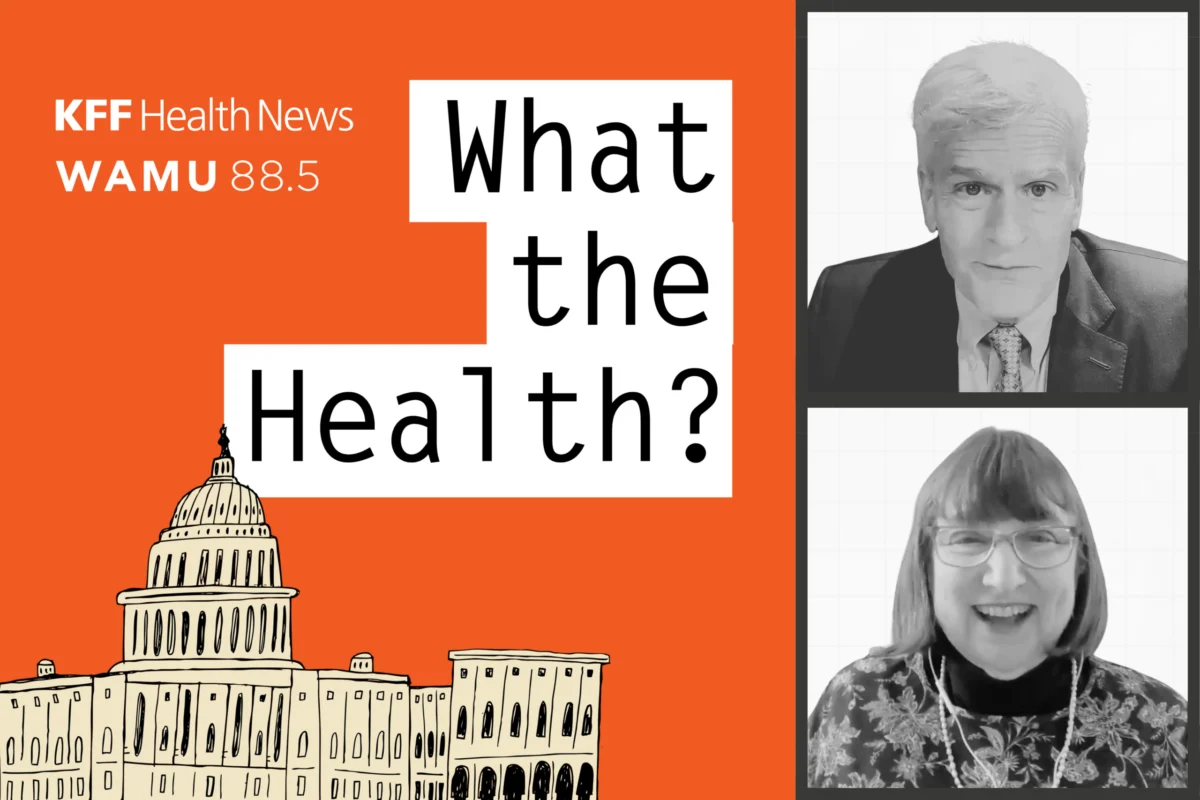
Cassidy also referenced his “Money and Value for Patients” proposal and participated in KFF Health News’s “How Would You Fix It?” series, which features in-depth discussions on healthcare challenges. An abridged version of his interview was featured in Episode 456 of the What the Health? From KFF Health News podcast, titled “A Shrinking Safety Net,” broadcast on July 23.
Broader Implications and Future Outlook
The debate surrounding Trump’s proposed tariffs on generic drugs highlights a critical juncture in American healthcare policy. On one hand, there is a compelling argument for enhancing national security and ensuring the resilience of the pharmaceutical supply chain by reducing reliance on foreign manufacturing. This could lead to greater domestic job creation and a more stable supply of essential medicines during times of crisis.
On the other hand, the potential for increased drug costs poses a significant challenge. Policymakers must carefully weigh the economic impact on patients and the healthcare system against the strategic benefits of reshoring pharmaceutical production. This will likely involve complex negotiations and the exploration of various policy tools, such as incentives for domestic manufacturing, investments in research and development, and robust regulatory oversight.
The coming months will likely see further scrutiny of Trump’s proposal, with potential analyses from the CBO and continued debate among lawmakers, industry stakeholders, and patient advocacy groups. The success of such a policy will depend on its ability to achieve its national security objectives without imposing an undue financial burden on the American public. The interconnectedness of global trade, national security, and healthcare costs ensures that this issue will remain a central focus in policy discussions.