
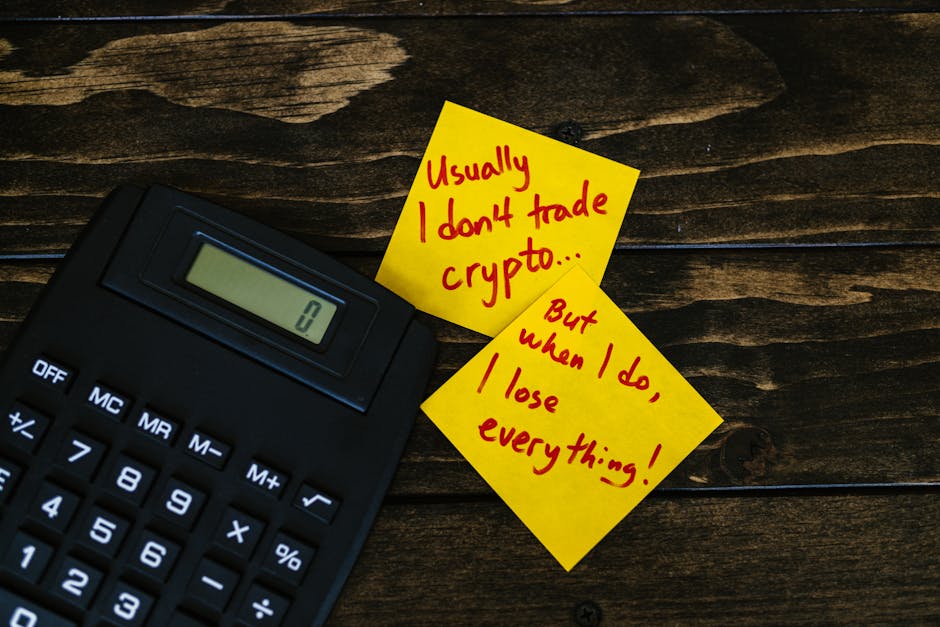
Prominent Crypto Critic Warns of Imminent Collapse: A Deep Dive into the Doubts
The cryptocurrency landscape, often characterized by its rapid innovation and speculative fervor, is facing intensified scrutiny from a vocal contingent of critics. Among these, a figure who has consistently maintained a skeptical stance, often to the point of predicting an imminent and catastrophic collapse, has recently reiterated their dire warnings. This individual, whose pronouncements carry significant weight due to their deep understanding of financial markets and technological underpinnings, has meticulously outlined a series of interconnected vulnerabilities within the crypto ecosystem that they believe are poised to trigger a widespread unraveling. Their arguments are not rooted in mere Luddism or a dismissal of blockchain technology’s potential, but rather in a sophisticated analysis of the inherent structural flaws, regulatory arbitrage, and the psychological underpinnings of the current market dynamics. Understanding these critiques is crucial for anyone invested in, or considering investing in, digital assets, offering a counterpoint to the often-unbridled optimism that pervades the space.
The core of the critic’s argument centers on what they perceive as a fundamental disconnect between the perceived value of many cryptocurrencies and their underlying utility or intrinsic worth. Unlike traditional assets that are backed by tangible goods, services, or revenue streams, a vast majority of crypto assets derive their value almost entirely from speculative demand. This demand, the critic argues, is fueled by a psychological phenomenon known as the greater fool theory – the belief that one can sell an asset to someone else at a higher price, regardless of its actual worth. This creates a highly unstable market where prices can skyrocket based on hype and fear of missing out (FOMO), but can equally plummet when sentiment shifts, leaving late entrants holding worthless tokens. The critic points to the proliferation of thousands of altcoins, many with little to no functional use case beyond being a vehicle for speculation, as a testament to this detachment from real-world economic principles. They emphasize that without genuine adoption and application, the market becomes an echo chamber of price action, vulnerable to any external shock.
A significant portion of the critic’s recent pronouncements has focused on the inherent fragility of the decentralized finance (DeFi) ecosystem. While DeFi promises a more open and accessible financial system, the critic contends that it is riddled with unaddressed risks. Smart contracts, the backbone of DeFi, are complex and susceptible to bugs and exploits, as evidenced by numerous high-profile hacks and rug pulls that have resulted in billions of dollars in losses. The lack of robust regulatory oversight in this nascent space means that recourse for victims is often non-existent, further exacerbating the risks. Moreover, the critic highlights the interconnectedness of DeFi protocols. A failure in one protocol can create a cascade effect, impacting others that rely on it for liquidity or as collateral. This creates a systemic risk that, in the critic’s view, is far greater than publicly acknowledged, akin to the complex web of derivatives that contributed to the 2008 financial crisis. The reliance on volatile cryptocurrencies as collateral for lending and borrowing further amplifies this risk, as a sharp downturn in the price of the collateral can lead to forced liquidations and widespread deleveraging.
Furthermore, the critic has consistently raised concerns about the environmental impact of certain proof-of-work cryptocurrencies, particularly Bitcoin. While acknowledging that newer, more energy-efficient consensus mechanisms are emerging, they argue that the current energy consumption of Bitcoin mining is unsustainable and contributes to climate change. This environmental burden, the critic suggests, will inevitably lead to increased regulatory pressure and public backlash, potentially leading to outright bans or severe restrictions in certain jurisdictions. They view this as another fundamental vulnerability that could trigger a significant devaluation of Bitcoin and other energy-intensive cryptocurrencies. The argument extends to the ethical implications of dedicating vast amounts of electricity to a system that, in their view, provides questionable societal benefit compared to the environmental cost. This ethical dimension adds another layer of pressure, potentially influencing institutional adoption and governmental policy.
The regulatory landscape, or rather the current lack thereof, is another critical point of contention for the prominent crypto critic. They argue that the absence of clear and comprehensive regulations has allowed a Wild West environment to flourish, characterized by market manipulation, fraud, and a lack of investor protection. While proponents of crypto often champion decentralization as a shield against government control, the critic believes that this very lack of oversight is a ticking time bomb. They anticipate that as the crypto market grows and its influence expands, governments will inevitably step in with stringent regulations, potentially stifling innovation or, in a worst-case scenario for existing holders, enacting measures that could devalue or even outlaw certain digital assets. The critic draws parallels to historical instances where unregulated markets eventually faced significant governmental intervention, often leading to painful adjustments for those invested. The patchwork of regulations across different countries also creates opportunities for regulatory arbitrage, where projects can relocate to more lenient jurisdictions, further complicating any attempts at global oversight and potentially creating havens for illicit activities.
The critic also delves into the psychological and social engineering aspects that they believe are driving the crypto market. They point to the powerful influence of social media, online forums, and prominent figures who often act as cheerleaders for specific cryptocurrencies, creating an echo chamber that amplifies positive sentiment while downplaying risks. This, they argue, preys on human psychology, particularly greed and the desire for quick wealth, leading individuals to make impulsive decisions without adequate due diligence. The critic views the crypto space as a fertile ground for pump-and-dump schemes and other forms of market manipulation, where well-connected individuals can artificially inflate the price of a token before selling off their holdings to unsuspecting retail investors. The inherent anonymity of many crypto transactions, while lauded by some for privacy, also makes it easier for malicious actors to operate with impunity. The sheer speed at which information and sentiment can spread across social media platforms allows for rapid shifts in market dynamics, making it difficult for reasoned analysis to keep pace with emotional responses.
Furthermore, the critic is highly skeptical of the purported decentralization of many prominent cryptocurrencies. They argue that while the underlying blockchain technology might be distributed, the actual control and influence often reside with a small group of individuals or entities. This can manifest in the form of dominant mining pools, large token holders who can sway market prices, or core development teams who hold significant sway over the future direction of a project. This concentration of power, the critic contends, undermines the very notion of decentralization and creates vulnerabilities similar to those found in traditional centralized systems. They point to instances where a few key developers have been able to implement significant changes without broad consensus, or where large whales have been able to manipulate market prices through sheer volume of trades. This perceived hypocrisy, between the ideal of decentralization and the reality of concentrated power, is a significant point of criticism.
The critic’s prediction of an impending collapse is not a static one, but rather an evolving thesis based on the accumulation of these identified vulnerabilities. They often draw parallels to past financial bubbles, such as the dot-com bust or the housing market crisis, highlighting similarities in the speculative fervor, the disregard for fundamental value, and the eventual inevitable correction. However, they also acknowledge that the digital nature of cryptocurrency and the global reach of the internet introduce unique dynamics that could accelerate the pace of both the rise and the fall. The interconnectedness of global financial markets means that a significant shock within the crypto space could have ripple effects across traditional finance, and vice versa. This potential for contagion is a key concern, adding to the urgency of their warnings.
In conclusion, the prominent crypto critic’s unwavering skepticism is underpinned by a multifaceted analysis of the cryptocurrency market. Their arguments encompass the speculative nature of asset valuation, the inherent risks within DeFi, environmental concerns, the inadequacies of the current regulatory framework, the psychological manipulation of investors, and the often-illusory nature of decentralization. While the crypto community often dismisses these criticisms as fear-mongering, a thorough examination of the critic’s points reveals a compelling case for caution. Understanding these perspectives is not about advocating for an outright abandonment of digital assets, but rather about fostering a more informed, risk-aware approach to an asset class that remains highly volatile and subject to a multitude of systemic and idiosyncratic risks. The critic’s persistent warnings serve as a vital counterpoint in a market often driven by hype, urging investors to look beyond the allure of quick riches and consider the fundamental realities and potential pitfalls of the cryptocurrency landscape. Their analysis compels a deeper dive into the substance, or lack thereof, underpinning the soaring valuations in this evolving financial frontier.





Leave a Reply