
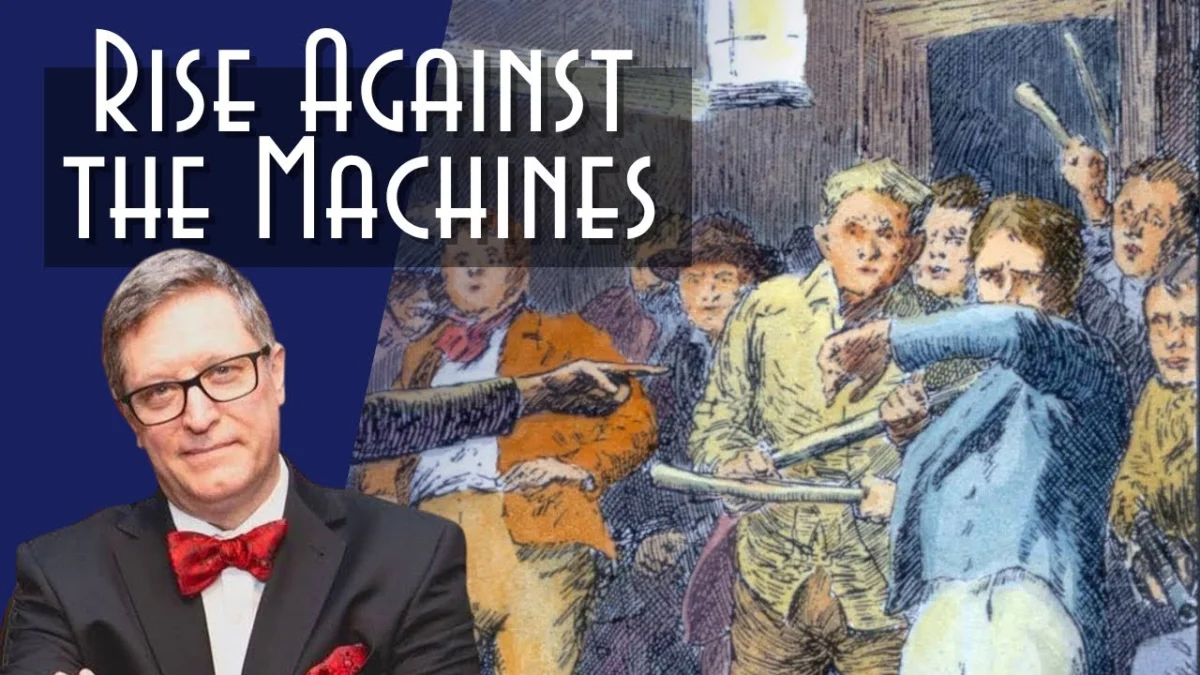
The friction between human labor and technological advancement is as old as civilization itself, echoing through the corridors of history from the dawn of industrialization to the modern era of artificial intelligence. One frequently repeated anecdote concerning the renowned economist Milton Friedman describes his visit to a canal under construction in 1960s China. Observing the vast number of manual laborers digging earth with shovels, Friedman reportedly asked the official in charge why the project was not being expedited using excavators and modern machinery. The bureaucrat explained that utilizing manual labor created a greater number of jobs. Friedman’s swift retort—“If it’s jobs you want, you should give those men spoons instead”—encapsulates the fundamental economic tension that has surfaced repeatedly across centuries: the conflict between employment preservation and efficiency-driven innovation.
Whether or not that specific exchange took place, it illustrates a profound societal dilemma. Today, this historical anxiety has found a striking modern parallel. As artificial intelligence and large-scale data centers reshape the global economy, contemporary knowledge workers find themselves grappling with the same existential dread that consumed the artisans of 19th-century England.
The Historical Roots of Mechanical Resistance: 1812 and the Luddite Uprising
To understand the modern backlash against automated systems and data infrastructure, historians often look back to the definitive era of anti-technology protest. According to research from the University of Cambridge, that apex arrived in 1812. The year was marked by an assault involving approximately 150 armed laborers on a mill in Huddersfield, England. During the raid, defending soldiers opened fire on the crowd to prevent a breach, fatally wounding two of the attackers.
This violent confrontation was the culmination of a widespread wave of unrest sweeping across industrializing England. The protests were fueled by intense anger over newly introduced technologies, such as automated power looms and wide stocking frames, which replaced the highly skilled labor of traditional artisans. Threatened with destitution and the erosion of their traditional way of life, desperate protesters lashed out. Documented actions from the period included the targeted murder of a Yorkshire mill owner.
The movement’s adherents rallied under the banner of Ned Ludd—a mythical or semi-legendary weaver said to have defiantly smashed a pair of stocking frames roughly 25 years prior. While the precise details of Ned Ludd’s foundational act remain shrouded in historical ambiguity, his name endures as a powerful cultural symbol for resistance against unbridled mechanization.
Despite popular perceptions, historical analysis reveals that the original Luddites did not represent a broad cross-section of the entire English workforce. Rather, the movement was largely concentrated among a relatively elite tier of legally protected workers. These individuals typically underwent years of rigorous apprenticeships before entering their professions, instilling a strong sense of occupational entitlement and the belief that their specialized labor guaranteed a sustainable livelihood. Furthermore, the grueling conditions, extended hours, and meager compensation offered by the newly emerging factories compared unfavorably to the relative autonomy of their traditional craftsmanship.
The 21st-Century Resurgence: From College Campuses to Data Center Protests
In the twenty-first century, the spirit of Luddism has undergone a notable cultural revival, catalyzed by the rapid acceleration of the artificial intelligence boom and massive digital infrastructure projects. As generative AI systems demonstrate the capacity to draft legal documents, write code, compose music, and generate visual art, even modern knowledge workers face the prospect of displacement.
This modern anxiety has manifested in various cultural and social movements. On university campuses, student-led "Luddite clubs"—frequently documented by major journalistic outlets like NPR—have gained traction, encouraging participants to disconnect from smartphones, social media, and constant digital connectivity. Similarly, academic institutions have hosted events such as the social media-free "Summer of Ludd" conference at The New School, providing a forum to critique the pervasive integration of digital platforms into daily life.
Beyond lifestyle rejections of technology, physical resistance has also emerged. Local communities across the globe are increasingly organizing protests against the physical footprint of the digital age: the rapid construction of massive AI data centers. These facilities, requiring unprecedented amounts of electrical power and water resources, have sparked fierce zoning battles, environmental concerns, and grassroots pushback reminiscent of the nineteenth-century mill resistance.
Economic Implications and the Automation Debate
The debate over technological displacement consistently divides economists, policymakers, and labor advocates. Proponents of rapid technological adoption argue that automation historically creates more wealth and higher-value jobs than it destroys, ultimately benefiting society through cheaper goods and increased productivity. Few contemporary critics, for instance, would seriously argue that the mass production of socks—enabled by the very automated looms the Luddites fought—constitutes a net loss for human civilization.
Conversely, labor economists and sociologists warn that the velocity of modern artificial intelligence deployment presents unprecedented challenges. Unlike previous industrial revolutions that primarily replaced manual physical labor, the AI revolution targets cognitive labor. This shift raises critical questions regarding economic stability, wealth inequality, and the future purpose of work.
Pioneering thinkers anticipated these structural shifts decades ago. During the 1960s, philosopher Alan Watts predicted that unchecked automation would eventually render traditional labor-based economies obsolete, arguing that society would ultimately need to implement structural solutions such as a Universal Basic Income (UBI) to decouple human survival from traditional employment.
As artificial intelligence systems continue to expand into domains ranging from medical diagnostics and surgical assistance to long-haul trucking and creative writing, the fundamental question remains: how will society balance the relentless pursuit of technological efficiency with the preservation of human dignity and livelihood? While nineteenth-century textile workers expressed their grievances with sledgehammers and fire, today’s workforce navigates the digital transition through legislative lobbying, union organizing, community activism, and cultural introspection. Whether future generations will look back at the current AI backlash as a temporary growing pain or a necessary re-evaluation of human labor remains one of the defining questions of our time.










Leave a Reply