
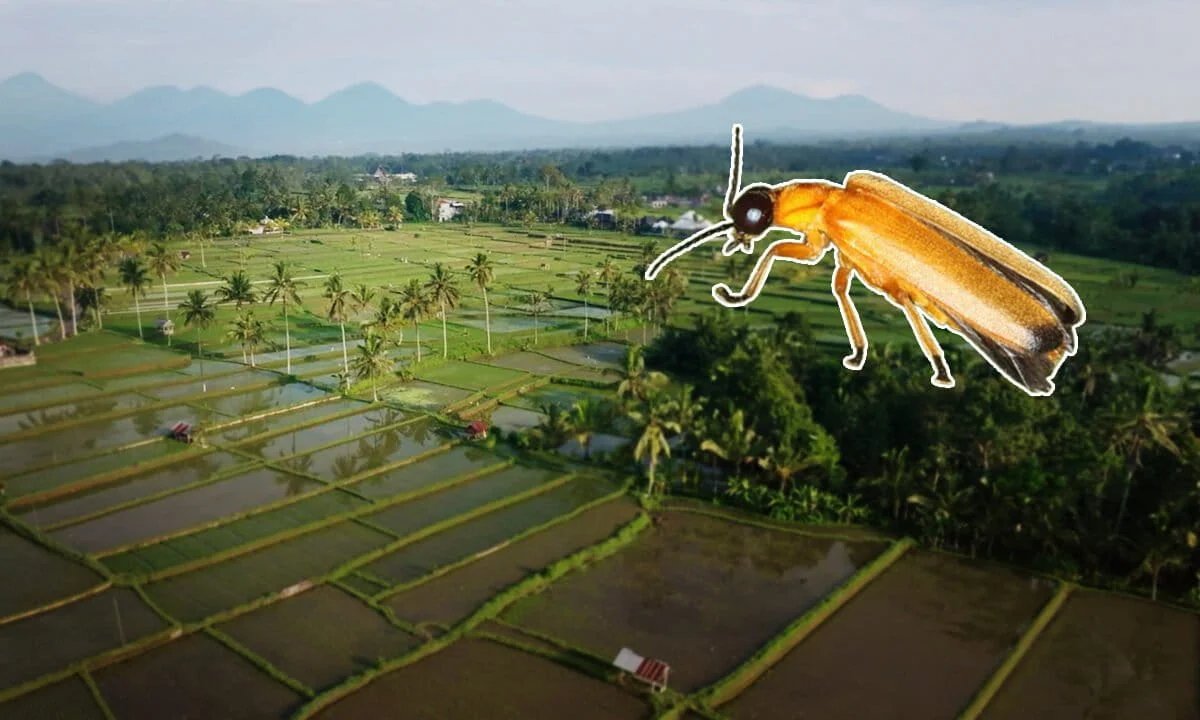
In the rapidly developing agricultural landscapes of Bali, Indonesia, a silent ecological crisis has been unfolding beneath the cover of darkness. For generations, local communities grew up accustomed to what residents fondly recall as "clouds of fireflies" illuminating the night sky above the island’s iconic rice paddies. However, decades of rapid urbanization, expanding infrastructure, agricultural modernization, and shifting environmental conditions have decimated these bioluminescent insect populations. Today, across Southeast Asia, at least four distinct firefly species face the looming threat of extinction.
Amidst this alarming decline, localized conservation efforts have emerged to turn the tide. Spearheaded by local visionary Wayan Wardika, Indonesia’s first and only dedicated firefly conservation initiative—appropriately named "Bring Back the Light"—is working tirelessly to breed, study, and rewild these crucial insects. More than just a nostalgic quest to recapture childhood memories, Wardika’s comprehensive project has evolved into a holistic ecosystem restoration campaign. By tackling the root causes of habitat degradation, including light pollution, chemical pesticide dependency, and soil depletion, the initiative offers a blueprint for how grassroots environmentalism can successfully bridge the gap between modern agricultural needs and biodiversity preservation.
The Vanishing Lights of Southeast Asia
Fireflies, scientifically classified as members of the beetle family Lampyridae, play a dual role of both ecological and cultural significance. Beyond their mesmerizing nocturnal displays—which males and females utilize for complex courtship signaling and predator deterrence—these insects serve as vital indicators of environmental health. Because fireflies possess strict physiological requirements regarding air purity, water quality, and chemical-free soil, their presence or absence provides an immediate diagnostic reading of an ecosystem’s overall vitality.
Furthermore, fireflies perform critical ecological functions. Many species act as natural biocontrol agents; their larvae feed voraciously on land snails and other agricultural pests that commonly damage rice crops. Additionally, adult fireflies contribute to local plant pollination.
Despite their utility, Southeast Asian firefly populations have plummeted due to a confluence of anthropogenic pressures:
- Habitat Loss: Unchecked real estate development and agricultural expansion continue to fragment and consume the natural forests, streams, and damp margins where fireflies breed and complete their multi-year life cycles.
- Light Pollution: As rural villages adopt modern electrical grids and urban sprawl encroaches on agricultural zones, artificial night lighting disrupts the delicate flash patterns fireflies rely upon to locate mates, rendering reproduction nearly impossible.
- Chemical Dependency: The widespread adoption of synthetic chemical fertilizers and potent pesticides over the past several decades has systematically poisoned the soil microflora, contaminated waterways, and killed off the prey species upon which firefly larvae depend.
- Global Climate Changes: Altered monsoon patterns and rising average temperatures further destabilize the microclimates necessary for fragile insect life cycles.
A Chronology of Conservation: The Birth of Bring Back the Light
Wayan Wardika’s journey from a childhood observer to a pioneering conservationist spans over four decades. Growing up in rural Bali during an era before widespread electrification, Wardika fondly remembers capturing fireflies to use as natural lanterns. However, returning to his home village after decades away, he confronted a stark reality: the luminous displays of his youth had vanished entirely.
Recognizing that no institutional frameworks existed in Indonesia to protect or study these declining insects, Wardika took matters into his own hands.
- 2020: Wardika officially establishes "Bring Back the Light" on his family farm, creating Indonesia’s first specialized firefly conservation program. Operating alongside a small, dedicated team of scientists and researchers—including specialist Cindy—the initiative begins groundbreaking ex-situ breeding programs to understand the notoriously under-researched reproductive biology of Indonesian firefly species.
- 2021–2022: The team successfully maps out the intricate, multi-stage life cycle of the local fireflies. Researchers discover that while the adult phase is brief—lasting merely three weeks dedicated entirely to feeding and mating—the larval stage can endure for up to two years. The painstaking process requires scientists to meticulously locate and count eggs, nurture delicate larvae, monitor pupae transformations, and carefully condition adults for release.
- 2023: Having successfully bred and released nearly 20,000 larvae and adult fireflies back into the wild, Wardika’s team observes gradual improvements in local micro-populations. However, researchers quickly realize that captive-breeding alone is insufficient. Without addressing the underlying toxicity of the surrounding agricultural landscape, released fireflies struggle to survive. This realization sparks a major evolution in the project’s strategic scope.
- Present Day: The initiative expands its mission from mere species propagation to total ecosystem regeneration, targeting the chemical inputs utilized by neighboring farms and working directly to transform local agricultural practices.
Transforming the Soil: From Cow Poop to Circular Ecosystems
Understanding that fireflies cannot thrive in chemically compromised environments, Wardika expanded his vision four years ago to tackle the agricultural practices poisoning the island’s soil and water tables. The core of this strategy rests on eliminating synthetic fertilizers and pesticides in favor of sustainable, circular farming methodologies.
At the heart of the initiative’s soil regeneration efforts is the Holy White Cow Conservation center, where Wardika collects manure. Rich in natural earthworms and millions of beneficial microorganisms, cow dung is processed into high-grade organic compost. This natural fertilizer restores essential minerals and microbial diversity to depleted agricultural soils, completely removing the need for synthetic nitrogen and phosphorus inputs that leach into waterways and devastate aquatic and insect life.
To combat synthetic pesticides, Wardika developed an innovative alternative known as "eco-enzyme." By collecting rejected, surplus fruit from local traditional markets, his team ferments the organic waste into a potent yet non-toxic formula. This concoction successfully deters crop-damaging pests while simultaneously providing vital nutrients to both plants and surrounding earth.
Wardika operates his family farm as an active demonstration site. Rather than relying on aggressive sales pitches or theoretical lectures, he aims to lead by undeniable example. By showcasing healthier, more robust crop yields grown through organic methods, the initiative hopes to organically inspire neighboring farmers throughout the region.
Economic Incentives and Community Engagement
Changing entrenched human behavior remains one of the most formidable obstacles in modern conservation. Many smallholder farmers in Bali, accustomed to decades of conventional chemical farming, view the transition to organic agriculture as a financial risk they cannot afford to take.
To overcome this socioeconomic barrier, Wardika devised a pragmatic, community-first incentive model. Recognizing the hesitation of local growers, he adapted his approach: "First I was trying to touch their hearts. So now I’m reverse. I have to fill up the pockets, then we change the hearts."
To minimize risk for the farming community, the Bring Back the Light initiative provides comprehensive support systems:
- Free Material Distribution: The project supplies participating farmers with free organic compost and eco-enzyme solutions, completely eliminating upfront material costs.
- Financial Insurance: Wardika personally guarantees compensation to farmers for any short-term crop losses incurred during the delicate transitional phase away from synthetic chemicals.
- Circular Economy Integration: The overarching goal is to establish a closed-loop ecosystem where local farmers receive all necessary growing inputs locally, sustainably, and without financial burden.
Funding for these extensive community subsidies is generated through innovative revenue streams, notably ecotourism firefly conservation tours hosted on the property, alongside the sale of high-value organic produce grown directly on the demonstration farm. Currently, four local farmers, including agriculturalist Pak Nyoman, have integrated into the scheme. Wardika’s ultimate objective is to convert all 35 farmers operating within his immediate watershed area, effectively establishing a pesticide-free sanctuary zone capable of sustaining robust firefly populations in perpetuity.
Broader Implications and Future Outlook
The implications of Wayan Wardika’s work extend far beyond the borders of his Balinese village. As rapid development and industrial agriculture continue to threaten biodiversity hotspots across Southeast Asia, the Bring Back the Light initiative offers a scalable, community-driven framework for environmental stewardship.
By framing insect conservation not as an isolated preservation project, but as an integral component of sustainable food production, soil health, and rural economic resilience, the initiative demonstrates that human communities and native wildlife can successfully coexist. As Wardika frequently emphasizes to visiting researchers, community members, and volunteers, the ultimate metric of success is shared by all species: "We human don’t live alone on this earth. We maintain the sustainability of nature, not just for our generation, but for our future generation. Not just for our kind, but also for the other biodiversity."
Through rigorous scientific dedication, economic pragmatism, and a steadfast commitment to healing the land from the soil up, the fireflies of Bali are slowly reclaiming the night—bringing light back to a landscape that nearly lost its sparkle.






Leave a Reply