

If you or someone you know may be experiencing a mental health crisis, contact the 988 Suicide & Crisis Lifeline by dialing or texting “988.”
Dr. Paul Nestadt occupies a unique vantage point in the landscape of modern mental health. As a practicing psychiatrist treating suicidal patients, a prolific researcher co-authoring scores of peer-reviewed papers on the etiology of self-harm, and an educator teaching graduate-level psychiatry, his professional life is thoroughly steeped in suicide prevention. Yet, he is remarkably candid about the limitations of clinical prediction.
“I can’t tell you which of my patients is likely to die by suicide in the next six months,” Nestadt admits.
Empirical data underscores this sobering reality. Extensive psychological research demonstrates that clinical predictions regarding who will attempt or die by suicide are only marginally more accurate than a coin toss—a diagnostic baseline that has stubbornly failed to improve over the past half-century. Rather than inducing despair, however, this clinical uncertainty has galvanized public health researchers to pivot toward population-level interventions. Instead of relying exclusively on the impossible task of identifying every individual at risk, public health experts are increasingly focused on environmental modifications, chief among them being the restriction of access to lethal means.
The Imperative of Lethal Means Restriction
The core philosophy behind lethal means restriction draws heavily from decades of successful public health frameworks, most notably those applied to motor vehicle safety. Public safety officials do not attempt to prevent traffic fatalities by predicting which individual driver will experience a sudden loss of reaction time or a momentary distraction. Instead, governments mandate structural and behavioral interventions: speed limits, mandatory seatbelt laws, front and side-impact airbags, and shatter-resistant windshields. These systemic changes successfully drove down historical crash death rates.
Applying this exact paradigm to suicide prevention means shifting focus away from exclusive reliance on individual risk assessments. “Instead of asking every doctor to figure out which patient will die by suicide and locking that patient up, it might be that we need to make sure there aren’t loaded guns available,” Nestadt explains.
According to comprehensive public health studies, limiting access to lethal means stands out as one of the single most reliable and evidence-backed strategies for reducing suicide mortality in the United States. This broad approach encompasses structural engineering solutions—such as erecting physical barriers on elevated bridges and architectural marvels to deter jumping—alongside medical regulatory policies, such as decreasing the maximum dosage quantities of prescription pharmaceuticals available in a single purchase. However, when these public health measures intersect with firearms, they invariably trigger profound constitutional sensitivities and intense political polarization.
The Escalating Crisis of Firearm Suicides
The urgency of addressing firearm access is highlighted by stark epidemiological data. Preliminary federal metrics indicate that more than 28,000 individuals died by firearm suicide last year, accounting for over half of all suicide fatalities nationwide. Even as overall suicide rates have shown periodic, slight downward adjustments in recent years, firearm-related suicides have marched steadily upward, setting record highs for five consecutive years.
Historically, the demographic most heavily impacted by firearm suicides has consisted of middle-aged white men and military veterans—two populations that have exhibited persistently elevated risk profiles for decades. In recent years, however, epidemiological monitoring has revealed troubling upward trends across other demographics, including women and specific minority communities, notably Black and Latino men. Public health analysts point to a massive surge in first-time firearm acquisitions during the COVID-19 pandemic—when nearly 30 million individuals acquired firearms, including roughly 11 million first-time owners—as a critical inflection point that amplifies the necessity for widespread, systemic prevention frameworks rather than hyper-targeted clinical interventions.
A Common Misconception: The Myth of Means Substitution
A persistent skepticism surrounding lethal means restriction is the assumption of futility—the common argument that individuals who are determined to end their lives will simply find an alternative method if one path is blocked.
Decades of psychiatric and epidemiological research decisively refute this premise. Studies examining "means substitution" demonstrate that creating physical or procedural barriers for one specific method rarely results in a direct translation to another. A primary driver of this phenomenon is the temporal nature of suicidal crises. Extensive data compiled by Harvard’s Means Matter research initiative indicates that a suicidal crisis can be remarkably acute and transient, with individuals often spending less than an hour—and in many cases, five minutes or less—between the initial internal decision to die and the physical execution of the act.

Consequently, any systemic friction or delay introduced into that brief window—such as requiring an individual to retrieve a key and unlock a secure storage safe to access a firearm—can provide the critical minutes needed for the acute urge to subside, for cognitive framing to shift, or for an external observer to intervene.
The Political Lightning Rod of Gun Policy
Despite robust empirical backing, legislative and regulatory measures concerning firearms remain among the most contentious subjects in American politics. Even within traditionally bipartisan discussions surrounding mental health and suicide prevention, the mere mention of universal background checks, mandatory waiting periods, or extreme risk protection orders frequently causes political alignment to fracture along predictable ideological lines.
Gun rights advocacy groups and firearm industry trade associations argue that many proposed policy solutions infringe upon the Second Amendment rights of law-abiding citizens. Consequently, many federal and state policymakers view the intersection of gun control and public health as politically toxic.
This dynamic has been heavily reflected at the federal level. President Donald Trump has consistently positioned himself as an ardent defender of gun owner rights. During his various administrative and political actions, his administration rolled back numerous firearm regulations, formally rescinded a previous surgeon general’s advisory that had explicitly categorized gun violence as a public health crisis, revoked significant federal grants earmarked for community-based violence intervention programs, and downsized federal staffing at agencies dedicated to researching and mitigating gun violence.
When asked how these policy actions align with the nation’s soaring rates of firearm-related deaths, White House representatives did not directly address specific criticisms regarding gun suicides. However, administration spokesperson Lauren Bis issued a statement emphasizing executive commitment to national wellness.
“President Trump is committed to Making America Healthy Again and that includes mental health,” Bis stated, pointing to broader administration initiatives such as backing research into psychedelic-based medical treatments for severe psychiatric illnesses and allocating $52.5 million in targeted grant funding for veteran suicide prevention programs.
The Practical Reality and Limits of Red Flag Laws
Amid the broader legislative gridlock, one specific regulatory tool has managed to gain traction across a significant portion of the country: the Extreme Risk Protection Order (ERPO), widely known as a red flag law.
Currently adopted in some statutory form across 22 states and the District of Columbia, red flag laws empower local judges to issue temporary orders authorizing law enforcement officers to remove firearms from individuals whose behavior or statements indicate an imminent, credible danger to themselves or others. While public discourse surrounding these laws typically spikes in the immediate aftermath of high-profile mass shootings, clinical research indicates that ERPOs are statistically far more effective at preventing individual suicides than intercepting mass casualty events.
Academic evaluations conducted across multiple states implementing ERPOs suggest that for every 10 to 20 firearms temporarily removed under judicial order, approximately one suicide is successfully averted.
The personal stakes of these policies are intensely felt by advocates like Dorothy Paugh. In 1965, when Paugh was a young girl, her father experienced sudden job loss and severe economic distress. Grappling with the inability to support his wife and five children, he organized his personal documents, reviewed his life insurance policy, and purchased a handgun.
“If my mom had been able to get an extreme risk protection order or if Dad’s best friend had asked to hold his gun for a while, maybe my dad would not have shot himself. He might have lived,” Paugh reflects. Decades later, she became a prominent public advocate, sitting in the legislative gallery in Annapolis to witness the successful passage of Maryland’s red flag law.
Yet, Paugh is equally vocal about the inherent limitations of these statutes. Years after losing her father, tragedy struck her family a second time. In 2012, her 25-year-old son, Peter, a passionate hiker and community member, died by suicide using a firearm. Unlike her father, Peter exhibited no recognizable behavioral warning signs. He had recently purchased a home with his girlfriend, hosted a birthday gathering for his brother, and purchased advance gifts for Mother’s Day.
“I did not know that my son was suicidal. I didn’t have a clue,” Paugh recalls. Even if comprehensive red flag laws had been universally available at the time, she acknowledges she would not have had the requisite warning signs to initiate a legal filing.
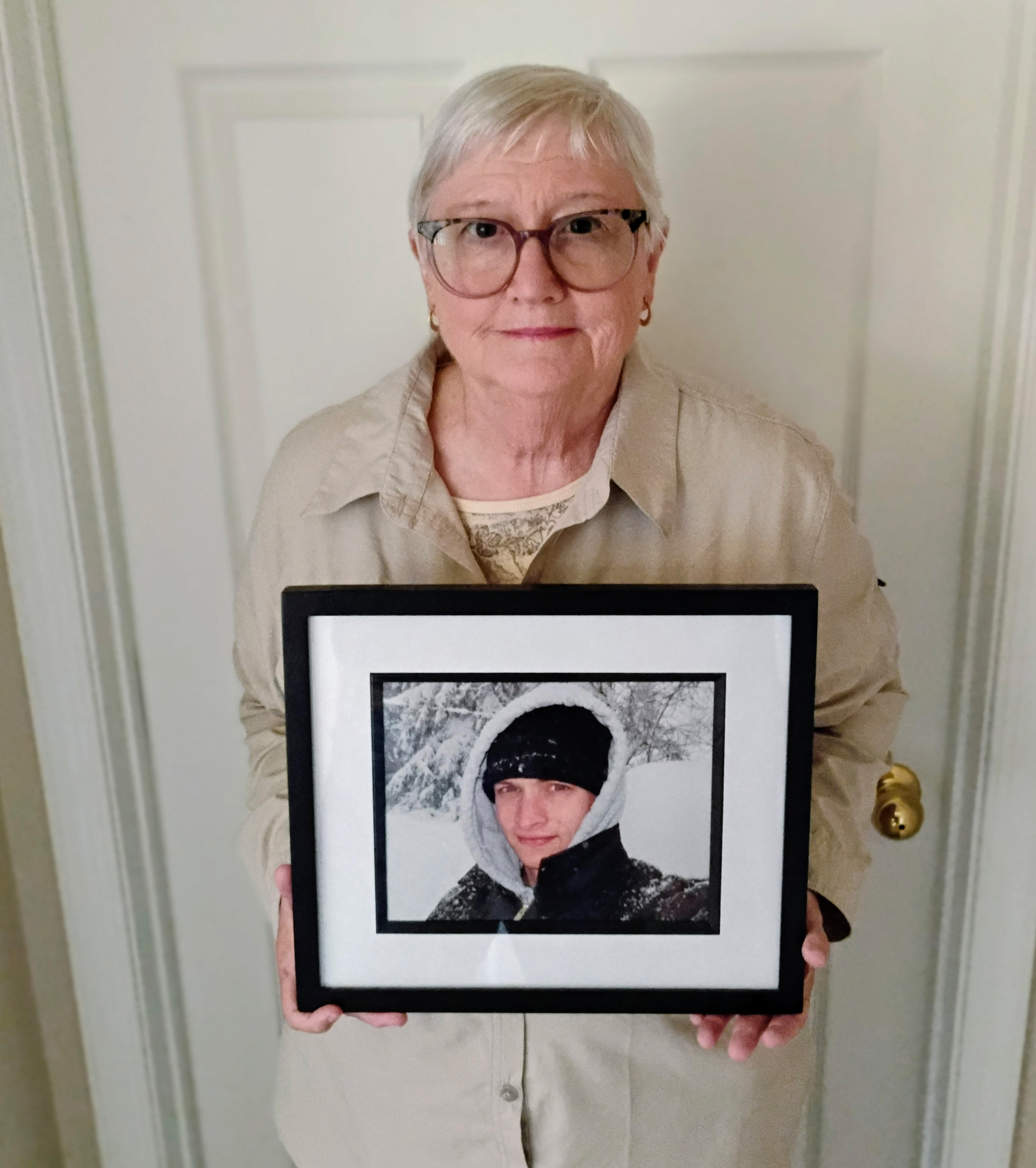
Michael Anestis, a clinical psychologist and executive director of the New Jersey Gun Violence Research Center, emphasizes that Peter’s experience is far from anomalous. Individuals most vulnerable to firearm suicide frequently do not display clear indicators to clinicians or family members. Data reveals that individuals who utilize firearms to complete suicide are statistically less likely to have sought prior mental health treatment. Furthermore, the vast majority of military veterans and active-service members who die by firearm suicide never articulate their internal distress to anyone in the months preceding their death.
Consequently, experts view red flag laws as an important baseline tool rather than a comprehensive solution—they successfully address individuals exhibiting visible, acute risk, but fail to capture the silent majority of individuals quietly navigating suicidal ideation.
The Public Health Success of Infrastructure and Storage Mandates
To address the broader population at risk, public health advocates argue for structural regulations analogous to mandatory vehicle safety features. These include universal permit-to-purchase systems, mandatory waiting periods between the initiation and completion of a firearm sale, and safe-storage mandates.
Research quantifying the impact of permit-to-purchase laws reveals stark correlations. A prominent multi-state study found that the enactment of a permit-to-purchase law in Connecticut was associated with an estimated 15% reduction in local firearm suicide rates, whereas the legislative repeal of a comparable permit law in Missouri corresponded with a 16% rise in firearm suicides.
Similarly, child access prevention (CAP) laws—which have been enacted in approximately three dozen states and the District of Columbia—legally mandate that firearm owners securely lock up weapons in households where minors reside. These policies have been shown to directly reduce youth suicide rates, an urgent priority given that federal data indicates firearm suicide rates among Black youth have surged by 245%, and among Latino youth by 98%, since 2014.
Anestis notes that comprehensive safe storage and permitting laws yield compounding benefits by simultaneously reducing rates of homicides and non-fatal firearm injuries. These forms of community violence not only inflict direct physical trauma but also serve as indirect contributors to suicide risk. Individuals exposed to chronic community violence frequently experience psychological trauma and habituate to physical injury and death, creating a compounding vulnerability that significantly elevates long-term suicide risk.
Industry Collaboration and Community-Led Interventions
Faced with proposals for universal regulatory measures, gun owners and firearm trade associations typically push back against mandates like waiting periods and permit systems, favoring instead educational initiatives that emphasize personal responsibility, mental health awareness, and safe storage education.
The National Shooting Sports Foundation (NSSF), the trade association representing the U.S. firearm industry, has collaborated extensively with the American Foundation for Suicide Prevention to develop informational brochures and safety assets distributed directly through commercial gun shops.
“Our purpose is to provide educational materials to the firearm-owning community on how to help prevent suicide and save lives,” said Bill Brassard, NSSF senior director of suicide prevention initiatives.
Simultaneously, the National Rifle Association maintains that broad legislative measures targeting firearm availability miss the fundamental root causes of mental distress. “Suicide is a serious issue that deserves serious solutions focused on the underlying causes, not on political efforts to restrict the rights of law-abiding Americans,” stated NRA spokesperson Justin Davis. “A truly dangerous individual needs to be incapacitated, not just deprived of one particular means of harm.”
Despite the overarching political chasm, localized grassroots initiatives have successfully bridged divides by bringing together unlikely partners—including commercial gun store owners, public health researchers, and municipal entities like public libraries—to distribute free cable locks, establish voluntary firearm storage programs for individuals undergoing acute mental health crises, and train commercial retailers to recognize and appropriately manage interactions with prospective buyers exhibiting signs of distress.
For advocates like Dorothy Paugh, these community-level efforts provide a vital source of optimism, fueling her ongoing advocacy for expanded mental health resources, destigmatized conversations surrounding self-harm, and pragmatic policies designed to decouple acute crisis moments from lethal instrumentation.
“It’s not a cure-all,” Paugh concedes regarding policy-driven means restriction. But, she adds, looking back on the generational loss within her own family, “it does save lives… If you’re that one person or that person’s family, it’s all the difference in the world.”










Leave a Reply