
The global water crisis has reached a critical juncture, with the United Nations reporting that approximately 2.2 billion people currently lack access to safely managed drinking water. As climate change intensifies droughts and depletes traditional groundwater aquifers, coastal nations—from the arid regions of the Middle East to the drought-prone landscapes of California—have increasingly turned to desalination as a vital lifeline. However, the reliance on conventional desalination methods, such as reverse osmosis and thermal distillation, presents a paradox: while these processes generate necessary fresh water, they simultaneously impose a heavy environmental toll.
Traditional desalination plants are notoriously energy-intensive, requiring massive electricity inputs to push seawater through specialized membranes or to boil it for vapor collection. Beyond the energy footprint, these facilities discharge "brine"—a hyper-saline byproduct laced with chemical additives used in pre-treatment. When this concentrated effluent is returned to marine ecosystems, it creates dead zones by spiking local salinity levels and depleting dissolved oxygen, threatening the biodiversity of oceans.
The Innovation: Optics Meets Sustainable Engineering
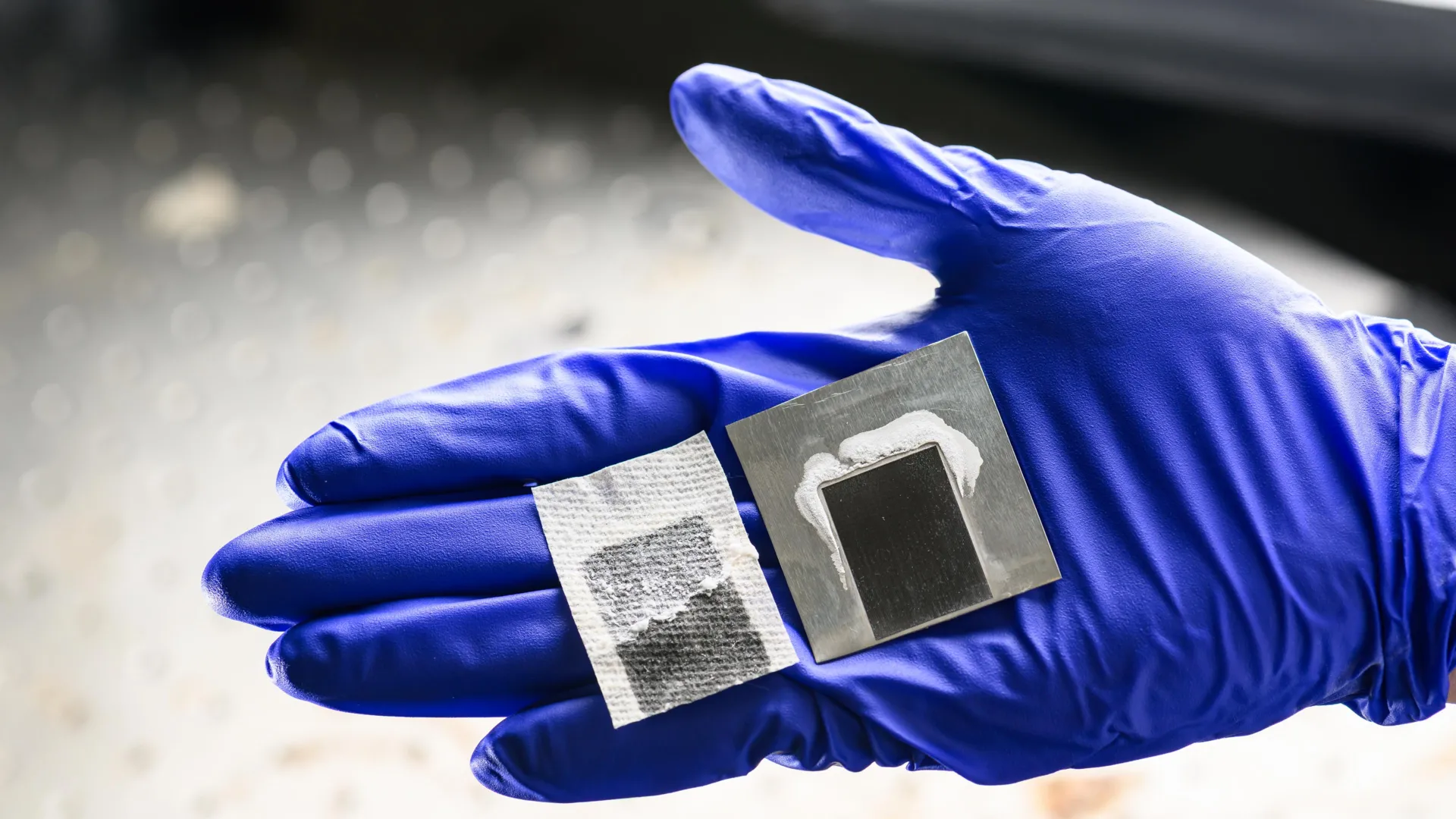
Researchers at the University of Rochester’s Institute of Optics have unveiled a breakthrough that could fundamentally alter the economics and environmental footprint of desalination. Led by Chunlei Guo, a professor of optics and physics and a senior scientist at the Laboratory for Laser Energetics, the team has engineered a solar thermal system that eliminates the need for liquid brine and chemical additives. The findings, recently published in the journal Light: Science & Applications, detail a method that uses the power of the sun and advanced surface engineering to produce clean water while simultaneously recovering valuable solid minerals.
The core of this technology lies in the use of femtosecond lasers—ultrafast pulses of light that last only one quadrillionth of a second. By using these lasers to treat the surface of black metal, the researchers create microscopic, topographical structures that fundamentally change how the material interacts with both light and liquid. The laser treatment turns the metal into an exceptionally efficient solar absorber while granting it "superwicking" properties, which allows water to spread rapidly across the surface rather than forming isolated beads.
Addressing the Seawater Complexities
For years, solar desalination has faced a significant hurdle: the difference between laboratory-grade saltwater and real-world seawater. In controlled experiments using simple sodium chloride (NaCl) solutions, researchers often observed that salt crystals remained porous, allowing water to continue wicking through the structure. However, natural seawater is a chemical cocktail containing magnesium, calcium, and a variety of other minerals. When these substances evaporate, they form dense, non-porous mineral scales, similar to the calcification found in household appliances.
In standard solar systems, these deposits quickly accumulate, clogging the surface and rendering the equipment useless. The Rochester team bypassed this by integrating the "coffee ring effect"—a phenomenon where suspended particles move to the edge of a droplet as it dries—into the design of the metal surface. By precisely engineering microscopic grooves, the panel directs the salts away from the central evaporation zone and toward "passive" areas on the sides of the panel. This self-cleaning mechanism ensures that the active region remains free of mineral crust, maintaining high efficiency over long periods.
Chronology and Development of the Technology
The trajectory of this research began with fundamental studies into light-matter interaction at the Institute of Optics. Over several years, the team investigated how femtosecond lasers could transform ordinary surfaces into functional, multi-purpose materials.
- 2020–2021: Initial experiments focused on the superwicking capabilities of laser-treated metals for water purification.
- 2022: The team successfully demonstrated the self-cleaning mechanism using artificial seawater, confirming that the "coffee ring effect" could be harnessed for mineral transport.
- 2023: Researchers conducted exhaustive tests using water samples collected from the Pacific, Atlantic, and Indian Oceans, proving the technology’s robustness against diverse mineral compositions.
- 2024: Publication of the primary findings in Light: Science & Applications, followed by a supplemental study in the Journal of Materials Chemistry A, which outlined the potential for lithium extraction.
Beyond Water: The Mining of Brine
Perhaps the most disruptive aspect of the Rochester system is the shift in perspective regarding desalination waste. By extracting salts in a dry, solid state, the technology avoids the environmental damage caused by liquid brine disposal. More importantly, it turns the waste stream into a potential revenue source.
The team has demonstrated that by embedding hydrogen titanate nanoparticles into the metal grooves, the system can selectively isolate lithium—a critical metal in the transition to renewable energy. With the surging demand for lithium-ion batteries in electric vehicles and consumer electronics, the ability to harvest lithium directly from seawater or hypersaline lakes represents a major economic incentive for desalination plant operators. In tests using water from the Great Salt Lake, the system successfully recovered roughly 50 percent of the available lithium.
Implications for Global Water Infrastructure
The implications of this technology extend far beyond a laboratory bench. If the system can be scaled to the industrial level, it addresses two of the most significant challenges facing humanity today: the need for potable water and the need for sustainable, localized mineral extraction.
Currently, lithium mining is an environmentally taxing process, often involving vast evaporation ponds that consume large amounts of land and water, or intensive hard-rock mining. By integrating mineral recovery into the desalination process, the Rochester approach could decouple lithium production from the destructive land-use practices traditionally associated with the mining industry.
Expert Analysis and Challenges Ahead
While the proof-of-concept results are promising, the transition from small-scale laboratory devices to commercial-grade infrastructure is significant. Industry experts note that scaling such systems requires solving issues related to large-scale manufacturing of laser-treated components and the long-term durability of these materials under harsh, real-world conditions. Factors such as biofouling—the growth of microorganisms on submerged surfaces—and extreme weather exposure remain variables that will require rigorous field testing.
However, the modular nature of the technology is a major advantage. Unlike massive reverse osmosis plants that require centralized, high-energy infrastructure, the Rochester system is inherently scalable. Smaller, decentralized units could be deployed in remote coastal communities that lack access to the power grid, providing a localized solution to water scarcity.
The Role of Global Support
The research has drawn significant attention from global funding bodies, including the National Science Foundation, the Bill & Melinda Gates Foundation, and the Worldwide Universities Network. This cross-sector interest underscores the potential impact on public health and global equity. By lowering the energy and environmental threshold for desalination, the technology aligns with the United Nations Sustainable Development Goal 6: ensuring the availability and sustainable management of water and sanitation for all.
Looking ahead, Professor Guo and his team plan to continue refining the material composition of the panels and the selectivity of the lithium-harvesting nanoparticles. As the global population grows and water resources become increasingly contested, innovations that transform waste into wealth—and scarcity into abundance—will play a defining role in the infrastructure of the 21st century. The work at the University of Rochester represents a vital step toward a future where water security and environmental stewardship are no longer mutually exclusive.










Leave a Reply