
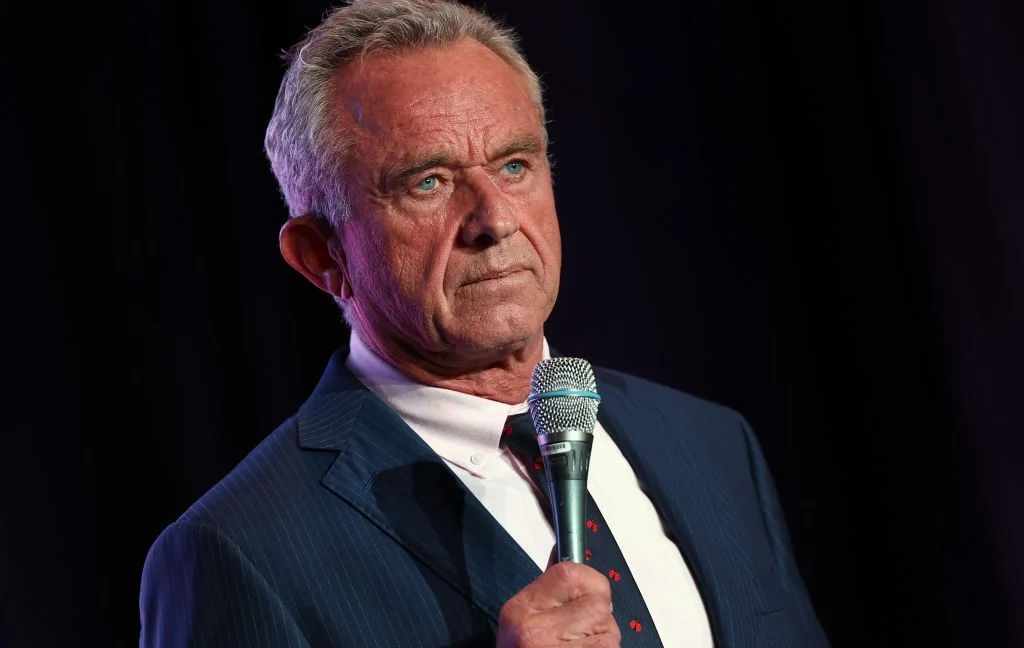
Health and Human Services Secretary Robert F. Kennedy Jr.’s scheduled keynote appearance at the upcoming annual conference hosted by Children’s Health Defense represents a significant public realignment with the anti-vaccine movement he formally stepped away from at the start of 2025. Billed by organizers as a pursuit of a more perfect future, the event is set to examine the current risks and opportunities for the burgeoning health freedom movement, with formal sessions scheduled for September 17 and an exclusive opening reception the night prior.
The conference has drawn substantial public attention, not least because of its high-profile roster of speakers and the political implications surrounding Kennedy’s official role as the nation’s top health official. Joining Kennedy on the agenda are prominent political figures and media commentators, including Senator Ron Johnson, a Republican from Wisconsin known for his vocal criticisms of federal vaccine mandates and policies, and Senator Rand Paul, a Kentucky Republican and licensed physician who has frequently challenged public health orthodoxies. Additional speakers include Mark Gorton, president of the Kennedy-aligned MAHA Institute; Jan Jekielek, a senior editor at the conservative outlet Epoch Times; and several senior staff members from Children’s Health Defense (CHD), notably Chief Executive Officer Mary Holland.
Demand for the event has outstripped initial capacities, reflecting the dedicated, highly mobilized base that follows the organization. According to the CHD conference website, in-person tickets priced at $250 sold out weeks in advance. Organizers subsequently released limited passes for secondary seating in the main conference room for $125, alongside digital access tickets priced at $100 to accommodate remote viewers via livestream.
Background Context and Organizational Ties
Children’s Health Defense has long served as a central hub for vaccine skepticism and the dissemination of claims linking routine childhood inoculations to chronic illnesses, developmental disorders, and autoimmune conditions. Founded and heavily shaped by Kennedy over many years, the organization has consistently challenged mainstream epidemiological consensus, earning widespread condemnation from the American Academy of Pediatrics, the Centers for Disease Control and Prevention, and the broader scientific community.
The relationship between Kennedy and CHD underwent a formal administrative transformation when Kennedy pursued and secured his position as the Secretary of Health and Human Services near the beginning of 2025. In an effort to navigate the stringent confirmation process before the United States Senate, Kennedy sought to distance himself structurally and rhetorically from the organization and its core ideological output. During his high-stakes confirmation hearings, Kennedy repeatedly maintained that he was pro-vaccine, asserting under questioning that he did not intend to take away vaccines from anyone who wanted them.
These assurances were met with skepticism by public health advocates and several lawmakers who pointed to Kennedy’s decades-long career as an environmental attorney-turned-activist who relentlessly promoted the debunked link between the measles, mumps, and rubella (MMR) vaccine and autism. Despite his testimony attempting to rebrand his stance as safety-oriented rather than anti-vaccine, his decision to return to the spotlight as a headliner for a premiere CHD event signals a stark reversal. Observers note that this public embrace of his foundational movement comes at a politically sensitive juncture, closely following reports that President Donald Trump has privately and publicly urged Kennedy to aggressively pursue investigations into the thoroughly discredited hypothesis that vaccines are a primary driver of autism rates in the United States.
Chronology of Events
The trajectory leading up to this high-profile speaking engagement involves a complex series of political maneuvers, administrative appointments, and shifting public relations strategies.
- Pre-2025: Robert F. Kennedy Jr. serves as the chairman and primary public face of Children’s Health Defense, authoring books, legal briefs, and essays questioning the safety profiles of federally recommended vaccines.
- Late 2024 to Early 2025: Following the presidential election, Kennedy is nominated to lead the Department of Health and Human Services. In anticipation of confirmation hearings, he formally severs his operational and leadership ties with CHD.
- Early 2025: During his Senate confirmation hearings, Kennedy faces rigorous questioning regarding his historical skepticism of vaccines. He explicitly testifies that he is pro-vaccine and vows to focus on transparency, chronic disease prevention, and rigorous science while administering HHS.
- Mid-2026: Reports emerge indicating friction within the administration, with President Trump reportedly expressing frustration that Kennedy has not moved fast enough to restrict specific vaccine availability or substantiate claims regarding autism.
- Late Summer 2026: CHD announces its annual conference lineup, placing Robert F. Kennedy Jr. at the top of the agenda as the keynote speaker, immediately reigniting debates over his dual identity as a cabinet secretary and an anti-establishment activist.
Supporting Data and Stakeholder Reactions
The financial and operational metrics surrounding the CHD conference highlight the enduring economic and cultural viability of the health freedom movement. Ticket pricing tiers—ranging from $100 for virtual attendance to $250 for premium hall access—demonstrate a monetized outreach model that sustains alternative media ecosystems and advocacy groups. Furthermore, the inclusion of sitting federal lawmakers such as Senators Johnson and Paul illustrates the institutionalization of vaccine skepticism within a specific faction of the contemporary conservative political coalition.
Public health organizations, medical associations, and independent scientists have reacted to the news of Kennedy’s keynote address with profound alarm. Representatives from major epidemiological bodies argue that a sitting cabinet secretary endorsing an organization dedicated to undermining public trust in immunization schedules presents an unprecedented conflict of interest. Critics emphasize that vaccine hesitancy has already led to resurgences of preventable infectious diseases, such as measles outbreaks in under-immunized communities across the United States.
Conversely, supporters of the health freedom movement view Kennedy’s return to the CHD stage as a validation of their years-long resistance against federal public health mandates. Advocates within these networks argue that government agencies have historically lacked transparency regarding adverse event reporting and that independent scrutiny—such as that provided by CHD and the MAHA Institute—is essential for medical reform.
Broader Impact and Implications
The decision of a cabinet-level official to headline an explicitly anti-vaccine conference carries profound implications for the credibility, direction, and execution of federal health policy in the United States.
From an institutional standpoint, the event blurs the traditional boundaries between executive governance and partisan advocacy. While cabinet secretaries frequently address sympathetic stakeholder groups, doing so while representing an organization that actively campaigns against the foundational recommendations of the agencies they oversee creates a unique operational challenge for career civil servants and public health officials within the Department of Health and Human Services, the Food and Drug Administration, and the Centers for Disease Control and Prevention.
Moreover, the policy implications are far-reaching. If federal leadership actively champions the narratives promoted by Children’s Health Defense, public health messaging regarding vaccine safety, efficacy, and distribution could undergo drastic shifts. Funding allocations for research into chronic disease versus infectious disease mitigation may also be reevaluated, reflecting the ideological priorities of the MAHA Institute and aligned groups.
As the conference date approaches on September 17, lawmakers, public health professionals, and the media will closely monitor Kennedy’s keynote address for indications of how he intends to reconcile his official governmental responsibilities with his long-standing ideological commitments. The event is expected to draw significant protests from medical professionals alongside enthusiastic support from the movement’s core constituency, setting the stage for a continued national debate over the future of American public health governance.








Leave a Reply