
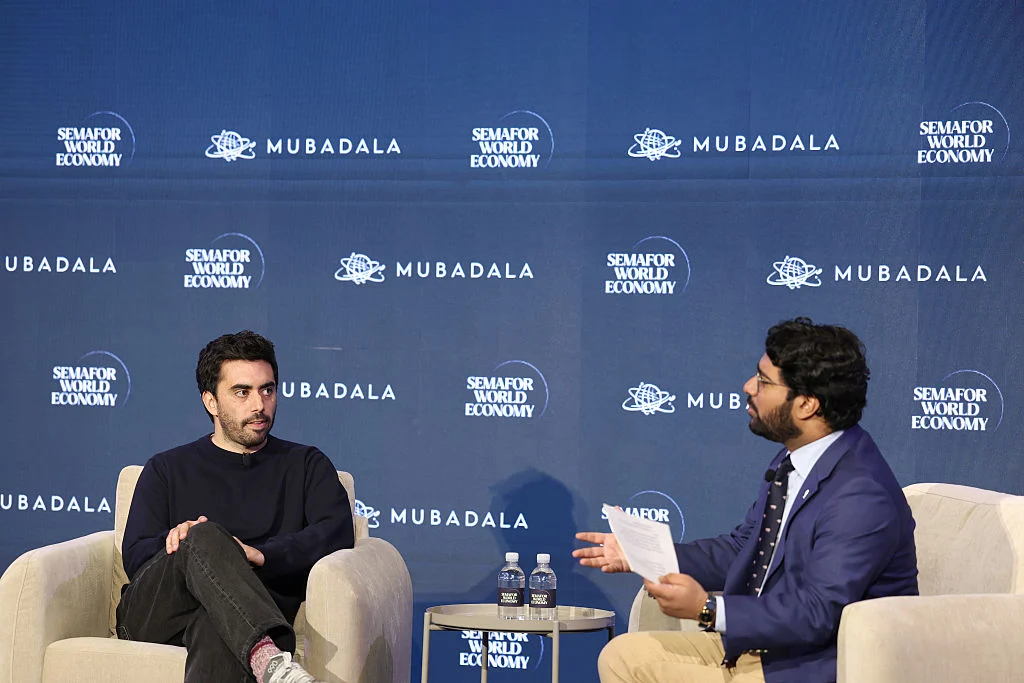
Cristobal Valenzuela, the co-founder and CEO of AI video-generation startup Runway, a company now valued at an impressive north of $5 billion following a recent $315 million funding round, has recently ignited a fresh wave of debate within the entertainment industry. His provocative statements regarding artificial intelligence’s transformative potential in Hollywood, delivered at Semafor’s World Economy Summit, propose a radical shift in film production strategy that is unlikely to endear him to the anti-AI faction of the creative community. Valenzuela’s vision challenges the foundational ethos of filmmaking, suggesting a future where output volume eclipses the traditional focus on singular, high-budget artistic endeavors, potentially redefining the economics and creative processes of an industry historically built on human-centric artistry.
The Valenzuela Doctrine: A "Quantity Problem" for Hollywood
At the heart of Valenzuela’s controversial proposition is a straightforward economic calculus: studios should drastically reallocate their resources to produce a greater number of films. He posited that the substantial sum of $100 million typically allocated to a single feature film, a 90-minute cinematic experience, could instead be distributed across 50 distinct productions. "If you’re spending a hundred million dollars on making one feature film, which is 90 minutes, imagine taking a hundred million dollars and spending it on, like, 50 movies," Valenzuela stated at the high-profile Semafor event. He clarified that this exponential increase in output would not necessarily compromise visual quality or narrative impact. "Same quality. Same amount of output, visually. But you make way more content. So you have way better chances of hitting something. It’s a quantity problem."
This perspective starkly contrasts with the entrenched belief in Hollywood that filmmaking is, at its core, an investment in a unique piece of art. For decades, studios have operated on the premise that success stems from meticulously backing visionary creative teams, fostering unique stories, and cultivating cultural phenomena through significant financial and artistic commitment to individual projects. The traditional model emphasizes the singular vision of a director, the intricate craft of a screenwriter, and the collaborative effort of hundreds of skilled artisans pouring their expertise into a single, cohesive work. Valenzuela’s comments reframe this intricate ecosystem into a purely statistical exercise, implying that artistic triumph can be achieved by simply playing the odds through mass production. He suggests that if enough content is generated, commercial and critical success will inevitably follow, effectively reducing the nuanced craft of filmmaking to a numbers game. This stance immediately puts him at odds with a significant portion of the creative community that views art as inherently inimitable and not subject to mere algorithmic scaling.
Semafor’s World Economy Summit: A Platform for Disruptive Ideas
Semafor’s World Economy Summit, an influential gathering that convenes global leaders, policymakers, and innovators, served as a fitting backdrop for Valenzuela’s disruptive insights. The summit, known for exploring critical trends shaping the global economy, frequently features discussions on technological advancements and their societal and industrial ramifications. For an event centered on economic strategy and innovation, the integration of AI into a multi-billion-dollar industry like entertainment presented a compelling case study. Valenzuela’s presence underscored the growing recognition of AI’s potential to redefine traditional economic models, even in sectors historically resistant to rapid technological shifts. The discussions at such summits often highlight the tension between economic efficiency and established practices, a tension that Valenzuela’s comments perfectly encapsulated for the film industry, placing AI at the nexus of technological progress and economic transformation.
The Shifting Sands of Skepticism: AI’s March into Creative Domains
Valenzuela readily acknowledged the significant controversy surrounding the introduction of AI into the deeply human-centric creative markets of film and television production. However, he maintained an optimistic outlook, asserting that "things are changing fast." He attributed much of the initial skepticism surrounding AI to "fear and misunderstanding," suggesting that a broader public and industry understanding of these powerful AI tools is now taking root. This shift, he implied, paves the way for greater acceptance and integration, moving beyond initial apprehension towards a more pragmatic adoption.
Runway, under Valenzuela’s leadership, has been at the forefront of developing advanced AI "world models" designed specifically to empower the creative class. The company’s stated mission is to enable artists to "do more work better and faster," leveraging AI to augment human capabilities rather than simply replace them. Valenzuela claims that Runway’s technology is already actively utilized by a considerable number of studios and independent creators, and its application is demonstrably contributing to a reduction in production costs across the board. This claim is particularly compelling for an industry constantly battling escalating budgets and the inherent risks of high-cost productions.
A Timeline of AI Adoption in Hollywood: From Concept to Reality
The integration of AI into film production is not merely a theoretical concept; it is a rapidly accelerating reality, building upon decades of technological advancements in filmmaking. While computer-generated imagery (CGI) and advanced visual effects (VFX) have been integral to filmmaking for decades, AI represents a new paradigm, moving beyond mere rendering and animation to generative creation and intelligent automation.
- Early 2000s-2010s: Foundational AI in Post-Production: Basic AI algorithms began assisting in behind-the-scenes post-production tasks like automated color grading, motion tracking for visual effects, and rudimentary editing suggestions, primarily focused on efficiency and data processing.
- Mid-2010s: Machine Learning for Advanced VFX: Machine learning started to be applied to more complex VFX, such as realistic character animation, facial capture, and even preliminary script analysis for identifying themes or predicting audience reception. Tools like deepfake technology, though controversial, demonstrated AI’s capacity for hyper-realistic visual manipulation.
- Late 2010s-Early 2020s: Emergence of Generative AI: The true inflection point came with the development of generative AI, particularly in text-to-image and text-to-video models. Companies like Runway, founded in 2018, began developing tools that could create visual assets, scenes, and even short video clips from textual prompts, moving from assistive to genuinely generative capabilities. Runway’s significant funding rounds, including its latest, underscore investor confidence in this transformative potential.
- 2023-Present: Widespread Industry Discussion and Pilot Programs: The past year has seen an explosion of industry discussion and pilot programs for comprehensive AI integration. Major studios and streaming platforms are actively exploring AI for diverse applications, including scriptwriting assistance, rapid pre-visualization (pre-vis), digital human creation, and, critically, significant cost reduction across the production pipeline. This period also saw the rise of union concerns, leading to AI clauses becoming central to labor negotiations with organizations like the Writers Guild of America (WGA) and the Screen Actors Guild – American Federation of Television and Radio Artists (SAG-AFTRA).
One of the most tangible examples of this shift is the impending release of "Bitcoin: Killing Satoshi," a film slated to be the first studio-quality AI-driven feature. Its reported production cost of $70 million represents a dramatic reduction from an estimated $300 million for a conventionally produced film of similar scope. This nearly 75% cost saving, as reported by TheWrap, highlights the immediate financial appeal of AI technologies for risk-averse studios looking to maximize their return on investment.
Beyond this pioneering project, the adoption trend is gaining momentum across the industry. Amazon, a major player in content creation, has openly embraced AI to streamline and cut costs in its extensive film and television slate. Similarly, studios in India, a prolific film-producing nation with one of the world’s largest entertainment industries, are rapidly integrating AI tools to enhance efficiency and expand output. Sony Pictures has publicly articulated its plans to leverage AI in its film production pipelines to achieve similar cost efficiencies, signaling a widespread institutional commitment to this technology. Even iconic filmmakers like James Cameron, a pioneer in advanced filmmaking technology known for his meticulous and often costly productions like Avatar, have voiced support for AI. Cameron views AI as a crucial tool to sustain the production of blockbuster movies in an era of escalating budgets, potentially safeguarding jobs by making ambitious projects more financially viable without resorting to widespread layoffs.
Valenzuela underscored the pervasive nature of AI’s impact, stating that its influence extends "everywhere." "It’s in the pre-production side, it’s in scripting, it’s in planning, it’s in execution, visual effects – this is already beginning to be deployed at scale," he elaborated. This comprehensive integration suggests that AI is not merely a niche tool but a fundamental paradigm shift impacting every stage of the filmmaking process, from conceptualization and storyboarding to final visual effects and post-production, promising efficiencies at an unprecedented scale.
The Great Debate: Artistic Integrity vs. Algorithmic Efficiency
While the tech industry, championed by figures like Valenzuela, posits that scaling creativity with AI will inherently lead to a proliferation of "great art," this assertion remains a significant point of contention among critics and traditional artists. The core of the dispute lies in whether quantitative output, however visually polished or narratively competent, can truly replicate the unique human elements of intuition, emotion, subjective interpretation, and lived experience that are traditionally considered hallmarks of artistic excellence and profound storytelling. Many fear that a focus on sheer volume might dilute artistic quality and lead to a homogenization of creative expression.
Runway, however, firmly believes in this correlation. Valenzuela articulated this belief by diagnosing a "crisis of creativity in the industry because of the economic incentives of how the content is made." He argued that current production models, heavily reliant on massive budgets and risk-averse strategies, stifle innovation by prioritizing safe bets and established franchises, thereby limiting the diversity of voices and narratives that reach audiences. He suggests that AI could liberate creators from these economic constraints.
To illustrate his point, Valenzuela drew an analogy with the publishing industry, claiming that some 25 million books are produced annually, a volume far exceeding any individual’s capacity to read. While acknowledging this vast quantity, he asserted that "the world is in a much better place because there’s more people who manage to tell a story or say something [to] the world." It’s worth noting that Valenzuela’s figure for annual book production appears to be an overestimate compared to traditional data from organizations like UNESCO, which reports around 2.2 million new titles yearly. However, his calculation might include the burgeoning market of self-published e-books and online serials (like Wattpad stories), many of which are indeed increasingly being aided or generated by AI tools and often fall outside conventional publishing statistics. Regardless of the precise figure, his underlying argument points to the democratizing potential of technology to lower barriers to entry for content creation, thereby increasing the sheer volume and diversity of available narratives, even if only a fraction achieve widespread recognition.
The overarching idea, then, is to inundate the market with content, banking on the statistical likelihood that a certain percentage will resonate and achieve success. This "flood the market" strategy is precisely what Valenzuela envisions for the movie industry, empowered by AI. "We have this internal saying at Runway that the best movies are yet to be made because we haven’t heard from probably, like, the billions of people who haven’t had access to this… technology," Valenzuela concluded, encapsulating Runway’s foundational belief in AI’s capacity to unlock unprecedented creative potential globally by democratizing the means of production.
Broader Impact and Implications: Reshaping the Creative Landscape
Valenzuela’s vision, while exciting for tech enthusiasts and studio executives focused on the bottom line, carries profound implications for the entire entertainment ecosystem, touching upon economic, social, and artistic dimensions.
Economic Restructuring and Investment Models: The immediate and most apparent impact is the potential for massive cost reductions. If AI can genuinely bring down the budget of a studio-quality feature film from hundreds of millions to tens of millions, it could fundamentally alter financing models, investment thresholds, and risk assessment for film projects. This could lead to a proliferation of mid-budget films, a category that has largely disappeared from Hollywood in recent decades, or it could simply mean studios produce more blockbusters at a lower cost, increasing profit margins. It might also encourage more venture capital into film production, seeing it as a more predictable "numbers game."
Job Market Transformation and Union Concerns: This is arguably the most contentious aspect. While proponents like Cameron suggest AI can prevent layoffs by making projects viable, many creative professionals and unions fear widespread job displacement. Writers, visual effects artists, editors, concept artists, and even actors (through AI-generated digital doubles and voice synthesis) face potential disruption. The WGA and SAG-AFTRA, during their 2023 strikes, made AI usage a central point in labor negotiations, seeking robust protections against unchecked algorithmic replacement, fair compensation for the use of their likeness or work in AI training data, and strict guidelines for AI’s role in creative processes. The shift from a craft-based industry to one increasingly reliant on prompt engineering and AI supervision could redefine existing roles and necessitate new skill sets, creating a demand for "AI whisperers" or "creative AI managers."
Democratization vs. Commoditization of Art: Valenzuela champions AI as a tool for democratization, enabling billions to tell their stories, aligning with the broader trend of user-generated content and the lowering of barriers to entry for various creative endeavors. However, critics argue that an unchecked flood of AI-generated content could lead to the commoditization of art, devaluing human creative effort and potentially drowning out genuinely innovative works in a sea of algorithmically optimized, yet potentially bland or derivative productions. The sheer volume might make it harder for audiences to discover quality and for human artists to stand out, leading to content fatigue.
Intellectual Property and Copyright Challenges: The legal and ethical landscape surrounding AI-generated content is nascent and complex. Questions abound regarding the ownership of AI-created works, especially when trained on vast datasets of copyrighted human-created material without explicit consent or compensation. Who owns the "50 movies" if they are substantially generated by AI? How are the original artists whose work contributed to the AI’s training compensated? These are unresolved issues that could lead to extensive litigation, necessitate new legal frameworks, and potentially reshape the entire concept of copyright in the digital age.
Quality and Authenticity Debate: The core philosophical question remains: can AI truly create "art" in the human sense? While AI can mimic styles, generate compelling visuals, and even construct narratives, the debate continues whether it possesses the capacity for genuine originality, emotional depth, or the nuanced understanding of the human condition that underpins great storytelling. Critics worry that a focus on quantity through AI might lead to a homogenization of creative output, producing technically perfect but artistically bland content that lacks the soul and unique perspective only a human creator can imbue.
New Creative Roles and Hybrid Models: The future is likely to see a hybrid model where AI serves as a powerful co-pilot rather than a sole creator. New roles might emerge for "AI whisperers" or "creative directors" who guide AI tools, curate their output, and integrate human artistry with algorithmic efficiency. This collaborative approach could unlock entirely new forms of storytelling and visual expression, fostering a symbiosis between human imagination and artificial intelligence.
In conclusion, Cristobal Valenzuela’s comments at the Semafor World Economy Summit serve as a stark indicator of the seismic shifts underway in Hollywood. His advocacy for a quantity-driven, AI-powered film production model challenges the industry’s historical reliance on artistic investment and singular masterpieces. While offering compelling economic advantages and the promise of democratized creation, this vision simultaneously ignites critical debates about the future of human creativity, employment, artistic integrity, and the very definition of what constitutes "film" in the age of artificial intelligence. The coming years will undoubtedly witness a fascinating, and perhaps tumultuous, evolution as Hollywood grapples with these profound questions and seeks to navigate the complex interplay between innovation and tradition.










Leave a Reply