
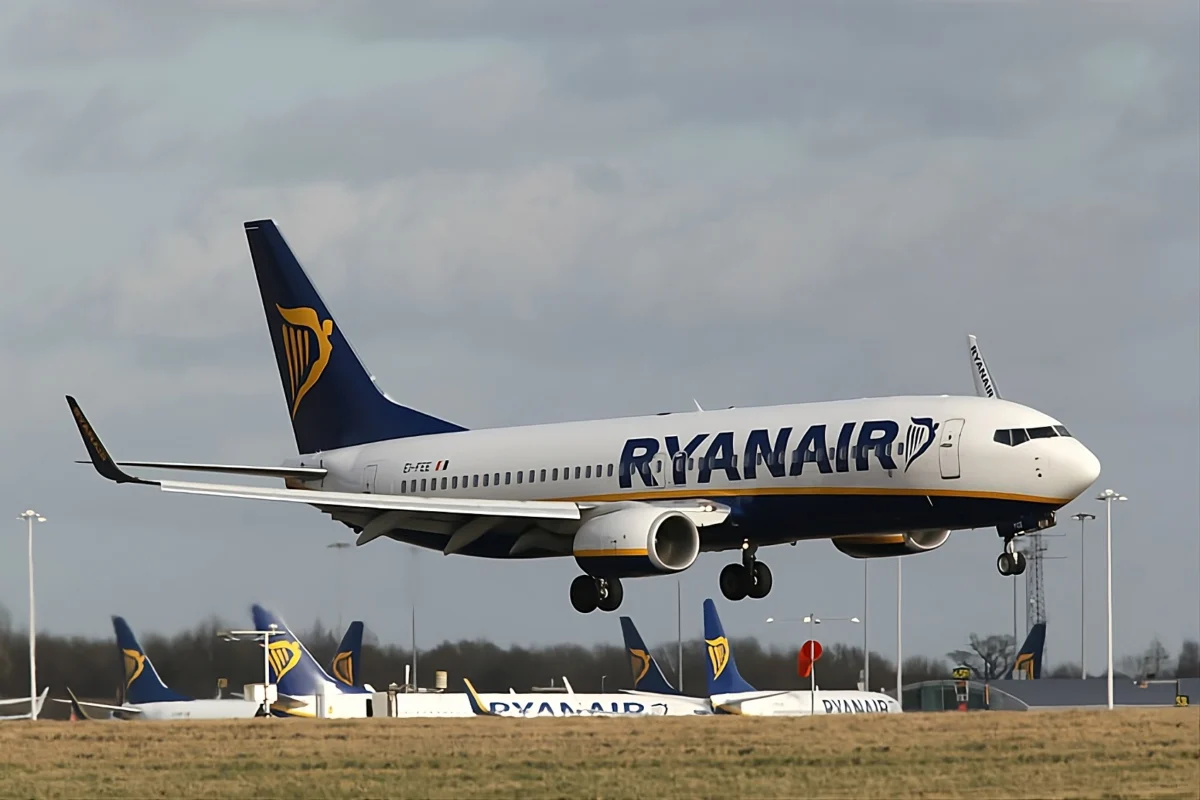
Ryanair Chief Executive Michael O’Leary has formally issued a public apology following more than a week of fierce backlash triggered by his controversial remarks comparing competing full-service airlines to "high-fare rapists." The apology, released via a video statement on September 18, marks an abrupt turnaround for an aviation executive renowned for courting controversy and leveraging outrageous public statements to generate free publicity for his low-cost carrier.
The controversy erupted ahead of Ryanair’s annual shareholder meeting scheduled for September 10 at the airline’s Dublin headquarters. During a briefing with reporters, O’Leary launched into a scathing critique of major traditional carriers, including Aer Lingus, Lufthansa, and British Airways. In his remarks, he argued that soaring ticket prices would drive desperate passengers away from these legacy airlines in favor of budget options like Ryanair.
To emphasize his point regarding what he characterized as excessive pricing structures, O’Leary stated that travelers "can’t afford to fly with the high-fare rapists around Europe." When journalists immediately challenged the appropriateness of the language and asked whether he was trivializing sexual assault, O’Leary doubled down, answering "Absolutely," and deliberately shifting the focus of his defense toward his ongoing animosity and willingness to offend legacy airline executives rather than the gravity of the metaphor he chose to employ.
Chronology of the Controversy and Escalating Fallout
The sequence of events unfolded rapidly over a tumultuous ten-day period, drawing sharp condemnation from advocacy groups, political leaders, and the public across Ireland and the broader European aviation market.
September 10: During a press conference at Ryanair’s Dublin headquarters prior to the September 10 annual shareholder meeting, O’Leary publicly refers to competing full-service airlines as "high-fare rapists." When reporters challenge the terminology, he defends the remark, maintaining that his primary target is the financial exploitation of passengers by legacy carriers.
September 11: As initial public criticism builds, O’Leary issues a formal letter defending his statements. He insists that his remarks did not trivialize the serious crime of rape, but he notably declines to offer an apology, attempting instead to clarify his original economic argument regarding ticket pricing.
September 14: Irish Prime Minister (Taoiseach) Micheál Martin publicly addresses the controversy. While acknowledging that O’Leary likely did not intend to normalize sexual assault, the Taoiseach urges the outspoken airline boss to reflect deeply on his choice of words, listen to the concerns of women, and exercise better judgment.
September 17: Advocacy organizations, notably the Dublin Rape Crisis Centre, report a surge in distressed calls to national helplines from survivors and their families triggered by the widespread repetition of O’Leary’s comments in the media. The center formally requests an apology and offers O’Leary individualized educational training on the real-world harms of trivializing sexual violence.
September 18: Reversing his previous stance, O’Leary releases a video apology. He admits that conversations with family, friends, and colleagues inside and outside Ryanair made him realize the deep hurt and upset he had caused, particularly to sexual assault survivors. The Dublin Rape Crisis Centre immediately welcomes the apology, expressing hope that the incident will foster greater awareness of the damaging impact of careless language.
Pattern of Provocative Rhetoric and Recycled Insults
Michael O’Leary’s tenure at the helm of Europe’s largest low-cost carrier has long been defined by disruptive marketing strategies and intentionally provocative public relations stunts. Over the decades, the Ryanair boss has routinely weaponized sensationalism to keep his airline’s name in international headlines, frequently pitching radical or absurd operational ideas designed to reinforce Ryanair’s ultra-low-cost brand identity.
Among his most infamous historical proposals are suggestions to charge passengers for using onboard lavatories, introducing standing-room-only cabins with vertical passenger harnesses, and entirely eliminating ticket revenue by replacing it with onboard digital gambling facilities. Each time these extreme ideas or colorful insults are picked up by the global press, it serves as a cost-effective reminder to budget-conscious consumers that Ryanair maintains rock-bottom fares by stripping away non-essential frills.
However, the specific insult used in the September 10 briefing was not entirely novel. Historical records indicate that O’Leary recycled language from a July 2004 dispute, during which he publicly labeled the owners of London Stansted Airport "a bunch of overcharging rapists" while locked in contentious negotiations over airport operating fees and passenger service charges.
While defenders and industry analysts attempted to frame his latest outburst as an extreme, albeit clumsy, metaphor for financial exploitation and predatory pricing in the aviation sector, the analogy faced immediate logical and ethical hurdles. Observers noted that the comparison fundamentally breaks down because airline passengers purchase tickets with full voluntary agency, whereas sexual assault is, by legal and ethical definition, an entirely involuntary act involving coercion and violence.
Official Reactions and Institutional Responses
The severity of the language deployed by a prominent corporate leader drew swift institutional condemnation. The Dublin Rape Crisis Centre emerged as a primary voice demanding accountability. Rachel Morrogh, the chief executive of the organization, publicly highlighted that individuals utilizing national support helplines had experienced genuine distress and trauma upon hearing the repeated comparisons in news broadcasts.
The center’s leadership underscored that using language associated with sexual violence as a rhetorical device for commercial grievances diminishes the seriousness of the crime and creates additional barriers for survivors seeking support. By offering O’Leary sensitivity training, the organization sought to pivot the controversy into an educational opportunity regarding public discourse.
Political pressure mounted significantly when Irish Prime Minister Micheál Martin weighed in on the controversy. The involvement of the nation’s leader elevated the dispute from a corporate public relations mishap to a matter of national discourse regarding corporate governance, ethical standards, and leadership responsibility. Taoiseach Martin emphasized that high-profile executives carry a profound social responsibility in their public communications, urging O’Leary to listen closely to the community feedback.
The Apology and Concluding Remarks
Faced with mounting reputational damage, potential commercial friction, and intense political scrutiny, O’Leary ultimately capitulated on September 18. In his video statement, he explicitly addressed the fallout:
"I am truly sorry for the offense and upset I’ve caused you by my careless use of those words. It won’t happen again. I will try to learn from this mistake and do better in the future."
The Dublin Rape Crisis Centre formally acknowledged and welcomed the statement. Rachel Morrogh noted that O’Leary’s recognition of the pain inflicted upon survivors and their families was a necessary step, expressing hope that the high-profile resolution would serve as a broader reminder to corporate leaders about the real-world consequences of minimizing sexual violence for rhetorical impact.
As the dust settles on Ryanair’s latest self-inflicted publicity crisis, industry watchers suggest that while O’Leary’s calculated penchant for provocation remains a core pillar of Ryanair’s brand DNA, the boundaries of acceptable corporate discourse are shifting. The episode demonstrates that even the most resilient masters of shock-value marketing are increasingly subject to corporate accountability, public censure, and the demand for higher standards of responsibility from consumers, advocates, and political leaders alike.







Leave a Reply