
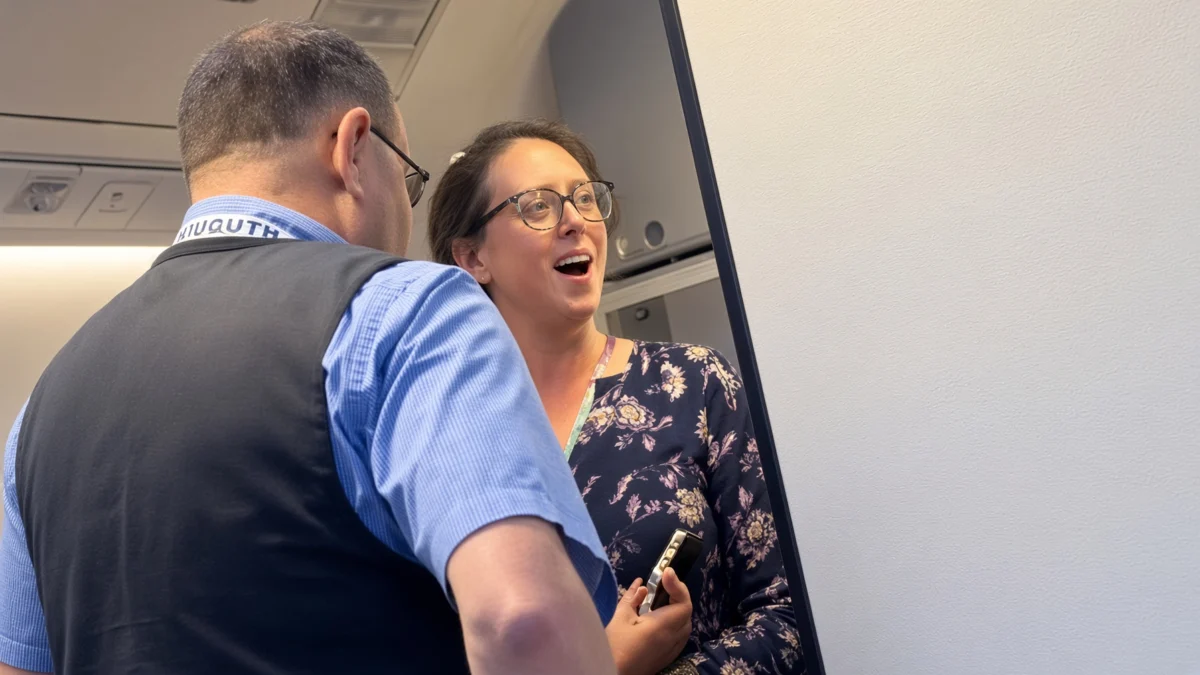
A heated dispute between a passenger and a Southwest Airlines flight attendant at an aircraft boarding door has ignited a broader conversation regarding airline baggage policies and the recurring friction caused by mandatory gate-checking procedures. The incident, which was captured on a two-and-a-half-minute video shared by the aviation news outlet A Fly Guy, depicts a female passenger refusing to surrender her carry-on luggage, despite requests from ground staff to check the bag into the aircraft’s cargo hold. The confrontation escalated to the point where the flight attendant formally denied the passenger boarding, citing both a "bad attitude" and alleged physical assault, ultimately leading to a call for law enforcement intervention.
The video captures the passenger standing in the threshold of the aircraft door, arguing that overhead bin space remained available in the cabin. Throughout the exchange, the passenger repeatedly accused the flight attendant of "assault and battery," while the crew member remained visibly composed, insisting that the passenger would not be permitted to fly. The situation serves as a stark example of the mounting tensions between airlines prioritizing operational efficiency and passengers frustrated by the perceived inconsistency of cabin storage policies.
Chronology of the Disruption
The encounter began on the jetbridge, where airline personnel were identifying carry-on bags to be gate-checked as part of a standard procedure to ensure timely departures. When the passenger in question was instructed to surrender her bag, she resisted, citing the visible availability of storage space inside the aircraft.
As the passenger reached the boarding door, the disagreement intensified. While the video does not capture the initial interaction or any physical contact that may have preceded the recording, the flight attendant is heard stating clearly that the passenger had initiated physical contact, thereby necessitating her removal from the flight. Despite the passenger’s protests and her attempts to highlight the empty overhead bins, the flight attendant stood firm, emphasizing that the passenger’s conduct had crossed a threshold that prohibited her from proceeding to her seat. The standoff concluded with the flight attendant requesting the assistance of airport police, effectively terminating the passenger’s travel plans for that flight.
The Logic Behind Mandatory Gate Checks
To the average traveler, being forced to gate-check a bag when bins appear empty is often perceived as an arbitrary or even deceptive practice. However, airline operations experts note that the decision-making process is rooted in complex logistics aimed at preventing departure delays.
Airlines frequently initiate mandatory gate checks before the cabin is fully boarded to mitigate the risk of a "full bin" scenario toward the end of the boarding process. If flight crews discover that overhead bins are at capacity when the final groups of passengers are boarding, it creates significant operational friction. A passenger who cannot find space near their assigned seat must backtrack through the cabin against the flow of incoming passengers to locate space or surrender their bag to be tagged and sent to the cargo hold. This process, often involving physical labor in a crowded aisle, can delay a flight’s pushback from the gate.
Consequently, airlines often err on the side of caution. If a gate agent or flight attendant estimates that the remaining volume of incoming bags will exceed the remaining bin capacity, they will initiate mandatory checks. This estimation is notoriously difficult to perfect, as it depends on the geometry of the bags, the efficiency with which passengers stow them, and the degree of communication between ground staff and cabin crew.

Data-Driven Boarding Pressures
The operational burden of boarding has grown significantly as airlines have shifted their revenue models. In recent years, major carriers, including American Airlines, have implemented sophisticated software systems to guide gate agents on when to begin mandatory gate checks. These algorithms process real-time data, including aircraft type, total passenger count, and specific route characteristics, to calculate the probability of bin depletion.
However, these systems are not omniscient. They cannot account for the individual behavior of passengers—such as the tendency to place small items, like jackets or personal bags, in overhead bins instead of under the seat in front of them, which consumes valuable space meant for larger luggage.
The issue is further exacerbated by the industry-wide shift in baggage fee structures. As airlines increasingly charge for checked luggage, passengers are incentivized to maximize their carry-on allowances to avoid these additional costs. This results in a higher volume of carry-on bags per flight, placing unprecedented pressure on overhead bin capacity. For carriers like Southwest, which historically differentiated itself through a generous "two free checked bags" policy, the recent increase in gate-checking frequency suggests that the airline is struggling with the same capacity constraints that have long plagued legacy carriers.
Legal and Policy Implications
The incident highlights the precarious position of cabin crew members who are tasked with both enforcing safety policies and maintaining a hospitable passenger experience. From a legal standpoint, the authority of a flight crew to remove a passenger is broad. Under federal regulations, specifically those governing the behavior of passengers on aircraft, crew members have the right to deny boarding to any individual whose behavior is deemed disruptive or a threat to the safety and security of the flight.
Accusations of "assault and battery," as leveled by the passenger in the video, carry significant legal weight. However, when such accusations are made against a crew member in the context of a refusal to comply with boarding instructions, they are rarely viewed as a justification for further disruption. Once a captain or lead flight attendant declares a passenger "off the flight," the failure to comply with that directive can result in charges of interfering with a flight crew, a federal offense in many jurisdictions.
Potential Solutions and Future Outlook
The recurring nature of these "gate-check meltdowns" has led industry analysts to propose alternative models for cabin management. One potential solution is the implementation of a "guaranteed overhead bin space" model. Under this framework, airlines could offer passengers the ability to purchase or reserve bin space, perhaps bundled with higher-fare classes or elite status tiers.
Proponents argue that if airlines were to guarantee bin space, they would be held accountable for managing that space more effectively. This would shift the burden of responsibility from the passenger to the airline, which would then be required to calibrate its boarding and gate-check procedures to deliver on that specific service promise. However, critics argue that such a system would further complicate the boarding process and potentially alienate travelers who cannot afford premium service tiers.
As the industry continues to grapple with the tension between cost-cutting, revenue generation, and customer satisfaction, the case of the Southwest passenger serves as a cautionary tale. It underscores that while the frustration of being separated from one’s belongings at the gate is a valid passenger concern, the boarding door remains a high-stakes environment where adherence to crew instructions is paramount. As airlines continue to refine their automated boarding systems and storage policies, the focus will likely remain on balancing the need for on-time performance with the necessity of clear communication to prevent the escalation of minor inconveniences into major travel disruptions. For now, the incident remains a subject of review for both the airline and those monitoring the evolving standards of air travel conduct.






Leave a Reply