
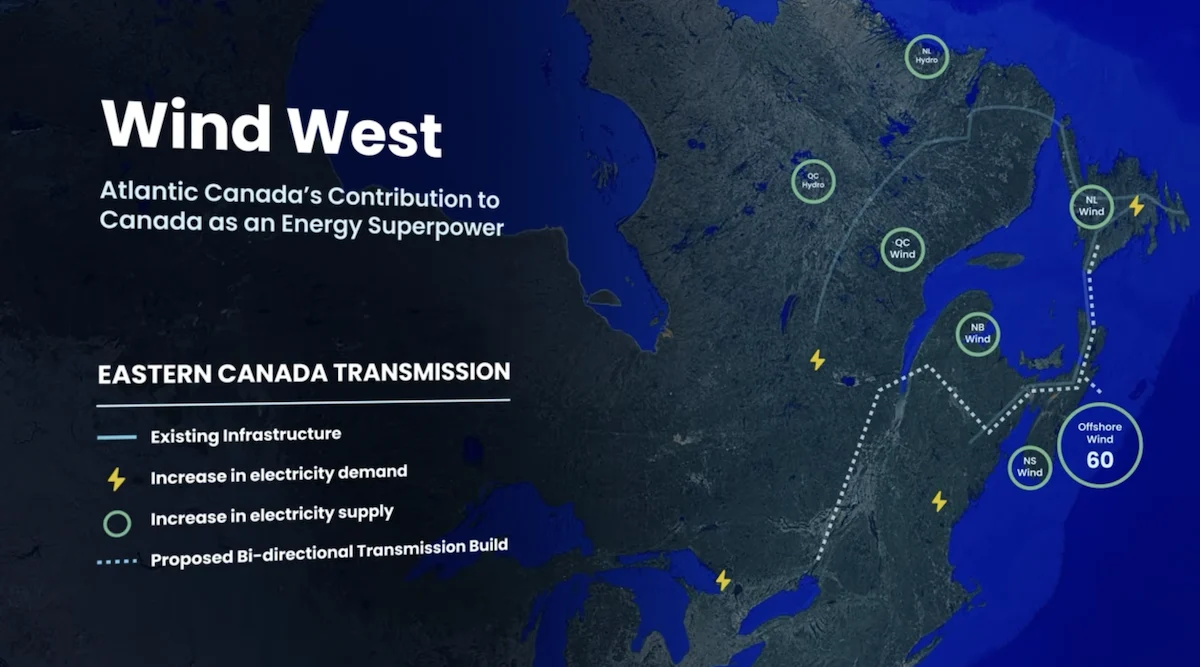
The Canadian province of Nova Scotia is positioning itself to become a preeminent hub for renewable energy production, aiming to leverage its vast, high-velocity offshore wind resources to secure both domestic energy independence and international export opportunities. The centerpiece of this initiative is the Wind West project, a proposed offshore wind development of unprecedented scale that signals a strategic pivot toward regional energy integration across North America. As the United States grapples with shifting federal energy policies and legal challenges surrounding domestic offshore wind development, the prospect of importing reliable, clean electricity from Atlantic Canada has gained significant momentum.
The Strategic Vision of Wind West
Nova Scotia’s ambitious energy strategy is rooted in the province’s geographic advantage. Situated along the North Atlantic, the region experiences some of the most consistent and powerful wind currents in the Western Hemisphere. According to provincial data, average annual wind speeds in identified offshore zones reach 9 to 11 meters per second, providing an ideal environment for large-scale turbine operations.
The Wind West project is designed to be a cornerstone of the province’s "Green Hydrogen and Offshore Wind" framework. In its initial phase alone, the province anticipates the installation of 5 gigawatts (GW) of capacity, capable of generating approximately 24 terawatt-hours (TWh) of electricity annually. To put this in perspective, this output is estimated to be double the current peak demand of the entire Nova Scotia electrical grid. Looking further into the future, the provincial government has identified sites capable of supporting up to 62 GW of total capacity, with projected capacity factors reaching as high as 60%. These metrics are highly competitive, even when compared to the performance of modern, high-efficiency natural gas combined-cycle power plants.
Chronology of the North Atlantic Energy Partnership
The development of Wind West follows a series of high-level agreements aimed at formalizing a collaborative energy corridor between Canada and the Northeastern United States.

- February 2026: Nova Scotia Premier Tim Houston and Massachusetts Governor Maura Healey signed a landmark Memorandum of Understanding (MOU). This agreement established a formal framework for cross-border collaboration, specifically targeting the integration of offshore wind energy into the New England power grid to replace retiring fossil fuel assets.
- March 2026: The Government of Nova Scotia formally introduced the Wind West development plan at the inaugural Canada Investment Summit in Toronto, inviting global stakeholders to participate in the infrastructure build-out.
- June 2026: The commissioning of the 1.25 GW Champlain Hudson Power Express transmission line marked a critical milestone in regional energy trade, successfully connecting Quebec’s hydropower resources to the New York City load center. This project served as a proof-of-concept for the viability of long-distance, high-voltage direct current (HVDC) transmission.
Technical and Economic Implications
The significance of the 60% capacity factor cannot be overstated. In traditional power generation, capacity factor represents the ratio of actual output over a period of time to the theoretical maximum output. While onshore wind often struggles with intermittency, the stability of offshore currents allows for a level of reliability that mimics baseload power.
By integrating these offshore wind farms into a broader "Eastern Energy Partnership," the Canadian provinces—including New Brunswick, Newfoundland and Labrador, and Prince Edward Island—are moving toward a highly resilient, interconnected grid. This regional grid aims to balance hydro, tidal, nuclear, and wind resources, effectively hedging against the supply shocks that have historically plagued the North American energy market. For the United States, importing this power represents a pathway to meeting aggressive state-level decarbonization mandates, particularly in states like Massachusetts and New York, where land-use constraints make large-scale domestic renewable development difficult.
The Geopolitical and Regulatory Landscape
The growth of the Canadian offshore wind sector occurs against a backdrop of complex regulatory friction within the United States. Federal efforts to pause or curtail offshore wind development—including legal challenges to existing leasehold agreements and the implementation of administrative hurdles—have created a climate of uncertainty for developers.
In response, several US coastal states have adopted a more aggressive legal stance. Attorneys General from New York, Connecticut, Maine, Massachusetts, New Jersey, and Rhode Island have collectively engaged in litigation against federal authorities to protect the integrity of offshore energy leases. These legal battles highlight a widening divide between federal energy priorities and the localized economic interests of coastal states that view wind energy as an essential tool for lowering electricity costs and ensuring grid stability.
Within the US Department of Energy, internal adjustments have been made to navigate these challenges. The reorganization of the Office of Solar Energy Technologies and the Office of Wind Energy Technologies into the "Integrated Energy Systems Office" (IESO) marks a transition toward a more holistic, system-level approach to energy infrastructure. This office is tasked with addressing the long-term reliability of "aeromechanical energy systems"—a designation that encompasses traditional wind turbine technology while emphasizing its role as a component in a broader, integrated energy grid.

Challenges and Future Outlook
Despite the enthusiasm for Wind West, significant hurdles remain. Building an offshore wind farm of this magnitude requires not only massive capital expenditure but also the construction of specialized subsea transmission infrastructure. The logistical complexity of transporting high-voltage power across international borders necessitates complex regulatory approvals and a long-term commitment to shared energy security protocols.
Furthermore, the economic viability of the project depends on the stability of the long-term power purchase agreements (PPAs) that will ultimately be signed between Canadian developers and US utility providers. As fossil fuel prices remain volatile, the promise of stable, fixed-price energy from offshore wind becomes increasingly attractive to corporate and municipal buyers.
Analysis of the Regional Shift
The move by Nova Scotia to develop a 62 GW potential resource base fundamentally shifts the energy geography of the North Atlantic. If successful, the province will not merely be a participant in the energy transition; it will be an exporter of industrial-scale clean power. This shift has several critical implications:
- Grid Resilience: The interconnection of the Eastern Canadian grid with the Northeastern US creates a larger, more diverse portfolio of energy assets. A larger grid is inherently more resilient to localized disruptions, as energy can be rerouted from hydro-rich regions to wind-rich regions based on demand and weather patterns.
- Supply Chain Development: The scale of the Wind West project necessitates a robust, specialized supply chain. Nova Scotia is positioning its ports and manufacturing hubs to become the primary staging area for North Atlantic offshore wind maintenance and construction, which will likely foster a new industrial cluster in the Atlantic Provinces.
- Decarbonization at Scale: For US states with high climate targets, the ability to import large volumes of carbon-free electricity allows for the accelerated decommissioning of coal and oil-fired power plants. This is particularly relevant in New England, where grid congestion and reliance on natural gas imports have historically driven high price volatility.
As the global energy landscape undergoes this transformation, the partnership between Nova Scotia and its US neighbors serves as a case study in how sub-national entities can bypass federal gridlock to achieve common environmental and economic objectives. The success of Wind West will likely be measured not just in megawatts of capacity, but in the durability of the cross-border infrastructure that connects the two nations. While the political winds in Washington remain unpredictable, the economic and logistical logic of an integrated North American energy market appears to be gaining permanent traction.









Leave a Reply