

The walk down the slight incline toward the East Falmouth harbor reveals a landscape quintessential to Cape Cod, Massachusetts. Weathered shingle-style homes line the shore, while small commercial vessels and pleasure craft sit idle in gravel driveways. On a warm afternoon, the air carries the familiar, sharp scent of salt and drying seaweed. However, beneath the serene surface of Waquoit Bay lies an industrial evolution that is redefining the region’s relationship with its environment. What was once viewed primarily through the lens of traditional fishing has transformed into a sophisticated, science-driven aquaculture program designed to combat one of the most pressing environmental challenges facing the coast: nitrogen pollution.
The Nitrogen Crisis and the Aquaculture Mandate
For years, the towns of Cape Cod have faced mounting regulatory and legal pressure to restore water quality in their embayments. As the population has grown, the influx of nitrogen—largely derived from septic systems—has fueled harmful algal blooms, stripped oxygen from the water, and degraded essential marine habitats. Under the federal Clean Water Act, municipalities are required to meet strict nitrogen load limits. While traditional solutions like municipal sewering are effective, they are also astronomically expensive and geographically disruptive.
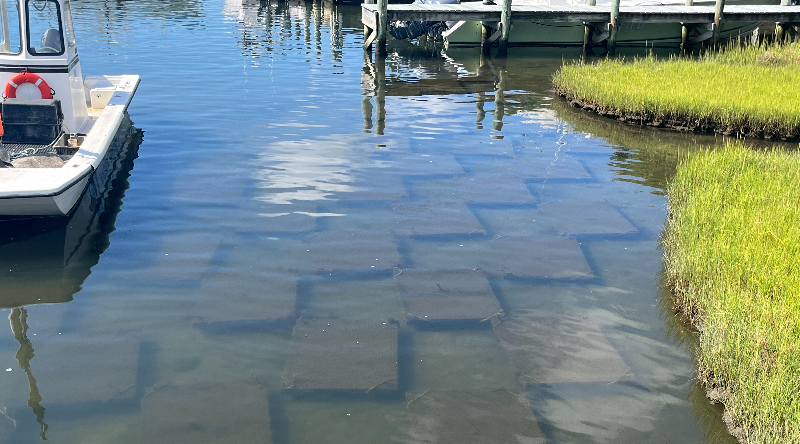
In response, Falmouth officials began looking toward non-traditional, nature-based solutions. A 2018 study by Roger Williams University provided the framework for a Rotational Aquaculture Plan, positing that shellfish—specifically oysters—could serve as biological filters. By sequestering nitrogen in their tissues and shells as they grow, oysters offer a cost-effective, decentralized mechanism for water remediation that simultaneously supports a $28 million industry in Massachusetts.
A Chronology of Progress
The development of Falmouth’s aquaculture program did not happen overnight. It was the result of a deliberate, decade-long effort to move away from expensive infrastructure projects toward sustainable ecological management.
- Pre-2018: Falmouth researchers began investigating alternatives to conventional sewering, recognizing that the town’s estuaries were reaching a tipping point regarding nutrient saturation.
- 2018: The Roger Williams University study validated the concept of municipal shellfish aquaculture, leading to the adoption of a formal plan that allowed for both private and municipal shellfish farms.
- 2020: The deployment of large-scale oyster projects began in earnest, with entities like Ward Aquafarms establishing operations in the Eel River.
- 2021–2024: Critical data collection occurred during this period, providing empirical evidence that oyster filtration could remove nitrogen at a fraction of the cost of mechanical systems.
- 2025: R. Charles Martinsen III, Deputy Director of the Falmouth Water Quality Management Committee, announced plans to quadruple the acreage dedicated to aquaculture, signaling a move toward long-term institutional reliance on the practice.
The Economics of Ecological Restoration
The financial argument for aquaculture is as compelling as the environmental one. Data analyzed by committee member Thomas Duncan between 2021 and 2024 offers a stark comparison between biological filtration and technological interventions. In the Eel River, the nitrogen removed by the oyster farms was equivalent to the output of 26 single-family homes.
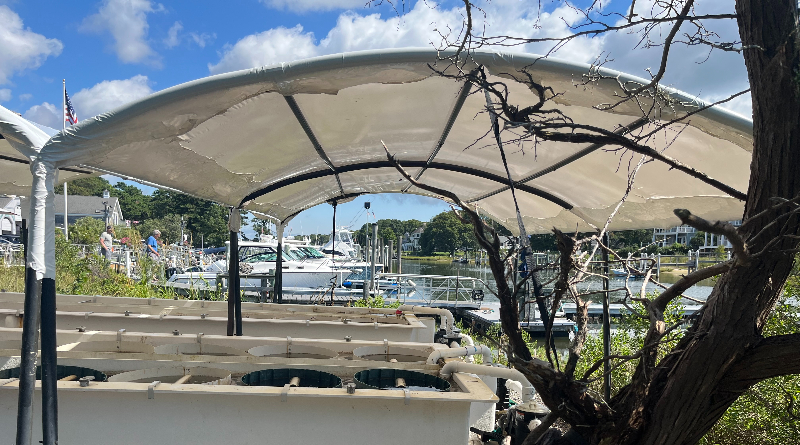
When calculating the cost of mitigation, the disparity is significant. Removing that same amount of nitrogen through urine-diverting systems would cost roughly $2,088, whereas utilizing innovative and alternative (I/A) septic systems could cost upward of $1.17 million. Consequently, aquaculture serves as a high-efficiency bridge, allowing the town to meet its Total Maximum Daily Load (TMDL) requirements while avoiding the prohibitive costs of town-wide sewer expansion.
The program is self-sustaining in many respects. Each farm pays the town approximately $19,600 in annual leasing fees, and growers can rent specialized equipment from the municipality. Revenue generated from these leases is deposited into a revolving account specifically earmarked for the purchase of shellfish seeds, ensuring that the industry continues to scale without constant reliance on tax-funded subsidies.
Technological Siting and Regulatory Coordination
One of the primary hurdles in establishing a marine farm is the complex web of environmental, legal, and municipal regulations. To streamline this process, the NOAA Sea Grant Aquaculture Extension and Technology Transfer program introduced MA-ShellfAST. This geographic information system (GIS) tool allows potential growers to visualize environmental data layers—such as water depth, sediment type, and proximity to sensitive habitats—before submitting a permit application.
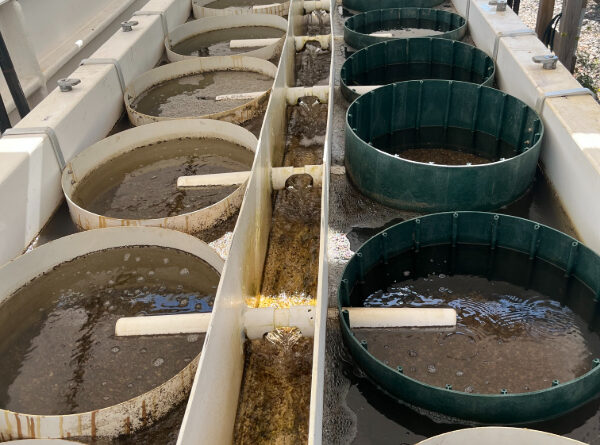
By providing a map-based format for regulatory review, the tool reduces conflicts between aquaculture and other water users, such as recreational boaters and conservationists. It also ensures that site selection is based on biophysical compatibility, minimizing the risk of failure and environmental damage. This transparency has been key to securing community acceptance, as residents are able to see exactly where farms are located and how they are monitored.
The Role of the Waquoit Bay National Estuarine Research Reserve
Waquoit Bay serves as a living laboratory for these efforts. Spanning 2,800 acres, the National Estuarine Research Reserve (NERR) provides a stable, protected environment for ongoing scientific investigation. Because the bay is representative of shallow embayments throughout the northeastern United States, the research conducted here has national implications.
Collaborative projects between the town and private operators like the Cape Cod Oyster Company have turned the bay into a model for integrated resource management. For instance, the Seapit River, fed by nutrient-rich freshwater from the Moonakis and Little Rivers and flushed by the tides of Vineyard Sound, provides the ideal chemical balance for oyster growth. During the winter, when metabolic rates drop, the farms employ specialized storage strategies—ranging from deep-water submersion to climate-controlled land facilities—to protect the stock from ice damage and thermal stress.
Broader Implications and Future Outlook
While aquaculture is a powerful tool, it is not a panacea. Officials in Falmouth are clear that shellfish farming must be part of a broader "toolbox" approach that includes sewering, denitrifying septic systems, and nutrient management policies. However, the success of the program suggests that the future of water quality management may lie in the integration of human industry with natural processes.
The implications for other coastal communities are profound. As climate change accelerates, increasing water temperatures and shifting precipitation patterns, the resilience of estuaries is being tested. Oysters, by acting as both a biological filter and an economic engine, offer a pathway toward a more circular economy where the act of production—farming seafood—directly contributes to the health of the public commons.
The resurgence of the oyster industry, which was largely decimated by 1840, marks a return to a more symbiotic relationship with the coast. Modern science, through disease-resistant strains and advanced hatcheries, has made it possible to reclaim these waters. As the program expands to its projected 80 to 140 acres, the town of Falmouth expects to produce over 1.3 million oysters annually. Each one of those oysters represents a measurable reduction in nitrogen, a step toward clearer water, and a testament to the fact that environmental restoration can be a profitable, community-led endeavor.

Ultimately, the transformation of Falmouth’s harbor from a simple, scenic inlet to a site of intensive ecological production underscores a shift in how we define "infrastructure." In the coming decades, the most successful coastal towns may not be those that simply build walls to hold back the sea, but those that harness the natural biological capacity of the estuary itself to maintain a delicate, sustainable balance. The oysters of Waquoit Bay are not just a delicacy; they are a vital component of a new, science-backed strategy for coastal survival.









Leave a Reply