
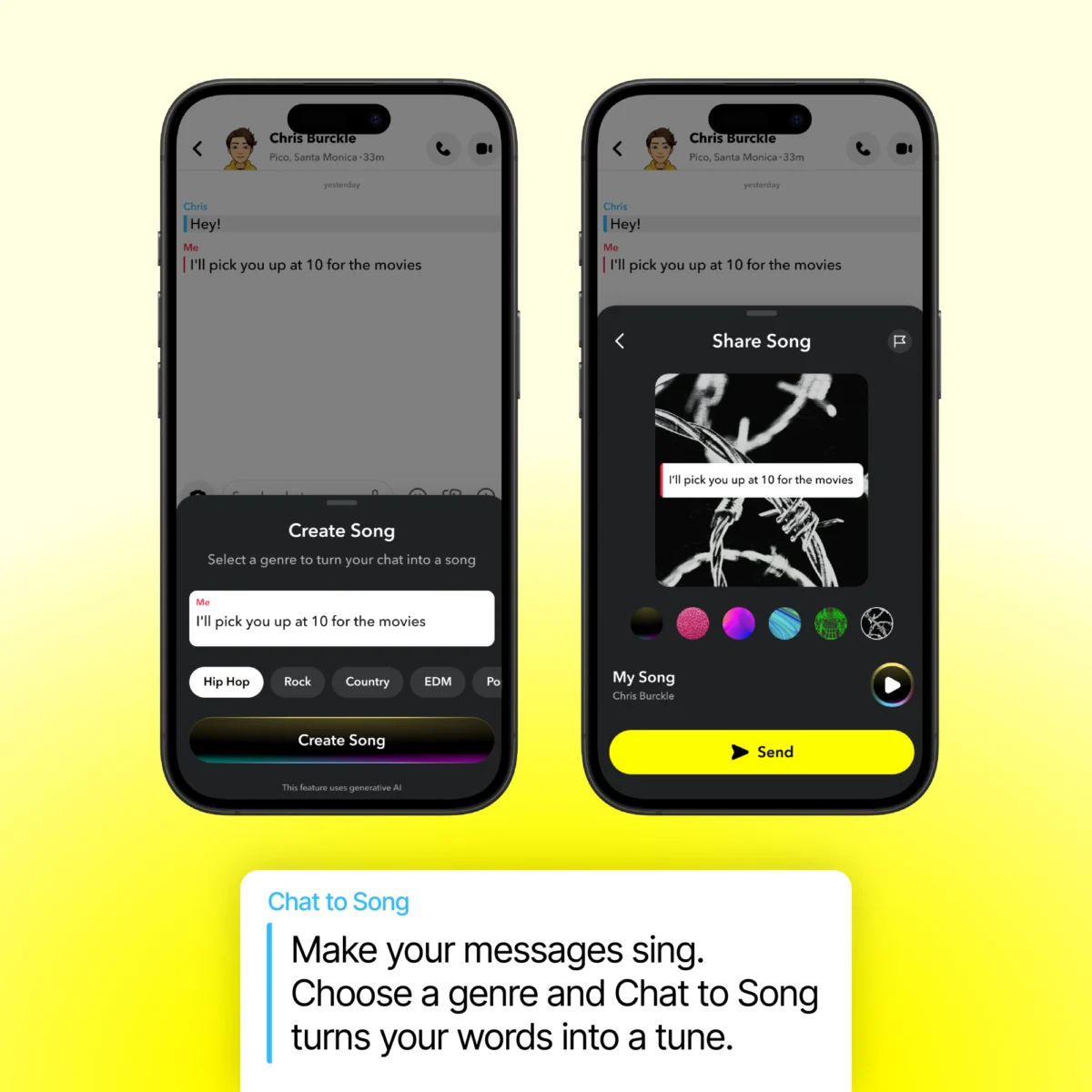
In an aggressive expansion of its generative artificial intelligence suite, Snap Inc. announced on September 21, 2026, that it is rolling out a series of premium features for its Lens+ subscribers. The centerpiece of this update is a tool dubbed "Create Song," which allows users to convert standard text-based chat messages into short, original musical compositions. By simply pressing and holding a message within the Snapchat interface, users can select from various genres—including pop, rock, country, and hip-hop—to transform conversational text into a personalized audio track. This feature marks the latest effort by the social media giant to monetize its growing library of generative AI tools, placing high-compute functionality behind its $7.99 monthly Lens+ subscription tier.

The Evolution of the Lens+ Ecosystem
The introduction of "Create Song" arrives as Snapchat continues to refine its premium offerings to sustain its subscriber base. Snapchat+, which serves as the umbrella for the platform’s paid services, currently boasts more than 25 million active subscribers globally. Within this framework, Lens+ acts as an exclusive tier focused on advanced augmented reality (AR) and generative AI capabilities.
Since its launch in 2025, Lens+ has served as a testing ground for Snap’s most ambitious technical integrations. Previous additions to the tier include the "Imagine Lens," a sophisticated image-generation tool, and "AI Clips," which leverages machine learning to convert static photographs into five-second video loops. By gating these tools behind a monthly subscription, Snap is signaling a strategic shift toward a model that prioritizes power users who are willing to pay for enhanced creative expression.

Expanding the Creative Toolkit: Photoshoot and Remix
Beyond the auditory experience of "Create Song," Snap has introduced a suite of visual enhancements designed to streamline user content creation. "AI Photoshoot" addresses one of the most common frustrations in social photography: the "near-miss" shot. Whether a subject is blinking, looking away, or suffering from suboptimal lighting conditions, this feature utilizes AI to retouch and re-light images in real-time, effectively salvaging Snaps that might otherwise have been deleted.
Complementing this is "AI Remix," a tool that allows users to take a photograph received from a friend and reinterpret it through a new artistic lens. The tool encourages collaborative, iterative communication; users can apply stylistic prompts—such as "cartoon 90s baby" or "anime style"—to received stickers and photos, creating a new, generative response. Furthermore, the company has integrated AI-enhanced fonts, allowing users to transform simple text captions into stylized, three-dimensional textures like foam, spray paint, or bubble letters.

Chronology of Recent Snap Strategic Moves
The release of these features is not an isolated incident but rather the latest in a rapid succession of updates aimed at deepening user engagement. The trajectory of Snap’s 2026 roadmap highlights a clear focus on utility and social organization:
- September 10, 2026: Snap launches "Snapchat Plans," an event-coordination feature designed to facilitate real-world meetups. By allowing users to organize events and track attendance, the company has directly entered the market space dominated by platforms like Partiful.
- September 21, 2026: The company unveils the "Create Song" and "AI Photoshoot" features for Lens+ subscribers, signaling a pivot toward AI-integrated messaging.
- Third Quarter 2026: Snap continues to emphasize the distinction between public content (Spotlight) and private communication (Chat). While AI is becoming ubiquitous in private, subscriber-only channels, the company has maintained strict guidelines regarding AI-generated video in public-facing discovery feeds, likely to mitigate concerns regarding misinformation and content quality.
Industry Context and Market Implications
The decision to charge for AI-driven chat enhancements places Snapchat in direct competition with other major social platforms, most notably Meta, which has similarly integrated AI features into its messaging apps. Analysts observe that Snap’s current strategy is heavily reliant on the "compute-heavy" nature of these tools. Generative audio and video require significant server resources, justifying the $7.99 price point.

However, the long-term success of this model depends on the longevity of the novelty. While initial adoption of generative AI tools is typically high, user retention often hinges on whether these features become essential to the daily workflow of the platform. By focusing on "playful" tools that integrate into existing patterns—such as how friends interact within group chats—Snap is attempting to make these features feel less like a technological gimmick and more like an extension of digital identity.
Ethical and Technical Considerations
The integration of generative AI into private messages carries inherent responsibilities. Snap has noted that these features are governed by its existing safety guidelines. Despite this, the move to automate the transformation of text into music and images raises questions about the future of digital authenticity. As users begin to communicate via AI-generated audio and modified imagery, the boundary between human intent and machine-generated content becomes increasingly porous.

Snap’s decision to limit these features to Lens+ subscribers also acts as a safeguard of sorts. By ensuring that these tools are primarily used within established friend circles—rather than in public, viral-focused channels like Spotlight—the company minimizes the risk of widespread, unverified AI content proliferation. The company has explicitly stated that fully AI-generated video will not be recommended in public discovery feeds, effectively creating a "walled garden" for its generative tools.
Future Outlook for Lens+
Looking ahead, the success of the September 2026 update will likely dictate the company’s Q4 and 2027 development priorities. If the "Create Song" feature drives a measurable increase in subscription renewals, it is probable that future Lens+ updates will continue to iterate on this formula: small, high-frequency, creative tools that rely on the existing, intimate social graph of the user.

As Snap battles for market share in an era of waning attention spans, the ability to turn a mundane text message into a song or a bad photo into a professional-grade portrait may be the necessary value proposition to keep its 25 million subscribers engaged. For now, the rollout is underway across all markets where Lens+ is available, with regional availability expected to stabilize in the coming weeks. Whether this AI-first approach will be enough to solidify Snapchat’s dominance in the social landscape remains the central question for investors and users alike. As the novelty fades, the true test will be whether these tools provide lasting utility or simply represent a temporary flash of innovation in a crowded digital marketplace.









Leave a Reply