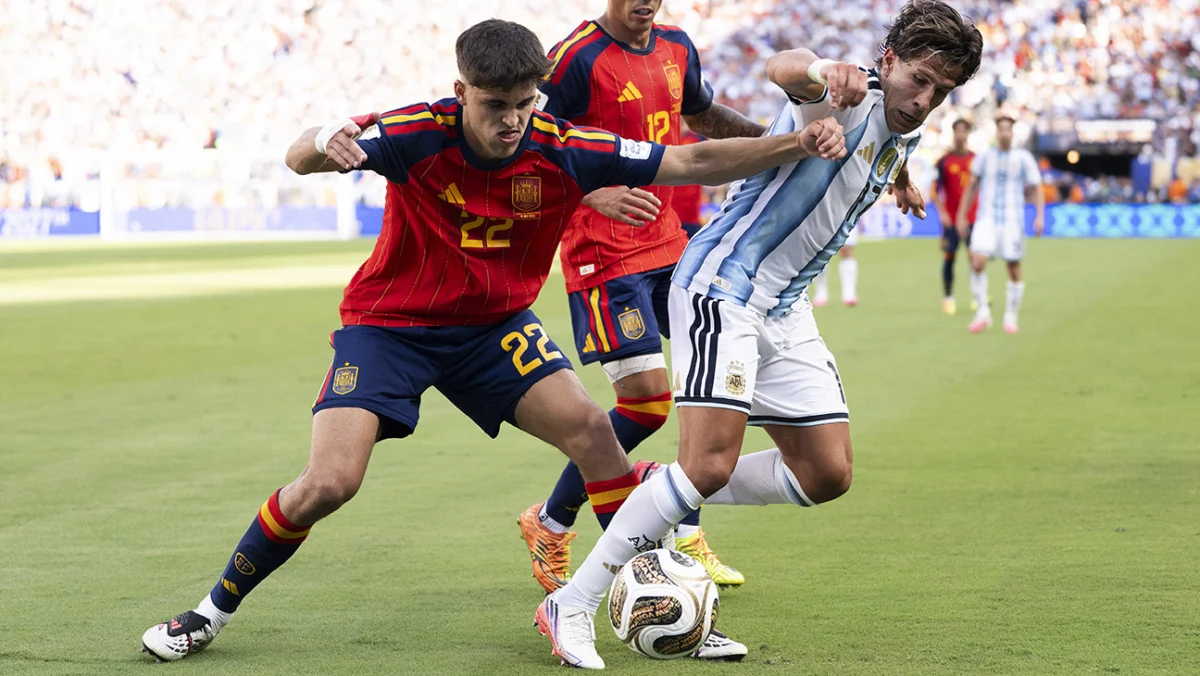
Spain’s hard-fought victory in the FIFA World Cup 2026 final has not only etched their name in football history but has also rewritten the record books for television viewership in the United States. The thrilling 1-0 triumph over Argentina, secured in extra time, culminated a tournament that has proven to be the most watched sporting event of its kind in the nation’s history, across both English and Spanish language broadcasts. The final match alone captivated an unprecedented audience, signaling a profound and growing embrace of international football within the American sporting consciousness.
A Landmark Final for a Landmark Tournament
The culmination of the 2026 FIFA World Cup, hosted across the United States, Canada, and Mexico, delivered a spectacle that resonated deeply with American audiences. The final, held on July 19, 2026, at the New York New Jersey Stadium in East Rutherford, New Jersey, saw Spain edge out a determined Argentinian side in a tense encounter. This victory not only marked Spain’s second World Cup title but also served as the centerpiece of a tournament that consistently broke viewership records.
The combined viewership for the final match across Fox, Telemundo, and Peacock exceeded a staggering 60 million viewers. This figure represents a monumental leap from previous World Cup finals and indeed, any other soccer match broadcast in the United States. To put this into perspective, the 2022 World Cup final between Argentina and France, which also featured Argentina, drew a combined 25.78 million viewers (16.78 million on Fox and 9 million across Telemundo and Peacock). The 2026 final’s audience more than doubled that figure, underscoring a dramatic surge in football’s popularity.
English-Language Broadcasts Reach New Heights
Fox’s English-language broadcast of the final averaged an impressive 38.9 million viewers, a figure that already surpassed the previous record for any soccer match in the U.S. This record was previously held by the U.S. Men’s National Team’s dramatic loss to Belgium in the round of 16 of the same tournament, which garnered 45.99 million viewers. The final match’s viewership on Fox was an additional 5.8 million viewers higher than that historic round of 16 game.
The peak viewership for the Fox broadcast was particularly telling, with nearly 51.7 million people tuning in between 5:45 p.m. and 6:00 p.m. ET, precisely during the pivotal moments of the match when Spain secured their victory with a goal from Ferran Torres in the 106th minute. It’s important to note that the 38.9 million average figure reported by Fox includes some pre-game coverage, as has been standard practice for their World Cup ratings reports. For the match itself, excluding the pre-game segments, Fox’s audience figure rose to an even more remarkable 42.5 million viewers. This sustained engagement throughout the entire duration of the final highlights the gripping nature of the contest and the growing investment of American viewers in the sport.
Spanish-Language Broadcasts Cement Their Dominance
The Spanish-language broadcasts on Telemundo and Peacock also contributed significantly to the record-breaking viewership, drawing an estimated 22.6 million viewers for the final. While this figure was just shy of the all-time Spanish-language record of 23.2 million viewers, set by the Mexico-England match during the round of 16, it was incredibly close and indicated that the final contest held immense appeal across linguistic demographics. Pending any final updates, it remains possible that the Spanish-language viewership for the final could indeed surpass that previous record, further solidifying the broad appeal of this World Cup.
A Tournament of Unprecedented Engagement
The record-shattering performance of the final match was not an isolated incident but rather the crescendo of a tournament that consistently delivered massive audiences. Throughout the 2026 World Cup, viewership figures demonstrated a sustained and escalating interest in international football.
The semifinals, in particular, provided compelling narratives that captured significant attention:
- Argentina’s Comeback Victory: The thrilling semifinal clash where Argentina staged a dramatic comeback to defeat England drew a combined 28.3 million viewers. This included 16.9 million viewers on Fox and 11.4 million viewers across Telemundo and Peacock, showcasing the intense rivalry and high stakes of this stage of the competition.
- Spain’s Dominance: In the other semifinal, Spain’s commanding shutout victory over France attracted 22.91 million viewers. Fox’s English-language broadcast accounted for 13.11 million of these viewers, while Telemundo and Peacock combined for 9.8 million viewers.
These semifinal numbers alone would have been considered exceptional in previous World Cups, but in the context of the 2026 tournament, they served as strong indicators of the growing football fanbase in the United States. The consistent high viewership across multiple stages of the tournament suggests a deeper integration of soccer into the American sports landscape, moving beyond niche appeal to mainstream dominance.
Context: The Evolving American Football Fanbase
The 2026 World Cup’s unprecedented viewership can be attributed to several interconnected factors. Firstly, the tournament’s co-hosting by the United States provided a home-field advantage, fostering a sense of national pride and investment, particularly in the USMNT’s journey. Even after the USMNT’s elimination, the global spectacle of the World Cup continued to draw viewers, demonstrating a growing appreciation for the sport itself, beyond just national team allegiance.
Secondly, the increasing Hispanic population in the United States has historically been a strong driver of soccer viewership, and their engagement with Telemundo and Peacock has been consistently high. The record-breaking numbers for Spanish-language broadcasts are a testament to this demographic’s passion for the sport.
However, the dramatic surge in English-language viewership, particularly for matches not involving the USMNT, points to a broader cultural shift. The accessibility of international football through major broadcast networks like Fox, coupled with the compelling narratives and high-quality play displayed throughout the tournament, has successfully converted a significant segment of the general sports audience into football enthusiasts.
The widespread availability of streaming services like Peacock has also played a crucial role, offering viewers more flexible and accessible ways to watch matches. This accessibility, combined with the undeniable global appeal and dramatic storytelling inherent in the World Cup, has created a perfect storm for viewership growth.
Analyzing the Implications
The record-breaking viewership for the 2026 FIFA World Cup final and the tournament as a whole carries significant implications for the future of soccer in the United States:
- Increased Investment and Sponsorship: The massive audience numbers will undoubtedly attract greater investment from advertisers and sponsors, further bolstering the financial infrastructure of soccer leagues and organizations within the U.S. This could lead to enhanced development programs, improved infrastructure, and a more competitive domestic league.
- Growth of Major League Soccer (MLS): The heightened interest in international football is likely to spill over into increased support and viewership for Major League Soccer. As more Americans become familiar with the sport’s intricacies and global stars, they may seek out local professional teams to follow.
- Youth Development and Participation: The visibility and success of the World Cup can inspire a new generation of young athletes to take up the sport, potentially leading to a significant increase in youth soccer participation rates across the country.
- Media Landscape Evolution: Broadcasters will likely continue to prioritize soccer content, potentially leading to more dedicated sports channels, increased coverage, and more sophisticated broadcast strategies for future tournaments and leagues. The success of this World Cup could also influence how other major sporting events are covered and marketed.
- Global Sporting Powerhouse Status: The overwhelming viewership reinforces the United States’ position as a major market for global sports. This success could influence future bidding for major international sporting events and further solidify the nation’s role in the global sports economy.
Looking Ahead
As the dust settles on this historic tournament, the 2026 FIFA World Cup will be remembered not just for Spain’s dramatic victory, but for its profound impact on American sports culture. The record-shattering viewership numbers are a clear indication that soccer has firmly established itself as a major player in the U.S. sporting landscape. The challenge now for stakeholders in the sport will be to capitalize on this momentum, nurturing this newfound passion and ensuring that the growth witnessed during this tournament translates into sustained engagement and development for years to come. The future of football in America has never looked brighter.