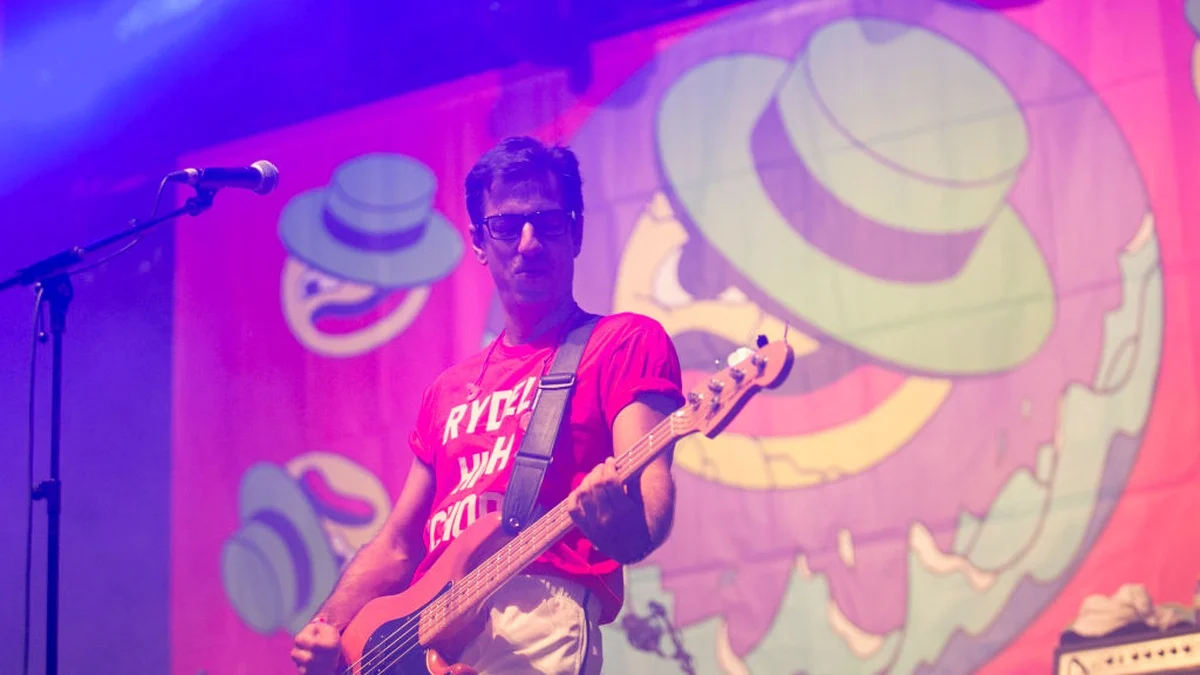
The influence of American power-pop icons Weezer on the global musical landscape is well-documented, but few international acts have channeled that fandom as directly as the Spanish punk-rock trio Airbag. Long before the group cemented their status as stalwarts of the Iberian alternative scene with their ninth studio album, they operated as something of a dedicated Weezer tribute act. During the early 2000s, while simultaneously crafting their own sound, the band members were so deeply enamored with the songwriting sensibilities of Rivers Cuomo and his cohorts that they dedicated entire live sets to replicating the Weezer discography for Spanish audiences.
This revelation, surfacing in a recent interview with the Spanish music publication CrazyMinds, highlights the foundational role that Weezer’s melody-driven, distorted aesthetic played in the formative years of Airbag. For a band that has now spent nearly three decades contributing to the Spanish punk canon, these early years of imitation were not merely a hobby, but a vital training ground for the melodic craft that would eventually define their own records.
A Chronology of Devotion: From Tribute Acts to Original Works
The genesis of Airbag’s obsession coincided with a pivotal moment in both bands’ histories. In the early 2000s, Weezer was experiencing a massive resurgence following the 2001 release of their self-titled record, widely known as The Green Album. Airbag, then in the infancy of their career following the 2000 debut of their album Mondo Cretino, found a blueprint in the American band’s ability to bridge the gap between aggressive punk energy and precise, pop-informed arrangements.
According to frontman Adolfo Díaz, the project was initially conceived as an informal endeavor. "We started a project alongside Airbag, just for fun, where we only played Weezer covers," Díaz noted. This wasn’t merely a casual jam session; the band treated these performances with a level of seriousness that bordered on professional curation. The group performed approximately five to six dedicated Weezer-only shows during this period. The commitment to the bit was total: for their performance centered on The Green Album, the band meticulously recreated the album’s iconic cover art, posing in front of a green backdrop to mimic the aesthetic of the original release.
This timeline serves as a testament to the specific cultural bridge Weezer built across the Atlantic. By the time Airbag was touring their own material, the ghost of Weezer’s influence was already embedded in their creative process. Looking back at interviews from the release of Mondo Cretino, the band’s ambition was explicitly linked to the trajectory of their idols. When asked about their long-term career aspirations, the trio did not cite the complex art-rock movements or experimental punk subgenres of the time; they simply stated, "We want to be like Weezer when we grow up."
The Mechanics of Influence: Balancing Distortion and Melody
The musical philosophy of Airbag reflects a sophisticated understanding of what made the mid-to-late 90s alternative boom so effective. Weezer’s breakthrough was predicated on the "quiet-loud-quiet" dynamic popularized by The Pixies, but refined through a lens of suburban angst and power-pop sensibilities. For Airbag, who were operating within the vibrant, often raw context of the Spanish punk scene, the challenge was to retain that scene’s inherent grit while incorporating the harmonic complexity that defined the American college-rock sound.
The implication of this early "tribute phase" is significant. It allowed the band to dissect the songwriting architecture of tracks like "Hash Pipe" or "Island in the Sun," observing firsthand how layering guitars against a tight, consistent rhythm section created a "wall of sound" that remained accessible. This analysis became the cornerstone of their own songwriting. By the time they reached their ninth studio album, Una extraña fuerza, released this year through the label Sonido Muchacho, the influence had been fully synthesized into a mature, signature sound. The record serves as a masterclass in the very techniques they once studied through covers: a blend of high-energy, distorted instrumentation coupled with highly melodic, radio-ready choruses.
Broader Context: The Legacy of Weezer in the 21st Century
To understand why Airbag felt such a profound connection to Weezer, one must look at the broader cultural reach of the Rivers Cuomo-led project. Since their 1994 debut, Weezer has navigated the precarious landscape of mainstream success, massive fan-driven cult status, and stylistic pivots. The 2026 release of their 20th studio album, another self-titled effort, underscores the band’s longevity. Following their "The Gathering" tour—which concluded with a triumphant hometown show in Los Angeles on October 24th—the band continues to demonstrate that their influence is not merely historical but contemporary.
The international demand for Weezer, with upcoming 2027 dates slated for Japan, the UK, and Europe, illustrates that the appeal of their music transcends linguistic and geographic borders. Airbag’s story is a microcosm of this phenomenon. It suggests that the "Weezer effect"—the intersection of vulnerability, technical prowess, and punk-rock attitude—is a universal language for alternative musicians.
Analysis: The Role of Covers in Band Development
While some might view a band playing cover sets as a detour from their artistic path, musicologists often point to this practice as an essential component of professional development. By focusing entirely on the catalog of a band they idolized, Airbag was essentially attending a masterclass in production, song structure, and performance dynamics.
The fact that these performances were "just for fun" belies the technical difficulty involved in replicating Weezer’s specific brand of production. Achieving the precise sonic density of early 2000s Weezer requires an intricate understanding of guitar pedal chains, studio layering, and vocal harmonizing. For a three-piece unit (occasionally augmented by a second guitarist), this was an ambitious undertaking that sharpened their collective musicianship.
Furthermore, the public nature of these performances served to align Airbag with a specific identity within the Spanish music scene. By positioning themselves as students of the American alternative canon, they signaled their intent to deviate from the more traditional, perhaps more aggressive, paths often taken by their Spanish contemporaries. This stylistic differentiation was a deliberate choice, one that provided them with the space to evolve from a local punk act into a sophisticated, genre-blending band capable of sustaining a multi-decade career.
Looking Forward: The Continued Evolution of Airbag
As Airbag enters the next chapter of their career with Una extraña fuerza, the band stands as a clear example of how early influences, when approached with reverence and analytical rigor, can provide a sustainable foundation for original artistic expression. The transition from covering "The Green Album" in the early 2000s to producing their own cohesive, original works has been a process of internalizing the "Weezer" ethos until it became their own.
Their story also serves as a reminder of the cyclical nature of music history. As they continue to tour and record, their own early work is likely being studied by a new generation of musicians—perhaps even those who, like Airbag in the early 2000s, are looking for a way to balance the raw energy of punk with the precision of pop.
The legacy of the band’s early devotion remains clear. When asked today about the influence of their heroes, the members of Airbag do not express regret or distance themselves from their younger, more "fan-like" selves. Instead, they view those years as a crucial period of identity formation. The goal they set for themselves decades ago—to be like Weezer—was not about imitation, but about finding a way to make music that resonated with as much sincerity and melodic force as the records that defined their youth. Having successfully achieved that, Airbag now stands as a respected entity in their own right, continuing the very tradition of alternative rock that they once sought to emulate.