Mikiah Roberson, a graduate student in the University of Maryland Global Campus’s digital forensics and cyber investigation program, mapped her life around a specific financial calendar. She anticipated a $6,700 federal student loan disbursement to arrive between May 27 and June 3, a sum essential for covering her rent, utility bills, and car payments. As a disabled veteran, Roberson’s tuition is covered by other benefits, but her survival—and her ability to remain enrolled—depends entirely on the timely arrival of federal loan funds for living expenses. When June 3 arrived without the expected deposit, the brief pause quickly escalated into a month-long crisis that threatened her basic stability.
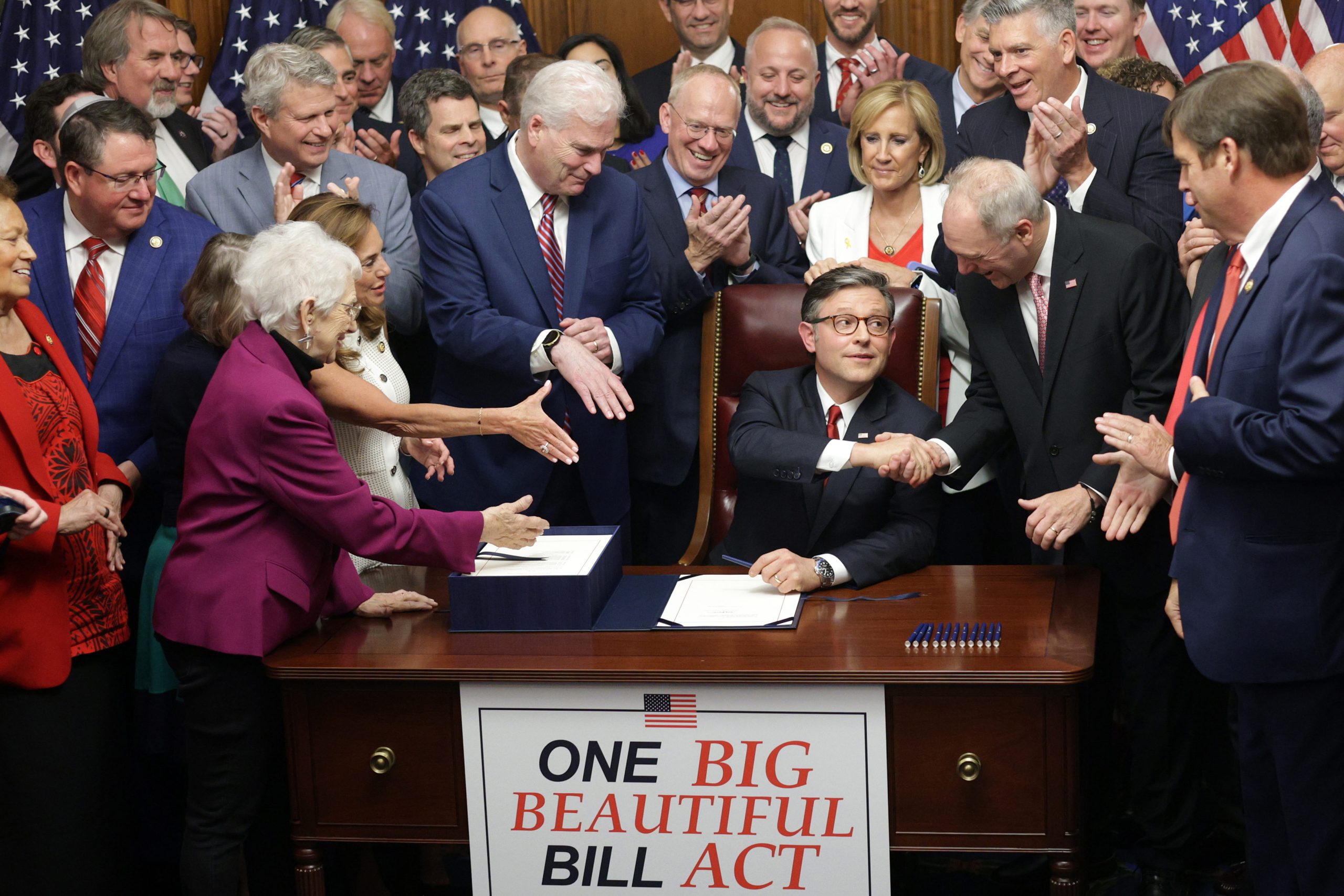
Roberson is not an isolated case. Across the United States, students have found themselves caught in a bureaucratic deadlock caused by the implementation of the One Big Beautiful Bill Act (OBBBA), signed into law by President Donald Trump on July 4, 2025. The legislation introduced sweeping changes to the federal student aid system, including lifetime borrowing limits, the elimination of the Graduate PLUS loan program, and new proration requirements for students taking fewer than full-time credit loads. However, the compressed timeline for implementation—mandated for a July 1, 2026, effective date—has created a "perfect storm" of administrative gridlock.
A Chronology of Institutional Failure
The legislative timeline for the OBBBA has been widely criticized by higher education advocacy groups and financial aid administrators as fundamentally incompatible with the operational realities of university business offices. Under the Higher Education Act, the Department of Education is typically required to adhere to a "master calendar" that mandates a rigorous, 18-month rulemaking process. This timeline allows for necessary negotiations, public commentary, and, crucially, a window for software vendors to update the complex systems that colleges use to calculate and distribute aid.
Because the OBBBA was signed in July 2025 with an effective date less than one year later, the Department of Education was forced to bypass these established safety buffers. Final rules were not issued until May 2026, leaving institutions with mere weeks to reprogram proprietary software, train staff, and reconcile their internal data with federal requirements.
By August 2026, the cracks in this timeline had widened into a national systemic failure. Major software vendors, upon which thousands of colleges rely to process financial aid, were reportedly unable to meet the condensed development schedule, forcing many financial aid administrators to revert to manual, error-prone calculations. The result was a cascading series of delays that hit the most vulnerable students—particularly those enrolled in summer sessions—the hardest.
The Human Cost of Financial Uncertainty
For students living on the margins, a delay in financial aid is not merely a bookkeeping inconvenience; it is an existential threat. Research from the Hope Center for College, Community, and Justice at Temple University indicates that nearly 60 percent of college students already experience some form of housing or food insecurity. When expected funds are withheld, these students have no legal recourse against either their institution or the Department of Education.
One student in a graduate program at National University, who requested anonymity due to fears of institutional retaliation, described a desperate scramble to avoid homelessness. Expecting a $5,000 disbursement in early June, she relied on the funds to cover rent for herself and her child. "I had to reach out to family members and get help," she noted. "I was hoping to be able to pay them back with my refund, but nobody knew when the money was coming. It created a cascade of tough situations." By the time the funds were released in mid-July, she had already incurred multiple late fees on her rent, deepening her financial deficit.
For Roberson, the emotional toll was equally devastating. "It had a major impact on my mental and emotional health," she said. "Constantly stressing out over whether an eviction notice would be coming, if my lights would be turned off, or if my car would be repossessed—it makes it impossible to focus on academic requirements."
Official Responses and Political Friction
The Department of Education has maintained that its actions were dictated by the statutory requirements of the OBBBA. Ellen Keast, a spokesperson for the agency, noted that the department worked within the deadlines established by Congress. "Congress gave the Department less than a year to implement these changes," Keast stated. She argued that the agency provided the necessary resources, including webinars and "Dear Colleague" letters, to prepare institutions for the transition.
However, industry experts disagree with the assessment that the timeline was sufficient. Sarah Austin, a policy analyst at the National Association of Student Financial Aid Administrators (NASFAA), noted that as of August, some major software vendors were still struggling to align their systems with the new federal requirements. "Just having enough time to get the information, make sure the software vendors have the information, make sure they can then reprogram everything—all of that takes time," Austin said. "What we’ve seen here is a condensed version of that."
Congressional leadership, however, has stood by the legislation. Representative Tim Walberg, chairman of the House Committee on Education and the Workforce, defended the OBBBA as a necessary overhaul of a "broken system." In a statement, he emphasized that "delaying needed reforms would have negative consequences for students and taxpayers," suggesting that the short-term disruption was a secondary concern to the long-term goal of curbing federal debt.

Broader Implications for Higher Education
The tension between the Department of Education and the higher education sector is likely to persist into the fall semester. Experts warn that the issues experienced by summer-term students—who are often the most reliant on federal aid—may be a precursor to widespread complications during the high-volume autumn disbursement period.
Stony Brook University’s financial aid office, led by Nick Prewett, has already signaled a cautious approach. To avoid the need for retroactive adjustments to loan amounts, many schools are holding off on disbursements until the conclusion of the "add/drop" period. While this protects the school from federal non-compliance penalties, it places an additional burden on students who have already budgeted their fall expenses around the start of the semester.
Furthermore, the lack of uniform guidance has created a "buck-passing" culture. Students like Roberson report being caught in a loop where university officials direct them to the Department of Education, while federal employees instruct them to contact their school. This friction is exacerbated by the fact that the guidance released by the Department has, at times, been inconsistent. In August, a group of 16 Congressional Democrats urged the Department of Education to issue additional, clearer guidance regarding the proration of loans, noting that conflicting information in webinars and written documents has only added to the confusion.
The Long-Term Outlook
As of mid-September, the landscape of federal financial aid remains volatile. Students who have managed to survive the summer delay are now looking toward the next disbursement cycle with significant anxiety. For many, like Roberson, the experience has forced a permanent change in behavior. Having received her summer funds six weeks late, she has already taken on a part-time delivery job to build a "buffer" for future delays—a decision that compounds her physical strain as a disabled veteran.
"I’m nervous because I don’t know if we’re going to hit this situation again," Roberson said. "It’s very nerve-racking just trying to prepare ahead of time for if an issue arises, which is unfair when you’re trying to focus on class."
The situation underscores a growing disconnect between federal policy mandates and the operational capacity of the institutions tasked with carrying them out. For the roughly 13 million students who rely on federal financial aid annually, the "One Big Beautiful Bill Act" has become a symbol of administrative failure, where the pursuit of legislative reform has come at the direct expense of the very population the system is intended to support. Without a concerted effort to stabilize the disbursement infrastructure and provide clear, consistent communication to institutions, the coming academic year risks becoming a period of sustained financial instability for the nation’s student body.