The primary rainforests of Liberia, which constitute nearly half of the remaining Upper Guinean Forest ecosystem, are currently experiencing a period of rapid and unregulated depletion. Satellite monitoring and on-the-ground reports indicate that the country is losing its forest cover at an accelerating pace, a phenomenon largely attributed to the expansion of illegal cocoa plantations. This surge in agricultural encroachment is fueled by a burgeoning global demand for chocolate, creating a complex conflict between economic survival, international trade regulations, and the preservation of one of the world’s most critical biodiversity hotspots.
As the last stronghold of intact forest in West Africa, Liberia’s landscape is being reshaped by a demographic and economic shift that mirrors the environmental collapse seen in neighboring nations. Deep within the southeastern interior, the transformation is visible in the smoke of slash-and-burn clearing and the replacement of ancient hardwoods with rows of young cocoa trees. This transition represents not just a local environmental issue, but a pivotal moment in the global effort to decouple commodity production from tropical deforestation.
The Historical Context: Lessons from Côte d’Ivoire
To understand the current crisis in Liberia, one must look east toward Côte d’Ivoire. For decades, Côte d’Ivoire has stood as the world’s leading cocoa producer, supplying approximately 40% of the global market. However, this economic dominance came at a staggering environmental price. Since the mid-20th century, Côte d’Ivoire has lost more than 80% of its primary forest cover, much of it replaced by cocoa monocultures.
The "Green Gold" rush in Côte d’Ivoire was driven by a massive migration of farmers, both internal and from neighboring countries, seeking fertile forest soils. Once the forests of Côte d’Ivoire were largely exhausted and soil fertility began to wane, the focus of the regional cocoa industry began to shift across the border. Liberia, with its vast tracts of standing forest and relatively low population density in its interior, became the new frontier.
The historical migration patterns that established the Ivorian cocoa industry are now being replicated in southeastern Liberia. Migrant workers, many with experience in the Ivorian cocoa sector, are crossing into Liberian territory, bringing with them the techniques and market connections necessary to establish large-scale plantations. This cross-border movement is often informal and unregulated, leading to the establishment of farms within protected areas and community-owned lands without legal oversight.
Satellite Data and the Scale of Forest Loss
Recent data from satellite monitoring services, including Global Forest Watch and the European Space Agency’s Copernicus program, highlight a disturbing trend. In the last five years, "hotspots" of deforestation have intensified in the counties of River Gee, Grand Gedeh, and Sinoe. These areas are characterized by high-canopy density and are essential for regional climate regulation and water cycles.
The data reveals that the deforestation is not occurring in a vacuum but is following a distinct pattern of "pioneer" clearing. First, small paths are cut into the primary forest to allow access. High-value timber is often extracted first to provide immediate capital, followed by the wholesale burning of the understory to clear land for cocoa seedlings. Unlike industrial logging, which can sometimes be monitored via large-scale infrastructure, illegal cocoa farming is fragmented and incremental, making it difficult for overstretched forest authorities to track and intercept in real-time.
Statistical analysis suggests that if the current rate of encroachment continues, Liberia could lose a significant portion of its remaining primary forest within the next two decades. This would not only eliminate a vital carbon sink but would also destabilize the local climate, potentially leading to reduced rainfall and higher temperatures—conditions that would eventually make cocoa farming itself unsustainable in the region.
The Human Element: Migrants, Rangers, and Landowners
The crisis is underpinned by a desperate economic reality. For many migrant workers entering Liberia, cocoa represents a path out of extreme poverty. These individuals often operate at the bottom of the global supply chain, performing the grueling work of clearing land and tending to crops for minimal returns. They are frequently recruited by middlemen who promise access to land and connections to international buyers.
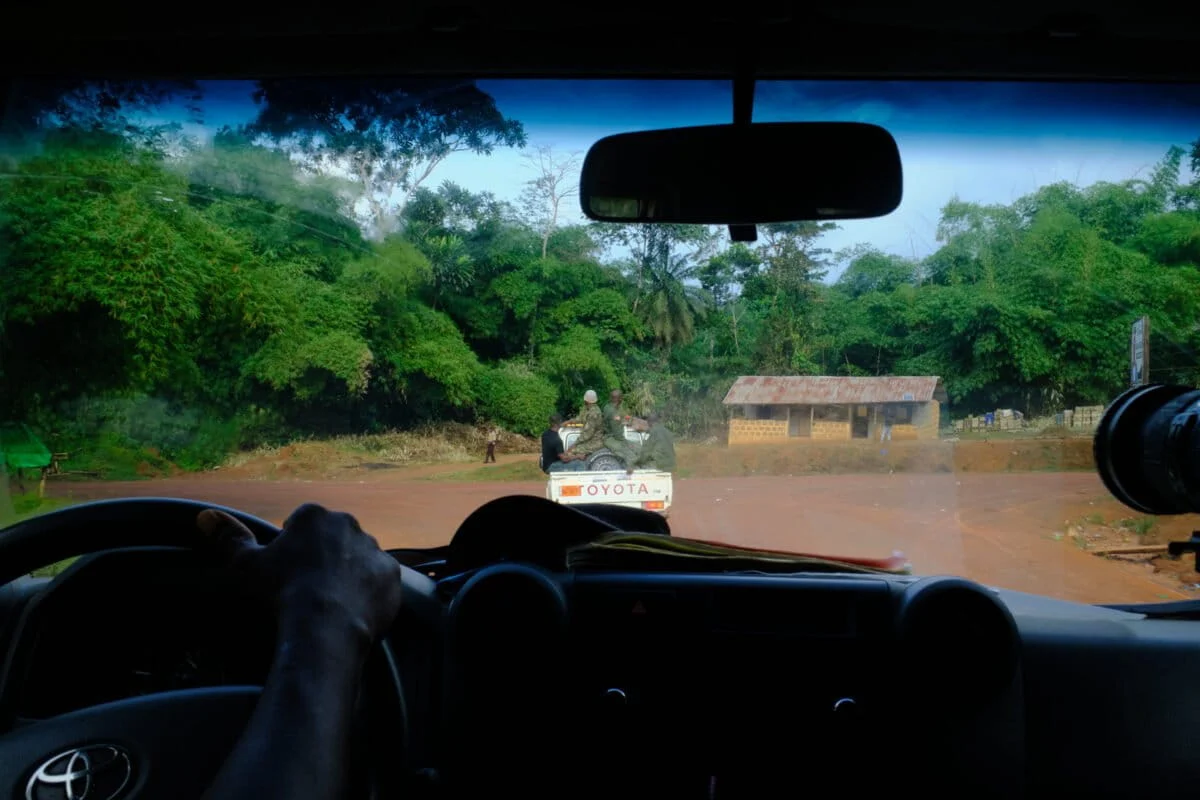
On the front lines of defense are Liberia’s forest rangers, employed by the Forestry Development Authority (FDA). However, these rangers face immense challenges. Underfunded and outnumbered, they are tasked with patrolling thousands of square kilometers of dense, roadless terrain. Reports from the field indicate that rangers often lack the basic equipment—such as vehicles, GPS units, and even boots—necessary to confront well-organized illegal farming operations. In some instances, the sheer scale of the migration overwhelms the capacity of local authorities to enforce existing land-use laws.
Community landowners find themselves in a precarious position. While some communities have attempted to protect their traditional lands from encroachment, others are enticed by the immediate financial incentives offered by cocoa developers. The lack of clear land titles and the presence of "informal" agreements often lead to disputes that can turn violent, further destabilizing the social fabric of the rural southeast.

Biodiversity at the Brink: The Threat to Chimpanzee Habitats
The environmental impact of illegal cocoa expansion extends far beyond the loss of trees. Liberia’s forests are home to the Western Chimpanzee (Pan troglodytes verus), a subspecies classified as critically endangered by the IUCN. These primates require large, contiguous areas of primary forest to survive.
The fragmentation of the forest caused by cocoa plantations creates "islands" of habitat, isolating chimpanzee populations and making them more vulnerable to hunting and disease. Furthermore, the increased human presence in deep forest areas leads to a rise in the bushmeat trade, as workers look for protein sources in remote areas.
Environmental NGOs have raised the alarm that the Grebo-Krahn National Park and the Sapo National Park—Liberia’s flagship protected areas—are under increasing pressure. If these habitats are breached by the cocoa frontier, it could lead to the localized extinction of not only chimpanzees but also the pygmy hippopotamus and various rare bird species endemic to the Upper Guinean Forest.
The European Union Deforestation Regulation (EUDR)
The situation in Liberia has gained significant attention in the European Parliament. The European Union is one of the world’s largest consumers of cocoa and chocolate products, and European lawmakers are increasingly wary of their role in driving global deforestation.
In response, the EU has introduced the European Union Deforestation Regulation (EUDR), which requires companies to prove that products sold on the EU market—including cocoa, coffee, palm oil, and timber—were not produced on land deforested after December 31, 2020. For Liberia, this regulation is a double-edged sword. On one hand, it provides a powerful incentive for the government and the private sector to formalize the cocoa industry and eliminate illegal deforestation. On the other hand, the difficulty of proving "deforestation-free" status could marginalize small-scale Liberian farmers who lack the technology or resources to map their farms and provide the necessary traceability data.
Officials in Monrovia have expressed concern that without significant international support, the EUDR could inadvertently push the illegal cocoa trade into "shadow markets" in Asia or other regions with less stringent environmental standards, failing to stop the deforestation while harming the Liberian economy.
Chronology of the Cocoa Frontier
To understand the urgency of the situation, a timeline of the regional cocoa expansion provides essential context:
- 1960s–1980s: Côte d’Ivoire experiences a "cocoa miracle," becoming the world’s top producer. Forest cover begins to decline rapidly as millions of hectares are converted to agriculture.
- 1990s–2000s: Civil wars in both Côte d’Ivoire and Liberia disrupt agricultural production but also lead to a lack of environmental governance. Displaced populations move into forest areas for subsistence.
- 2010–2015: Post-war stability in Liberia leads to renewed interest in the agricultural sector. International investors and regional migrants begin eyeing Liberia’s intact forests.
- 2017–Present: Satellite data begins to show a sharp increase in deforestation in southeastern Liberia. Reports emerge of organized "pioneer" settlements dedicated to cocoa.
- 2023: The EU formally adopts the EUDR, sending shockwaves through the global cocoa supply chain and putting pressure on West African nations to secure their forest borders.
- 2024: Liberian authorities and international partners launch new initiatives to increase patrolling in protected areas, though illegal clearing continues in remote sectors.
Implications and the Path Forward
The crisis in Liberia is a microcosm of the global struggle to balance development with conservation. If the illegal cocoa expansion is not checked, Liberia risks losing its most valuable natural asset—its primary forest—in exchange for short-term agricultural gains that may fail as the climate changes.
The implications are global. The loss of the Liberian rainforest would mean the release of massive amounts of stored carbon, contributing to global warming. It would also represent a failure of international commodity oversight, proving that even with advanced satellite monitoring, the lure of the global chocolate market can still outpace the protection of the natural world.
Addressing the issue requires a multi-faceted approach. First, the Liberian government needs increased technical and financial support to empower forest rangers and clarify land tenure. Second, the global chocolate industry must move beyond "paper-based" sustainability claims and invest in true traceability that reaches the "first mile" of production. Finally, there must be a recognition that as long as poverty remains the primary driver of migration and forest clearing, the rainforest will remain under threat.
The story of Liberia’s forests is currently being written in the shadows of the canopy and the halls of international power. Whether it ends in the total conversion of the landscape—repeating the history of its neighbors—or in a new model of sustainable development depends on the actions taken in the next few crucial years. For now, the rapid rate of deforestation serves as a stark reminder that the world’s appetite for chocolate comes with a hidden and increasingly unsustainable cost.