In the dense, emerald expanses of southeastern Liberia, a quiet but catastrophic transformation is unfolding. For decades, the Upper Guinean rainforest—a critical biodiversity hotspot that once stretched across West Africa—has been systematically dismantled by commercial logging, infrastructure projects, and industrial agriculture. Today, more than half of the remaining fragments of this ancient ecosystem are found within Liberia’s borders. However, a new and relentless threat has emerged, driven by the global North’s insatiable demand for chocolate: the rapid expansion of cacao production. Known locally as "brown gold," cocoa has become the primary driver of a modern-day land rush that pits the survival of endangered species against the economic desperation of rural communities.
Grand Gedeh County has become the epicenter of this environmental crisis. In recent years, satellite imagery has revealed massive, jagged scars across the canopy, signaling the clearing of primary forest to make way for cocoa plantations. This trend is not merely a local phenomenon but a systemic shift in West African agriculture. As soil fertility declines and land becomes scarce in traditional cocoa powerhouses like Côte d’Ivoire and Ghana, the industry is migrating westward into Liberia’s pristine interiors. The result is a volatile mix of illegal encroachment into protected areas, the exploitation of migrant labor, and a complex supply chain that obscures the environmental cost of the final product.
The Frontier of the Cocoa Rush in Grand Gedeh
The allure of cocoa in Grand Gedeh is pervasive, crossing all social and political strata. From subsistence farmers to high-ranking government officials, the consensus in the region is that cocoa represents the most viable path out of generational poverty. In the town of Zleh City and surrounding villages, the transition is visible. Thatch-roofed huts are being replaced by concrete structures roofed with zinc, a direct consequence of the "cocoa money" flowing into the local economy.
However, this economic boom comes at a steep ecological price. Conservationists working on the ground, such as those with the Wild Chimpanzee Foundation, report that the destruction is occurring within areas earmarked for high-level protection. George, a forest ranger in the region, notes that the "cocoa rush" has made it increasingly difficult to protect the Western chimpanzee, a critically endangered subspecies. The landscape is also home to forest elephants, pygmy hippos, and rare flora found nowhere else on Earth. As the forest is felled, these species lose the contiguous corridors necessary for their survival.
The scale of the farms is staggering. Recent investigations have uncovered plantations exceeding 100 hectares deep within proposed national parks. These are not small-scale garden plots but industrial-scale operations that have appeared almost overnight. According to local reports, much of this land was primary forest as recently as two years ago. The rapid pace of conversion suggests a lack of effective state oversight and, in some cases, the complicity of local authorities who profit from the land deals.
A Chronology of Environmental Degradation
The current crisis in Liberia follows a predictable and tragic timeline seen elsewhere in the region. To understand the future of Liberia’s forests, one must look at the history of its neighbors.
- The 1960s–1990s: Côte d’Ivoire and Ghana rose to become the world’s leading cocoa producers. This period was characterized by the "forest frontier" model, where high yields were achieved by clearing virgin rainforests for nutrient-rich soil.
- The 2000s: Côte d’Ivoire lost over 80% of its forest cover. As land became exhausted and climate change began to affect yields, farmers and investors began looking toward the relatively untouched forests of Liberia.
- 2015–2020: Small-scale cocoa farming began to accelerate in southeastern Liberia. International NGOs and development agencies initially promoted cocoa as a "sustainable" alternative to rubber or palm oil, often underestimating the potential for large-scale forest conversion.
- 2021–Present: The "Brown Gold" rush reached a fever pitch. Increased global cocoa prices and the arrival of experienced migrant workers from neighboring countries catalyzed a massive expansion into protected territories like the Grebo-Krahn and Sapo landscapes.
The Human Element: Migration and Exploitation
The industry’s growth is fueled by a complex demographic shift. Many of the workers clearing the Liberian forests are migrants from Burkina Faso, a country with a long history of providing labor for the Ivorian cocoa sector. These workers are often invited by Liberian community leaders or landowners under "work-to-own" or profit-sharing agreements.
While these arrangements provide economic opportunities for the migrants and income for the local Liberian hosts, they also create a legal and social gray area. Rangers frequently encounter young men and even children working on illegal farms deep in the forest. When confronted, these workers often flee, fearing arrest for encroachment on protected land. The human cost is evident: children who should be in school are instead engaged in the grueling labor of felling trees and tending saplings, often unaware that the land they are tilling is part of a national reserve.
Local landowners defend these practices as a matter of survival. In the absence of government-led development or alternative livelihoods, the forest is viewed as their only bank account. "If you say I shouldn’t farm, what do you expect me to do?" one local resident asked. This sentiment highlights the fundamental tension between international conservation goals and the immediate needs of some of the world’s poorest populations.
The Supply Chain: From Forest to Broker to Global Market
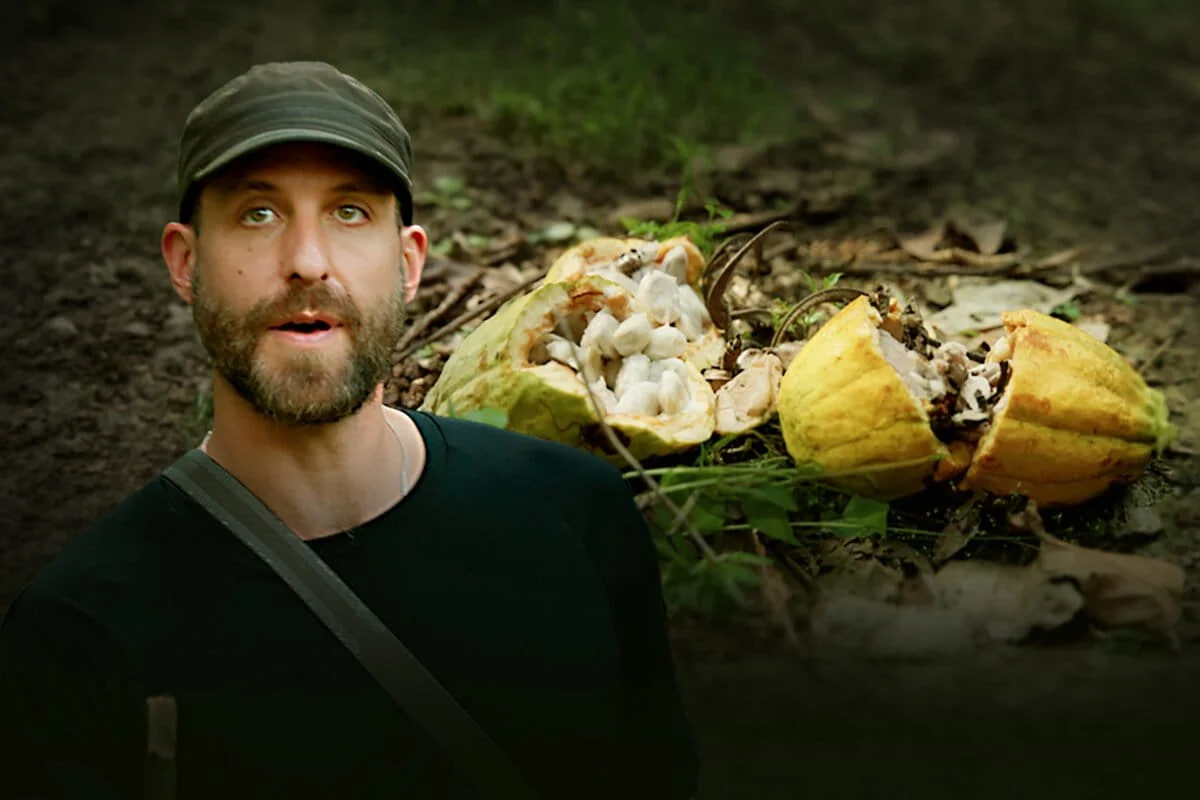
The cocoa produced in the heart of Liberia’s rainforest does not stay there. It enters a sophisticated supply chain that eventually lands it in the manufacturing plants of Europe and North America. The process begins with local brokers, such as Lincoln, a prominent figure in the Zleh City brokers’ association. These middlemen act as the bridge between the remote forest farms and the global market.
At every stage of the journey, the price of the "brown gold" escalates. The brokers buy fermented and dried beans from farmers, often at a fraction of the global market price, and sell them to exporters in Monrovia, Liberia’s capital. From the capital, more than half of the country’s cocoa production is shipped to the European Union (EU), Liberia’s largest trading partner for agricultural commodities.
A troubling aspect of this trade is the lack of transparency. Brokers and farmers alike admit they have no idea which global corporations are ultimately purchasing their beans. This anonymity allows deforestation-linked cocoa to be laundered into the global supply, as beans from illegal forest farms are mixed with those from legitimate plantations at collection points. For the global consumer, it is currently almost impossible to distinguish between a "clean" chocolate bar and one produced at the expense of a chimpanzee habitat.
Regulatory Responses and the EUDR Contention
In an attempt to sever the link between consumption and deforestation, the European Union recently passed the European Union Deforestation Regulation (EUDR). This landmark legislation requires companies to prove that products sold in the EU market—including cocoa, coffee, palm oil, and timber—were not produced on land deforested after December 31, 2020.
The EUDR has the potential to be a game-changer for Liberia’s forests. By requiring strict geolocation and traceability data, the law aims to block "deforestation-linked" cocoa from entering the lucrative European market. Delphine Batho and other EU legislators argue that the regulation is a necessary step in taking responsibility for the environmental footprint of European consumption.
However, the implementation of the EUDR has been fraught with political and logistical challenges. Originally slated to go into effect at the end of 2024, the regulation has faced significant pushback from both industry groups and producing nations, who argue that the traceability requirements are too burdensome for smallholder farmers. Consequently, the European Commission recently proposed a 12-month delay in the law’s enforcement.
Critics of the delay argue that it provides a "grace period" for even more forest clearing. In Grand Gedeh, the prospect of future regulations may actually be accelerating deforestation, as farmers rush to establish as much land as possible before the "satellite eyes" of the EU begin strict monitoring.
Analysis of Implications: Is Liberia the Next Côte d’Ivoire?
The current trajectory of the Liberian cocoa industry bears a haunting resemblance to the early stages of forest loss in Côte d’Ivoire. In the latter, the quest for cocoa dominance resulted in the loss of nearly all primary forest cover, leaving the country vulnerable to climate change, reduced rainfall, and soil erosion. Liberia stands at a crossroads.
If the current "business as usual" model continues, Liberia’s remaining Upper Guinean rainforest could disappear within a generation. The implications of this loss extend far beyond the borders of Grand Gedeh. These forests serve as a massive carbon sink, essential for regional climate stability and global carbon sequestration efforts. Their destruction would release millions of tons of CO2 into the atmosphere, undermining international climate goals.
Furthermore, the "boom and bust" nature of cocoa farming poses a long-term economic risk. Once the "forest rent"—the initial high productivity of newly cleared land—is exhausted, yields will inevitably drop. Without a transition to sustainable, agroforestry-based models, Liberian farmers may find themselves with neither a forest nor a viable livelihood in twenty years.
Toward a Sustainable Path
Stopping the destruction of Liberia’s rainforests requires a multi-faceted approach that addresses both the demand for cocoa and the poverty of those who grow it.
- Enforcement and Oversight: The Liberian government must empower forest rangers and the Forestry Development Authority (FDA) to halt encroachment into proposed and established national parks. This includes investigating and prosecuting high-level officials who facilitate illegal land deals.
- Traceability Systems: Investing in national traceability systems is essential. If Liberian cocoa is to remain competitive in a regulated global market, every bag of beans must be traceable back to a farm that was not carved out of primary forest.
- Sustainable Intensification: Rather than clearing new land, farmers should be supported in improving yields on existing plots through better techniques and organic fertilizers.
- Alternative Livelihoods: Conservation efforts will only succeed if local communities see tangible benefits. Payments for ecosystem services (PES) or sustainable eco-tourism could provide the income necessary to make forest preservation more attractive than "brown gold."
The story of Grand Gedeh is a microcosm of a global struggle. It is a story of how a global appetite for a luxury good can drive the extinction of species and the erasure of ancient landscapes. As the world watches the delays in European regulation and the rising prices of cocoa, the fate of Liberia’s rainforests hangs in the balance. Unless there is a fundamental shift in how cocoa is produced and traded, the "brown gold" of Grand Gedeh may well be the final chapter for the Upper Guinean forest.