In the dense, humid reaches of Grand Gedeh County, a transformative and potentially devastating economic phenomenon is unfolding. Known locally as the "brown gold" rush, the rapid expansion of cacao production is fundamentally altering the landscape of southeastern Liberia. While the industry promises a path out of systemic poverty for local communities and migrant workers, it simultaneously threatens the last major stronghold of the Upper Guinean rainforest, a global biodiversity hotspot that has already seen the majority of its original extent vanish across West Africa.
For over a century, the Upper Guinean rainforest—which once stretched across Guinea, Sierra Leone, Liberia, Côte d’Ivoire, Ghana, and Togo—has been decimated by commercial logging, infrastructure development, and industrial agriculture. Today, Liberia is home to more than half of the remaining forest. However, recent satellite data and on-the-ground investigations reveal that this critical carbon sink and wildlife habitat is being perforated by thousands of small and medium-sized cocoa farms. The very commodity that fuels the world’s multi-billion-dollar chocolate industry has become the primary driver of deforestation in Liberia’s southeastern frontier.
The Biodiversity Crisis and the Vanishing Wild
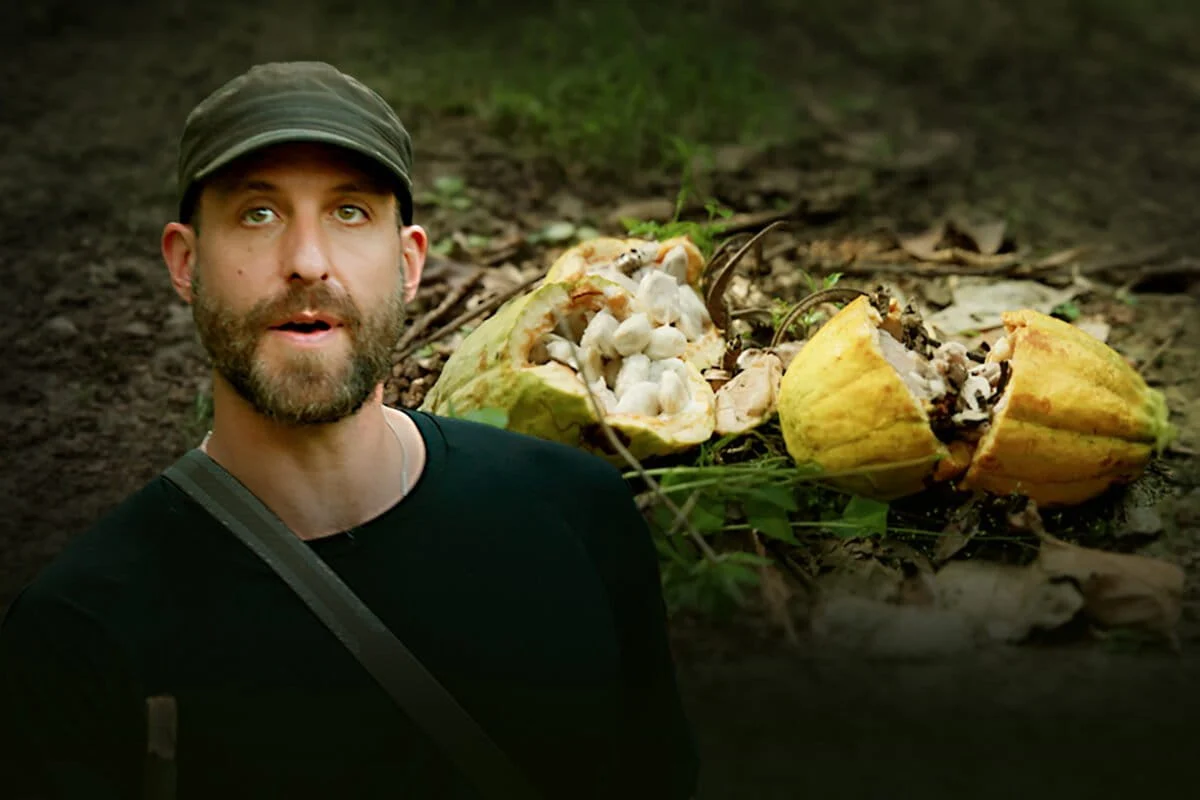
The heart of the conflict lies in the overlap between protected or proposed conservation areas and the fertile soils required for cacao. In Grand Gedeh, conservationists are struggling to maintain the integrity of the forest. George, a representative from the Wild Chimpanzee Foundation, monitors the region’s "proposed national parks," which are intended to serve as sanctuaries for some of the world’s most endangered species.
The landscape is home to the Western chimpanzee, a subspecies that has seen its population decline by an estimated 80 percent over the last three generations. It also supports forest elephants, pygmy hippos, and various rare bird species. "In the name of cocoa farming, people are destroying the forest," George warns. He notes that the density of farming activity makes it increasingly difficult to spot chimpanzees in areas where they were once common.
The scale of the destruction is stark. Investigations into these proposed reserves have revealed farms spanning over 100 hectares in areas that are technically off-limits to agricultural development. These are not just legacy farms; many are new clearings, some less than a year old. The process typically involves "under-brushing"—clearing the smaller trees and shrubs—followed by the felling of larger canopy trees to make room for young cacao saplings. This fragmented approach to deforestation eventually leads to total canopy loss, turning a complex ecosystem into a monoculture plantation.
The Human Element: Economic Necessity vs. Environmental Stewardship
The "cocoa rush" is fueled by a complex mix of local ambition and regional migration. In Grand Gedeh, the influx of migrant workers from neighboring Burkina Faso has become a defining feature of the industry. These workers, often fleeing instability or seeking better economic prospects, are frequently "invited" by Liberian community landowners to clear forest and plant cacao in exchange for a share of the crop or future land rights.
This arrangement creates a difficult moral and legal landscape. Many of these workers are effectively "caught" in illegal farms within protected zones. During recent patrols, forest rangers have encountered young workers, including children, who should be in school but are instead deep in the rainforest tending to saplings. The risk of arrest is high, yet the economic pressure remains a more immediate threat than the law.
For local Liberian villagers, the arrival of cocoa has brought tangible, life-altering changes. In many towns, traditional huts have been replaced by sturdier houses built with cement and zinc roofing. "Five years ago, there was no cocoa here," one local resident observed. "Now, the life of the town has been transformed." For a population living on the margins of the global economy, the argument for conservation is often overshadowed by the immediate need for food, education, and healthcare. When asked about the illegality of farming in protected areas, one landowner responded with a poignant question: "If you say I shouldn’t do [it], what do you expect me to do? How do you expect me to live?"
A Lack of Transparency in the Supply Chain
As the cacao moves from the forest floor to the global market, it passes through a series of intermediaries, each taking a cut of the profit. In Zleh Town and other hubs, brokers run the show. These brokers are the bridge between the remote forest farms and the exporters in Monrovia. According to local distributors, the business is growing daily, with profits rising at every step of the supply chain.
Despite their central role in the industry, there is a profound "blind spot" regarding the destination of the beans. Farmers and local brokers in Grand Gedeh often have no idea which global companies are purchasing their product. They operate in a vacuum of information, aware only of the prices set by the capital. "We don’t know which company it is—whether a European or an American company," says Lincoln, a local broker. "We are just here because we were living in poverty and we are seeing the cocoa bringing little money to us."
Data suggests that more than half of Liberia’s cocoa exports are destined for the European Union. This makes the EU the most influential player in the fate of Liberia’s forests. However, the connection between a chocolate bar on a shelf in Brussels and a cleared patch of rainforest in Grand Gedeh remains obscured by a lack of traceability.
The EU Deforestation Regulation (EUDR) and Political Backlash
In an attempt to address its role in global deforestation, the European Union passed the EU Deforestation Regulation (EUDR). This landmark legislation mandates that any company selling commodities like cocoa, coffee, soy, or timber in the EU market must prove that their products did not originate from land deforested after December 31, 2020.
If fully implemented, the EUDR could effectively shut the door on cocoa grown in Liberia’s protected forests. "The regulation aims to take up European responsibility for the destruction of forests," says one EU legislator. The goal is to shift trade relations toward sustainability and stop the "one-sided exploitation of resources."
However, the path to implementation has been fraught with challenges. Originally slated to go into effect in late 2024, the regulation has faced significant pushback from both industry groups and member states, leading to proposed delays. Critics of the delay argue that it is a political decision rather than a technical one, driven by pressure from large-scale agricultural interests. For Liberia, the delay means that the "brown gold" rush can continue largely unchecked for at least another year, further encroaching on the remaining rainforest.
Lessons from Côte d’Ivoire: A Cautionary Tale
The current trajectory of Liberia’s cocoa industry bears a haunting resemblance to the history of Côte d’Ivoire. Once the world’s leading producer of cocoa, Côte d’Ivoire paid a heavy price for its agricultural dominance. Over the last six decades, the country has lost more than 80 percent of its forest cover, much of it to cocoa production.
As land in Côte d’Ivoire becomes exhausted or strictly regulated, the industry’s "frontier" has shifted toward Liberia. The patterns are identical: migration, forest clearing, and the eventual loss of biodiversity in exchange for short-term economic gains. Without a significant intervention in how cocoa is sourced and regulated, experts fear that Liberia’s forests will suffer the same fate as those across the border.
The Path Forward: Can Sustainability Coexist with Development?
Stopping deforestation in southeastern Liberia is not as simple as enforcing a ban or drawing a line on a map. It requires a holistic approach that addresses the root causes of poverty while providing incentives for conservation.
Potential solutions include:
- Traceability Systems: Implementing "farm-to-port" tracking to ensure that cocoa entering the global market is not linked to recent deforestation.
- Support for Sustainable Intensification: Helping farmers increase yields on existing land so they do not need to clear new forest to maintain their income.
- Carbon Credits and Conservation Payments: Providing communities with financial rewards for keeping forests standing, making conservation more lucrative than farming.
- Strengthening Legal Frameworks: Moving proposed national parks into permanent, legally protected status with adequately funded ranger patrols.
The story of Grand Gedeh is a microcosm of a global struggle. It represents the tension between the world’s insatiable appetite for cheap commodities and the urgent need to protect the ecosystems that regulate our climate. For now, the cocoa is winning the battle in Liberia, and it is winning fast. Whether the "brown gold" will ultimately lead to long-term prosperity or the total collapse of one of Africa’s last great forests remains to be seen. As the world watches the delays in European regulation and the rising prices of cocoa, the chainsaws in Grand Gedeh continue to echo through the trees.