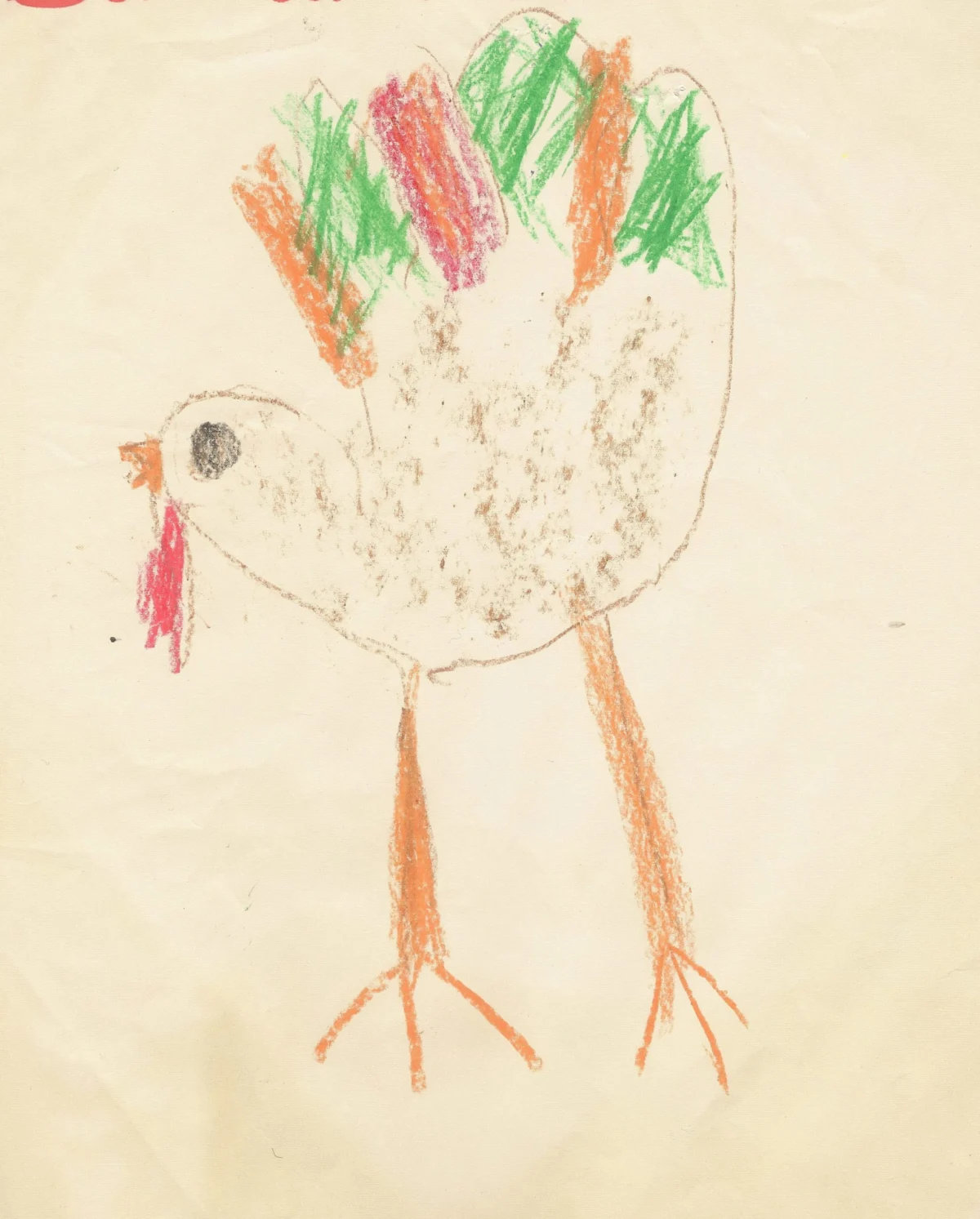
The ubiquitous construction-paper hand turkey, a staple of elementary school classrooms every November, has long served as a symbol of seasonal festivity. However, educators and policy analysts are increasingly pointing to this project as a physical manifestation of a flawed pedagogical approach to arts instruction. While appearing to be a harmless holiday tradition, the hand turkey represents a broader, systemic reliance on product-based, compliance-driven arts education that prioritizes mimicry over creative development. This critique highlights the urgent need to shift toward a process-oriented model that fosters student agency, critical thinking, and genuine artistic expression.
The Evolution of Arts Education Standards
To understand the persistence of the "hand turkey" model, one must examine the history of arts education in the United States. For much of the 19th and early 20th centuries, art and music were relegated to the periphery of the public school experience, often categorized as "specials" or extracurricular activities. It was not until 1994 that a significant legislative shift occurred, when federal law formally designated the arts as a core academic subject. This change was bolstered by the publication of the first national arts standards, which sought to provide a framework for learning.
Despite these advancements, the implementation of these standards remained largely voluntary. Unlike the subjects of mathematics and reading, which were subject to rigorous accountability systems under the No Child Left Behind Act, arts education remained largely insulated from federal oversight. Consequently, individual states were left to draft their own guidelines. In many jurisdictions, these guidelines focused on three primary pillars: mastering artistic vocabulary, understanding technical execution, and learning the historical role of the arts. While academically sound in theory, the practical application in classrooms often devolved into an exercise in compliance. Students were taught to replicate specific techniques to produce uniform outcomes—a practice that prioritizes the "what" of art over the "how" and "why."
Chronology of Pedagogical Reform
The shift from product-based instruction to a process-oriented framework was a decades-long endeavor.
- 1994: The U.S. Department of Education and the National Endowment for the Arts collaborate to establish the first National Standards for Arts Education, marking the arts as a core academic subject.
- 2001: The enactment of the No Child Left Behind Act places intense pressure on testing in reading and math, often causing school districts to reduce funding and time allocated for arts instruction.
- 2014: The National Core Arts Standards are released. This represents a paradigm shift, moving away from simple skill acquisition toward a four-part artistic process: creating, performing, responding, and connecting.
- 2020–2023: Recent educational research highlights the impact of the pandemic on student mental health, with arts education being identified as a critical tool for student engagement and emotional regulation.
The Consequences of "Compliance" Art
The reliance on projects that mandate a specific, predetermined outcome—such as the hand turkey—sends a subtle but powerful message to students: their artistic value is defined by their ability to follow instructions and replicate a teacher-provided model. This approach often draws from narrow, Eurocentric traditions that emphasize technical mastery over individual perspective.

When a classroom is filled with twenty-five nearly identical iterations of a single project, the focus is placed on the "Stepford-like" uniformity of the output rather than the student’s creative intent. Data from the National Center for Education Statistics (NCES) indicates that while access to arts education is often linked to improved academic outcomes and increased student retention, the quality of that instruction remains highly inconsistent. In environments where arts are taught as a series of linear tasks, many students internalize the belief that they are "not artistic." This exclusionary framing suggests that artistry is a fixed trait reserved for those who can "get it right," rather than a skill developed through exploration and iterative problem-solving.
Institutional Responses and Expert Perspectives
Educational experts argue that the pressure on teachers to produce "shiny" results for public display—such as hallway bulletin boards or spring concerts—compounds the problem. "The issue isn’t the poultry itself," notes one former school district arts executive. "The issue is whether a student has any hand in deciding what they explore."
Many teachers are caught in a cycle where their performance is judged by the aesthetics of their students’ output rather than the depth of their inquiry. To address this, organizations like the National Art Education Association (NAEA) have pushed for curricula that emphasize the "Studio Habits of Mind," a framework developed at Harvard Project Zero. This framework encourages students to engage in behaviors such as "envisioning," "observing," and "reflecting," which are essential to developing a personal artistic voice.
Broader Implications for Future Policy
If the goal of the American education system is to cultivate innovation and critical thinking, then the current approach to arts instruction requires a significant overhaul. The transition toward a process-oriented model involves three key systemic changes:
- Reimagining Teacher Preparation: Colleges of education must ensure that new arts educators are trained to facilitate iterative learning cycles rather than focusing solely on discipline-specific technical skills. This includes teaching instructors how to provide generative feedback that encourages student reflection.
- Addressing Inequity in Access: The disparity in arts education across school districts remains a critical civil rights issue. Wealthier districts often maintain robust arts programs with dedicated facilities, while underfunded districts continue to view the arts as a luxury. Standardized funding models are necessary to ensure that every student, regardless of zip code, has the opportunity to engage in deep, creative work.
- Reframing Success Metrics: Schools must move away from evaluating arts programs based on the end-product alone. Creating "boisterous laboratories" where students feel safe to fail, experiment, and defend their creative choices is essential to fostering a generation of innovators.
The hand turkey on the refrigerator door is, ultimately, a relic of a dated educational philosophy. By moving beyond the binary of "getting it right" and embracing a more nuanced, process-driven approach, schools can ensure that the arts serve their true purpose: teaching students that their unique perspectives are powerful, valid, and worthy of expression. The future of arts education lies not in the precision of the tracing, but in the boldness of the imagination that follows.