On October 25, 1671, the Italian-French astronomer Giovanni Domenico Cassini forever altered our understanding of the outer solar system by identifying a previously unknown celestial body orbiting the ringed planet, Saturn. This discovery of the moon Iapetus marked a pivotal moment in 17th-century observational astronomy, establishing Cassini as one of the most prolific observers of the Jovian and Saturnian systems. At the time, the discovery was not merely an addition to a catalog of lights in the sky; it was a challenge to the existing perceptions of the structural complexity of the Saturnian environment.
The Context of 17th-Century Planetary Observation
To understand the magnitude of Cassini’s find, one must consider the technological limitations of the era. Astronomy in the 1670s relied heavily on long-focus refracting telescopes, which were prone to chromatic aberration and required significant physical length to achieve even modest magnification. Christiaan Huygens, a Dutch contemporary of Cassini, had already made history in 1655 by identifying Titan, Saturn’s largest moon, and correctly identifying that the features previously thought to be "handles" on the planet were, in fact, a complex ring system.
When Cassini turned his gaze toward Saturn sixteen years later, he was utilizing the improved optics of the day to systematically map the planet’s vicinity. The identification of Iapetus was not an accident of chance but the result of rigorous, repetitive observation. However, the moon presented an immediate scientific enigma that would baffle astronomers for the next three centuries.
The Mystery of the Vanishing Moon
Upon his initial detection of Iapetus on the western side of Saturn, Cassini tracked its trajectory with meticulous care. Based on his preliminary orbital calculations, he predicted that the moon would emerge on the eastern side of the planet approximately 39 days later. When the predicted date arrived, the telescope revealed a void where the moon should have been.
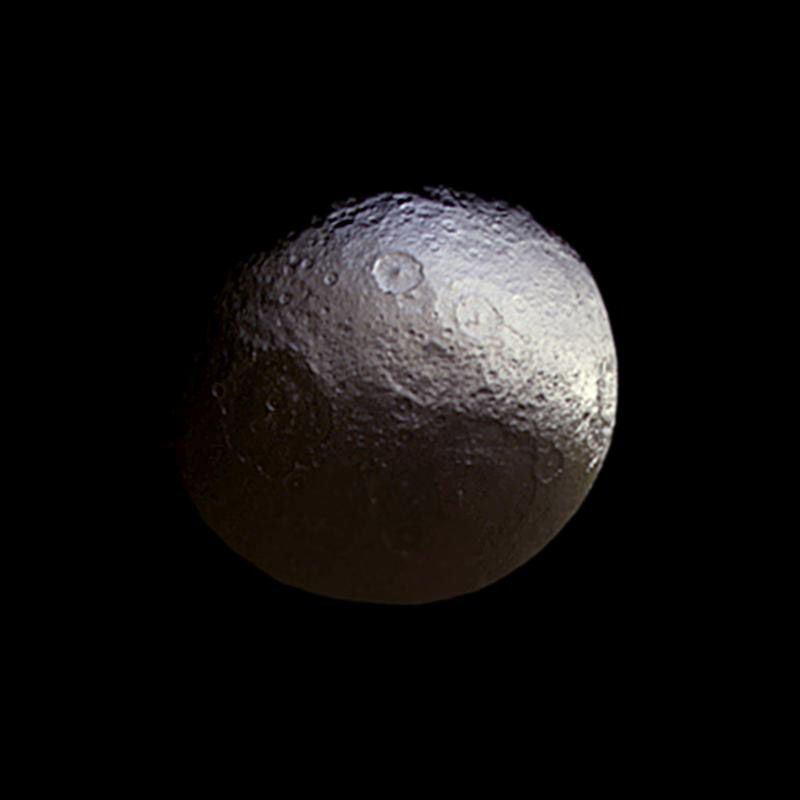
Confused but undeterred, Cassini continued his monitoring. Much to his surprise, when the moon eventually swung back to the western side of the planet, it reappeared exactly as it had been before. This peculiar pattern—visible on the west, invisible on the east—led Cassini to propose a revolutionary hypothesis: the moon possessed two distinct hemispheres with vastly different albedos, or surface reflectivities. He surmised that one side of the moon was inherently darker than the other, rendering it nearly invisible against the backdrop of deep space when the dark hemisphere faced toward Earth. This insight into synchronous rotation and surface asymmetry was a profound leap for an era that still viewed celestial bodies as uniform, unchanging spheres.
A Chronology of Discovery in the Saturnian System
The discovery of Iapetus acted as a catalyst for further exploration. Following his success in 1671, Cassini’s appetite for discovery intensified. The subsequent decade proved to be one of the most productive periods in the history of planetary science:
- 1655: Christiaan Huygens discovers Titan, the first known moon of Saturn.
- 1671: Giovanni Cassini discovers Iapetus, the second moon of Saturn.
- 1672: Cassini discovers Rhea, the third moon, providing further evidence of a complex satellite system.
- 1684: Cassini identifies two additional moons, Tethys and Dione, using superior telescopes provided by the Paris Observatory.
This sequence of discoveries established the foundation for the "Cassini-Huygens" nomenclature that would define future space exploration missions. The cumulative data collected by these pioneers forced the scientific community to acknowledge that Saturn was not an isolated sphere, but a miniature solar system unto itself, governed by the same gravitational laws that Isaac Newton was concurrently defining.
The Yin-Yang Moon and Modern Space Exploration
The mystery of Iapetus’s two-tone coloration remained one of the most enduring puzzles in planetary science until the arrival of the NASA-ESA Cassini-Huygens spacecraft in the early 21st century. Launched in 1997 and arriving at Saturn in 2004, the orbiter provided the first high-resolution imagery of the moon’s surface.
The images confirmed what Cassini had hypothesized 333 years prior: the moon is starkly divided. One hemisphere is coated in a dark, reddish-brown material, while the other is composed of bright, reflective water ice. This "yin-yang" appearance is now understood to be the result of a process known as thermal segregation. The dark material, likely composed of carbonaceous dust, absorbs more solar radiation, causing the underlying ice to sublimate. This water vapor then migrates and re-deposits on the colder, brighter regions of the moon, creating a runaway feedback loop that reinforces the color contrast.
Broader Implications for Solar System Evolution
The study of Iapetus has provided modern astrophysicists with critical data regarding the age and formation of the Saturnian system. Recent computer simulations and orbital modeling have shifted the consensus regarding the timeline of these satellites.
For many years, it was assumed that the moons and rings of Saturn were as old as the planet itself, dating back approximately 4.5 billion years. However, new analysis suggests that the inner moons and the rings may be significantly younger—potentially forming within the last 100 million years, a timeframe that overlaps with the late Cretaceous period on Earth.

The outer, larger moons like Titan and Iapetus, however, are believed to be primordial, dating back to the formation of the solar system. The interaction between these older bodies and the younger, chaotic ring system is thought to be the result of orbital resonances. Scientists now theorize that a previous generation of moons may have been destroyed through gravitational interactions as Saturn migrated or as its rings evolved, with the debris eventually coalescing into the current satellite configuration.
Scientific Consensus and Future Prospects
The legacy of Giovanni Cassini’s 1671 discovery extends far beyond the identification of a single moon. It represents the transition from classical astronomy to the era of planetary science, where observations are integrated into models of dynamic, evolving systems.
"The persistence of early astronomers like Cassini, who utilized limited tools to infer complex physical realities like surface albedo, remains the bedrock of our current methodologies," noted a spokesperson for the Jet Propulsion Laboratory (JPL) during the final stages of the Cassini mission. "Every piece of data captured by modern probes is a direct descendant of the questions first posed in the 17th century."
As we look toward the future, the lessons learned from Iapetus continue to influence missions to other icy moons, such as Enceladus and Europa. The understanding that celestial bodies are not static, but are constantly reshaped by geological, thermal, and gravitational forces, has fundamentally changed how we interpret the search for life and the history of our planetary neighborhood.
Today, Iapetus stands as a testament to the longevity of scientific inquiry. What began as a tiny, elusive speck of light in a primitive telescope has become a focal point for understanding the grand, chaotic history of the Saturnian system. The yin-yang moon remains a reminder that in the vastness of the cosmos, the most profound answers often lie in the details that seem, at first glance, to be missing.