
The architectural and cultural world breathed a collective sigh of relief following the containment of the Pacific Palisades fire on January 25, which threatened one of the most significant landmarks of mid-century modernism. While the blaze claimed numerous structures in the high-value coastal Los Angeles neighborhood, the Charles and Ray Eames House, also known as Case Study House No. 8, emerged largely unscathed. This miraculous survival has sparked a renewed interest in the Eameses’ broader body of work, particularly their prolific output of short films that served to democratize design and science for the mid-twentieth-century public.
Located on a wooded bluff overlooking the Pacific Ocean, the Eames House is more than a residence; it is a manifestation of a specific worldview. To those who have visited the site or studied its extensive photographic record, the structure represents a domestic application of industrial technology and global aesthetic sensibilities. From its exterior, the house is defined by its clean, vaguely Japanese lines, sharp geometric angles, and rectangular planes of primary colors reminiscent of a Mondrian painting. Inside, the space is a curated tapestry of the couple’s life, featuring Isamu Noguchi lamps, Native American basketry, kokeshi dolls, and the iconic Eames Lounge Chair.
Following a brief closure to address minor smoke damage and perform essential conservation work, the Eames House officially reopened to the public last summer. However, for those unable to make the pilgrimage to Chautauqua Boulevard, the Eameses’ cinematic work provides a digital gateway into their philosophy. The 1955 short film, "House: After Five Years of Living," offers an intimate look at the residence during its prime, capturing the spirit of the space exactly as its creators intended it to be experienced.
Architectural Significance and the Case Study Program
To understand the stakes of the January 25 fire, one must look back to the origins of the Eames House. In 1945, John Entenza, the editor of Arts & Architecture magazine, launched the Case Study House Program. The initiative aimed to address the post-World War II housing shortage by commissioning leading architects to design and build inexpensive, efficient model homes using modern materials.
Charles and Ray Eames designed Case Study House No. 8 to be their own home and studio. Unlike the more austere minimalism of their contemporaries, the Eameses sought to create a "warm" modernism. The house was constructed using off-the-shelf industrial steel and glass components, yet it felt deeply personal and organic due to its integration with the surrounding meadow and eucalyptus trees. Completed in 1949, the house became a symbol of the "good life" in Southern California—a life characterized by sunlight, modularity, and an unpretentious appreciation for both high art and folk craft.
The structure was designated a National Historic Landmark in 2006. Its survival in the face of the recent wildfires is a testament to the ongoing fire-mitigation efforts led by the Eames Foundation and the Getty Conservation Institute, which have worked together to implement landscape management strategies designed to protect the steel-and-glass structure from the perennial threat of California brush fires.
A Chronology of the Eames Legacy and Recent Events
The history of the Eames House and the couple’s subsequent influence can be traced through several key milestones:
- 1945: The Case Study House Program is announced; Charles and Ray Eames begin the initial design for House No. 8.
- 1949: Construction of the Eames House is completed in Pacific Palisades. The couple moves in on Christmas Eve.
- 1955: The film "House: After Five Years of Living" is released, showcasing the maturation of the site’s landscape and interior.
- 1958: The Eameses begin a long-term consulting relationship with IBM, leading to groundbreaking educational films and exhibits.
- 1977: The definitive version of "Powers of Ten" is released, becoming one of the most influential short films in history.
- 1978 & 1988: Charles and Ray Eames pass away, respectively, leaving their estate to be managed by their descendants.
- 2004: The Eames Foundation is established to preserve the house and the couple’s intellectual property.
- January 25 (Recent Year): A major fire breaks out in Pacific Palisades; the Eames House is spared but suffers smoke damage.
- Last Summer: The Eames House reopens to the public after successful restoration efforts.
- Upcoming (Next Year): The Eames Foundation plans a 50th-anniversary celebration and re-release of the acclaimed "Powers of Ten."
The Cinematic World of Charles and Ray Eames
While they are most famous for their furniture—specifically the molded plywood chairs and the leather-and-rosewood lounge chair—Charles and Ray Eames were also pioneers of the short-form documentary. A collection of 35 Eames shorts, recently highlighted on digital platforms, reveals their signature instinct for "lighthearted pedagogy."
The film "House: After Five Years of Living" serves as a primary example of their style. Rather than a traditional walkthrough, the film utilizes a series of still shots and brief animations to illustrate the construction process and the textures of the exterior walls. It focuses on the interplay between the industrial structure and the natural world, moving tentatively toward the interior to highlight the objects that made the house a home. This technique allowed the Eameses to control the viewer’s eye, emphasizing the "functioning" of the house as a vessel for living rather than just a static piece of architecture.
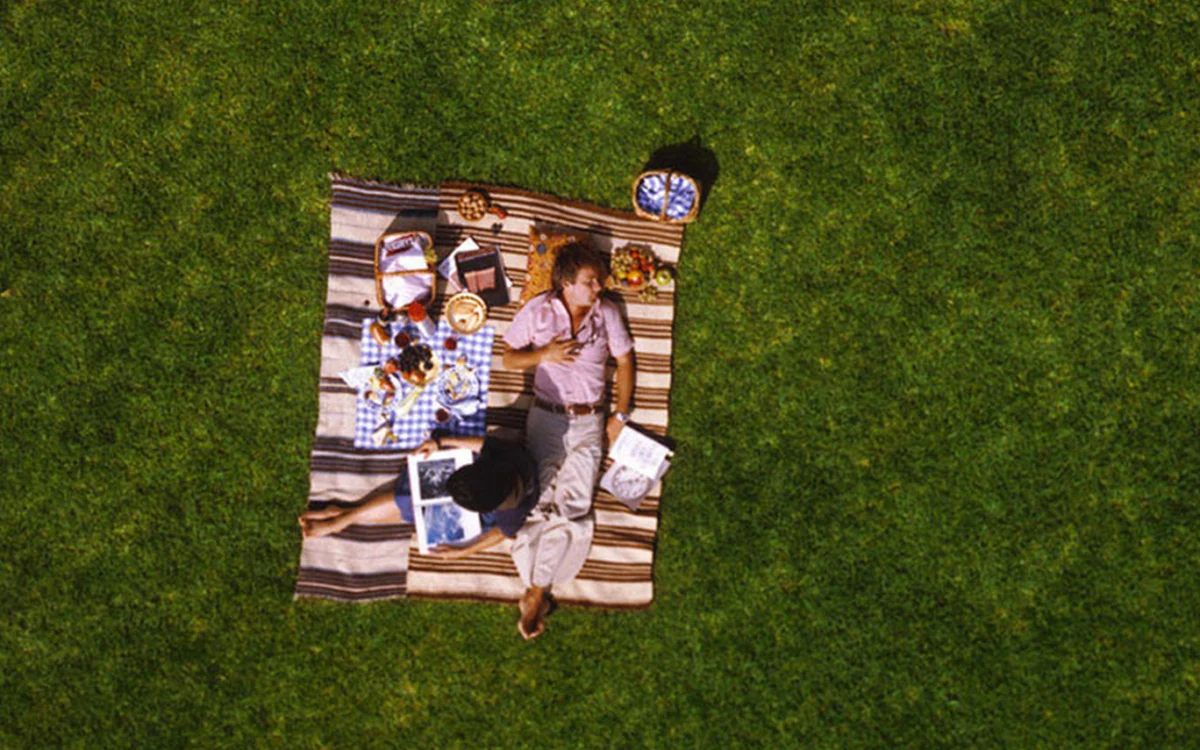
Perhaps their most famous cinematic achievement is "Powers of Ten." The film begins with a picnic on a lakeside in Chicago and zooms out by a factor of ten every ten seconds. The camera travels from the human scale to the edge of the known universe—100 million light years away—before zooming back down through the skin of a sleeping man to the microscopic scale of a single proton.
The Eames Foundation’s decision to bring "Powers of Ten" back into the spotlight for its upcoming anniversary reflects the film’s enduring relevance. In an era of satellite imagery and atomic-scale engineering, the film’s message about the relative scale of the universe remains a foundational tool for science education.
Technological Interlocutors: The IBM Collaboration
The Eameses’ work for IBM represents a critical juncture where design met the dawn of the Information Age. In films like "A Computer Perspective: Background to the Computer Age," commissioned for an exhibition of the same name, the couple humanized the burgeoning field of computing.
The film traces the history of calculation from early human machines to the sophisticated postwar decades. During this era, as the film’s narrator notes, the computer was asked to be "not only calculator and analyzer, but information storage and retrieval device, instrument of communication, and interlocutor."
Modern analysts point out that the Eameses were remarkably prescient. Their vision of the computer as an "interlocutor"—a conversational partner—prefigured the development of artificial intelligence and modern user interfaces. Furthermore, "Powers of Ten" is often cited as a conceptual precursor to tools like Google Earth. The Eameses’ ability to visualize complex data and spatial relationships in a way that was both captivating and accessible laid the groundwork for how we interact with digital information today.
Broader Impact and the Future of Preservation
The survival of the Eames House during the January 25 fire has highlighted the vulnerability of Southern California’s architectural heritage. As climate change increases the frequency and intensity of wildfires, institutions like the Eames Foundation are facing unprecedented challenges in preserving "living" museums.
The foundation’s response to the fire—a meticulous cleaning of smoke residue and a rapid reopening—serves as a model for disaster recovery in the arts. Experts suggest that the preservation of the Eames legacy depends as much on digital accessibility as it does on physical maintenance. By digitizing their film library and making it available to a global audience, the foundation ensures that even if the physical structure were to be lost, the "worldview" it represents would remain intact.
The Eameses’ proximity to the world that the mid-twentieth century was bringing into being allowed them to act as guides for a society in transition. Whether through a chair that molded to the human form or a film that explained the complexities of communication theory, they sought to make the modern world more hospitable.
As we look toward the 50th anniversary of their most celebrated film, the Eames House stands not just as a relic of the past, but as an active participant in the ongoing conversation about design, nature, and technology. The clean lines and Mondrian colors of the Palisades bluff remain a beacon of optimism, reminding us that even in a world of constant change and occasional disaster, good design has the power to endure.








Leave a Reply