
The clean energy industry has learned the hard way that having the law on your side does not always guarantee victory. Since President Donald Trump returned to the White House for his second term, his administration has systematically attempted to delay, suspend, or cancel dozens of major wind and solar energy projects nationwide. Despite these green energy initiatives having successfully navigated rigorous, multi-year federal environmental reviews, federal bodies including the Department of the Interior and the Pentagon have repeatedly frozen their permits. Officials have frequently justified these roadblocks under the ambiguous umbrella of "national security," or in many cases, have executed the freezes without providing any public explanation whatsoever.
These sustained regulatory assaults have severely damaged the offshore wind sector, driving many major developers to accept costly federal lease buyouts rather than endure years of protracted litigation. In response to this ongoing regulatory hostility, renewable energy companies have thrown their weight behind Capitol Hill negotiations for a bipartisan energy permitting reform bill. A coalition of senators reached a critical compromise on legislation known as the Bipartisan American Affordability and Jobs Act (BAAJA). Although a formal congressional vote is deferred until after the midterm elections, the renewable energy sector has welcomed the framework as a crucial defensive measure.
The Anatomy of the Bipartisan Permitting Compromise
The Bipartisan American Affordability and Jobs Act is designed to accelerate environmental reviews across the entire energy spectrum—expediting everything from high-voltage transmission lines and solar arrays to natural gas pipelines and oil extraction networks. Crucially for the renewable sector, the legislation includes specific mechanisms intended to restrain current and future executive administrations from arbitrarily blocking clean energy development. Prior to the public rollout of the legislative compromise, President Trump reportedly indicated to senior aides that he would temporarily ease his opposition to wind energy projects in order to secure a broad permitting deal.
However, political consensus is already fracturing. While renewable energy trade groups remain steadfast in their backing of the bill, climate advocates and legal experts warn that the legislation’s "project certainty" provisions may prove toothless against a determined executive branch. Underscoring these anxieties, the Trump administration announced a sweeping review of three Atlantic Coast offshore wind permits—including the fully operational Revolution Wind project off the coast of Rhode Island—directly threatening the fragile legislative truce.
"The administration’s action against these wind projects just further demonstrates the lengths they will go to to obstruct clean energy progress, especially offshore wind," said Elizabeth Klein, who directed the Bureau of Ocean Energy Management under the Biden administration.
Examining the Project Certainty Provisions
The project certainty framework embedded within the Senate bill rests on two foundational pillars: statutory protection for issued permits and an anti-discrimination mandate.
First, the legislation declares that the federal government "shall not take any new action that would revoke, rescind, withdraw, terminate, suspend, amend, or alter" any energy project that has already been legally permitted. While this language largely reinforces existing administrative law—as federal permits are not legally supposed to be cancelled arbitrarily—the bill establishes concrete remedies if the government violates this prohibition.
If federal authorities unlawfully move to dismantle a permitted project, developers can pursue two primary remedies through the federal court system. The first is formal permit reinstatement. However, legal analysts note this remedy is somewhat redundant; federal judges have already repeatedly struck down the Trump administration’s previous attempts to halt wind developments, yet the executive branch continues to pursue permit revocations regardless.
The second remedy is a substantial financial payout. The legislation empowers courts to order the federal government to reimburse project developers for 25 to 50 percent of their total capital expenditures. For utility-scale offshore wind farms running into the billions of dollars, these reimbursements would draw directly from the federal Judgment Fund—a permanent appropriation utilized by the Department of Justice to pay legal judgments and settlements against the United States, which typically disburses approximately $2 billion annually. Successful claims under the BAAJA could trigger an unprecedented spike in these federal outlays.
The second core component of project certainty is an explicit anti-discrimination clause designed to prohibit "disparate treatment" of any energy source, whether photovoltaic solar panels or traditional coal-fired power plants. If a renewable developer can present compelling evidence to a federal judge demonstrating a consistent pattern of anti-wind or anti-solar animus in permit denials, the court can mandate the restoration of the permit alongside full reimbursement for the complete construction costs of the facility, provided the project is successfully completed.
Economic Fallout and Investor Sentiment
Proponents of the legislation argue that the promise of robust financial backing will restore investor confidence in a U.S. renewable energy market that has experienced extreme volatility under the Trump administration. This stabilization is particularly vital for the offshore wind sector. During the Biden administration, international energy giants such as Ørsted and Equinor committed tens of billions of dollars to construct massive commercial wind farms along the Atlantic seaboard.
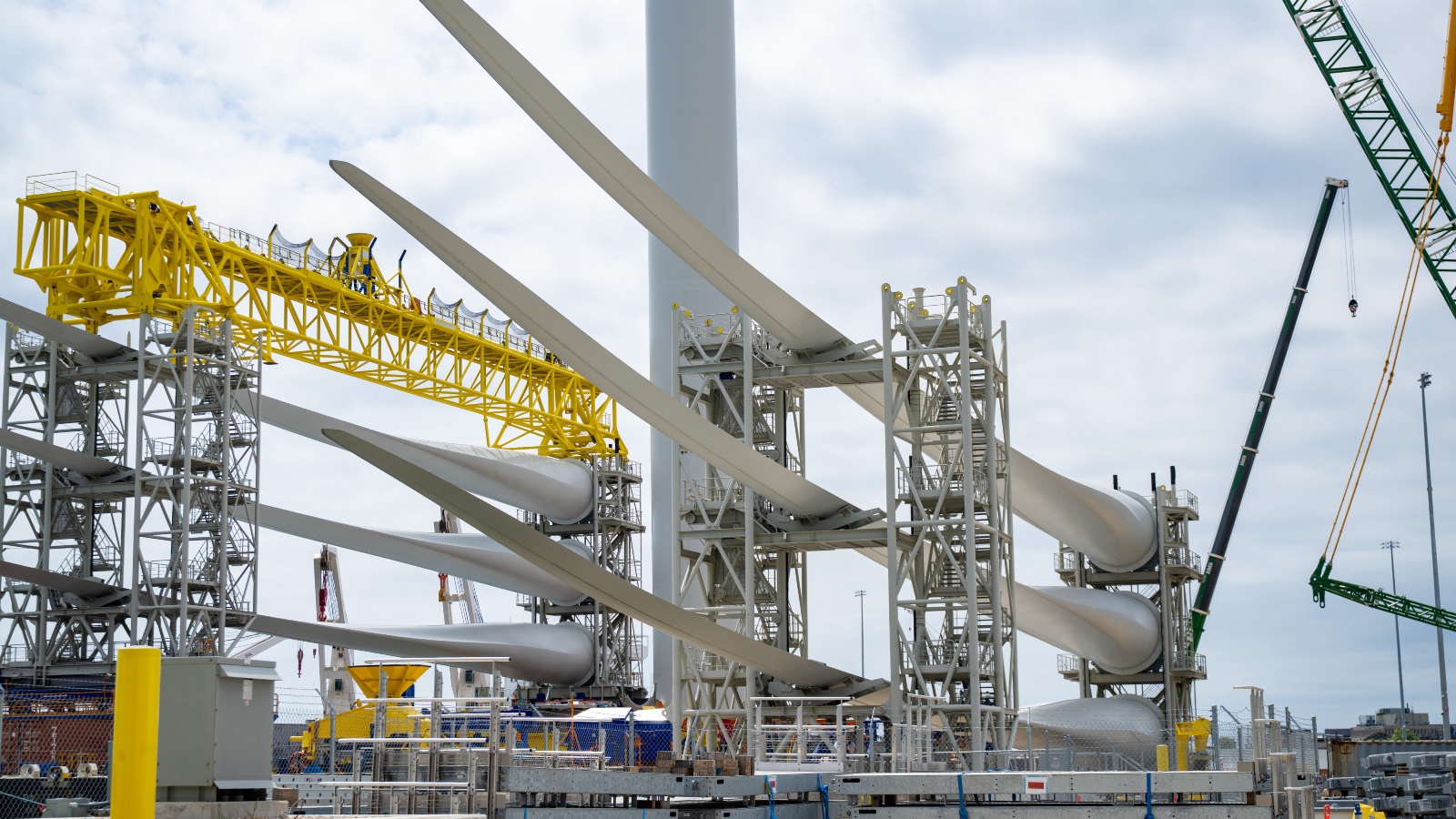
These heavy investments were severely impacted when global supply chains fractured in the post-pandemic economic landscape, followed swiftly by aggressive executive actions aimed at dismantling existing installations. Consequently, many multinational energy developers currently view the United States as a high-risk, uninvestable market. Yet, heavily populated Northeastern states—including New York, Massachusetts, and Rhode Island—remain deeply reliant on massive deployments of offshore wind capacity to satisfy their statutory clean energy mandates and climate decarbonization goals.
The American Clean Power Association (ACPA), a prominent trade organization representing utility-scale wind and solar developers, published an exhaustive analysis of the legislation. The group asserted that "greater certainty lowers financing risk before construction and reduces the chance that years of development and investment will be stranded by a later policy reversal."
Skepticism and the Reality of Executive Buyouts
Despite the potential safety net of federal financial reimbursements, critics and legal scholars question whether the legislative provisions will effectively deter executive interference. Opponents point out that the Trump administration has already engaged in financial transactions to halt renewable projects, utilizing lease buyouts funded by public resources.
Over the past year, the Department of the Interior has negotiated several high-profile deals to buy back offshore wind leases from developers in exchange for commitments to redirect capital toward fossil fuel infrastructure. While these transactions face ongoing legal challenges from environmental coalitions, they effectively function as federal payouts compensating companies for assets the administration intends to block anyway.
"The project certainty provisions are unlikely to deter the Trump Administration from continuing to mess with clean energy permits, since this administration has shown an eagerness to use the public’s money to advance its own policy goals," observed Matthew Littleton, a former trial attorney in the Environment and Natural Resources Division at the U.S. Department of Justice.
Furthermore, legal experts have raised concerns regarding the mechanics of the bill’s anti-discrimination clause. The statute establishes the baseline for measuring "disparate treatment" based on the average pace of project approvals over the preceding five-year window. Because the Trump administration will have spent four consecutive years prioritizing oil, gas, and fossil fuel infrastructure while actively delaying solar and wind developments, this backward-looking baseline could inadvertently shield the administration from discrimination lawsuits, as the statistical divergence would be baked into the five-year average.
The Escalating Conflict Over Atlantic Wind
The practical risks of this ongoing regulatory standoff were highlighted when the White House filed court motions seeking to rescind operating and construction permits for three major Atlantic Coast wind developments. Among them is the 700-megawatt Revolution Wind project, which is already fully constructed and actively delivering electricity to homes and businesses in Rhode Island. The other two targeted projects remain in early developmental phases. In each legal filing, the Department of Justice stated only that the government intends to "reevaluate compliance" with federal environmental and administrative statutes.
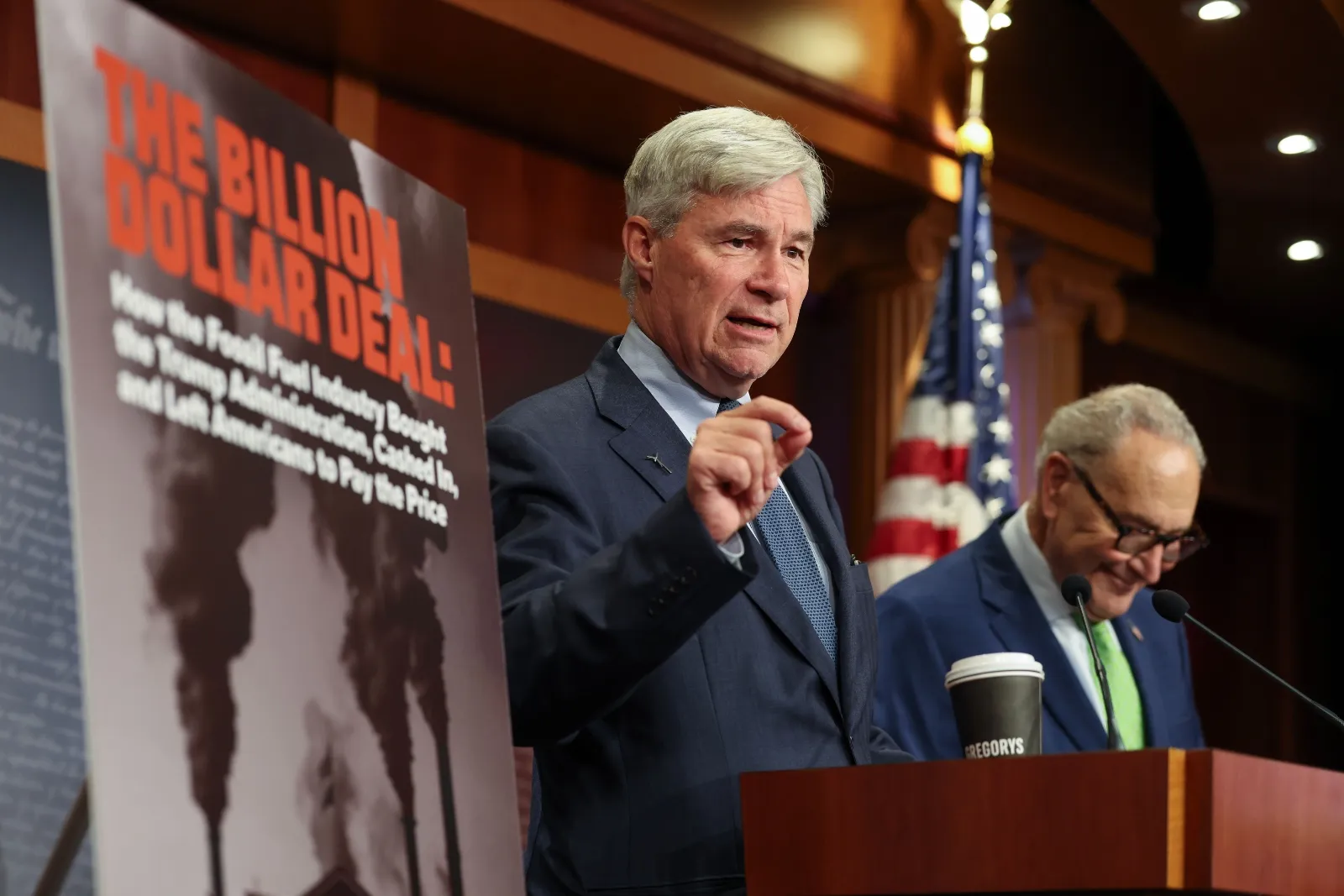
Earlier in the legislative cycle, key Democratic negotiators in the Senate vowed that such aggressive administrative maneuvers would instantly kill any prospects for a bipartisan energy compromise. Senator Sheldon Whitehouse of Rhode Island, a primary architect of the Bipartisan American Affordability and Jobs Act, maintained earlier in the year that he would refuse to endorse any permitting reform package unless the executive branch ceased its campaign against operational wind farms.
However, following the administration’s latest legal actions against Revolution Wind, Senator Whitehouse adopted a pragmatic approach, pointing to the assault as definitive proof of the legislation’s necessity.
"Frankly, we need to get permitting certainty in law, and this proves it," Whitehouse stated.
Broader Implications for the American Energy Grid
The proposed permitting reform legislation offers genuine financial protection to multinational developers, ensuring that an executive administration cannot arbitrarily wipe out billions of dollars in private capital without justification. However, the fundamental question remains whether the statutory changes can successfully halt a coordinated political campaign against offshore wind.
The resolution of this high-stakes legislative battle carries profound implications. For millions of residents and commercial enterprises across the Northeastern United States, the availability of reliable, diversified energy generation is vital for maintaining grid stability and meeting regional heating and electricity demands. As the Bipartisan American Affordability and Jobs Act moves toward its post-midterm legislative showdown, the future of the American clean energy transition remains suspended in regulatory uncertainty.








Leave a Reply