The Technology Behind the Display
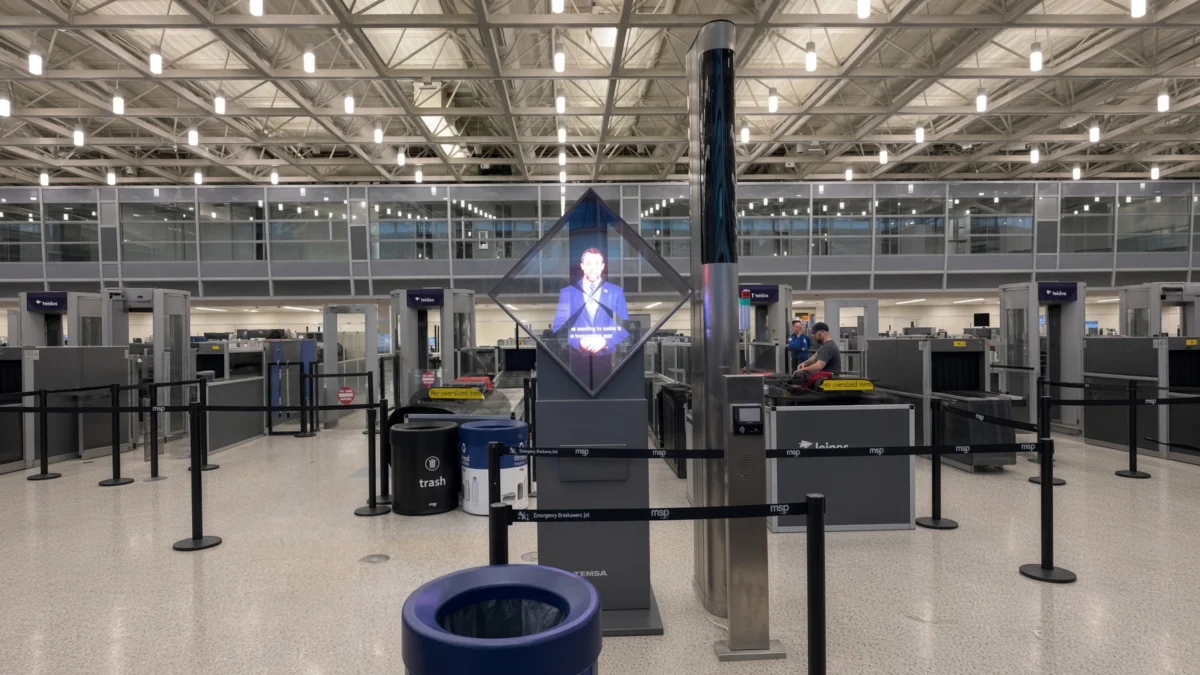
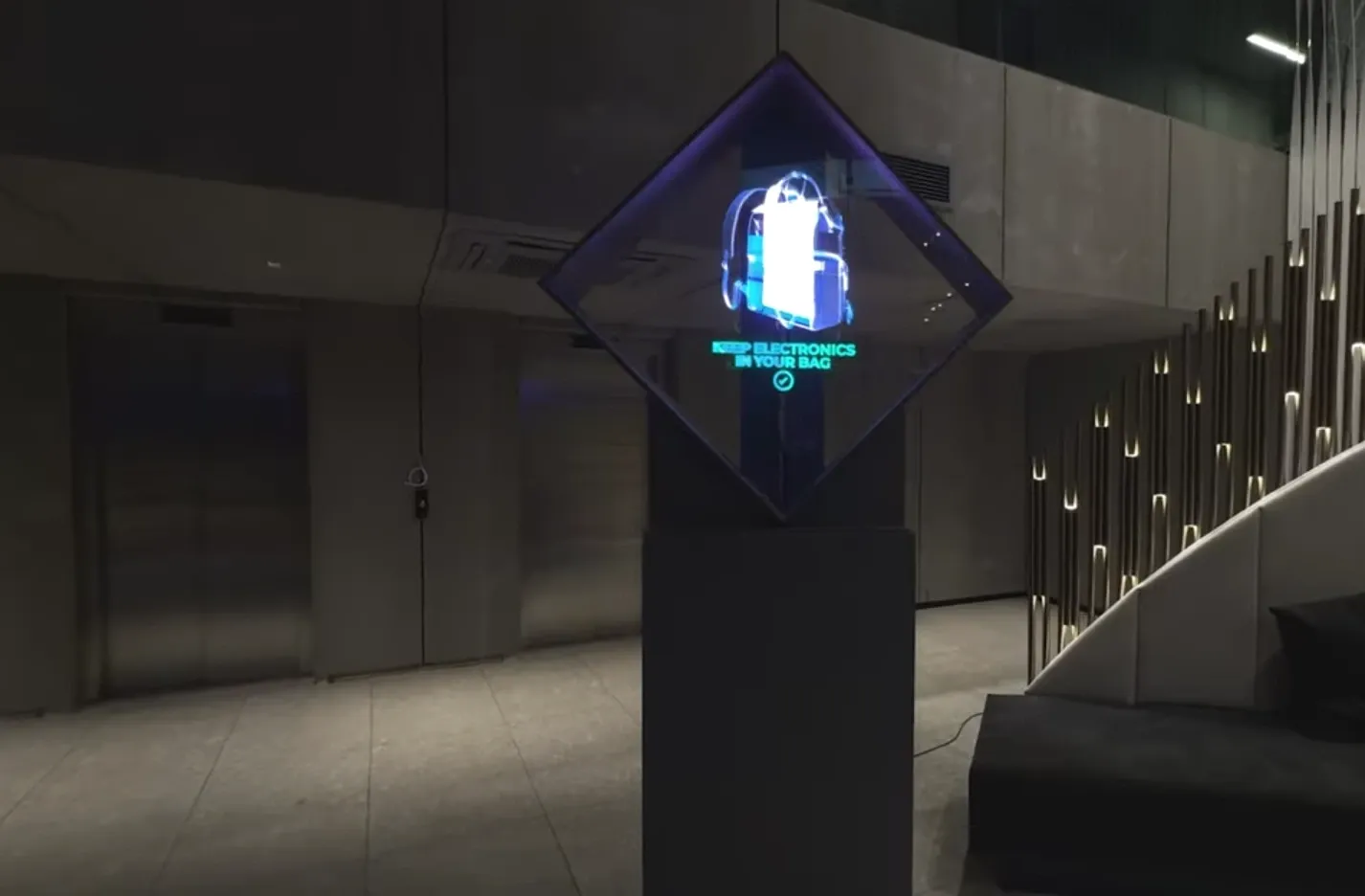
The images, which some observers have described as a modern-day take on "Big Brother," utilize HYPERVSN technology. The system, marketed as the "Tensator Shard," creates the illusion of a floating hologram through rapidly rotating LED blades. These displays, which stand on pedestals within the sterile areas of security checkpoints, render a crisp, upper-body projection of the Secretary. According to Campaign3D, the firm responsible for the rollout, approximately 50 of these units have been installed across 27 U.S. airports.
The stated intent of the initiative, according to Department of Homeland Security (DHS) communications, is to provide clearer, more visible instructions for passengers navigating the complex and often stressful security screening process. By placing a dynamic, eye-level display at the front of the line, the agency aims to reduce confusion regarding luggage protocols, such as the placement of electronic devices. However, the content currently being broadcast extends far beyond procedural instruction.
Chronology of Political Messaging in Transit
The use of airport checkpoint displays for political communication is not a new development, but it has intensified in recent years. The current iteration follows a series of controversial deployments under the previous administration.
In October 2025, then-Secretary Kristi Noem utilized the same network of airport screens to broadcast messages during a period of federal government shutdown, specifically blaming legislative gridlock on congressional Democrats. That move prompted significant pushback from local airport authorities. For instance, the Dallas–Fort Worth International Airport and Dallas Love Field chose to disable the displays, citing internal policies that prohibit the use of public infrastructure for partisan political advertising.
The transition to Secretary Mullin’s tenure saw an immediate effort to rebrand the federal presence in these spaces. Internal communications from July 2026 revealed that Secretary Mullin’s office issued directives to airport operators across the country, requesting the immediate removal of all remaining messaging from the Noem era. The memo requested confirmation of removal, signaling a top-down mandate to curate the visual environment of the nation’s airports. By November 2026, the new holographic displays featuring Secretary Mullin were confirmed to be active in hubs such as O’Hare and Minneapolis–St. Paul.

The Content and Public Reaction
Travelers have reported that the loops feature a mix of procedural guidance and overt political rhetoric. In addition to security reminders, the holographic Mullin reportedly reassures passengers that "they are not the problem," offers a formal expression of gratitude to President Trump, and concludes with the phrase, "God Bless America."
Public reaction has been polarized. On social media platforms like Bluesky, travelers have documented the experience, with some characterizing the display as an invasive use of captive-audience technology. Will Stancil, who photographed the display at Minneapolis–St. Paul, noted the unsettling nature of the projection, drawing parallels to the dystopian surveillance imagery found in George Orwell’s 1984.
Beyond the aesthetic concerns, there is a growing debate regarding the appropriateness of using mandatory security lines—spaces where citizens have no choice but to be present—as a stage for government self-promotion. Critics argue that while the TSA is tasked with maintaining safety, the line between public service announcement and political theater has become dangerously thin.
Monetization and the Captive Audience
The deployment of these holograms is the latest evolution in the trend of monetizing airport security lines. For years, the TSA has allowed private companies to sell advertising space on the bins and equipment used during the screening process. Critics have long argued that the TSA creates a "compulsory audience"—travelers who must submit to a search to board a flight—and that this audience is then treated as a commodity.
The move to integrate political messaging into this ecosystem marks a shift from commercial advertising to ideological messaging. In the past, checkpoint advertising was generally limited to consumer goods or travel services. The current holographic campaign, however, represents a government agency using the same captive audience to disseminate its own political narrative. This has raised questions about whether the federal government should be permitted to broadcast political endorsements in environments that are meant to be neutral, non-partisan, and focused strictly on public safety.
Fact-Based Analysis of Implications
From a logistical standpoint, the efficacy of the holograms is subject to debate. While high-visibility displays can assist in directing passenger flow, the inclusion of political slogans and personal endorsements does not contribute to the efficiency of the screening process. In fact, many security experts suggest that "cognitive load"—the amount of information a passenger must process while waiting in line—is already at capacity. Introducing non-essential, high-contrast visual stimuli may distract travelers from the vital security instructions they actually need to follow.
Furthermore, the precedent set by the rapid removal of the Noem-era videos suggests a cycle of partisan churn. If each successive administration replaces the visual displays with its own image, the checkpoint environment could become a rolling gallery of political figures. This risks further alienating the traveling public, who often view the security process as an unavoidable burden rather than a platform for political discourse.
Legal scholars have noted that while the government has broad latitude in how it manages its property and informs the public, the use of mandatory, involuntary captive audiences for partisan messaging sits in a gray area of constitutional law. While not necessarily a violation of the First Amendment, the optics of "Big Brother" messaging at the gate of a secure facility create a psychological environment that many Americans find at odds with the democratic norms of the country.
Looking Ahead
As the deployment continues, the Department of Homeland Security faces mounting pressure to clarify its guidelines regarding the content of these displays. Several municipal airport authorities have begun internal reviews to determine whether the content meets their local standards for political neutrality.
The situation highlights a fundamental tension in modern governance: the desire to leverage modern technology to reach the public versus the responsibility to maintain neutral, efficient, and professional public institutions. Whether the "holographic secretary" becomes a permanent fixture of American air travel or is eventually relegated to the scrapheap of failed public relations experiments remains to be seen. What is clear, however, is that the intersection of technology, security, and politics at the airport gate is likely to remain a point of contention for both travelers and policymakers in the months to come. As the 50 current units continue to broadcast their loops, they serve as a stark reminder of how public spaces are increasingly being shaped by the political currents of the day, transforming the mundane wait for a flight into a high-tech encounter with the machinery of the state.