The University of Bologna has officially inaugurated the Bibliotheca Eco, a monumental repository housing the extensive personal library of the late Umberto Eco, the world-renowned philosopher, semiotician, and novelist. This opening marks a significant milestone in the preservation of 20th-century intellectual history, coming as the world commemorates the legacy of a man whose work bridged the gap between dense academic theory and global popular fiction. The library, which serves as a concrete representation of Eco’s notoriously "capacious mind," contains over 30,000 volumes transported from his famous residence in Milan, meticulously arranged to mirror the original structure of his private collection.
Umberto Eco, who passed away in 2016, was a fixture at the University of Bologna for nearly four decades, serving as a professor from 1971 to 2007. It is therefore fitting that his "working library"—the tools of his trade—has found a permanent home within the halls of the institution where he shaped generations of thinkers. The project is the result of a complex multi-year agreement between the Eco family and the Italian state, ensuring that one of the most significant private collections of the modern era remains accessible to scholars and the public alike.
A Life Measured in Books: From the Eco Chamber to the University
The sheer scale of Umberto Eco’s bibliophilia was legendary even during his lifetime. His English translator, William Weaver, famously used the royalties from the massive success of The Name of the Rose to build an extension on his Tuscan villa, a space he affectionately dubbed the “Eco Chamber.” However, the new Bibliotheca Eco at the University of Bologna is a far more ambitious endeavor. It seeks not just to store books, but to replicate an intellectual environment.
The collection is divided into two primary sections: the Rare Book Library and the Working Library. The former contains Eco’s collection of ancient texts, incunabula, and rare manuscripts, which are held under specialized conservation protocols. The latter, the Working Library, is a sprawling testament to the diversity of Eco’s interests. This section includes more than 32,000 modern volumes, ranging from standard academic texts on medieval philosophy to a massive collection of comic books, detective fiction, and pop culture ephemera.
The library also serves as a comprehensive archive of Eco’s own output. It houses more than 2,000 different editions and translations of his works, including his seminal novels Foucault’s Pendulum, The Island of the Day Before, and The Prague Cemetery. These volumes illustrate the global reach of Eco’s thought, showing how a professor of semiotics from Bologna managed to capture the imagination of readers from Tokyo to New York.
The Chronology of Preservation
The journey from Eco’s private apartment in Milan to the public halls of Bologna was a decade-long process involving intricate legal and logistical maneuvers.
- February 2016: Umberto Eco passes away at the age of 84, leaving behind a massive library split between his Milan apartment and his country house in Monte Cerignone.
- 2017–2020: Negotiations begin between the Eco family (led by his widow, Renate Ramge Eco) and the Italian Ministry of Culture. The goal was to keep the collection together while ensuring its long-term survival and accessibility.
- 2021: A formal agreement is reached. The Italian state acquires the collection. It is decided that the "modern" working library will be placed on a 90-year loan to the University of Bologna, while the rare "Bibliotheca Antiqua" (consisting of approximately 1,200 volumes printed before 1900) will be housed at the Braidense National Library in Milan.
- 2022–2023: The physical transfer and cataloging process begin. Architects and librarians work to recreate the shelving logic of Eco’s original library within the University of Bologna’s structure.
- 2024: The Bibliotheca Eco officially opens to the public, coinciding with commemorative events marking the intellectual’s enduring influence.
The "Good Neighbor" Shelving Principle
One of the most unique aspects of the Bibliotheca Eco is its organization. Rather than following a traditional Dewey Decimal or Library of Congress classification system, the books have been arranged according to Eco’s own "good neighbor" principle. This concept, inspired by the German art historian Aby Warburg, suggests that the book one needs is often not the one they are looking for, but the one shelved next to it.
In Eco’s view, a library should facilitate serendipity. By placing seemingly unrelated titles in close proximity—for example, a treatise on 12th-century theology next to a study of 20th-century linguistics or a Superman comic—the library reveals unexpected intellectual connections. Scholars visiting the Bibliotheca Eco will be able to navigate the shelves exactly as Eco did, tracing the lateral leaps of logic that defined his essays and novels.
The visual identity of the library is further enhanced by Eco’s personal ex libris (bookplate). Based on a 16th-century woodcut, the stamp depicts a donkey seated on a latrine topped with a cornucopia. The donkey plays a small pipe, leading a dance of a dozen monkeys. This whimsical, slightly grotesque image perfectly encapsulates Eco’s academic irony and his belief that high culture and low humor are inextricably linked.
Supporting Data and Technical Specifications
The Bibliotheca Eco is housed in a renovated wing of the University of Bologna, designed to evoke the aesthetic of Eco’s Milanese apartment while meeting modern archival standards.
- Total Volume Count: Over 30,000 modern books and 1,200 rare antiquarian books.
- Subject Categories: Ancient and medieval philosophy, history of ideas, semiotics, linguistics, translation theory, literary genres (detective/sci-fi), and mass communication.
- Special Collections: A significant archive of comic books and "feuilletons" (serialized popular fiction), reflecting Eco’s pioneering work in cultural studies.
- Facility Features: The space includes climate-controlled shelving, a dedicated reading room for researchers, and digital terminals that allow users to browse the catalog through the lens of Eco’s original organizational logic.
The inclusion of volumes from Eco’s country house in Monte Cerignone is also underway. This addition will bring the total count even higher, making it one of the most significant personal academic libraries in Europe.
Official Responses and Cultural Impact
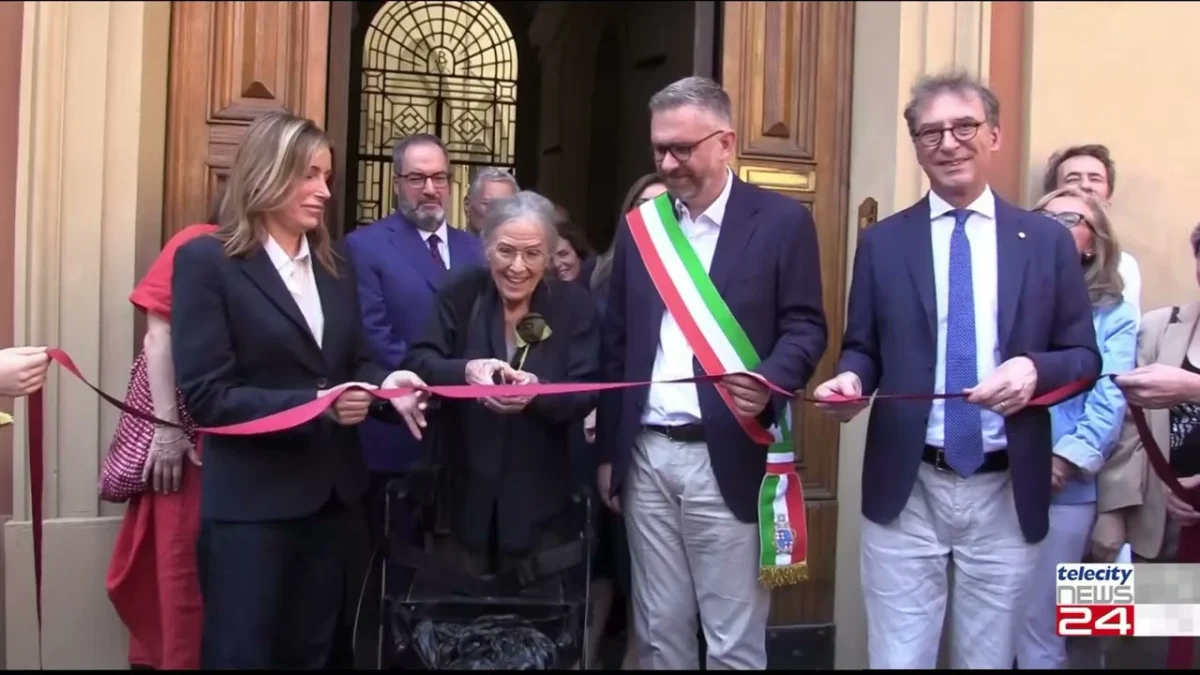
The opening of the library has been met with acclaim from the Italian academic and political establishment. The Rector of the University of Bologna noted during the ribbon-cutting ceremony that the library is not a "museum of the past," but a "laboratory for the future." He emphasized that Eco’s method of inquiry—questioning everything from the structure of a joke to the nature of truth—is more relevant today than ever in the age of digital misinformation.
Renate Ramge Eco, the author’s widow, expressed her satisfaction that the books are being used rather than merely stored. She has frequently noted that for Eco, a library was a "living organism." This sentiment aligns with Eco’s famous concept of the "Antilibrary." Eco believed that the value of a library lies not in the books one has read, but in the books one has not yet read—the "unread books" represent the vastness of human knowledge yet to be explored.
Broader Implications and Intellectual Legacy
The establishment of the Bibliotheca Eco has broader implications for how the world preserves the legacies of "public intellectuals." In an era where personal archives are increasingly digital and ephemeral, the physical presence of 30,000 books serves as a reminder of the material reality of thought.
For the University of Bologna, the library solidifies its status as a global center for the humanities. For the city of Bologna, it adds another layer to its identity as "La Grassa, La Rossa, La Dotta" (The Fat, The Red, The Learned). The library is expected to become a site of pilgrimage for semioticians and fans of Eco’s fiction, providing a tangible link to the man who famously claimed that "to survive, you must tell stories."
As scholars begin to delve into the collection, the Bibliotheca Eco will likely yield new insights into how Eco constructed his complex narratives. By seeing the exact editions he consulted and the "neighbors" he chose for them, researchers can reconstruct the genealogy of his ideas. The library stands as a final, open book from a man who spent his entire life reading, writing, and reminding the world that libraries are the memory of mankind.