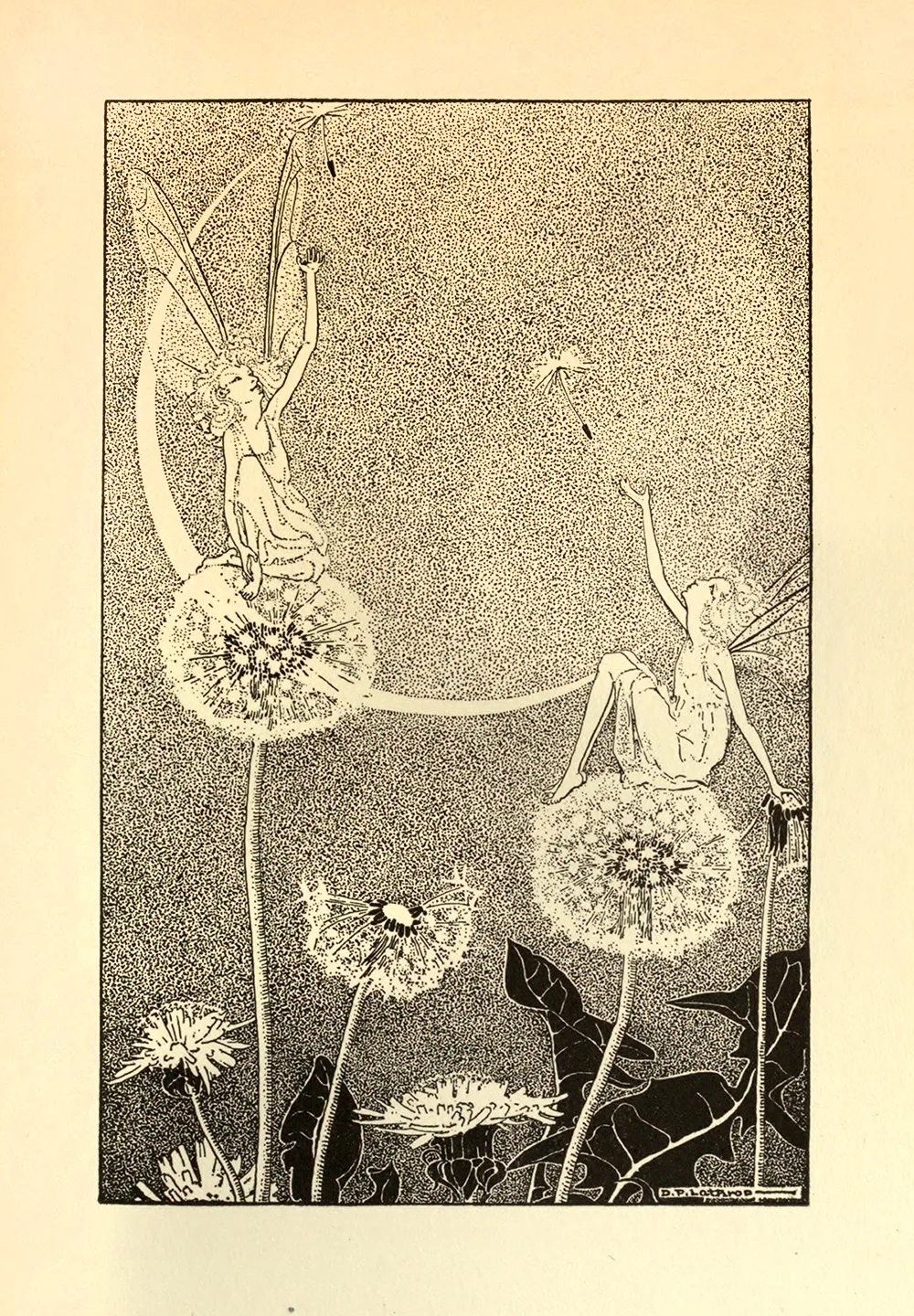
The search for human meaning often proceeds under the assumption that purpose is a fundamental law of the universe, akin to gravity or electromagnetism, yet historical and philosophical inquiry suggests it is instead a fragile construct of consciousness. This distinction forms the cornerstone of G.K. Chesterton’s later reflections, particularly those found in his posthumously published autobiography. Unlike the immutable laws of physics, which predate biological life and will persist long after the dissolution of the solar system, meaning exists only within the brief interlude of human awareness. When the organized atoms that constitute a person disband into their constituent parts—returning to the state of unfeeling stardust—the specific vantage point that assigned value to the world dissolves with them. In this context, the act of "making meaning" becomes the primary creative and intellectual challenge of the human experience, a theme that Chesterton explored through the humble image of the dandelion.
The Chronology of a Polymathic Career
Gilbert Keith Chesterton (1874–1936) was a central figure in the British literary landscape of the early 20th century. His career spanned several decades of profound social and scientific upheaval, during which he produced a staggering body of work including approximately 80 books, 200 short stories, 4,000 essays, and several hundred poems.
Born in Campden Hill, London, Chesterton’s intellectual development was marked by a transition from the artistic pursuits of the Slade School of Art to the rigorous debates of Fleet Street journalism. By the turn of the century, he had established himself as a formidable social critic and philosopher. His chronology is marked by key milestones: his marriage to Frances Blogg in 1901, the publication of his seminal "orthodoxy" in 1908, and his increasingly vocal opposition to the eugenics movement in the 1920s.
His autobiography, completed shortly before his death in June 1936, serves as a summative document of his worldview. It was written during a period when Europe was once again descending into the shadows of totalitarianism and scientific materialism—forces Chesterton believed were stripping the world of its inherent "miraculousness."
The Dandelion Metaphor: Gratitude vs. Entitlement
At the heart of Chesterton’s philosophy is a concept he termed the "submerged sunrise of wonder." He argued that the greatest tragedy of adult life is the loss of the childhood capacity to see the world as a "fiesta" of existence. To illustrate this, he frequently turned to the image of the dandelion, a common weed that he transformed into a symbol of metaphysical debt.
Chesterton posited that human beings often fall into one of two intellectual traps: pessimism or a "more offensive" form of optimism. The pessimist views the world as a bleak, accidental void, while the offensive optimist treats the wonders of nature as commodities to be compared and upgraded. In his autobiography, Chesterton critiqued the "captious comparisons" of his era, noting that people often undervalued the dandelion by suggesting they could find "better" or "cheaper" versions at commercial outlets like Selfridge’s or Woolworth’s.
This critique serves as a broader analysis of human entitlement. Chesterton argued that the "staggering heresy" of modern life is the belief that a human being has a "right" to the beauty of the world. By treating the existence of a flower—or the existence of oneself—as a given, the individual loses the ability to feel wonder. He suggested that the recognition of the "unbidden miracle of chance" is the only logical response to the astronomical odds against our existence.

Supporting Data: The Statistical Improbability of Being
Modern scientific data provides a rigorous backdrop to Chesterton’s 19th-century intuition regarding the "miraculous" nature of life. When Chesterton spoke of the "blaze of astonishment" at our own existence, he was touching upon what mathematicians and physicists now describe as the "Fine-Tuned Universe" or the "Anthropic Principle."
Calculations by astrophysicists suggest that if the initial explosion of the Big Bang had differed in its intensity by as little as one part in 10 to the 60th power, the universe would have either collapsed back on itself or expanded too rapidly for stars and planets to form. Furthermore, the probability of a specific sequence of DNA resulting in a particular human being is estimated at 1 in 10 to the 2,685,000th power.
Chesterton’s writing sought to bridge the gap between this cold statistical reality and the subjective experience of living. He viewed the artistic and spiritual life as a process of "digging" for the realization that one is actually alive. His work suggests that if the probability of existence is near zero, then every moment of consciousness is a form of "prenatal purgatory" rewarded by the sight of the sun.
Intellectual Opposition: Decadence and Pessimism
Chesterton’s insistence on wonder was not merely a personal preference but a calculated reaction to the prevailing cultural movements of his time. In the late Victorian and Edwardian eras, "Decadence" and "Pessimism" were dominant intellectual forces, championed by figures who viewed the world with a sense of weary disillusionment.

Chesterton identified two primary dangers to the human spirit: presumption (the belief that we deserve the world) and despair (the belief that the world is meaningless). His literary output was a "fiery resolution" against these trends. He sought to remind his readers that the environment they treated as "dead-alive" was, in fact, teeming with complexity.
This position made him a unique figure in the history of philosophy. While many of his contemporaries were moving toward Nihilism or strict Materialism, Chesterton advocated for a return to the "wonder and splendour" of being. He argued that even a man sitting quietly in a chair should, upon reflection, be struck by the sheer impossibility of his own presence.
Historical Reactions and Broader Implications
The impact of Chesterton’s philosophy of wonder extended far beyond his own lifetime, influencing a diverse range of thinkers and writers. C.S. Lewis, the famed author and theologian, credited Chesterton’s The Everlasting Man with fundamentally altering his intellectual trajectory. Similarly, J.R.R. Tolkien’s concept of "recovery"—the regaining of a clear view of things as they were meant to be seen—echoes Chesterton’s call to see the dandelion as if for the first time.
In a modern context, Chesterton’s views have found a resurgence in the "mindfulness" and "environmental consciousness" movements. Authors such as Maria Popova have highlighted how Chesterton’s meditations on the flower and the meaning of life prefigure contemporary discussions about our relationship with the natural world. The "spell against the erasure of wonder," as seen in modern botanical literature, is a direct descendant of Chesterton’s "new and fiery resolution."

Furthermore, Chesterton’s opposition to eugenics—a movement that sought to "improve" the human race through selective breeding—was rooted in this same philosophy of wonder. He believed that every individual was a unique "constellation of consciousness" that could not be reduced to a biological utility. His defense of the "ordinary" man and the "ordinary" dandelion was, in fact, a defense of the intrinsic value of all life against the cold metrics of social engineering.
Conclusion: The Enduring Relevance of Existential Gratitude
G.K. Chesterton’s legacy remains a testament to the power of perspective. By framing the search for meaning not as a discovery of a physical law, but as an act of gratitude for the "interlude" of life, he provided a framework for navigating the complexities of the modern age.
The dandelion, in Chesterton’s view, is not merely a weed but a "clause of exquisite precision punctuated by chance." It serves as a reminder that familiarity breeds contempt only when we forget the "staggering cosmic odds" that allow us to experience the sky, the trees, and the "rosary of days" that constitute a human life.
As society continues to grapple with the pressures of commercialism, technological alienation, and existential anxiety, Chesterton’s call to "dig for the submerged sunrise of wonder" offers a path toward a more profound engagement with reality. His work asserts that the ultimate creative challenge is not to change the world, but to realize that we are in it—and to be happy. In an era of profound uncertainty, this philosophy of existential gratitude remains a vital counterweight to the "dreary pessimist" and the "offensive optimist" alike.