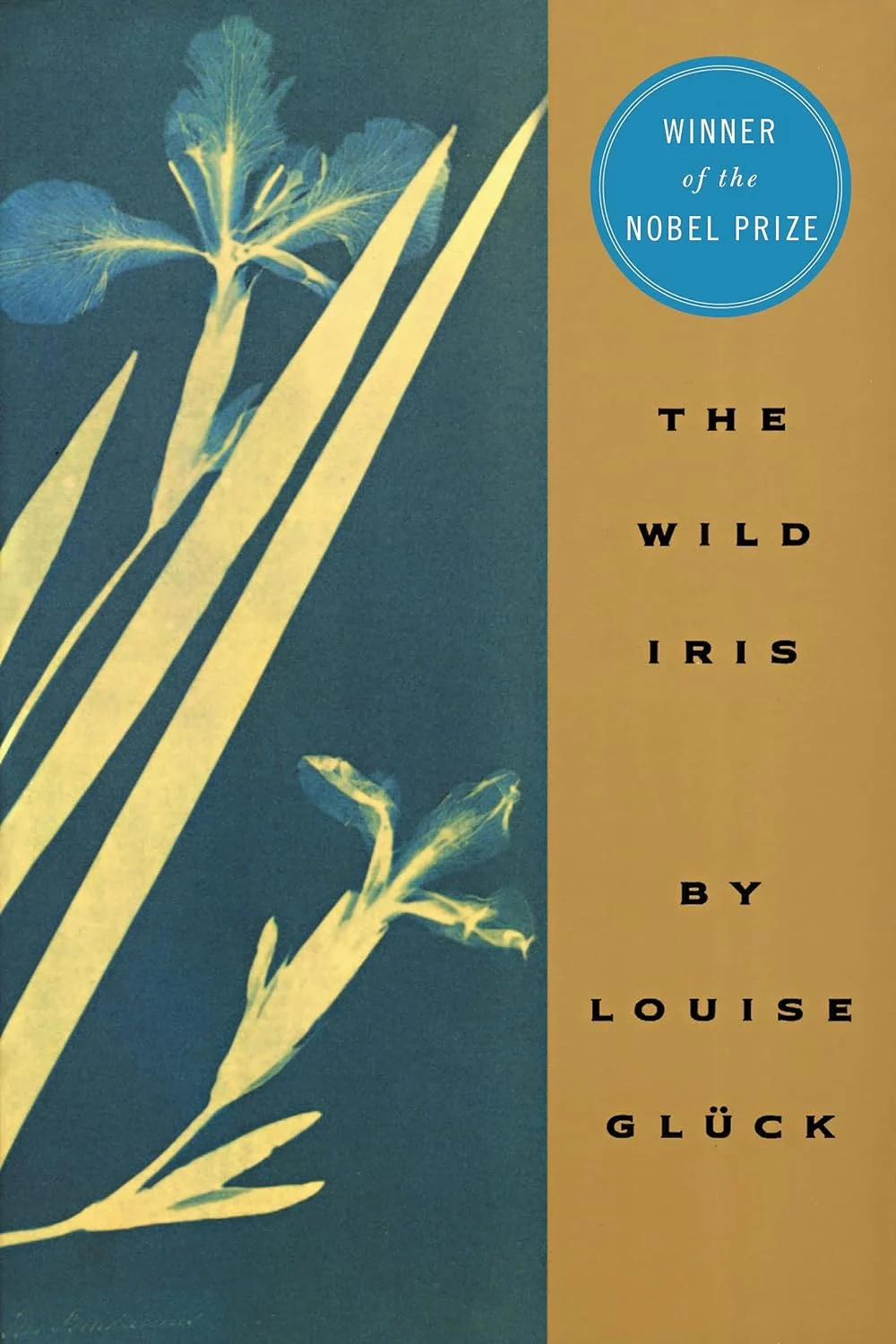
The literary world continues to reflect on the profound contributions of Louise Glück, the American poet and essayist who passed away on October 13, 2023, at the age of 80. As a Nobel Laureate and Pulitzer Prize winner, Glück’s work has long been celebrated for its clinical precision, its engagement with classical myth, and its unflinching exploration of the human condition. Central to her expansive bibliography is the 1992 collection The Wild Iris, a work that remains a cornerstone of contemporary American poetry. This collection, and its titular poem, serves as a poignant exploration of the "trapdoor" in the human psyche—an experience of suffering that eventually transitions into a portal for spiritual and existential rebirth.
The Life and Career of Louise Glück: A Chronology of Austere Beauty
Louise Glück was born on April 22, 1943, in New York City and raised on Long Island. Her journey into the heights of literary achievement was marked by a disciplined commitment to the "spare" style that would become her trademark. Her development as a writer was inextricably linked to her personal struggles, most notably a severe battle with anorexia nervosa during her teenage years. This period of illness, which led her to leave high school for treatment and forgo a traditional full-time college education, became a foundational element of her poetic voice. She later described the illness as a desire for control and a manifestation of the "will," themes that would recur throughout her work.
Glück’s professional trajectory began in earnest with the publication of her first collection, Firstborn, in 1968. While the book received positive reviews, it was her subsequent works that established her as a major voice. Over the following decades, she published more than a dozen volumes of poetry, including The House on Marshland (1975), The Triumph of Achilles (1985), and Ararat (1990). However, it was the 1992 release of The Wild Iris that catapulted her to international prominence, earning her the Pulitzer Prize for Poetry in 1993.
The timeline of her later career was marked by a series of prestigious appointments and accolades. In 2003, she was named the 12th Poet Laureate Consultant in Poetry to the Library of Congress. In 2014, she received the National Book Award for Faithful and Virtuous Night. The pinnacle of her career arrived in 2020, when the Swedish Academy awarded her the Nobel Prize in Literature "for her unmistakable poetic voice that with austere beauty makes individual existence universal."
Analytical Perspective: The Wild Iris and the Architecture of Suffering
The title poem of The Wild Iris is frequently cited as one of the most significant pieces of 20th-century literature. It functions as a persona poem, a form Glück mastered, in which the speaker is not the poet herself but the flower of the title. The poem begins with the stark declaration, "At the end of my suffering / there was a door." This opening sets the stage for a narrative of transformation that moves from the silence of death to the "great fountain" of rebirth.
In a journalistic analysis of the work, the poem can be viewed as a study of consciousness surviving the "dark earth." Glück utilizes the lifecycle of the perennial iris—which dies back in the winter only to bloom again in the spring—as a metaphor for the human experience of trauma and recovery. The "suffering" mentioned in the opening lines is not merely physical but ontological. The poem describes the "terrible" nature of surviving as a consciousness "buried in the dark earth," unable to speak or interact with the world.
The transition from "nothing" to "the stiff earth bending a little" represents the moment of emergence. For Glück, the end of suffering is not a return to a previous state of being, but a passage into something "larger, truer, and more possible." The "voice" that the iris finds at the end of the poem is described as a "great fountain, deep blue / shadows on azure sea water." This imagery suggests that the act of surviving deep psychological or spiritual "oblivion" results in a renewed capacity for expression and a deeper connection to the vitality of existence.
Supporting Data and Critical Reception
The impact of The Wild Iris is reflected in both its critical reception and its enduring sales figures. Upon its release, the collection was praised for its innovative structure, which alternates between three voices: the flowers of the garden speaking to a gardener/creator, the gardener (the poet) speaking to God, and a divine figure speaking to the gardener.
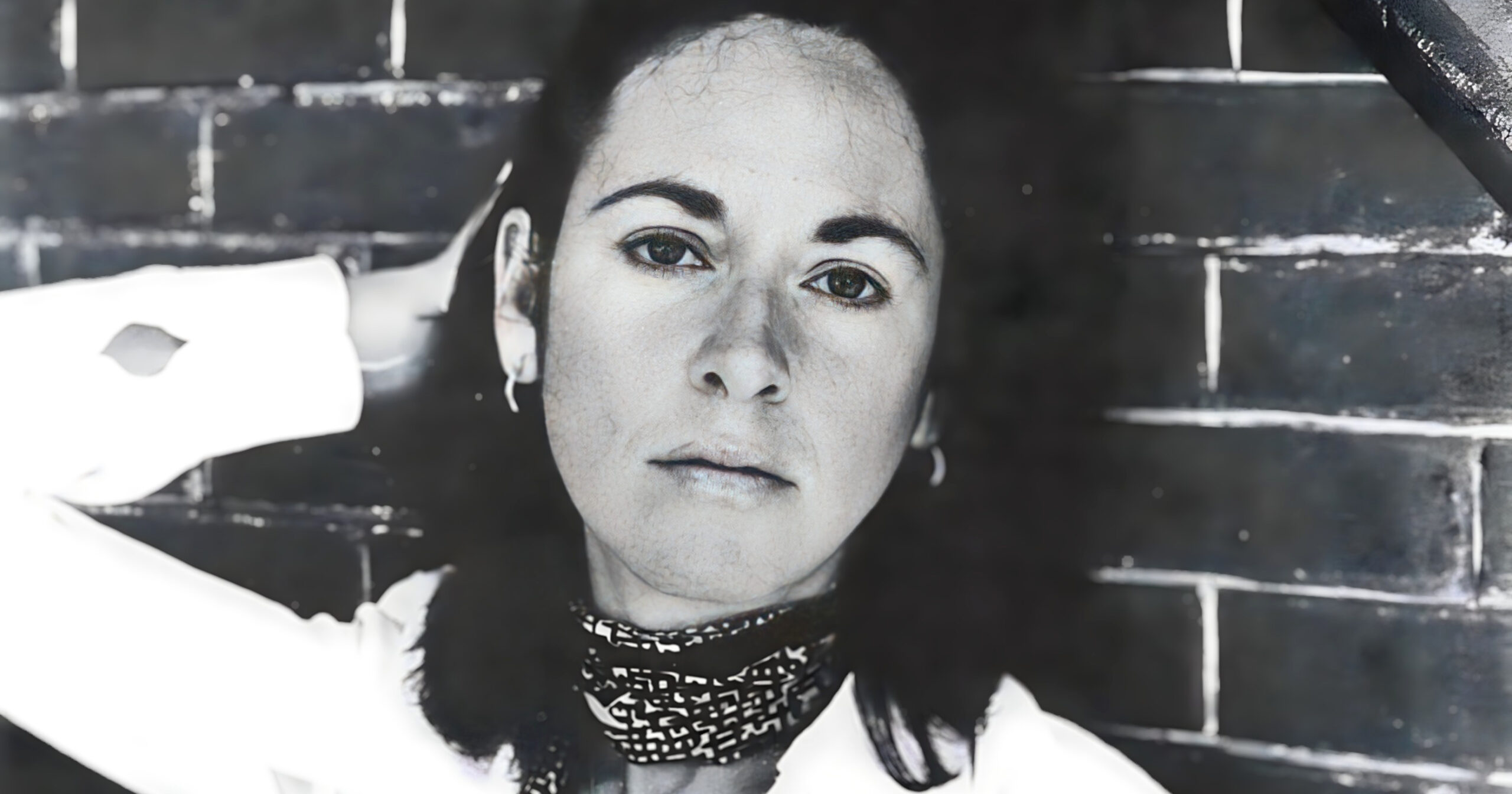
According to data from the Pulitzer Prize archives, the jury in 1993 selected Glück’s work for its ability to navigate the "mysterious and the mundane" with equal clarity. Since its publication, The Wild Iris has remained one of the best-selling volumes of poetry in the United States, a rare feat for a medium often relegated to a niche audience. In the wake of her Nobel Prize win in 2020, sales of her collected works saw a 250% increase in major retail markets, highlighting the global appetite for her specific brand of "austere beauty."
Academic studies of Glück’s work often highlight her departure from the "Confessional" school of poetry. Unlike her predecessors such as Sylvia Plath or Anne Sexton, Glück’s work avoids the purely autobiographical. Instead, she uses the "I" as a universal vessel, stripping away the specifics of her own life to reach a more generalized truth about human fragility.
Official Responses and Tributes
Following her death in October 2023, the literary community issued a series of statements that underscored her influence. Peter Salovey, the President of Yale University where Glück served as the Frederick Iseman Professor in the Practice of Poetry, remarked, "Louise Glück was a titan of American letters. Her poems, characterized by their precision and depth, explored the most fundamental aspects of what it means to be human. Her loss is immeasurable, but her voice remains in the students she mentored and the readers she moved."
The Swedish Academy, in a retrospective statement, noted that Glück’s work was "a search for the universal, and in this search, she took inspiration from myths and classical motifs, present in most of her works." Her editor at Farrar, Straus and Giroux, Jonathan Galassi, described her as "one of the greatest American poets" and a "determined, uncompromising seeker after truth."
Fellow poets also weighed in on her legacy. Margaret Atwood described Glück’s voice as "chiseled" and "essential," while former Poet Laureate Robert Pinsky noted her ability to "address the most difficult and painful subjects with a cool, almost terrifying clarity."
Broader Impact and Existential Implications
The enduring relevance of Louise Glück’s work, and The Wild Iris in particular, lies in its refusal to offer easy comfort. In a contemporary culture that often seeks to "bypass" suffering or find quick fixes for emotional pain, Glück’s poetry insists on the necessity of the "dark earth." She posits that the "passage from the other world"—whether that world is depression, grief, or physical illness—is the only way to find a voice that is truly one’s own.
The broader implications of her work extend into the realms of psychology and philosophy. Her exploration of "the end of suffering" aligns with philosophical concepts of "the dark night of the soul," suggesting that profound transformation requires a period of silence and "oblivion." The "door" at the end of suffering is not an exit from life, but an entrance into a more profound engagement with it.
As the literary world moves forward without Glück’s living presence, her body of work stands as a testament to the power of the written word to articulate the inexpressible. The Wild Iris remains a vital text for anyone navigating the complexities of loss and the possibility of renewal. It serves as a reminder that what returns from the "center of life" is often more vibrant and more resilient than what entered the darkness.
In the final analysis, Louise Glück’s legacy is not just one of awards and accolades, but of a specific kind of courage: the courage to look directly at the "stiff earth" and wait for the moment it begins to bend. Her work ensures that the "still, small voice of the soul" will continue to sing, providing a map for those who find themselves at the end of their own suffering, facing a door they have yet to open.