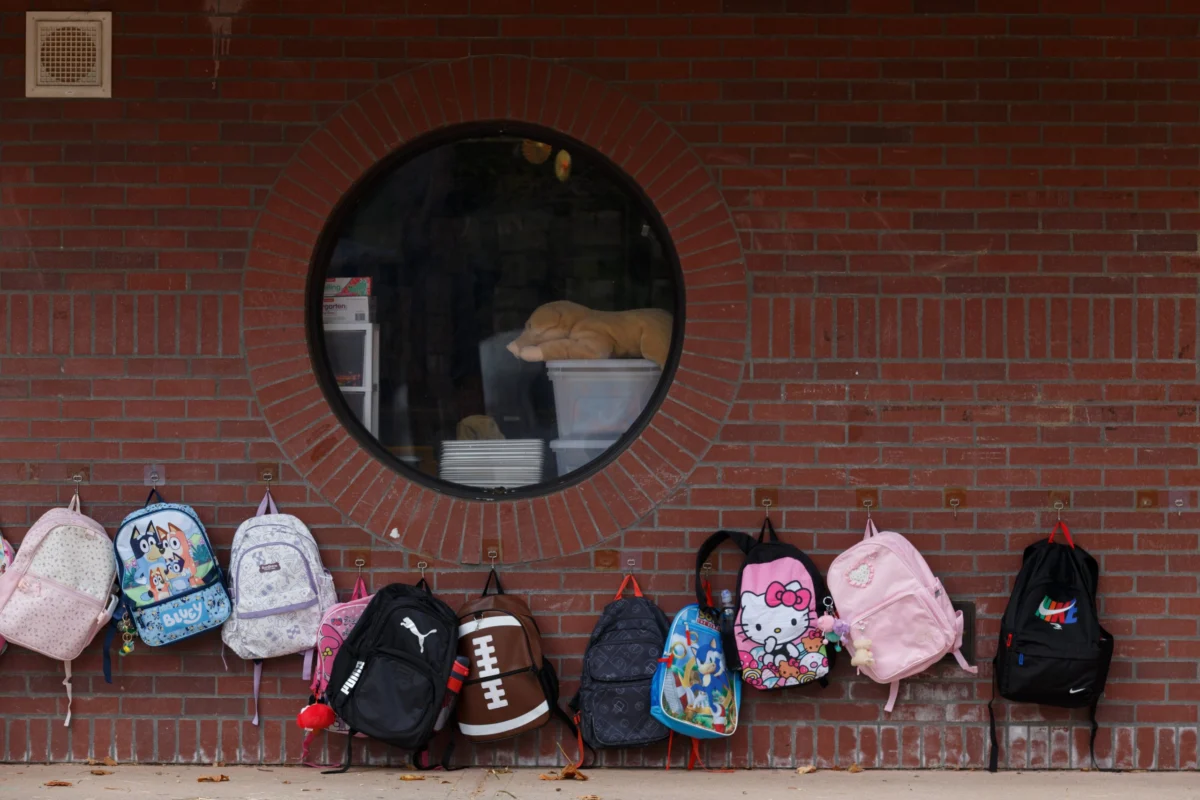
Minutes before the first bell rang at Glen Cove Elementary School in Vallejo, California, this past August, eleven-year-old Penny Núñez-Brandão stood at the school gate, scanning the sea of students for a familiar face. She turned to her mother, Kimberly, with a heavy realization: “I don’t see any. None of my friends are coming.” For Penny, the transition was not merely the standard apprehension of a new school year; it was the forced migration of a student whose previous campus had been shuttered. She is one of thousands of American children caught in the crosshairs of a deepening national trend: the systematic closure of public schools driven by plummeting birth rates and deteriorating district finances.
The phenomenon is widespread. During the most recent academic year, 1,156 schools across the United States were permanently shuttered—the highest volume of closures since the onset of the COVID-19 pandemic. This data, analyzed by Big Local News at Stanford University, paints a grim picture of a public education system attempting to “right-size” itself in an era of demographic contraction. As student enrollment continues to outpace school closures, experts warn that the current strategy of consolidation is likely a temporary stopgap that fails to address the underlying structural insolvency of many districts.

A Chronology of Decline in Vallejo
The Vallejo City Unified School District (VCUSD) serves as a microcosm of this national crisis. Once a bustling educational hub, the district now supports only half the student population it served two decades ago. In 2006, the district enrollment stood at nearly 18,000 students; by 2026, that number had plummeted to roughly 9,300.
The roots of the current crisis are tangled in both economic history and modern fiscal mismanagement. In the early 2000s, administrative turmoil brought the district to the brink of bankruptcy, necessitating a $60 million state-funded emergency bailout. While the infusion of cash staved off total collapse, it placed the district under state receivership for nearly two decades. The oversight did not end until the summer of 2024, just as Ruben Aurelio assumed the role of superintendent.
Aurelio inherited a volatile situation. The district had relied heavily on temporary federal COVID-19 relief funds to balance operational budgets, including staff salaries. When those funds evaporated, the structural deficit became unavoidable. By 2025, with buildings operating at only 46 percent capacity, the district board took drastic action. In a two-phase plan, the board closed two K-8 schools in 2025, followed by three additional elementary schools in 2026. These closures represent a 25 percent reduction in the district’s total footprint, accompanied by a plan to cut up to one-third of staff positions to close a $36 million budget gap.

The Financial Fallacy of Consolidation
While superintendents and school boards often justify closures as a necessary measure to concentrate resources, the economic reality is frequently less efficient than anticipated. Research from institutions like the UChicago Consortium on School Research and various economic studies suggest that closing schools rarely produces the immediate financial windfall administrators promise.
The hidden costs of consolidation are significant. Districts must absorb the expenses associated with transporting displaced students to new campuses, providing severance packages to terminated employees, and maintaining security for empty, decaying facilities to prevent vandalism and theft. At the now-vacant Pennycook Elementary in Vallejo, for instance, the district has been forced to allocate precious funds for ongoing security patrols, as the shuttered building remains a target for intruders and structural degradation.
Furthermore, the act of closing a school often initiates a “downward spiral” of enrollment. When a neighborhood school closes, parents—frustrated by the instability or the increased distance to new campuses—often leave the public system entirely. They may migrate to private schools, charter networks, or move to neighboring districts. This exodus further erodes the per-pupil funding that remains, effectively defeating the purpose of the initial cost-cutting.

Broader Implications and Demographic Shifts
The national decline in student headcount is not merely a local issue in California; it is a systemic shift. Between 2019 and 2024, public school enrollment nationwide dropped by 1.4 million students, a 3 percent decrease. While declining birth rates are the primary driver, other factors—such as the expansion of private school vouchers, the rise of homeschooling, and shifting immigration patterns—have exacerbated the trend.
Economists from Bellwether and WestEd have projected that if enrollment continues to decline at its current trajectory, public schools could lose $11.5 billion in annual state revenue by the 2030-2031 school year. This impending "revenue cliff" suggests that the closures seen in cities like Houston, Philadelphia, and Cleveland are likely just the beginning of a prolonged period of contraction.
Lydia Rainey, a research principal at the Center on Reinventing Public Education, argues that stakeholders must temper their expectations. "That’s extremely wishful thinking," she stated when asked if districts could expect a future rebound in enrollment. With state governments facing their own fiscal pressures and the federal government reducing its footprint in K-12 education, the expectation that public coffers will open to save legacy schools is increasingly unrealistic.

The Human Cost: Instability in the Classroom
For families like the Núñez-Brandãos, the abstract concepts of “budgetary right-sizing” manifest as tangible trauma. Kimberly Núñez-Brandão, whose children have been reassigned multiple times, expressed profound frustration with the district’s inability to provide a stable learning environment. During a recent curriculum night, she learned that her daughter’s new class had 32 students, a number that reflects the overcrowding often caused by consolidating classrooms.
The situation was further destabilized in October when, weeks into the school year, Penny’s teacher resigned. The school district, struggling to retain staff, replaced the educator with a long-term substitute. This type of volatility is particularly damaging to academic outcomes. Research consistently shows that displaced students experience long-term drops in reading and math proficiency, especially when they are transferred into already struggling or overcrowded environments.
A New Strategic Approach?
Superintendent Aurelio maintains that the cuts, while painful, are the only path forward. "We’re not just closing schools to close schools," he said. "We’re right-sizing a district that was built for significantly more kids."

To mitigate the damage, the Vallejo district has attempted to adopt a more proactive, marketing-oriented strategy. This includes renovating remaining campuses to attract young families, exploring the launch of specialized language programs—such as a planned Tagalog-language school—and attempting to block transfer requests to keep students within the system.
Jason Willis, a school finance expert with WestEd, notes that Vallejo’s approach of spreading cuts over several years, rather than executing sudden, massive closures, provides a slight buffer for families to plan. However, even with these efforts, the fundamental issue remains: as long as the district is perceived as unstable, families will continue to look for exits.
For parents like Caitlin Jackson, who moved to Vallejo for its affordability, the choice is increasingly difficult. Despite the district’s attempts to improve, she remains wary. "Trying to downsize a system while also trying to sustain it, that is just very difficult," she observed.

As the 2026-2027 school year progresses, the future of districts like Vallejo remains precarious. The reliance on substitute teachers, the physical decay of closed campuses, and the persistent flight of families all suggest that the "school closure cliff" is not just a statistical phenomenon, but a profound transformation of the American community. For children like Penny, the schoolhouse is no longer a permanent landmark of the neighborhood, but a temporary fixture, subject to the cold, shifting arithmetic of a shrinking population.