
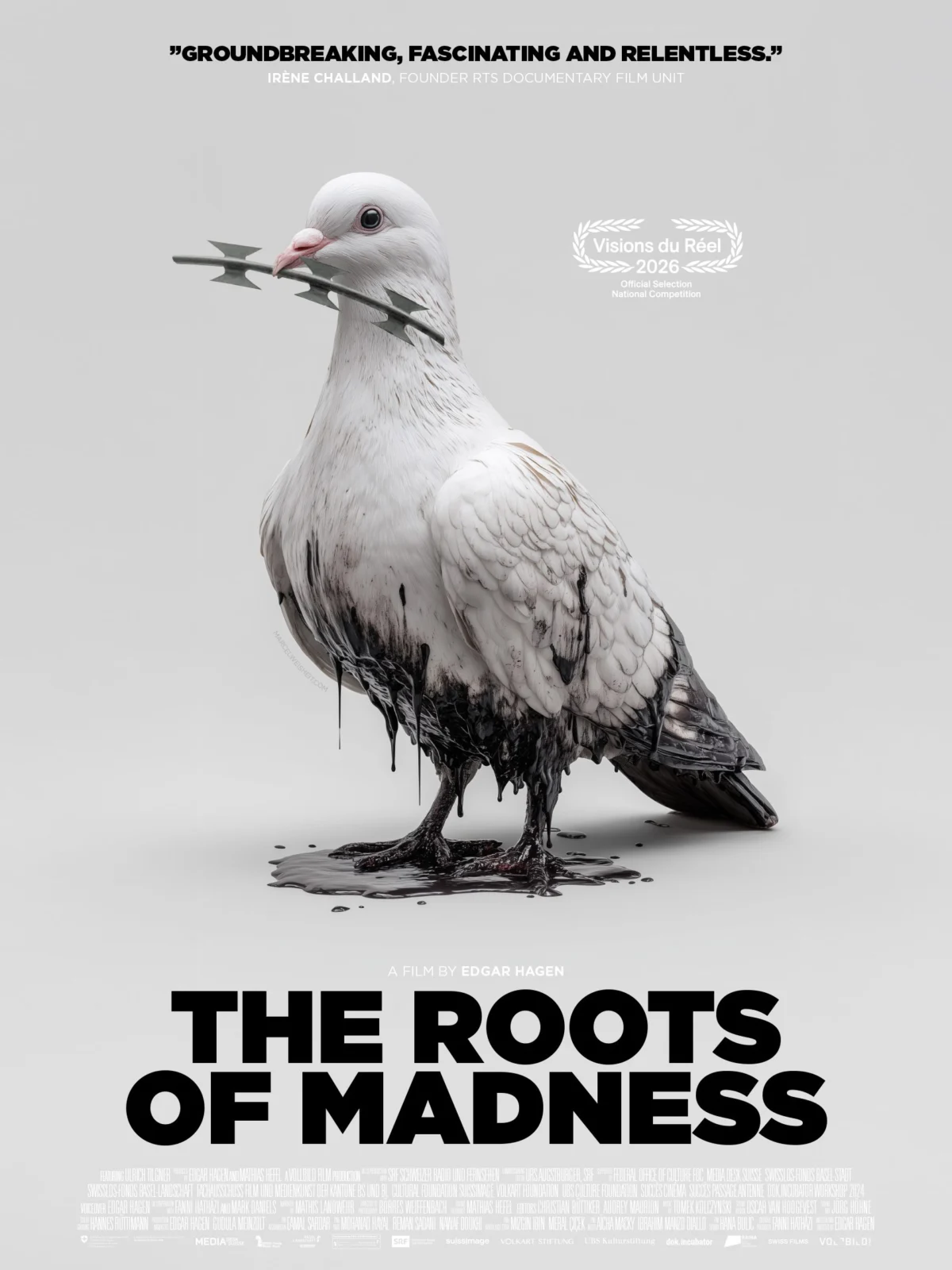
Swiss filmmaker Edgar Hagen’s provocative new documentary, "The Roots of Madness," embarks on an ambitious journey to unravel the complex question of why millions are forced to flee their homes and become refugees. In an era marked by heightened political discourse surrounding migration and a surge in xenophobia across Europe and globally over the past decade, Hagen’s film seeks to provide profound answers by exploring the enduring consequences of Western intervention in the Middle East.
Hagen’s cinematic exploration is deeply rooted in understanding the long-term ramifications of these geopolitical actions. To achieve this, he joins forces with veteran German journalist Ulrich Tilgner, a seasoned correspondent who has extensively covered war zones and crisis-stricken regions for prominent German and Swiss broadcasters. Their collaboration culminates in Tilgner’s farewell journey, a poignant expedition through Afghanistan, Iraq, and Syria. During this journey, they aim to reconnect with not only ordinary individuals but also former contacts, old friends, and individuals Tilgner had interviewed in the past, seeking to ascertain how the situations have evolved since his previous visits. This endeavor aims to provide a visceral, on-the-ground perspective, moving beyond abstract political debates to the human realities shaped by decades of conflict and foreign policy.
The world premiere of "The Roots of Madness" is set to captivate audiences at the 57th edition of the Visions du Réel, a prestigious Swiss documentary festival held in Nyon, near Geneva. The film will be showcased in the national competition, with its initial screening scheduled for Sunday, April 19. This festival is renowned for its commitment to showcasing impactful and thought-provoking documentaries, making it an ideal platform for a film addressing such critical global issues.
A synopsis shared on the Visions du Réel website highlights the film’s potent message, noting the significant influx of refugees, primarily from the Middle East, into Europe in 2015. This event, the summary points out, "unwittingly fueled the rise of xenophobic extremism." The film artfully blends archival footage with often harrowing personal testimonies, creating an unflinching yet sensitive indictment. It navigates the delicate space between justifiable outrage and profound melancholy, urging viewers to confront uncomfortable truths about the origins and consequences of displacement.
In its investigative approach, "The Roots of Madness" dissects the promises of Western interventions in the Middle East, often framed in the language of "liberation" and "democracy." The documentary expands its geographical scope beyond the Middle East, taking audiences to Niger, Greece, and Serbia, illustrating the far-reaching impact of these conflicts and the ensuing refugee crises. By tracing the paths of displaced individuals and examining the geopolitical decisions that contributed to their plight, Hagen’s film seeks to draw a comprehensive picture of a global humanitarian challenge.
A trailer for the film, offering a glimpse into its powerful narrative and visual style, is available for viewing, further whetting the appetite for its premiere.
Produced by Edgar Hagen and Mathias Hefel under their banner Vollbild Film GmbH, "The Roots of Madness" is the brainchild of Hagen, who not only directed but also penned the screenplay. The film’s visual narrative is crafted by cinematographer Bärres Weiffenbach, with the crucial editing contributions of Christian Bütiker and Audrey Maurion, who weave together disparate elements into a cohesive and compelling whole.
Hagen articulated his personal motivation for releasing this film during a period of what he describes as "disturbing developments" threatening the foundational values of Western democracies. He states, "Many people in the Western world see the migrants and refugees who are trying to flee to the West as the cause of this divisive and perilous process, when the causes are actually quite different. I firmly believe we can only overcome the growing racism and political extremism in our countries if we endeavor to understand who these people are." His commitment is evident in his aim to "gain a clear understanding of the ongoing humanitarian disaster migrants and refugees face at Europe’s fortified borders by capturing authentic images and voices from the areas of conflict they flee from, and by juxtaposing those voices with our Western values and the West’s political decisions."

In a conversation with The Hollywood Reporter ahead of the documentary’s world premiere, Hagen elaborated on the film’s timely examination of the recent past to illuminate the present and future. "I wanted to look for the big picture," he shared. "I was feeling lost in a way when it came to understanding this situation. I was not the only person seeing that our society, when migration became a big topic, started closing up, building fences and walls, which also opened up a prison. I started thinking: What the hell is going on here?! We have to really understand that. And to do that, we have to go where they come from." This introspection underscores the film’s core objective: to foster a deeper comprehension of the refugee crisis by exploring its origins.
H2: The Genesis of a Collaboration and a Title
The impetus for "The Roots of Madness" emerged from a profound connection Hagen felt upon meeting Ulrich Tilgner. "I just had this impulse," Hagen recalled, "And that was the first impulse to start this film." He was particularly drawn to Tilgner’s journalistic approach, which eschewed a singular focus on powerful figures and instead delved into the lives of ordinary people. "He didn’t really focus just on the politicians. He went to the people to understand the atmosphere, the feelings, and what was really going on behind the closed doors," Hagen explained. This method allowed Tilgner to grasp "the suffering of the people connected to these wars that [have led and] lead people to become refugees."
This empathetic and ground-level perspective directly influenced the film’s evocative title. "This idea that we have to go where this conflict comes from, go to the heart of the conflict, means going to the roots of this madness that millions of people have to leave," Hagen told The Hollywood Reporter. He emphasized the critical distinction between choice and necessity: "And as you see in the film, they don’t want to leave, they have to leave, and this is what we have to understand from our Western perspective. We have to see and accept that." This framing challenges the prevalent narrative that often portrays refugees as voluntary migrants seeking economic betterment, rather than individuals fleeing existential threats.
Hagen expressed a personal imperative to experience and convey the pain and suffering often perceived as distant from his comfortable European vantage point. He believes that sharing these realities is crucial for those who do not directly encounter war and conflict zones. "This urge to understand also [plays into the] dramaturgy of the film," he stated. "And I think that’s also where the empathy and emotion in this film comes from on the way to understanding the same pattern of Western interventions in different places." This approach aims to forge a connection between the distant struggles of refugees and the decision-making processes in the West that may have contributed to them.
H2: Examining Western Influence and Global Ramifications
"The Roots of Madness" also scrutinizes the role of Western powers in the rise of various groups, including the Taliban in Afghanistan, and examines "how we are helping to produce this radicalism." Hagen’s intention is to move beyond simply reporting on the existence of such groups to understanding the complex web of factors, including external influences, that contribute to their emergence and persistence.
The director drew a parallel between past conflicts and contemporary geopolitical events, citing the recent escalation of tensions involving Iran. He noted a perceived shift in public discourse, particularly in contrast to the justifications offered for past interventions. "With this Iran war, the perception has changed because Donald Trump doesn’t even make the effort to give a justification," Hagen argued. He recalled that during the Iraq War, under George W. Bush, the rationale presented was often "for peace and for democracy." Hagen observes that "Trump doesn’t really make the effort anymore to defend our values. And that, I think, is making people wake up and understand what we are losing." He further elaborated, questioning the ease with which powerful nations can engage in military actions and the complicity or inaction of populations when such actions occur. "How is it possible that the leader of the free world is attacking other countries like this? Why do we agree to that? Or if we don’t agree, why do we let it happen?"

H2: A Call for Dialogue and Understanding
With these profound questions at its core, Hagen’s documentary endeavors to illuminate not only the origins of the migrant crisis but also to provoke critical thinking about the future trajectory of Western societies. "‘Why is it going this way’ is the big question of the film," he noted. "But we should also think about where we want to head in terms of our values." This forward-looking perspective suggests that understanding the past is a crucial step towards shaping a more equitable and peaceful future.
Hagen expresses hope that "The Roots of Madness" will foster a "healthy debate" and "open a dialogue about these things." His commitment extends to exploring established and novel approaches to addressing complex international relations, including the concept of holding perpetrators accountable. "I think we also really have to maintain established approaches and find new ways to talk and deal with the ‘bad guys,’ for example, by bringing them to court. It’s no solution to kill them, because that way we just produce the radicalism we are fighting and end up in an endless spiral of violence and killing. I think it is in our own interest to attack, discuss and solve these issues." This statement underscores a belief in restorative justice and diplomatic solutions over perpetual conflict, positioning the film as a catalyst for a more constructive global dialogue.
The film’s thematic scope is vast, touching upon the historical context of interventions in the Middle East, the subsequent humanitarian crises, and the resultant political and social shifts in Europe. For instance, the protracted conflict in Afghanistan, exacerbated by the Soviet invasion in 1979 and subsequent power struggles, has led to decades of instability and displacement. The 2003 invasion of Iraq, justified by claims of weapons of mass destruction that proved unfounded, further destabilized the region and contributed to the rise of extremist groups. These historical events, intricately linked to Western foreign policy, form the backdrop against which the film explores the human cost.
The rise of xenophobic sentiment in Europe, particularly in the wake of the 2015 refugee crisis, is a stark indicator of societal anxieties. Data from organizations like Eurostat reveal significant increases in asylum applications during that period, coinciding with a rise in support for far-right political parties in several European nations. "The Roots of Madness" aims to contextualize these shifts by directly linking them to the underlying causes of displacement, thereby challenging simplistic narratives that blame refugees for societal problems.
Hagen’s emphasis on journalist Ulrich Tilgner’s journey is a strategic choice to ground the film in personal experience and historical perspective. Tilgner’s decades of reporting from the frontlines provide an invaluable archive of observations and relationships. His farewell tour is not merely a nostalgic look back but a deliberate attempt to trace the trajectory of events and their human consequences. By revisiting former interviewees and contacts, the film seeks to capture the long-term impact of war, political instability, and foreign intervention on individuals and communities. This narrative technique allows for a nuanced portrayal of resilience, loss, and the enduring hope for peace, even in the face of immense hardship.
The film’s exploration of Niger, Greece, and Serbia further broadens its geographical and thematic reach. Niger, a country grappling with poverty, climate change, and the spillover effects of conflicts in neighboring regions, has become a significant transit point for migrants heading towards North Africa and Europe. Greece, as a primary gateway to the European Union, has borne a disproportionate burden of the refugee crisis, leading to strained resources and political challenges. Serbia, situated on the Balkan route, has also played a crucial role in the flow of refugees, highlighting the interconnectedness of the crisis across multiple borders. By incorporating these diverse locations, "The Roots of Madness" underscores the transnational nature of displacement and the shared responsibility in addressing it.
Ultimately, "The Roots of Madness" stands as a critical examination of the intricate relationship between international politics, conflict, and human displacement. Edgar Hagen’s directorial vision, coupled with Ulrich Tilgner’s journalistic expertise, promises a powerful and thought-provoking cinematic experience that seeks to foster understanding, encourage dialogue, and advocate for a more compassionate and informed global response to the refugee crisis. The film’s premiere at Visions du Réel marks a significant moment for its potential to influence public perception and inspire meaningful action.










Leave a Reply