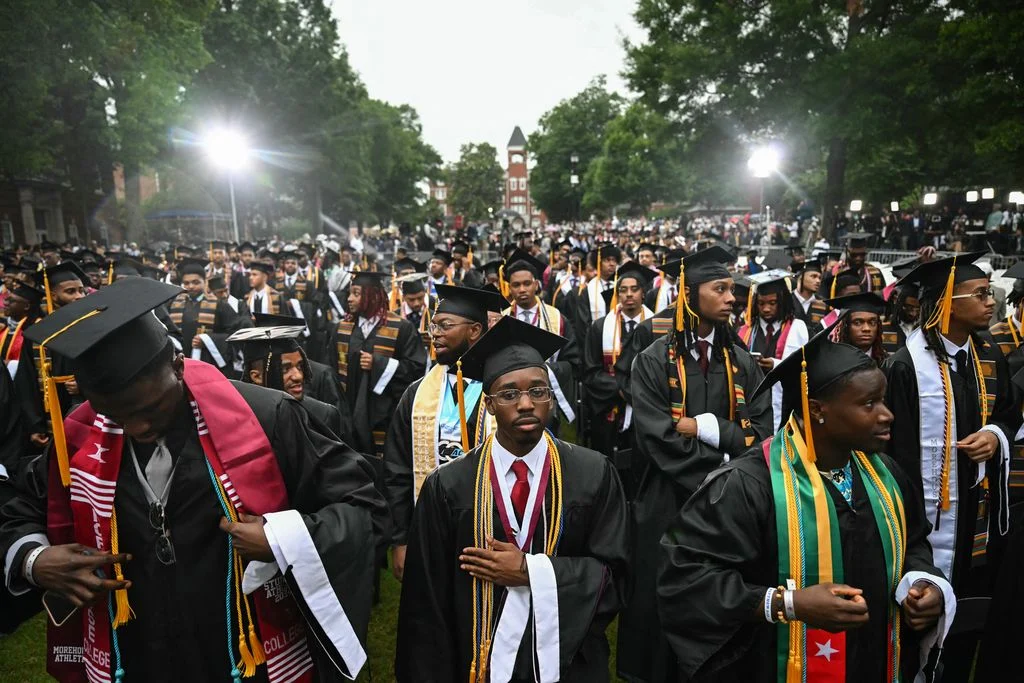
Trinity Williams, a junior at Howard University, occupies a front-row seat to one of the most significant shifts in American higher education. As a campus tour guide, she spends her days welcoming prospective students into an environment built on a legacy of empowerment. Founded in 1867 to educate newly freed African Americans, Howard has long served as a bastion for Black academic and professional excellence. However, in the wake of the Supreme Court’s 2023 ruling effectively banning race-conscious admissions, Williams has shifted her rhetoric. Her message to visiting high schoolers is now more urgent: “Always choose an HBCU.”
This sentiment reflects a growing realization among students of color: the mechanisms that once facilitated their entry into elite professional spaces are rapidly dismantling. While the Supreme Court ruling applied strictly to university admissions, its "chilling effect" has cascaded into corporate boardrooms and recruitment offices across the United States.
A Chronology of the Policy Shift
The current landscape for underrepresented students is defined by a series of legal and political maneuvers that began in the mid-2010s and accelerated following the 2023 Supreme Court decision in Students for Fair Admissions v. Harvard.
- June 2023: The Supreme Court rules that race-conscious admissions programs at Harvard and the University of North Carolina are unconstitutional, effectively ending affirmative action in higher education.
- Late 2023–2024: Following the ruling, a wave of conservative legal groups shifts their focus toward corporate diversity, equity, and inclusion (DEI) initiatives, pressuring firms to abandon race-based hiring and scholarship programs.
- October 2026: The federal government, under the administration of President Donald Trump, issues executive orders formally banning DEI initiatives in federal contracting and agency operations, signaling a broader national pivot away from institutionalized diversity efforts.
- November 2026: Midterm elections result in a "blue wave" of legislative victories, raising questions about whether a new coalition of lawmakers can counteract the momentum of the anti-DEI movement.
The Data: A Statistical Retreat from Diversity
The decline in diversity-focused recruitment is not merely anecdotal; it is reflected in industry-wide data. According to a 2025 survey by Veris Insights, the number of large employers identifying diversity as a primary factor in selecting campus recruitment targets plummeted to 31 percent, down from 60 percent in 2022.
This retreat is further evidenced by enrollment shifts at elite institutions. At Harvard University, the percentage of Black students in the first-year class dropped from 18 percent in 2023 to 9.3 percent in 2026. This trend is consistent with what experts call a "cascade effect." As highly selective colleges move away from race-conscious recruitment, high-achieving Black and Hispanic students are being displaced from elite institutions, either attending less competitive colleges or opting for HBCUs, which then face their own capacity and funding constraints.
The Columbia Business School has documented that companies are systematically dismantling diversity language and revising candidate sourcing strategies to avoid the threat of litigation. The result is a tightening of the professional pipeline for first-generation, Black, and Hispanic students, who have historically relied on these corporate-university partnerships to gain a foothold in competitive industries.
The Chilling Effect on Corporate America
While the Supreme Court’s ruling did not explicitly prohibit companies from pursuing inclusive hiring practices, the legal environment has become increasingly hostile. Corporate counsel, fearing lawsuits and political retribution, have advised companies to strip "diversity" from their mission statements and recruitment criteria.
Joni Hersch, a professor of law and economics at Vanderbilt University, notes that while firms are technically permitted to maintain robust recruitment pipelines, they have lost the appetite to be public about those efforts. "The strong message is that firms can return to their (entirely legal) hiring and training policies," Hersch explains. "But I do not believe they will necessarily become outspoken about their commitment to diversity."

This caution is visible in the recent settlement by the Hispanic Scholarship Fund, which agreed to open its historically race-restricted scholarships to all applicants to settle a legal challenge. For students like Daniella Mensah, a student at San Jose State University, these changes feel like a closing door. "It’s very hard when there’s just not enough opportunities to get our foot in the door," Mensah said, reflecting the anxiety of a generation that feels the rules of the game have been altered just as they entered the professional field.
Institutional Responses and the Political Divide
The political response to these trends has been deeply polarized. Critics of DEI, often aligned with the current administration, argue that these programs were discriminatory and that meritocracy should be the sole arbiter of success. Conversely, civil rights advocates, such as David Hinojosa of the National Center for Youth Law, maintain that these policies were essential for correcting systemic imbalances.
"Their intent to ensure privileged white people get to the front of lines remains central to their mission," Hinojosa stated regarding the administration’s stance. He suggests that if a newly elected Congress prioritizes the enforcement of civil rights protections, it could potentially mitigate the momentum of the current anti-DEI campaign.
However, the path forward remains uncertain. Even with the election of diverse leaders like Hakeem Jeffries, the institutional barriers created over the last three years are deeply embedded. Natasha Warikoo, a professor at Tufts University, believes that while a change in the political climate might stem the tide of legislative attacks on campus DEI, the private sector’s fear of litigation will likely persist.
Implications for the Future of the Workforce
The full consequences of these policy changes have yet to be fully realized. As Jonathan E. Collins, executive director of the Center for Educational Equity at Teachers College, Columbia University, points out, the students who were admitted under the new, post-affirmative action regime are only now beginning their undergraduate journeys.
"We likely haven’t seen the worst of it yet," Collins warned. "The first students admitted after the affirmative action ruling generally won’t graduate until 2028. So, its full employment consequences are still ahead of us."
For institutions like Howard, Morehouse, and other HBCUs, the current environment presents both a challenge and an opportunity. While these universities are positioned to become the primary incubators for Black professional talent, they are also grappling with the same financial pressures that affect all of higher education. Despite the renewed, albeit often controversial, attention from federal policymakers, the sustainability of these institutions as the "great equalizers" of the American education system remains a subject of intense debate.
The long-term economic impact of a less diverse professional workforce is a significant concern for economists. Research from Opportunity Insights indicates that students who attend highly selective "Ivy-Plus" institutions are significantly more likely to reach the top 1 percent of earners and gain entry into elite graduate programs. If the pipeline to these institutions continues to narrow for underrepresented groups, the resulting wealth and opportunity gap could widen, potentially stalling decades of progress in social mobility.
As the nation moves forward, the divide between the rhetoric of "equal opportunity" and the reality of recruitment practices will continue to be a defining feature of the American labor market. For now, students like Trinity Williams are choosing to bet on the established, supportive networks of HBCUs, viewing them as a necessary anchor in an increasingly uncertain and exclusionary professional landscape. The coming years will serve as a definitive test of whether American institutions can maintain their commitment to diversity without the legal frameworks that once mandated it.