While Wall Street investors grapple with escalating volatility in domestic technology equities and speculate on the longevity of the artificial intelligence boom, a far more severe financial correction has quietly devastated markets on the other side of the Pacific. According to comprehensive market analyses published by Yardeni Research, the speculative bubble surrounding artificial intelligence and high-tech enterprises in the People’s Republic of China has already burst. This downturn has triggered a profound market crash that poses an immediate and escalating threat to the broader national economy and the long-term strategic ambitions of President Xi Jinping.
The divergence in market performance between the United States and China highlights the severity of the Asian superpower’s financial distress. China’s technology-heavy STAR 50 index has experienced a staggering contraction, plummeting 44% from its peak earlier this summer. In comparison, the U.S. Nasdaq composite index has declined roughly 18% from its all-time high, a correction that transpired even after American equities suffered their most severe weekly drawdown since the initial weeks of the COVID-19 pandemic in early 2020.
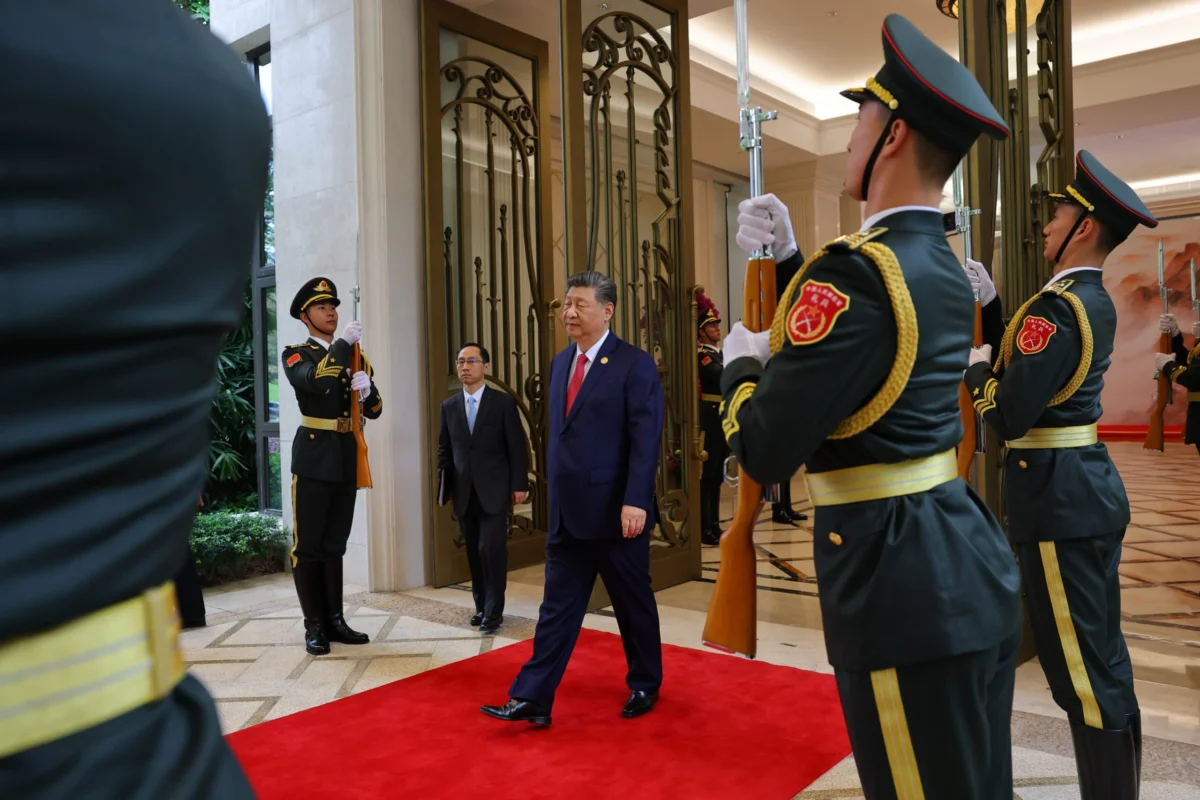
This dramatic erosion of market value has thrown a wrench into the economic masterplan engineered by President Xi and his senior policy advisors. While the Chinese leader was recently occupying center stage as a prominent host to visiting global dignitaries, the undercurrents of domestic financial instability threaten to unravel his carefully calibrated strategy. Xi has sought to pivot the nation’s vast pool of household savings away from a moribund real estate sector and channel those funds directly into the stock market. This reallocation of capital was designed to finance the nation’s aggressive artificial intelligence buildout and transition the economy away from its historic reliance on property development.
The Real Estate Collapse and the Erosion of Household Wealth
To understand the high stakes of China’s current equity market crash, analysts must examine the traditional repository of Chinese household wealth. For decades, the domestic real estate sector served as the primary engine of wealth accumulation and the preferred store of value for ordinary citizens, accounting for approximately 70% of total household wealth in China.
However, the prolonged housing market downturn has fundamentally altered consumer psychology. The systemic real estate crash has heavily weighed on domestic consumer demand, fostering an environment of intermittent deflation that has stymied broader economic recovery. Business investment has similarly withered. Official economic data from October revealed that property investment sank by nearly 22% year-over-year, underscoring the deep-seated reluctance of private enterprises to commit capital to brick-and-mortar projects.
With the domestic property market hobbled and consumer spending subdued, Beijing has increasingly relied on an aggressive export strategy. The government has flooded global markets with cheap manufactured goods to maintain headline GDP growth, while simultaneously deploying the informal "national team" of state-backed financial institutions to inject liquidity directly into the domestic stock market in an effort to place a floor beneath falling asset prices.
Despite these extraordinary government interventions, Chinese equities collapsed throughout the year. Financial analysts at Yardeni Research point to a confluence of structural pressures, including cutthroat domestic competition, heavier corporate tax burdens, escalating energy costs, mounting international tariffs, and the growing threat that foreign trading partners will implement strict trade barriers to block ultra-low-priced Chinese exports.
"To keep AI funding flowing, Xi needs a buoyant stock market," Yardeni noted in a research dispatch. "Otherwise, AI risks being folded into the state-owned enterprise (SOE) universe that his team has pledged to shrink since 2013, further crowding out the private sector."
Financial PTSD and the Legacy of State Intervention
Retail investors, who historically drive the vast majority of trading volume on Chinese exchanges, remain profoundly skittish. This deep-seated caution is rooted in the aggressive regulatory crackdowns launched by the government against major technology firms beginning in 2020, which wiped out billions of dollars in market capitalization and fundamentally altered the operating environment for private enterprise.
Compounding this regulatory anxiety is the persistent perception that China’s stock exchanges function less like transparent capital markets and more like rigged casinos that disproportionately favor politically connected insiders. This sentiment is vividly illustrated by the performance of the benchmark Shanghai Composite Index, which remains mired far below its historic peak reached in October 2007, despite the fact that China’s overall gross domestic product has expanded nearly sixfold over the same period.
Many Chinese households are currently grappling with what financial psychologists describe as "financial PTSD" stemming from repeated stock market busts. Most notably, the catastrophic market crash of the summer of 2015 required an unprecedented, aggressive rescue mission by the state’s national team to prevent a systemic financial collapse.
While China undoubtedly retains its status as a global leader in artificial intelligence development, and retail investors continue to dominate daily trading activity, their participation often resembles high-stakes speculative gambling rather than prudent retirement planning.
"Yet this is a moment of real danger for Xi," Yardeni warned. "A bursting AI bubble would not merely erase wealth or dent China’s technological prestige. It would weaken Beijing’s attempt to replace a broken property model with a stock-market-led one. China can build world-class AI models, train engineers, and spend billions on chips. But if its households still view Shanghai as a casino with odds set by the Politburo, Xi’s dream of creating a Chinese version of Wall Street may remain just that: a dream."
Beijing’s Urgent Policy Response and Regulatory Measures
The acute vulnerability of the capital markets has not gone unnoticed by China’s top economic decision-makers. Recognizing the existential nature of the financial instability, Premier Li Qiang addressed a State Council executive meeting earlier this month, explicitly declaring that stabilizing the nation’s capital markets constitutes the absolute top policy priority for the remainder of the calendar year.
In alignment with this directive, Chinese securities regulators have moved swiftly to implement emergency stabilizing measures. Regulatory authorities drastically eased requirements governing corporate share buybacks—a corporate finance mechanism designed to provide artificial lift to sagging stock prices. Simultaneously, regulators have actively discouraged initial public offerings (IPOs) and large-scale share sales to prevent stock dilution, which frequently serves as a catalyst for cascading retail selloffs.
Geopolitical Pressures and New Technological Hurdles
Compounding the domestic market turbulence are external geopolitical shocks that threaten to derail China’s technological trajectory. A recent high-profile corporate governance and intelligence scandal involving multinational semiconductor giant Nvidia has introduced a fresh layer of risk to Beijing’s artificial intelligence ambitions.
The ensuing international backlash concerning the advanced U.S. semiconductors and high-performance computing capacity that had previously leaked into the Chinese market has galvanized policymakers in Washington. Consequently, the administration of U.S. President Donald Trump has moved to implement an even stricter suite of technology controls and export curbs.
Market analysts at Capital Economics highlighted the gravity of these new trade restrictions in a note published on Tuesday. "By targeting both indirect chip shipments to China and its access to overseas computing power, the new controls threaten to slow the catch-up of China’s leading AI models and to slow China’s AI rollout," the analysts wrote.
As Beijing navigates this multi-front crisis—balancing a domestic real estate depression, a pervasive crisis of confidence among retail investors, stringent regulatory interventions, and escalating international technological blockades—the coming months will test the limits of state-managed capitalism. The ability of President Xi and Premier Li to stabilize the financial architecture will determine not only the immediate fate of the nation’s technological aspirations but the long-term stability of the Chinese economic model itself.