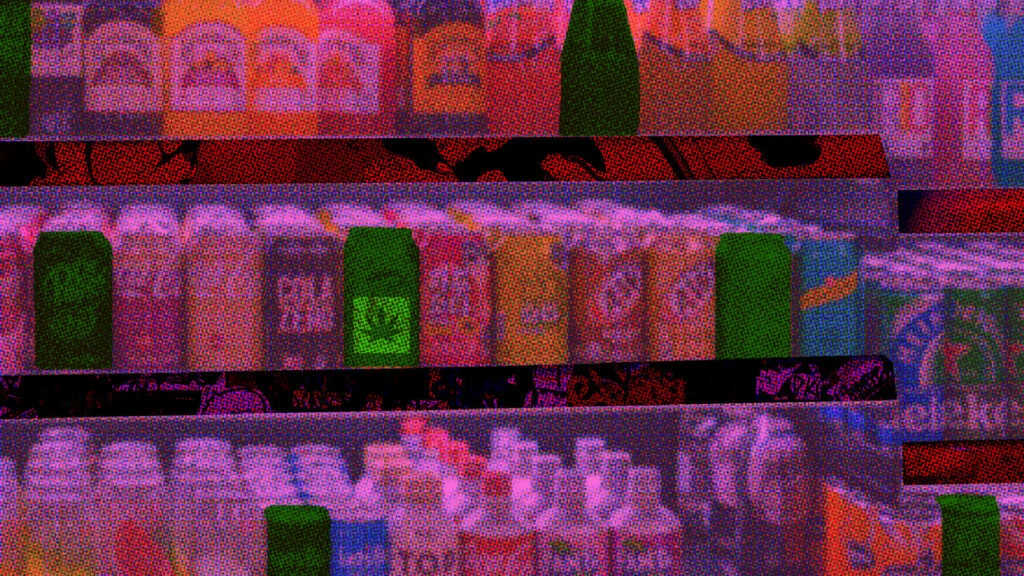
The refrigerated aisles of New York City’s grocery stores, bodegas, and delis are quietly becoming a landscape of confusion and potential risk, as an array of cannabis-infused beverages, often indistinguishable from their non-intoxicating counterparts, line the shelves. Brands like Oasis, Cann, Milonga, Cycling Frog, Tempter’s, Gigli, and Mighty Kind present a vibrant, almost playful facade, their colorful cans easily mistaken for iced tea, probiotic sodas, or other "functional beverages" that share their prime real estate. Yet, behind this unassuming exterior lies a burgeoning market operating in a regulatory gray area, raising alarms among health professionals, policymakers, and even the industry itself.
A recent scouting trip through South Brooklyn revealed a disconcerting reality: many of these THC-containing drinks were displayed without any clear indication of their intoxicating properties. In some instances, stores located mere blocks from schools offered these beverages with no signs warning of their psychoactive content, nor did staff typically request identification at the point of sale. This lack of overt caution belies the potency of many of these products. New York state law, as outlined in regulations adopted in 2023, stipulates that these beverages should contain no more than 1 milligram of THC per serving and are restricted to licensed dispensaries. However, the investigation found beverages containing up to 100 times that amount readily available in mainstream retail outlets, from upscale delis in Brooklyn Heights to large grocery stores adjacent to public parks. While many products contained a standard recreational dose of 5 to 10 mg of THC per serving, higher potency options, boasting 50, 60, and even 100 mg of THC, were also easily accessible, posing a significant risk of overwhelming even experienced cannabis users.
"It’s not allowed, but it’s still happening," stated Christopher Lackner, head of the trade group Hemp Beverage Alliance, acknowledging the widespread circumvention of current regulations. This situation is not unique to New York; the THC beverage market has experienced explosive growth across the United States, mirroring a broader trend of declining alcohol consumption. Industry projections estimate the U.S. cannabis and hemp beverage market to reach $1.4 billion in sales by 2026, with an estimated 500 to 750 brands vying for market share. This proliferation is largely attributed to a loophole created by the 2018 Farm Bill, which legalized hemp and its derivatives. This legislative act inadvertently opened the door for the sale of THC products derived from hemp in retail settings, bypassing the more stringent regulations governing state-licensed cannabis dispensaries.
The Looming Deadline and Industry Optimism
The current legal landscape is poised for significant change. The loophole that has facilitated the widespread availability of hemp-derived THC products is slated to close in November. However, the THC beverage industry remains optimistic that a legislative solution will be brokered. This optimism is reflected in the actions of major retail chains like Target, Circle K, and Sprouts, which are either expanding or initiating sales of these beverages, signaling a belief in the category’s long-term viability.
This expansion, however, is met with profound concern from medical professionals, researchers, and advocacy groups. They warn that the easy accessibility and ambiguous labeling of these drinks significantly increase the likelihood of accidental ingestion, posing substantial health risks, particularly to young people and other vulnerable populations.
A Surge in Pediatric Exposures and Health Risks
The increase in accidental THC ingestions, particularly among children, has become a critical public health issue. Dr. Rudy Kink, a pediatric emergency physician at Le Bonheur Children’s Hospital in Memphis, Tennessee, has observed a dramatic rise in cases involving children consuming THC drinks and other THC products. He estimates his hospital sees four to five such cases weekly. These incidents range from curious toddlers attracted by colorful packaging to teenagers intentionally experimenting with cannabis. Tragically, some younger children have mistakenly consumed these beverages, believing them to be ordinary sodas. The consequences can be severe, with children presenting at hospitals lethargic, confused, nauseous, and in some cases, near comatose. Parents are often bewildered by their child’s condition until blood and urine tests reveal the presence of THC.
"I don’t think that teenagers quite understand the effects of THC and how it can cause some of the other problems medically, like vomiting and altered mental status," Dr. Kink observed. He strongly advocates for clear, unambiguous labeling of THC drinks to prevent such confusion.
Recent data underscores these concerns. A 2025 survey of high school seniors revealed that 8% of females and 10% of males had consumed hemp-derived cannabis products in the preceding 12 months. A parallel survey of U.S. adults from the same year indicated that 14% had used hemp-derived THC, with users of THC beverages tending to be younger, more educated, and with higher incomes than users of other cannabis products.
The very nature of the packaging and labeling presents another hurdle. Jessica Kruger, a health educator at the University of Buffalo specializing in cannabis use, notes that many consumers struggle to interpret standard nutrition labels, let alone the nuances of cannabis labeling and milligram dosages. This lack of understanding can exacerbate the risks associated with these products.
Furthermore, THC drinks not sold through state-licensed dispensaries circumvent the rigorous testing and quality control protocols mandated for regulated cannabis products. "You don’t know if there’s contaminants, you don’t know what the ratio is" of THC to CBD, Kruger explained, highlighting the potential for mislabeled products or the presence of undeclared substances. "They can claim whatever the heck they want."
The Escalating Threat of Accidental Consumption
The widespread availability of hemp-derived cannabis products, including THC drinks, gummies, and vapes, has coincided with a significant increase in pediatric poisonings, according to Matthew Rossheim, an associate professor at UNT Health Fort Worth specializing in retail cannabis products. A study published in the Journal of Addiction Medicine revealed a staggering surge in calls to U.S. poison centers concerning cannabis exposure in children under six, increasing by over 6,000% between 2009 and 2024. For children aged six to twelve, the increase was even more dramatic, exceeding 13,000% over the same period. Another study involving 27 children under 14 who were suspected of exposure to hemp-derived delta-8 products found that 30% required intensive care unit admission, with many experiencing dangerously low blood pressure, respiratory distress, and requiring intravenous fluids.
Rossheim also points to a rise in emergency room visits for cannabis-induced psychosis. Research on Northern California teenagers has linked cannabis use to a significantly elevated risk of psychotic and bipolar disorders. Diane Carlson, co-founder and national policy director for the advocacy group One Chance to Grow Up, has witnessed firsthand parents and children mistakenly believing they were purchasing CBD, only to later develop psychosis.

In Ohio, healthcare professionals have reported a notable increase in ER visits from patients experiencing "actively psychotic" episodes, directly attributed to the boom in THC beverages. Online forums, such as Reddit, serve as a testament to the widespread confusion and accidental ingestions, with users seeking advice after mistaking THC drinks for regular sodas, unintentionally mixing them with medications, or consuming higher-than-intended doses. Concerns about failing drug screenings for employment due to accidental THC consumption also surface frequently.
For individuals unfamiliar with cannabis, the term "THC" may not convey the potential for intoxication. Tory Spindle, an associate professor at Johns Hopkins Medicine, notes that some consumers might perceive these beverages as mere wellness drinks, unaware of their psychoactive effects. The most alarming scenario, he posits, is an individual unknowingly consuming THC and subsequently driving under the influence, leading to potentially fatal consequences.
Unique Risks of THC Beverages
THC beverages may present distinct risks compared to other cannabis edibles. Spindle’s research suggests that the effects of THC drinks can be felt within 15 to 20 minutes, peaking around 30 to 45 minutes. This rapid onset contrasts sharply with traditional edibles like brownies or gummies, which typically take an hour to take effect and peak two to three hours later. Moreover, a 10 mg THC beverage appears to be more potent than a 10 mg gummy. This rapid and potent impact can significantly impair judgment and reaction times, even for individuals aware they are consuming a THC product.
Compounding these concerns, Spindle’s research indicates that cannabis product labeling is frequently inaccurate, with THC concentrations sometimes underestimated or overestimated. Hemp-derived products, in particular, are more prone to mislabeling and potential contamination due to the absence of regulatory oversight. Spindle suggests that the labeling accuracy of THC drinks is likely comparable to other unregulated cannabis products.
Navigating the Regulatory Maze and Retailer Practices
The Hemp Beverage Alliance advocates for THC beverages to be marketed, labeled, and shelved in a manner consistent with other adult beverages, requiring customers to present identification proving they are 21 years or older. In the interim, Lackner suggests that clear signage alerting customers to the presence of THC is essential, even when these products are displayed alongside nonalcoholic options. However, he acknowledges that a "self-regulatory scheme for reputable retailers" often prevails in the absence of robust enforcement.
State laws governing hemp-derived THC are fragmented and subject to frequent changes. Ohio, for instance, recently enacted a ban on most such products, specifically targeting THC beverages, though a temporary injunction has allowed some products to return to shelves. States like Alaska and Washington have demonstrated greater success in restricting THC products to licensed dispensaries, though Rossheim emphasizes that bans alone are insufficient without effective enforcement.
Major retailers like Target have adopted more cautious approaches in states where they sell THC drinks. A Target spokesperson confirmed that the company requires IDs for purchase, displays these beverages alongside other adult drinks, and uses dedicated in-store signage, even when not legally mandated. In a Texas Target store, THC drinks were prominently displayed on an end cap, a premium retail location, with large signage identifying them as THC-infused beverages. Smaller warning labels noted the THC content and the legal prohibition against driving under the influence.
Conversely, the practices observed in New York’s grocery stores and bodegas are far less intentional. In a Brooklyn Heights deli, THC drinks were positioned directly below chocolate milk brands, blending seamlessly with probiotic sodas, devoid of any warning signs. Labels often featured brand names and prices, with minimal or no mention of THC content. These beverages were typically stocked alongside non-alcoholic drinks like lemonade, energy drinks, and coconut water, rather than with alcoholic beverages. A similar lack of clear demarcation was observed in a Minnesota co-op, where the drinks were stocked beside cold brews, unmarked.
The National Grocers Association acknowledges the variability of state regulations and encourages retailers to adhere to all applicable laws, collaborating with regulators and suppliers to ensure compliant marketing and labeling. The New York Office of Cannabis Management did not respond to a request for comment regarding the presence of THC drinks in retail stores.
The Future of THC Beverages: Regulation or Prohibition?
While the current landscape is fraught with ambiguity, some experts see potential benefits in the responsible use of cannabis beverages. Kruger suggests they could serve as a harm-reduction alternative to alcohol, citing a study where individuals who consumed a daily THC drink reported reduced alcohol consumption and less binge drinking. However, she cautions that long-term health impacts remain largely unstudied due to federal restrictions on cannabis research.
The alcohol industry itself is divided. Some manufacturers are exploring the lucrative cannabis drinks market, while others advocate for the closure of the Farm Bill loophole. Many liquor stores and breweries, facing declining alcohol sales, see THC drinks as a vital revenue stream.
As the November deadline for the Farm Bill loophole closure approaches, the industry’s response remains a mix of apprehension and strategic planning. Lackner of the Hemp Beverage Alliance remains philosophical, noting that legislative proposals aimed at addressing the issue, including delays and new regulatory pathways, are in the works. He expressed confidence that "cooler heads will prevail," suggesting that a last-minute legislative fix is plausible, a common pattern in Congressional action.
In anticipation of potential regulatory changes, some companies are diversifying their product lines by introducing non-THC beverages. Nevertheless, many manufacturers continue to produce THC drinks at high volumes, driven by robust consumer demand. The recent Hemp Beverage Expo in Austin, Texas, with over 100 distributors in attendance, suggests a collective industry belief in the sector’s resilience and future prospects, even amidst the looming regulatory uncertainty.